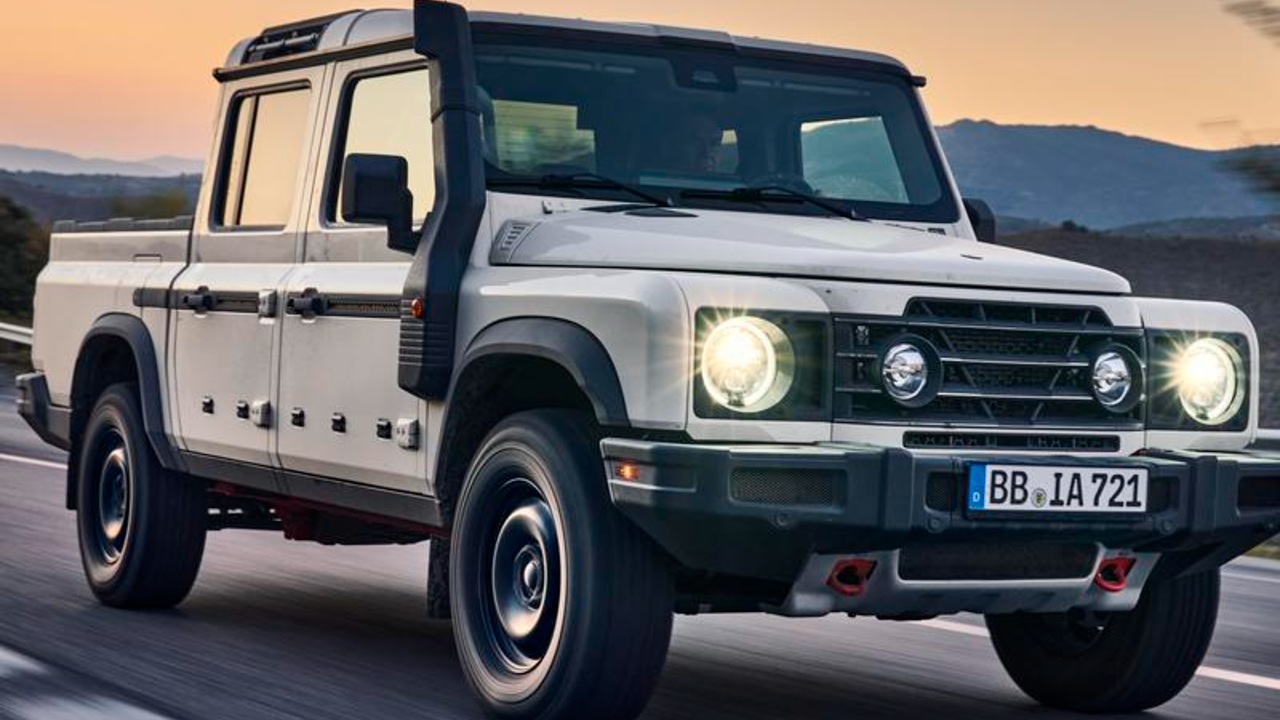
Ineos is edging closer to a decision that could reshape the American off-road market: building its rugged trucks and SUVs in the United States if demand keeps climbing. The company has already acknowledged that strong U.S. sales, rising tariffs, and tightening European emissions rules are pushing it toward local manufacturing, and executives now talk about American production as a matter of “when,” not “if.”
Behind that shift is a simple equation. The more Grenadiers and future models U.S. buyers snap up, the harder it becomes to justify shipping every vehicle across the Atlantic and paying extra at the border. I see the emerging strategy as a test of whether a niche 4×4 brand can turn American enthusiasm into a full-scale industrial footprint.
Tariffs, trade deals and the cost of staying overseas
The financial pressure on Ineos starts at the dock. Importing a relatively low-volume, high-price off-roader into the United States means every percentage point of tariff bites directly into margins or forces higher sticker prices. Ineos Automotive has already said it wants to build in the U.S. “as quickly as possible” to avoid those levies, and it is actively scouting sites for a plant that could serve American buyers more efficiently while sidestepping the latest U.S. tariff increases on imported vehicles.
Even with a new EU–U.S. trade agreement that set a 15 percent tariff level, Ineos Automotive CEO Lynn Calder has described that rate as only a partial relief, not a long term solution. In a statement from London, she welcomed the deal as a “significant improvement” but made clear that the company still needs to manage costs carefully as it expands. That context helps explain why Calder has repeatedly framed U.S. manufacturing as a logical next step rather than a distant aspiration, especially as the brand leans into a lifestyle push in the American market and weighs how much tariff exposure it can tolerate.
EU emissions rules are squeezing the French factory
Tariffs are only half the story. Ineos’ first and only factory today is in France, at a former Mercedes Benz site that Ineos Group acquired to build the Grenadier. That plant was meant to be the backbone of the company’s early growth, but looming European rules to eliminate carbon dioxide emissions from all new models sold in Europe within roughly a decade are complicating the picture. The company’s leadership has warned that the EU’s CO2 emissions ban stands in the way of fully filling the French facility and adding the kind of extra output that would comfortably supply both Europe and the U.S.
Opponents of the emissions ban argue that it moves too fast and risks undermining investment in existing plants, and Ineos’ situation illustrates that tension. The Grenadier was conceived as a traditional, combustion powered off-roader, and while the company is working on additional models, it has acknowledged that future European rules will limit how long it can rely on gasoline engines. That regulatory squeeze makes it harder to justify pouring more Grenadier volume into France, and it nudges the company toward a more diversified footprint where a U.S. plant could focus on markets that still accept internal combustion while Europe transitions to lower emission offerings.
Surging U.S. demand and the “build where you sell” mantra
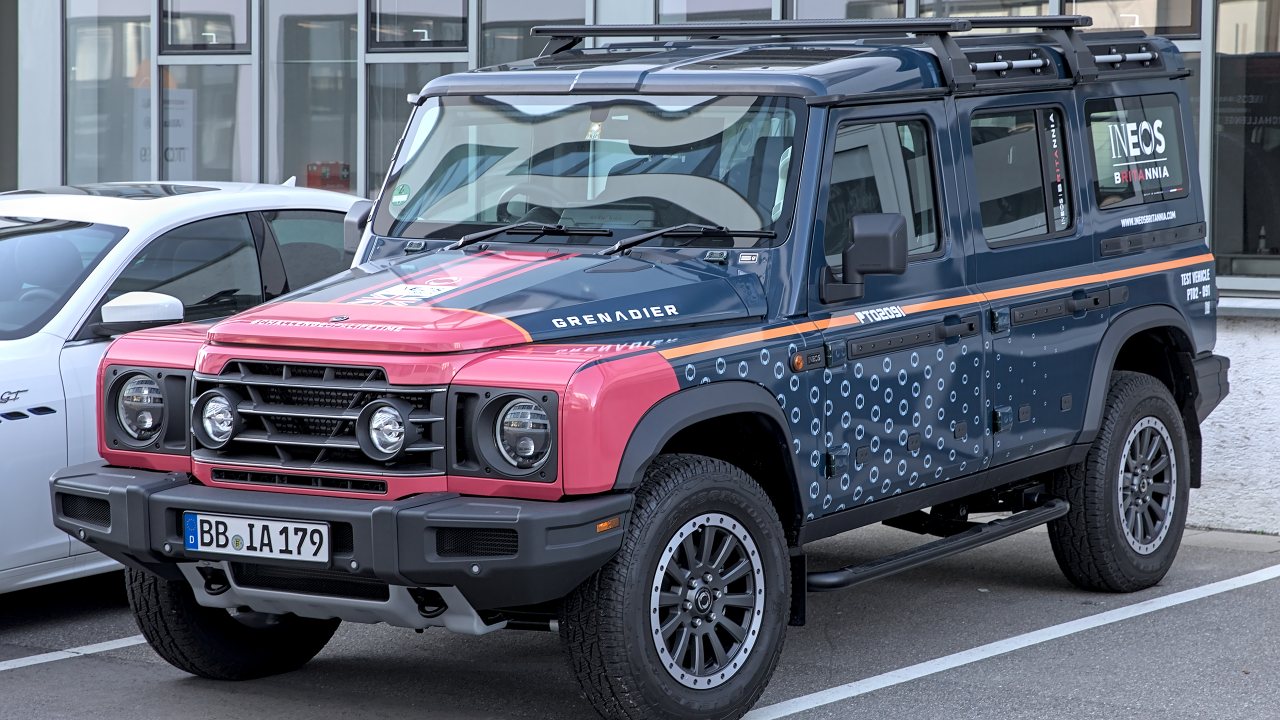
Against that backdrop, American buyers have become the swing factor. Reporting on Ineos’ plans notes that the company could open a factory in the United States if U.S. Americans keep buying its trucks and SUVs at a strong clip. The logic is straightforward: if demand for the Grenadier and upcoming models continues to grow, the business case for local assembly strengthens, turning what began as a tariff workaround into a broader strategy to anchor the brand in its most lucrative export market.
Calder has been explicit about the philosophy behind that shift. In a Q&A, when asked “Could there be U.S. production in the future to get around tariffs?”, she answered, “Sure,” and described a very simple manufacturing rule: produce vehicles close to where they are sold. A company spokesperson has echoed that view, saying, “We envision a manufacturing operation in the U.S. and [Europe], producing where we sell,” and linking that approach to the brand’s plan to expand its portfolio. Taken together, those comments show that Ineos is not just chasing short term savings, it is aligning its industrial map with the geography of its customers, and right now the U.S. is at the center of that map.
Capacity limits and the push for a second plant
There is also a practical ceiling on how much the French plant can do. Calder told Automotive News Europe that Ineos was making 50 vehicles a day, with a goal of reaching 90 a day in the near term. Even if the factory hits that target, the company still has to divide that output among Europe, North America and other new markets it is entering. That constraint becomes more acute as the lineup grows beyond the Grenadier, because every additional model competes for the same assembly slots unless Ineos adds new capacity elsewhere.
The company has already sketched out that broader product plan. It has confirmed a second model, the Grenadier Quartermaster pickup, and has previewed a smaller SUV named the Fusilier, whose exterior styling was revealed in February 2024. Ineos initially targeted a 2026 launch window for the Fusilier, and executives have said that once they are producing the Fusilier, the French plant will be running a more complex mix of vehicles. At that point, relying on a single European factory to feed a growing U.S. customer base looks increasingly risky, which is why I see the search for an American site as a capacity play as much as a tariff hedge.
What a U.S. truck plant would mean for buyers and rivals
If Ineos does commit to building trucks in the United States, the impact for American buyers would be immediate. Local production would reduce shipping time, cut exposure to currency swings, and give the company more flexibility to tailor specifications and pricing to U.S. tastes. The brand has already positioned the Grenadier as a back to basics alternative to mainstream SUVs, and a domestic plant could help it hold the line on pricing even as it adds features and variants that American customers expect from established off road players.
For rivals, a U.S. Ineos factory would signal that the brand is not just a niche European import but a long term competitor in the off road and adventure segment. The company has described the U.S. as a key test market, using phrases like “if we make it here we can make it anywhere” to underscore how central American acceptance is to its global ambitions. If that acceptance translates into a bricks and mortar investment, it would validate the strategy of launching a new 4×4 brand around traditional capability and then scaling up where demand proves strongest. The remaining variable is whether U.S. buyers keep ordering enough Grenadiers and future Fusilier models to tip the internal calculus from “we need to” toward “we are building in the U.S., and fast.”
More from Fast Lane Only: