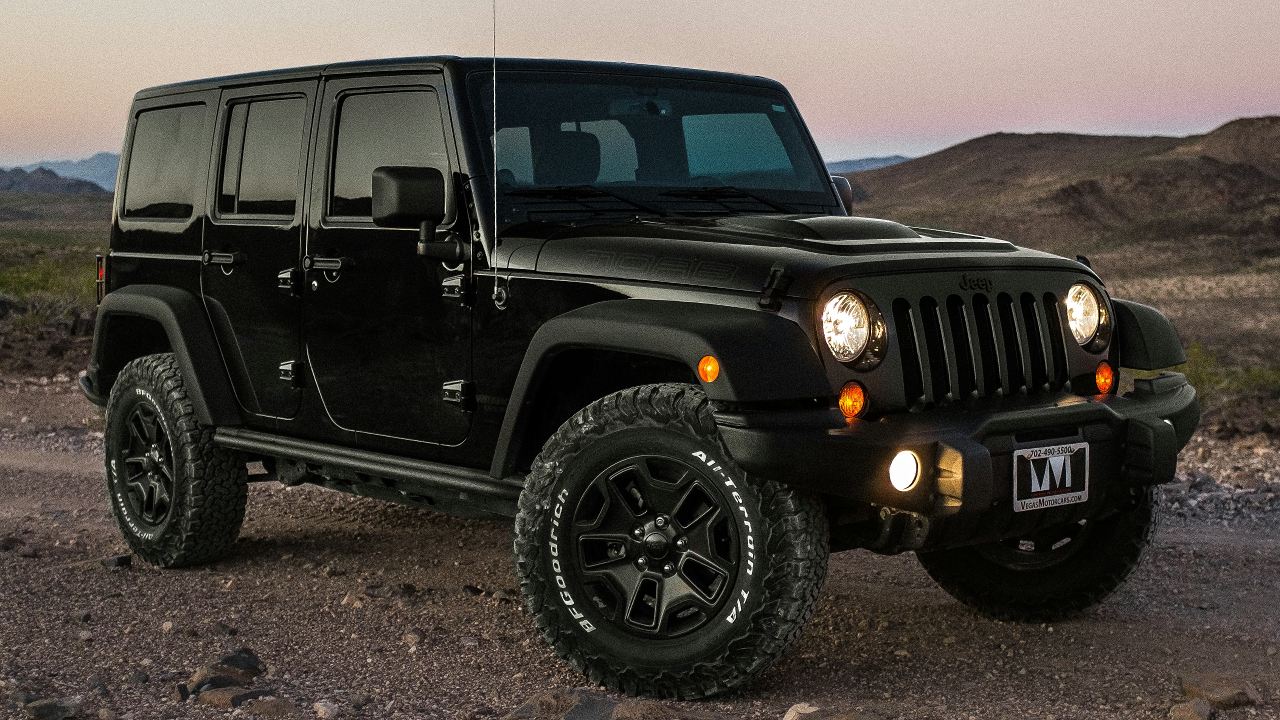
Jeep’s plug-in hybrid flagships, the Wrangler 4xe and Grand Cherokee 4xe, have quietly vanished from the brand’s consumer website while a sweeping stop-sale on the SUVs continues to drag on. The disappearance caps a year of escalating recalls over fire risk and power loss, leaving one of America’s most prominent PHEV lineups in limbo and owners facing a confusing mix of warnings, software fixes, and unanswered questions. I see a pattern emerging that goes beyond a single defect and speaks to how fragile consumer trust can be when safety campaigns pile up without a clear endgame.
Jeep’s plug-in hybrids go missing as stop-sale stretches on
The first sign that something had shifted came not from a press release but from the Jeep retail site itself, where shoppers noticed that Wrangler 4xe and Grand Cherokee 4xe configurations had effectively been pulled from view. That quiet scrub coincided with an ongoing stop-sale on both plug-in hybrids, a move that dealers were already grappling with as they sat on inventory they could not legally deliver. Reporting on the change noted that Jeep still did not have a complete remedy in hand and was instead signaling that a fix might not arrive until sometime in the second quarter, a long window for vehicles that had been central to the brand’s electrification pitch.
Behind the web disappearance is a tangle of safety actions that have converged on the same two models. Owners of Jeep Wrangler 4xe and Jeep Grand Cherokee 4xe have been hit with multiple recall notices related to their plug-in hybrid systems, including warnings about potential battery fires and sudden loss of drive power. The cumulative effect is that Jeep’s most visible electrified SUVs are now constrained by overlapping stop-sale orders and “park outside” advisories, a situation that helps explain why the company would rather not actively market them while it works through the backlog of safety fixes.
Fire risk, “park outside,” and a rare “Do Not Drive” warning
The most alarming thread in the recall web is the fire risk tied to the high-voltage battery systems in these plug-in hybrids. Federal safety regulators issued a Consumer Alert under the banner “Important Expanded Jeep Grand Cherokee and Jeep Wrangler PHEVs ‘Park Outside’ Recall for Fire Risk,” instructing owners to keep affected vehicles away from structures and to avoid charging them until repairs are completed. That alert underscored that the hazard could exist even when the SUVs were parked and turned off, and that it applied to Jeep Wrangler and Jeep Grand Cherokee plug-in hybrids that had already received earlier remedy software, a sign that prior fixes had not fully contained the problem.
Separate reporting on a Jeep Recall framed the situation as a PHEV battery fire risk that prompted an urgent warning to Jeep Wrangler and Jeep Grand Cherokee 4xe owners, again stressing that some vehicles should be parked outside and not charged as long as no remedy is available. Consumer-focused coverage of Jeep plug-in hybrid SUVs described drivers of Jeep Grand Cherokee 4xe and Jeep Wrangler 4xe facing yet another fire-related recall, with the automaker acknowledging dozens of fires and several injuries tied to the latest defect. In social media posts, Consumer Reports amplified the message with a #Recall notice aimed at “Drivers of 2023-2025 Jeep Grand Cherokee 4xe and 2024-2025 Jeep Wrangler 4xe plug-in hybrid SUVs,” highlighting that Jeep was aware of 36 fires and three injuries related to the new problem.
Power loss and software glitches compound the safety picture

Fire risk is not the only safety concern hanging over Jeep’s plug-in hybrids. Separate from the battery issue, Jeep has recalled 91,787 Grand Cherokee 4xe SUVs from model years 2022 through 2026 because a software error can cause them to lose drive power unexpectedly. That campaign, which focuses on the Jeep Grand Cherokee 4xe, warns that a sudden loss of propulsion can increase the risk of a crash, particularly at highway speeds or in heavy traffic. Owners are being told that dealers will update the software at no cost, but until that work is done, the recall notice itself is a reminder that the powertrain’s electronic brain has not been behaving as intended.
Specialist coverage of the same problem described it as a software glitch that prompted a stop-sale of one of America’s best-selling plug-in hybrids, with Jeep Grand Cherokee 4xe models, including the Grand Cherokee Trailhawk 4xe, caught up in the order. Another detailed breakdown of the recall noted that almost “92,000 PHEVs Are Affected In This Latest Recall,” again centering on the Jeep Grand Cherokee Trailhawk 4xe and tying the issue back to Stellantis as the parent company responsible for the fix. Video commentary from Mopar Insiders reinforced that a stop-sale remained in effect while dealers and customers waited for the official remedy, underscoring how a software-level defect can sideline a high-volume electrified SUV just as effectively as a mechanical failure.
Layered recalls: from engine contamination to massive PHEV campaigns
On top of the battery and software problems, Jeep has also had to confront a separate engine-related defect that triggered a rare “Do Not Drive” advisory. Coverage of that campaign described Jeep issuing an engine recall for Wrangler 4xe and Grand Cherokee 4xe due to sand contamination, with the warning explicitly labeled “Do Not Drive.” Owners were told that the contamination could damage internal components and that they should stop driving the affected Jeep Wrangler and Grand Cherokee plug-in hybrids until repairs could be performed. That kind of language is reserved for the most serious safety risks, and it added yet another layer of urgency for drivers already juggling multiple recall letters.
At the same time, Jeep has been running a large-scale recall of plug-in hybrids over fire risk that sweeps in both Wrangler and Grand Cherokee models. One campaign covers 320,065 Wrangler 4xe SUVs from model years 2020 through 2025, part of a broader effort described as Jeep Recalls Plug-In Hybrids Over Fire Risk. That figure, 320,065, illustrates the sheer scale of the issue for Jeep Wrangler owners alone, before even counting the Grand Cherokee side of the ledger. When combined with the “park outside” directive from federal regulators and the “Do Not Drive” advisory tied to engine contamination, the result is a recall landscape that touches nearly every aspect of how these vehicles are used, from where they are parked to whether they can be driven at all.
What owners can do while Jeep searches for lasting fixes
For current owners, the overlapping recalls and the quiet removal of Wrangler 4xe and Grand Cherokee 4xe from Jeep’s website translate into a practical question: what now. The first step is to verify whether a specific vehicle is covered by any of the open campaigns, using the recall lookup tools provided by regulators and the manufacturer. The National Highway Traffic Safety Administration maintains a searchable database of recalls where owners can enter a vehicle identification number and see if it is subject to a “park outside,” “Do Not Drive,” or other safety action. Jeep and Stellantis also direct customers to their own recall portals, which mirror the NHTSA data and provide instructions for scheduling repairs with dealers.
Legal and consumer advocates have stressed that Acting on these notifications promptly is crucial, warning that delaying repairs can compromise both safety and vehicle reliability. Guidance aimed at Jeep 4xe drivers notes that Owners can use a recall lookup tool by entering their VIN, then work with dealers to arrange the necessary software updates or hardware replacements at no charge. In the meantime, those who receive instructions to park outside, avoid charging, or stop driving altogether should treat those warnings as non-negotiable, even if it means significant disruption. Until Jeep can deliver durable fixes for the PHEV battery fire risk, the power loss software glitch, and the engine contamination issue, the quiet disappearance of Wrangler 4xe and Grand Cherokee 4xe from the brand’s digital showroom is less a mystery than a visible sign of how much work remains.
More from Fast Lane Only: