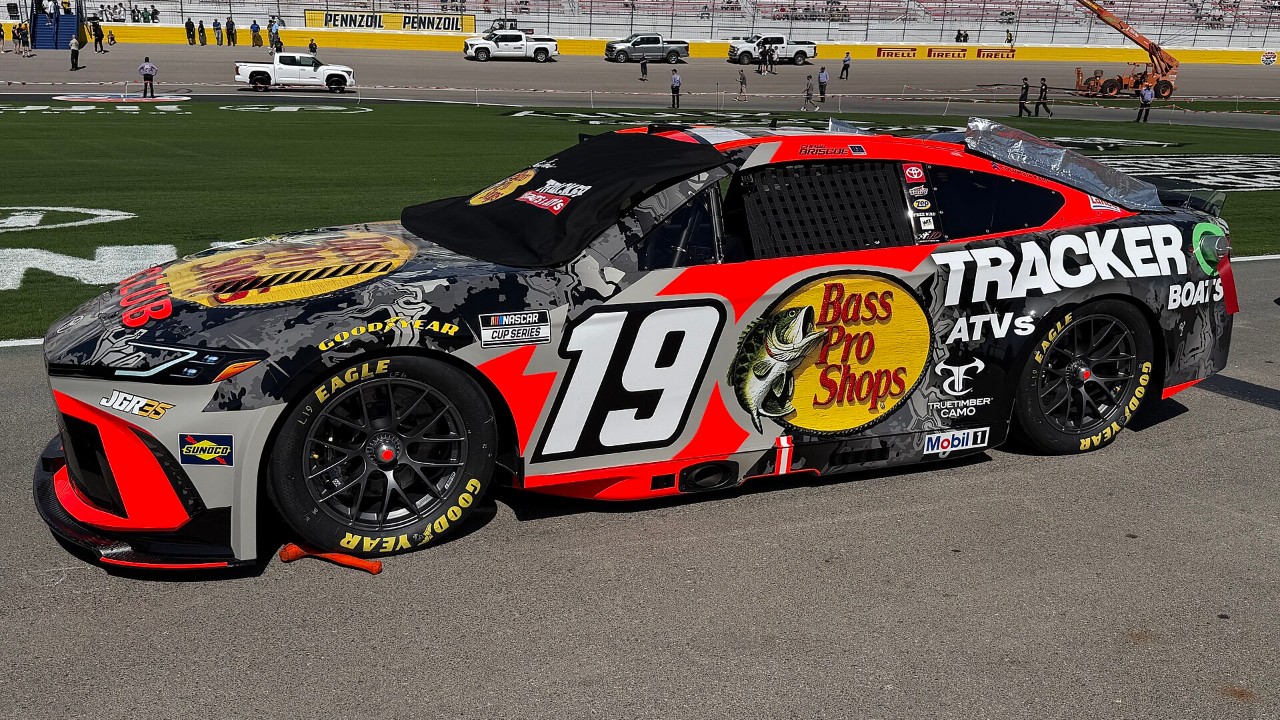
Kevin Harvick did not just last a long time in stock cars, he spent decades operating at a level that forces his name into any honest conversation about the greatest drivers in NASCAR history. His career arc, from emergency replacement to relentless title threat, offers a rare blend of durability, versatility, and big-race brilliance that stacks up impressively against the sport’s legends.
As I trace his journey from raw prospect to polished champion, I keep coming back to two intertwined questions: how did Harvick sustain elite form for so long, and where does that body of work place him on the all-time ladder? The answers live in the numbers he piled up, the pressure-cooker moments he owned, and the way peers and fans now talk about his legacy.
From California kid to Cup Series cornerstone
Harvick’s story starts with a teenager grinding through short tracks, then stepping into the national spotlight far earlier than anyone expected. He began his NASCAR career in 1992, and that early start laid the foundation for a driver who would eventually become one of the Cup Series’ most reliable forces. By the time he was a full-time fixture at the top level, he had already built a reputation as a hard-nosed racer who could adapt to different cars, tracks, and competitive eras.
What separates Harvick from many long-tenured drivers is that his longevity never felt like a slow fade. He last competed full-time in the Cup Series in 2023, yet he remained a weekly threat deep into that final campaign, still sharp enough to contend on everything from short tracks to intermediates. That kind of staying power, stretching from his early days in the 1990s to his final laps at events like the Clash at the Colosseum, is a key reason I see him as more than just a champion from one era. He is a connective tissue driver, bridging generations of rules packages, manufacturers, and rivals while rarely dropping out of the top tier.
The numbers that define a giant
When I evaluate greatness, I start with the cold, unforgiving math, and Harvick’s statistics are staggering. His own Fast Facts list 826 Starts, 60 Wins, 251 Top-Five Finishes, and 444 Top-10 Finishes in the NASCAR Cup Series, along with 31 poles and a championship title. Those are not the numbers of a driver who simply hung around; they are the profile of a relentless contender who turned nearly every season into a threat for trophies. Behind the wheel, he converted those opportunities into 60 NASCAR Cup Series wins, 251 top-five and 444 top-10 finishes, a level of consistency that very few drivers in history can match.
Harvick’s excellence was not confined to one division either, which matters when I weigh him against the sport’s all-timers. He is the third of only six drivers to have won a championship in both the Cup Series and the lower national tours, and he is one of a select group to earn titles in each of NASCAR’s three national series. The List of NASCAR race wins by Kevin Harvick underscores that breadth, documenting how he became an American driver who captured a Monster Energy NASCAR Cup Seri title while also stacking victories across the sport’s top three series. That multi-layered dominance is a major reason I place him in the inner circle of modern greats rather than just the “very good” tier.
Big stages, big trophies, and a clutch reputation
Raw totals are one thing, but the greatest drivers also deliver when the lights are brightest, and Harvick’s resume on marquee stages is loaded. Among his most significant Cup race victories, he claimed the 2007 Daytona 500, three Brickyard 400s, and the Southern 500 at Darlington Raceway, a collection of crown jewels that define a career built on seizing big moments. Those wins, highlighted in a detailed look at his Cup triumphs, show a driver who could rise above the chaos of restrictor-plate packs at Daytona, master the unique demands of Indianapolis, and outlast the grind of Darlington’s Southern 500.
His knack for delivering under pressure extended beyond single races into full-season title fights. Harvick’s 2014 championship run, captured in his NASCAR Cup Series biography, came in the heart of the playoff era, when the format demanded both week-to-week consistency and the ability to close in elimination rounds. That same profile highlights how he paired those 60 wins with a remarkable volume of top finishes, which is exactly the combination required to survive modern championship formats. When I stack him against other champions, that blend of crown-jewel victories and a title earned in a cutthroat system strengthens his case as one of the era’s most clutch performers.

The underrated art of not beating yourself
One of Harvick’s most impressive traits, and one that often gets overlooked in barstool debates, is how rarely he took himself out of races. Throughout Kevin Harvick’s NASCAR Cup Series career, analysts have pointed to his win-to-DNF ratio as a quietly historic statistic, noting how few times he failed to finish relative to his trips to victory lane. A closer look at that Cup Series record shows a driver who combined aggression with remarkable mechanical sympathy, preserving equipment while still racing hard enough to win.
That discipline paid off in the form of long, sustained stretches of relevance. When I look at his career highlights, the sheer volume of top-five and top-10 finishes, those 251 and 444 marks that appear in both his Fast Facts and his Behind the profile, tell the story of a driver who almost always brought the car home in one piece and near the front. That ability to avoid DNFs, to stay in the game long enough for strategy and late-race chaos to work in his favor, is a subtle but vital ingredient in why his win total climbed so high and why his teams could count on him year after year.
How fans and history are already ranking him
Numbers and trophies are one side of the argument, but I also pay attention to how informed fans and historians talk about a driver once the helmet is hung up. In one widely discussed fan ranking, a group of Reddit users compiled Top Ten Drivers of All Time based on the average position across 38 individual lists, with The Overwhelming Top featuring names like Richard Petty at the summit. Harvick’s placement in those conversations, often hovering just outside that ultra-elite Mount Rushmore, reflects a growing recognition that his career belongs in the same general neighborhood as the sport’s icons, even if fans still debate the exact slot.
Another fan discussion framed the question more directly, asking simply, “Where would you rank Kevin Harvick on the all-time best driver list?” and arguing that Kevin Harvick is seriously underrated in those debates. That Where thread captures something I feel strongly: his blend of longevity, versatility, and big-race success often gets overshadowed by flashier personalities or drivers with slightly larger raw win totals. When I synthesize the fan sentiment with the hard data, I land on Harvick as a clear top-10 driver all time, and a legitimate candidate for the back half of the top five depending on how heavily one weighs multi-series success and modern-era competition.
Legacy, leadership, and where he ultimately ranks
Legacy is not just about what a driver did behind the wheel, it is also about the imprint left on the garage and the sport’s culture. Harvick’s career has been framed by many as that of a driver who will leave a legacy as one of NASCAR’s best ever, a sentiment echoed in retrospectives that trace his path from early short-track days to major victories like the NASCAR Food City 250 in Bristol, Tenn. That Kevin Harvick narrative emphasizes not only his results but also his role as a veteran voice, a mentor to younger drivers, and a standard-setter for preparation and race craft.
As his driving career wound down, tributes began ranking the top 10 moments of his legendary NASCAR run, from the abrupt and solemn circumstances that thrust him into the Cup spotlight to the defining wins that cemented his reputation. One such look at his Oct highlights described how what started in the most abrupt and solemn of ways became something legendary, underscoring how he turned a difficult beginning into a sustained run of excellence. When I weigh that narrative arc, the statistical mountain he built, and the respect he commands from fans and peers, I see Kevin Harvick as more than a future Hall of Famer. I see him as one of the defining drivers of his generation, a top-10 all-time talent whose case will only look stronger as the years pass and the full scope of his career settles into the sport’s history.
More from Fast Lane Only: