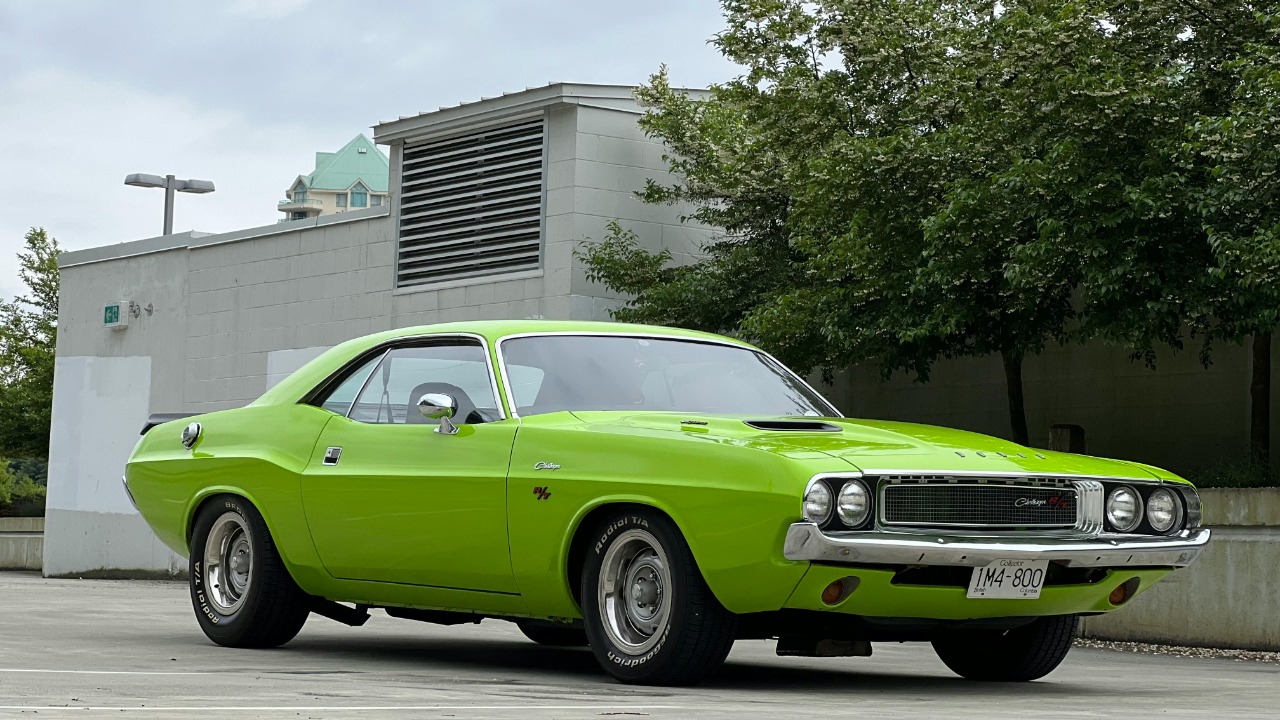
It started the way a lot of dream-car stories do: a sharp-looking 1970 Dodge Challenger, glossy paint, tidy interior, and a seller who swore it had been “restored.” The kind of car that makes you picture weekend cruises and gas-station conversations before you’ve even turned the key. And at first glance, it really did look the part.
But a few weeks after the purchase, the shine stopped feeling like a reward and started feeling like a warning. Not because the car ran terribly or because the title was sketchy. It was the paint—fresh, flawless, and just a little too eager to convince anyone not to look closer.
A “Restored” Classic That Looked Almost Too Good
The car presented like a greatest-hits album of muscle-car perfection: deep color, even panels, and trim that looked like it had been carefully refitted. Under the hood, everything was clean enough to eat off, which is always impressive and always a little suspicious. If you’ve been around classic cars long enough, you know the difference between “loved” and “staged.”
Still, it wasn’t an outrageous story. Plenty of older cars get resprayed, refreshed, and sold with a stack of receipts that sound reassuring. And the market for early Challengers is hot enough that buyers often feel like they have to move fast or miss out.
The First Clues Came From Small, Annoying Things
The first hints weren’t dramatic. They were the kind of little problems you chalk up to old-car quirks: a door that didn’t close with the same solid “thunk” every time, a trunk lid that needed a slightly different push depending on the day, and a faint wind noise that didn’t match how tight everything looked.
Then came the bubbles. Not big ones—just a few tiny blisters near the lower rear quarter, right where road grime likes to live. Fresh paint doesn’t usually start talking that quickly unless something underneath is asking to be heard.
A Magnet, a Flashlight, and That Sinking Feeling
Curiosity turned into concern, and concern turned into a simple test: a small magnet along the lower body lines. In some places it grabbed hard, like it should on steel. In others it slid like the car was made of Tupperware.
That’s when the flashlight came out, aimed into the wheel wells and along the underside edges where glossy paint can’t distract you. Overspray was visible in spots that shouldn’t have seen a paint gun. And the texture underneath—lumpy, uneven, oddly rounded—looked a lot like body filler trying its best to impersonate metal.
Fresh Paint Can Be a Gift, or a Curtain
There’s nothing inherently wrong with a respray, and plenty of solid restorations end with fresh paint. The problem is when paint becomes the whole strategy. A shiny finish can make your brain fill in the blanks: “If it looks this good outside, it must be good underneath.”
In reality, paint is often the last thing done, which makes it perfect for hiding the first thing that should’ve been fixed. Rust doesn’t care how expensive your clear coat was. It just waits.
What Was Hiding Underneath Wasn’t Just “A Little Rust”
When the car finally went up on a lift for a proper inspection, the story got louder. The underside had patches—some reasonable, some questionable, and some that looked like they were cut and welded in a hurry. A few seams were thick with undercoating, the classic “nothing to see here” move that can either be protection or camouflage.
The worst areas were the usual suspects for an E-body Mopar: lower quarters, trunk floor corners, and sections around the rear frame rails. In places, metal had been replaced with more optimism than steel. Instead of clean welds and properly shaped panels, there were overlapping sheets, messy beads, and edges that suggested someone was trying to cover holes rather than rebuild structure.
The Real Punchline: It Was “Straight” Because It Was Sculpted
From the outside, the panels looked straight. But once the shop started measuring and looking for telltale ripples, it became clear the smoothness wasn’t coming from careful metalwork. It was coming from filler—more than anyone wants to find on a car that was advertised as restored.
Some filler is normal in vintage sheetmetal work. The issue is thickness and location. When it’s packed into structural-adjacent areas and stacked over questionable patches, it’s not finishing work anymore. It’s a mask.
How This Slips Past Buyers (Even Smart Ones)
It’s easy to say, “You should’ve checked,” but the truth is most people do a reasonable inspection and still miss this kind of thing. Lighting at a seller’s garage can be flattering. Photos can be selective. And excitement is a powerful filter—especially when the car starts, idles, and doesn’t leave a trail of fluids.
Plus, a lot of classic-car transactions happen with a subtle clock ticking in the background. Another buyer is “on the way.” Someone else “has cash.” Even if that’s true, it pushes people into trusting the story instead of verifying it.
What a Proper Pre-Purchase Check Would’ve Found
A knowledgeable inspection would’ve focused on the unglamorous zones: inside the trunk under the mat, behind the rear wheels, along the pinch welds, and under the car where factory seams and spot welds should look consistent. It also would’ve checked the cowl and windshield areas, where leaks can quietly create big problems. Those checks aren’t complicated, but they do take time—and ideally, a lift.
Even without a lift, basic tools can reveal a lot. A magnet, a mirror, and a flashlight are surprisingly effective. So is simply looking for paint edges, tape lines, or overspray on rubber and wiring—small signs that the paint job may have been rushed.
The Money Part Hurts, But the Safety Part Matters More
The financial sting is obvious: fixing rust correctly is expensive, and fixing someone else’s shortcuts is even worse. Panels, labor, and proper metalwork can climb into the “why didn’t I just buy a better car?” range fast. And on a desirable model, you can end up paying twice—once for the shiny purchase, and again for the real restoration.
But there’s also the safety angle. Structural rust and sloppy patchwork can affect how the car behaves on the road and how it holds up in a crash. A muscle car is already a lively handful by design; it doesn’t need hidden weaknesses, too.
What Happens Next Depends on One Question: How Much Do You Love It?
At this point, owners usually face three paths: return it if the deal allows, resell it honestly and take the loss, or commit to doing the job properly. None of those options feel great in the moment. But pretending it’s fine is the one choice that almost always gets more expensive later.
The irony is that the car can still be saved. A Challenger with rust and bad repairs isn’t automatically doomed—it just needs truth, time, and a shop that won’t “paint it better” as a solution. And next time someone says “restored,” the smart move is to smile, nod, and ask one more question: “Restored how?”
More from Fast Lane Only