Twenty-five years after Dale Earnhardt’s car struck the wall in the final lap of the Daytona 500, a new film is returning to the moment that reshaped stock-car racing. The documentary promises not only to revisit the crash that ended the life of NASCAR’s most imposing star, but also to trace how that loss forced the sport to reinvent its approach to safety and identity. By looking back at Earnhardt’s final race with fresh testimony and archival detail, the project aims to show how a single impact still reverberates through every modern Cup Series start.
The film arrives at a time when NASCAR is still defined by the reforms that followed Earnhardt’s death, from redesigned cars to reengineered walls and mandatory head-and-neck restraints. It treats the crash less as a morbid spectacle than as a hinge point, a before-and-after line that separates an era of accepted risk from one of systematic protection. In doing so, it asks what the sport owes to the driver whose fatal accident forced it to change.
The new documentary and why it matters now
The upcoming film, titled “We’ve Lost Dale Earnhardt: 25 Years Later,” is a joint production from NASCAR Studios and FOX Sports that is scheduled to premiere on FS1 ahead of the Daytona 500. Positioned as a centerpiece of the 25th anniversary observance, it is designed to walk viewers through Earnhardt’s final weekend at Daytona International Speedway, his last laps, and the immediate aftermath in the garage and grandstands. The project is framed as a sober, emotionally direct account of how the sport’s most feared and admired competitor could be lost in a split second while running a race he had dominated for decades.
Producers from NASCAR Studios and FOX Sports have signaled that “We’ve Lost Dale Earnhardt: 25 Years Later” will blend new interviews with period footage to reconstruct not only the crash but also the culture that surrounded it. The film is expected to feature voices from inside the garage, including competitors, officials, and those who worked directly with Earnhardt, to explain how his death forced a reckoning with long-standing assumptions about danger. By centering the narrative on the phrase “Lost Dale Earnhardt” and explicitly marking the “Years Later,” the documentary underlines that the story is as much about what followed as what happened in Turn 4.
Revisiting the final laps at Daytona
Earnhardt’s last race at Daytona International Speedway has been replayed for a quarter century, but the new documentary seeks to slow it down and examine it from the inside out. In the closing laps of the Daytona 500, he was not simply a contender, he was a protector, working the draft to help position the cars of his son and his team while still racing at the edge of control. The crash that ended his life occurred in a matter of heartbeats, yet it unfolded within a complex web of strategy, trust, and split-second decisions that the film intends to unpack with the benefit of hindsight and technical analysis.
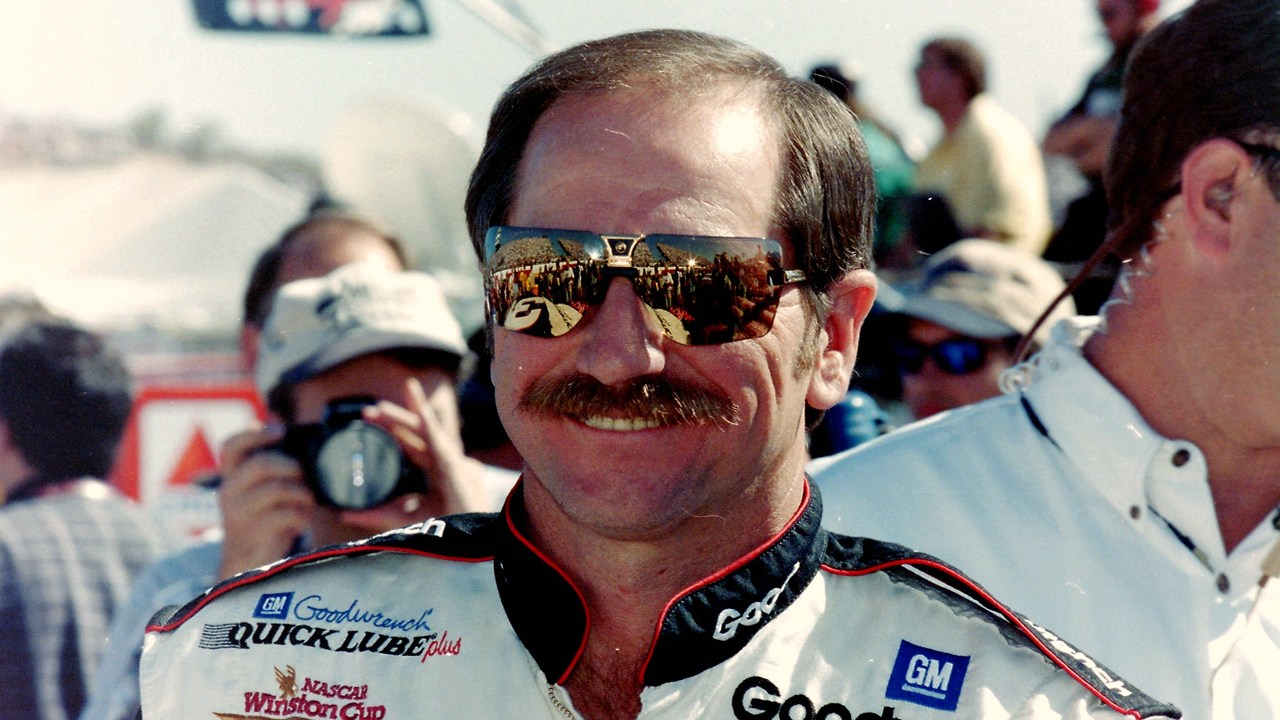
Archival images of Earnhardt adjusting his helmet during testing at Daytona International Speedway in early 2001, combined with fresh commentary, underscore how routine the day initially felt for a driver of his stature. The documentary’s focus on his “Final Momen” is not limited to the impact itself, but extends to the radio chatter, the body language in the pit box, and the stunned silence that followed when it became clear that the crash was not just another walk-away incident. By reconstructing those details, the film invites viewers to understand how a sport that had grown accustomed to spectacular wrecks without fatalities suddenly confronted the reality that even its toughest figure was not invincible.
The safety revolution that followed Earnhardt’s death
What separates Earnhardt’s fatal crash from many others in NASCAR history is what came next. In the months and years after his death, NASCAR overhauled its attitude toward safety, treating the loss of its most iconic driver as a mandate to rethink everything from cockpit restraints to track infrastructure. Experts have estimated that the resulting changes have saved dozens of lives, a testament to how thoroughly the sport reengineered itself in response to that single impact.
Central to this transformation was the adoption and enforcement of head-and-neck restraint systems, improved seat and harness designs, and stronger roll cages that better managed crash forces. NASCAR also invested heavily in energy-absorbing barriers, replacing unforgiving concrete with walls designed to dissipate impact. As one leading safety engineer, Robert Hubbard, has noted, Earnhardt’s death prompted NASCAR to reconsider how it managed safety at a fundamental level, pushing the sanctioning body to build a dedicated research and development apparatus rather than relying on incremental tweaks. The cumulative effect of these reforms is visible in the record that followed, with reports highlighting that there were no NASCAR Cup Series driver deaths in the years after 2001, a stark contrast to earlier eras.
How Earnhardt’s legacy shapes today’s NASCAR
Two and a half decades later, every modern NASCAR race still carries the imprint of Earnhardt’s legacy. The current generation of Cup cars, with their reinforced chassis and carefully engineered crumple zones, are direct descendants of the safety push that followed his death. Drivers now strap into cockpits that are designed around survival first, with mandatory head-and-neck restraints, advanced seats, and standardized safety protocols that would have been unthinkable in the era when Earnhardt built his reputation as “The Intimidator.”
That legacy is not only technical but cultural. NASCAR’s leadership and competitors speak of safety as a non-negotiable priority, a shift that traces back to the shock of losing Dale Earnhardt in a race that had long been his personal stage. The sport has invested millions of dollars in research, testing, and track improvements, and it continues to refine its rules and equipment in response to new data. The fact that reports can point to a long stretch without a fatal Cup Series crash is often cited as proof that the painful lessons of 2001 were not ignored. In this sense, Earnhardt’s death functions as both a warning and a standard, a reminder that complacency is unacceptable and that every new innovation is part of a promise made to drivers and fans alike.
Why returning to the crash still matters to fans and the sport
The decision by NASCAR Studios and FOX Sports to produce “We’ve Lost Dale Earnhardt: 25 Years Later” is not simply an exercise in nostalgia. For a generation of fans who watched the crash live, the film offers a structured way to revisit a trauma that unfolded in front of millions, now reframed with the knowledge of what it changed. For younger viewers who know Earnhardt only as a legend in highlight reels and on merchandise, the documentary provides context for why his name still carries such weight whenever safety is discussed.
By tying Earnhardt’s final race to the sweeping reforms that followed, the film positions his loss as a turning point that continues to protect every driver who straps into a NASCAR Cup Series car. It acknowledges the grief that accompanied the words “Lost Dale Earnhardt,” while also tracing the “Years Later” in which that loss was translated into concrete improvements in equipment, protocols, and track design. In doing so, the documentary suggests that revisiting the darkest moment in modern NASCAR history is not about reliving tragedy for its own sake, but about understanding how the sport chose to honor one of its greatest champions by making sure his fate would not be repeated.
More from Fast Lane Only