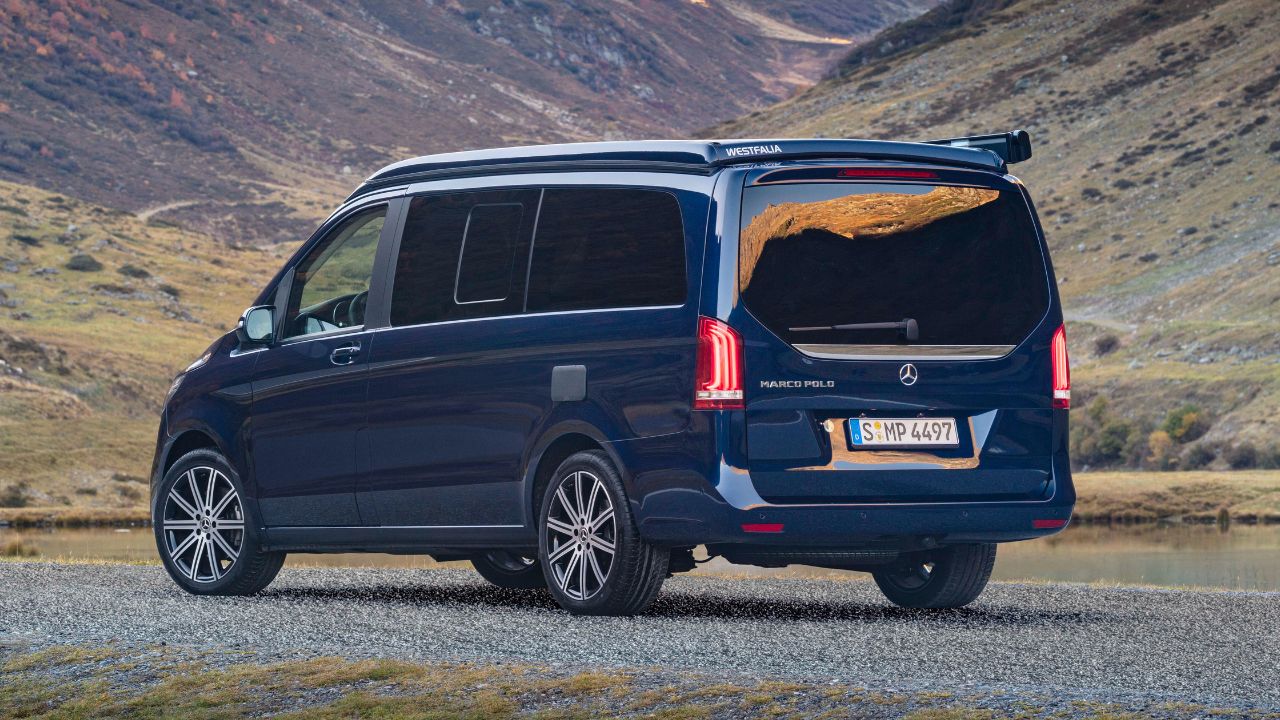
The latest Mercedes Marco Polo is not content to play a supporting role in the camper-van world. It is engineered and specced to go directly after the VW California, promising a more luxurious way to chase the horizon without giving up everyday usability. If you are weighing up your next compact camper, you now face a very deliberate choice between two different visions of the ultimate rolling holiday home.
The Marco Polo’s luxury pitch in a Cali-shaped world
You feel the intent behind the new Marco Polo the moment you step into its cabin. Where the VW California leans on its iconic image, the Mercedes focuses on turning the V-Class platform into a genuinely premium living space, with high-grade materials, integrated cabinetry and a layout that aims to feel like a compact lounge rather than a converted van. The official description of the Benz Marco Polo underlines that you are getting a factory-built camper, not an aftermarket compromise, with cooking, storage and sleeping solutions designed into the vehicle from the outset.
That focus on comfort is not theoretical. Reviewers who have spent a day and night in the latest Mercedes Marco Polo highlight how the beds for up to four people and the integrated kitchenette turn it into an “ultra-luxurious hideaway” rather than a basic bunk on wheels. That is the heart of Mercedes’ challenge to the VW California: you are invited to see the camper not just as a tool for weekends away, but as a mobile boutique hotel room that happens to have a three-pointed star on the grille.
Design, layout and the “glamping mobile” brief
On the road and on the campsite, the Marco Polo’s design choices are meant to make your life feel more like glamping than traditional camping. The pop-up roof with its electric lifting mechanism, a feature that traces its roots back to the third-generation Marco Polo on the Viano, gives you standing room and an elevated sleeping area without wrestling with manual struts. Recent demonstrations of the latest Glamping Mobile show how the roof, lighting and climate functions are integrated into the vehicle’s electronics, so you manage your “upstairs” bedroom with the same ease as the main cabin.
Inside, the Marco Polo’s rear bench and cabinetry are configured to maximise usable space, with owners of both vans noting that the MP’s interior feels more spacious than the Cali. The trade-off is that The Mercedes Marco Polo has one sliding door on the right-hand side, which can open your living area into the road rather than the pavement, a packaging decision that some buyers will need to weigh carefully when they picture real-world campsites and tight urban streets. That single-door layout is part of a broader design philosophy that prioritises a clean, yacht-like interior over the more utilitarian, dual-door flexibility you might be used to from the VW.
Tech, comfort and the “Advance” factor
If you care about in-van tech as much as you care about pitch-side views, the Marco Polo is deliberately stacked in your favour. The latest generation builds on a history of camper-specific innovation that has seen Mercedes integrate control of camping functions into the main infotainment system, with features like lighting, fridge temperature and roof operation accessible from the dashboard touchscreen or a smartphone, a level of integration that earlier reports suggested could let the Marco Polo outsmart The Volkswagen California. More recent video reviews of The Mercedes highlight the Benz Advance control system as the tech centrepiece, giving you a single interface for both driving and camping functions.
Comfort, however, is not flawless. Detailed assessments of the V-Class-based camper list specific Weaknesses, noting that the Suspension can be caught out on a series of bumps and that Air suspension is an expensive option rather than standard kit. That means you need to decide whether the plush cabin and advanced electronics outweigh the occasional fidget over poor road surfaces, especially when rivals like the Ford Transit Custom Nugget L1 2.0 Ecoblue 185, with a List price of £62,736 and a Target Price of £62,736, are praised in comparison tests for their composure even when All the campers are fully loaded.
On-road manners versus the VW California
When you drive these campers back to back, you quickly discover that the VW California and the Marco Polo prioritise different strengths. Group tests that pitch the Mercedes against its closest rivals report that On the road, All three of these campers take up a similar amount of space, but the VW feels the most wieldy and easiest to place, while the Mercedes trades a little agility for refinement and isolation from wind and road noise, something you will appreciate on long motorway slogs On the move. Independent verdicts have gone as far as to say the V-Class camper is Every bit as convincing as the VW California, even if What it loses in the finer packaging details it makes up for in ride comfort and cabin ambience when you are not parked up California.
Owners who have lived with both vans echo that split. In long-form comparisons, drivers note that the rear seat in the MP is more comfortable and that the interior of the MP feels more spacious, but they also concede that the Cali benefits from cleverer packaging in some areas, such as storage nooks and the way the steering column controls are laid out. Video reviewers who have spent a week with the VW before switching into the new Mercedes Benz Marco Polo the often come away saying the Mercedes feels like the more premium product, but that the California still has an edge in pure ease of use when you are constantly transitioning between driving and camping modes.
Living with the Marco Polo: practicality, trims and access
Beyond the test drive, you need to know how the Marco Polo will fit into your life. The current model is offered in a single, highly specified Premium Plus trim, with an optional AMG Line package that sharpens the styling and adds sportier details, a strategy that keeps the range simple but pushes you toward a high starting price if you want the full Premium Plus and AMG Line experience. That simplicity contrasts with the broader spread of California variants, and it underlines Mercedes’ belief that you are shopping for a luxury object first and a budget camper second. Reviews framed as “Before you buy” guides stress that the Marco Polo is the sort of camper you aspire to, not a bare-bones entry point into van life.
Access, however, remains a sticking point depending on where you live. In Europe, the Marco Polo is a familiar sight, but in the United States you are still officially limited to the Metris Weekender rather than the full-fat V-Class-based camper. Enthusiasts on Q&A forums point out that the Marco Polo has historically been offered only with four cylinder diesel engines and in V-Class form, which Mercedes has chosen not to sell in that market. Analysts of the American line-up Blame factors such as Mercedes deciding not to bring the V-Class, which serves as the basis of the camper, and instead partnering with recreational vehicle upfitter Peace Vans to create the Metris Weekender as a more modest alternative.
More from Fast Lane Only