After a period of disillusionment around fully autonomous driving, the sector is quietly reorganizing around a more pragmatic idea: pairing powerful centralized computing with established auto suppliers that know how to build and certify vehicles at scale. Nvidia is at the center of that shift, using its chips and software to anchor new alliances that range from robotaxis to long-haul trucks. I see these partnerships as an attempt to turn self-driving from a moonshot into an industrial product roadmap, with timelines, production targets, and shared risk.
Nvidia’s second act in self-driving
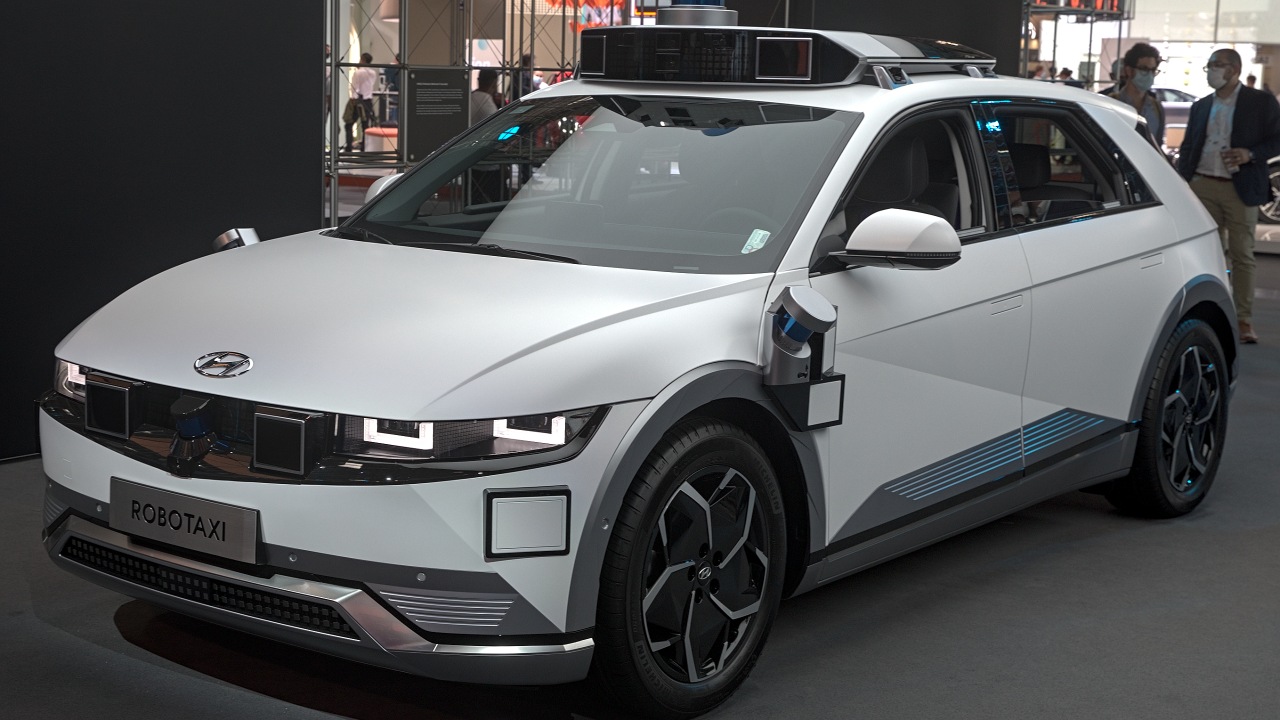
I view Nvidia’s latest push into autonomy as less a reboot than a second act, one that leans on its dominance in artificial intelligence to make self-driving a logical extension of its core business. The company is positioning its hardware and software stack as the brain for robotaxi fleets, working directly with operators that plan to test commercial services around 2027 and beyond. By tying its roadmap to concrete fleet deployments rather than abstract “future cars,” Nvidia is signaling that it wants to be judged on real-world miles, not just demo videos.
That ambition is visible in its work with robotaxi companies that intend to use Nvidia platforms to power both perception and decision-making in their vehicles. Executives have framed robotaxis as an “important growth category after AI,” effectively treating autonomous mobility as another large-scale computing problem that can be solved with the same data center style approach. In practice, that means standardized chips, a common software stack, and over-the-air updates that keep fleets improving long after they leave the factory, a model that is already familiar to anyone watching how Nvidia sells into cloud providers.
From chip supplier to system partner
What strikes me most in this new phase is how aggressively Nvidia is moving from component vendor to strategic partner for automakers and suppliers. Toyota, Aurora and Continental are a prime example, joining a growing roster of companies that are rolling out next-generation highly automated and autonomous vehicle fleets built around Nvidia technology. In parallel, Aurora, Continental and Nvidia have committed to a long-term partnership to deploy driverless trucks at scale, powered by the Nvidia Drive platform, which turns highway freight into a proving ground for the same AI systems that will eventually guide passenger cars.
This shift is not limited to one region or vehicle type. Nvidia is also working with Uber to develop a network of self-driving cars that target Level 4 capability, where vehicles can operate on their own in defined conditions while still allowing a human to take over. In that collaboration, Nvidia has been described as the backbone of the autonomous system, providing the compute and software environment that lets Uber and its manufacturing partners focus on operations and service design. I see the same pattern in its work with GM, which is jointly developing with Nvidia an upgrade of its recently unveiled Level 2, driver supervised, Super Cruise system, with a path to Level 3 where the driver intervenes only in emergencies. In each case, Nvidia is not just selling chips, it is co-authoring the feature set and performance envelope of the vehicle.
Auto suppliers look for a realistic path forward
For traditional auto suppliers, these alliances offer a way to stay relevant as vehicles become rolling computers, but they also expose deep questions about cost and scalability. Reporting on Nvidia’s recent deals makes clear that many interested automakers still have major concerns about how to pay for the high-performance hardware and redundant systems that full autonomy requires. Apart from the sticker shock, there is anxiety about whether these platforms can be deployed across entire lineups rather than confined to a few halo models or pilot fleets, especially when margins on mass-market cars are already thin.
I interpret the growing number of partnerships as a response to that tension. By pooling development with companies like Aurora and Continental, Nvidia can help spread the cost of software, validation, and tooling across multiple customers, while suppliers gain access to a common technology base that regulators and insurers can learn to trust. The collaboration with Baidu and ZF on self-driving car tech for China follows the same logic, combining a local digital ecosystem with global hardware and component expertise. For suppliers that once sold discrete parts like braking systems or infotainment units, tying into a centralized AI platform is becoming a prerequisite for staying in the game.
Robotaxis, premium cars, and trucks converge on one stack
What I find particularly revealing is how different segments of the mobility market are converging on a shared technical architecture, even as their use cases diverge. On one end, Nvidia is working with robotaxi operators that plan to run dedicated fleets in dense urban areas, where vehicles can be monitored closely and routes are relatively constrained. On another, Uber and Stellantis have outlined plans to start production of autonomous vehicles in 2028, with Uber deploying 5,000 of Stellantis’ autonomous vehicles in select cities worldwide after initial operations begin in the United States. That scale, 5,000 vehicles in the first wave, suggests a serious attempt to move beyond small pilots.
At the same time, Nvidia and Mercedes-Benz are bringing AI-defined driving to U.S. roads through the Nvidia Drive AV platform, which uses a dual stack architecture designed to balance innovation with safety. An end-to-end AI system handles complex driving tasks, while a separate, more deterministic stack provides redundancy and robust safety guardrails, a structure that mirrors how aviation systems are certified. I see similar thinking in the long-haul truck partnerships with Aurora and Continental, where the same Drive hardware and software are tuned for highway driving, logistics integration, and 24/7 uptime. Whether the vehicle is a robotaxi, a premium sedan, or a Class 8 truck, the underlying bet is that one scalable AI stack can serve them all with different configurations.
Learning to drive like a human, at industrial scale
Underpinning these alliances is a philosophical shift in how autonomous systems are trained and validated. Nvidia’s leadership has emphasized that the goal is not just to follow rules, but to have cars drive as a human would expect, with natural behavior that comes from learning directly from human drivers. That approach leans heavily on data, using vast fleets and simulation to capture edge cases, then feeding them back into the training pipeline. In my view, this is where Nvidia’s heritage in AI gives it an edge, since the same techniques that power generative models can be adapted to teach vehicles how to merge, yield, and negotiate complex intersections.
Yet the company is also careful to frame this as a safety story, not just a performance one. At the core of Nvidia Drive AV is a dual stack architecture that separates the cutting-edge AI from a more conservative, rule-based system, providing redundancy and robust safety guardrails if the primary stack encounters something unexpected. When combined with incremental steps like GM’s evolution from Level 2 Super Cruise to potential Level 3 capability, and Uber’s focus on Level 4 operation in constrained environments, I see a layered strategy emerging. Rather than leaping directly to fully driverless cars everywhere, Nvidia and its partners are building a ladder of features and use cases that can be deployed, monitored, and improved over time.
For all the renewed energy, the road ahead is still crowded with obstacles, from regulatory scrutiny to public skepticism shaped by earlier overpromises. Many automakers remain cautious, and the economics of equipping millions of vehicles with high-end compute are far from settled. Still, as Nvidia, Uber, Stellantis, Toyota, Aurora, Continental, Baidu, ZF, Mercedes-Benz, and GM align around shared platforms and staged rollouts, I see a more disciplined version of the self-driving dream taking shape, one that treats autonomy not as a single breakthrough moment but as a long, negotiated integration of AI into the global car fleet.
More from Fast Lane Only: