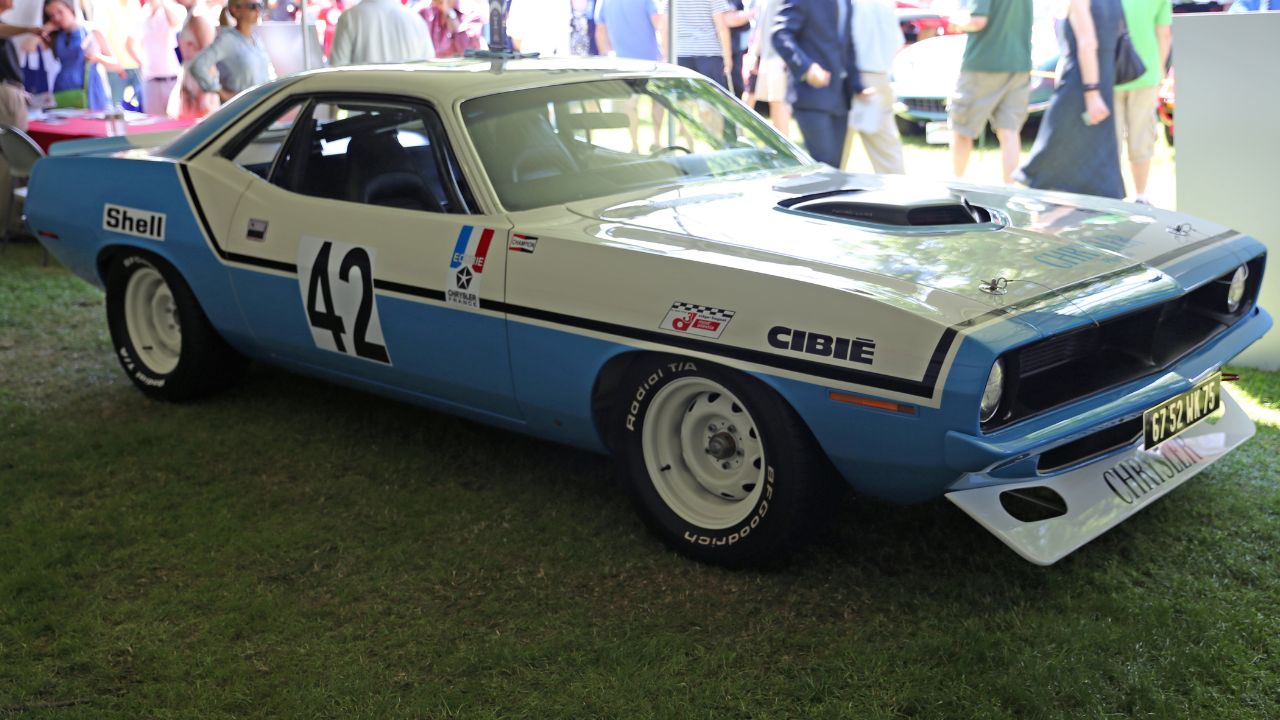
You meet a lot of legendary cars when you look back at Detroit’s glory years, but the Plymouth Hemi Cuda still hits you like a punch to the chest. You are not just looking at a fast Barracuda, you are staring at a factory street car that carried race-bred Hemi hardware and turned outrageous power into a kind of rolling rebellion.
Picture that long hood, the shaker scoop and the brutal idle of a big-block Hemi, and you are tapping into a moment when Plymouth decided to stop being polite and start scaring rivals. The result was a short-lived muscle icon that still feels wild in an era of sanitized performance.
The 426 Hemi turns a Barracuda into a brawler
If you want to understand why the Plymouth Hemi Cuda stunned Detroit, you start with the engine that made the car famous. Here you are dealing with the legendary 426 Hemi, an engine that had already terrorized drag strips before it found its way into the compact E body. The 1970 Plymouth ‘Cuda 426 HEMI is still described as one of the most feared and revered muscle cars of all time, pure Detroit thunder wrapped in aggressive sheetmetal that turned a sporty coupe into a street brawler.
Once you realize that the Cuda was essentially a Barracuda stuffed with what enthusiasts call a race Hemi, the whole car snaps into focus. Fans still celebrate the 1970 Plymouth Hemi Cuda as a legendary muscle car, praising its raw power, aggressive styling and its place as a high point of American automotive performance and design, and you feel that every time you hear someone talk about a matching-numbers 426 car. When you see those three digits, 426, stamped into the history of the Cuda, you understand why the engine, not just the body, made this Plymouth a myth.
How Plymouth sharpened the Barracuda into The Apex of Mopar Muscle
When you trace the Cuda story, you see Plymouth steadily turning the Barracuda from a sporty compact into something much more dangerous. By 1971, the Plymouth Barracuda was being remembered by enthusiasts as The Apex of Mopar Muscle, the final and most aggressive evolution of Plym’s pony car formula, and you can feel that escalation in every crease of the E body design. You are looking at a car that moved away from economy roots and leaned fully into wide stances, bold colors and shaker hoods that made no attempt to hide their intentions.
For you as a modern enthusiast, that evolution matters because it explains why the Hemi Cuda feels so focused. The Hemi Cuda, often described as the top-range Barracuda model available at the time, sat at the peak of this transformation, combining the muscular proportions of the later Barracuda with the most brutal engine in the Mopar catalog. When you compare a basic Barracuda to a fully loaded Plymouth Hemi Cuda, you are seeing the same basic shell pushed to its extreme, and that is exactly what gives the car its enduring pull.
1970: the holy-grail Hemi Cuda arrives
Drop yourself into 1970 and you are stepping into the moment the Plymouth Hemi Cuda becomes the holy grail of muscle cars. Enthusiasts still call the 1970 Plymouth HEMI ‘Cuda the holy grail of muscle cars, a machine that blended brutal power with jaw-dropping design and made rivals look tame. You are not just dealing with numbers on paper, you are dealing with a car that looked unhinged even sitting still, with that shaker poking through the hood and the promise of violence in every blip of the throttle.
Under that hood, the story gets even more serious. Collectors highlight cars like a 1970 Plymouth Hemi Cuda 426/425 HP Automatic in which carried a matching-numbers 426/425 HP Hemi V 8 engine, a combination that gave you towering torque and a reputation for shredding tires on command. When you hear owners talk about how the 1970 Plymouth Hemi Cuda captured the peak of American automotive performance and design, you understand why this specific year, this specific engine and this specific body style sit in your mind as the definitive expression of Detroit excess.
1971 Hemi Cuda: rarer, angrier and brutally fast
If the 1970 car is the icon, the 1971 Plymouth Hemi Cuda is the sharpened, limited edition that you chase in auction catalogs. Here you are looking at a standout in the world of American muscle cars, a car remembered for its combination of brute force and jaw-dropping styling that worked both on the street and the strip. When you see references to the 1971 Plymouth Hemi Cuda running hard in period and still turning heads today, you realize that Plymouth did not back off the formula even as the market started to cool.
The numbers you deal with here are not subtle. Enthusiasts point out that in 1971 the Hemi ‘Cuda was officially rated at 425 horsepower at 5,000 rpm and 490 lb ft of torque at 4,000 rpm, figures that tell you exactly why the car felt so ferocious. Auction descriptions describe Hemi cars with a Hemi V8 engine, 425 horsepower at 5000 RPM, 490 ft lbs of torque at 4000 RPM, 4 speed manual transmission and 0 to 60 MPH in 5.2 seconds, and you can imagine how that kind of performance felt on period bias ply tires. When you hear that Hemi powered Cudas were built for only two years, 1970 and 1971, and that the Street Hemi engine was described as irrationally fast, you start to appreciate just how extreme this package was for something you could register and drive to work.
Short run, long shadow: rarity, values and living with a Hemi Cuda
Part of what grabs you about the Plymouth Hemi Cuda is how quickly it came and went. You see that by 1971 sales of the broader Cuda line had dropped to only 16,492 cars, and that it was the final year for high compression powerplants before regulations and insurance pressure started to squeeze out vehicles like it. Within that shrinking market, the Hemi Cuda sat at the very top, which is why you read that Hemi powered Cudas are unsurprisingly rare and that their low production numbers reflect how few buyers were willing to pay for such an extreme package.
That scarcity is exactly why you watch modern sales so closely. When you see a 1971 Hemi Cuda described as one of just 59 4 speed cars ever produced, with that same 425 horsepower and 490 ft lbs combination, you understand why collectors chase them as blue chip assets rather than simple toys. Even a 1970 Plymouth Hemi Cuda that sold for serious money at a major auction, or a Plum Crazy purple 1970 Plymouth Hemi ‘Cuda that enthusiasts call one of the most legendary muscle cars ever to emerge from Detroi for both the street and the strip, shows you how the car has moved from dealership lot to cultural artifact. You might never park a Plymouth Hemi Cuda in your own garage, but every time you hear that deep Hemi idle or see those 426 callouts, you are reminded that Detroit once built a car so outrageous it still feels slightly illegal just to look at it.
More from Fast Lane Only