Ram’s decision to bring back V8 power in its half-ton pickups has unleashed a wave of demand that is now straining the company’s ability to build enough engines. The 5.7-liter Hemi V8 has roared back as a symbol of what truck buyers still want, and Ram is scrambling to align its factories, suppliers, and product plans with a market that is voting loudly with its orders.
Instead of a smooth transition to downsized turbocharged sixes, Ram is confronting a reality in which the Hemi is outselling its newer Hurricane engine family and forcing the brand to slow or reshuffle other projects just to keep up. I see a company caught between its long-term emissions and efficiency roadmap and a short-term surge of customers who are not ready to let go of a familiar V8.
Customer backlash forces Ram to reverse course
Ram did not plan to be here. The brand initially dropped the 5.7-liter Hemi V8 from the Ram 1500 for the 2025 model year, expecting buyers to migrate to the twin-turbo Hurricane six and other powertrains. Instead, sales fell sharply after the V8 disappeared, a slump so severe that Ram executives effectively admitted the move was a mistake and moved quickly to restore the engine to the lineup. Reporting on the 2026 Ram 1500 confirms that Ram has officially brought back the 5.7-liter Hemi V8 after CEO Tim Kuniskis acknowledged that customers had not followed the script the company had written for them.
The speed of the reversal shows how much leverage full-size truck buyers still have over product planning. Rather than quietly phasing out the Hemi, Ram watched order books and showroom traffic and then pivoted when it became clear that the Hurricane six was not filling the emotional or practical role the V8 had played. Coverage of the V8’s return notes that Ram had dropped the 5.7-liter Hemi V8 and “watched in horror as sales plummeted,” then reversed course and sent the Hemi-powered Ram 1500 back to dealers without the kind of markups that often accompany hotly anticipated performance options, a sign that the company wanted volume, not just headlines.
Hemi demand overwhelms Ram’s production plans
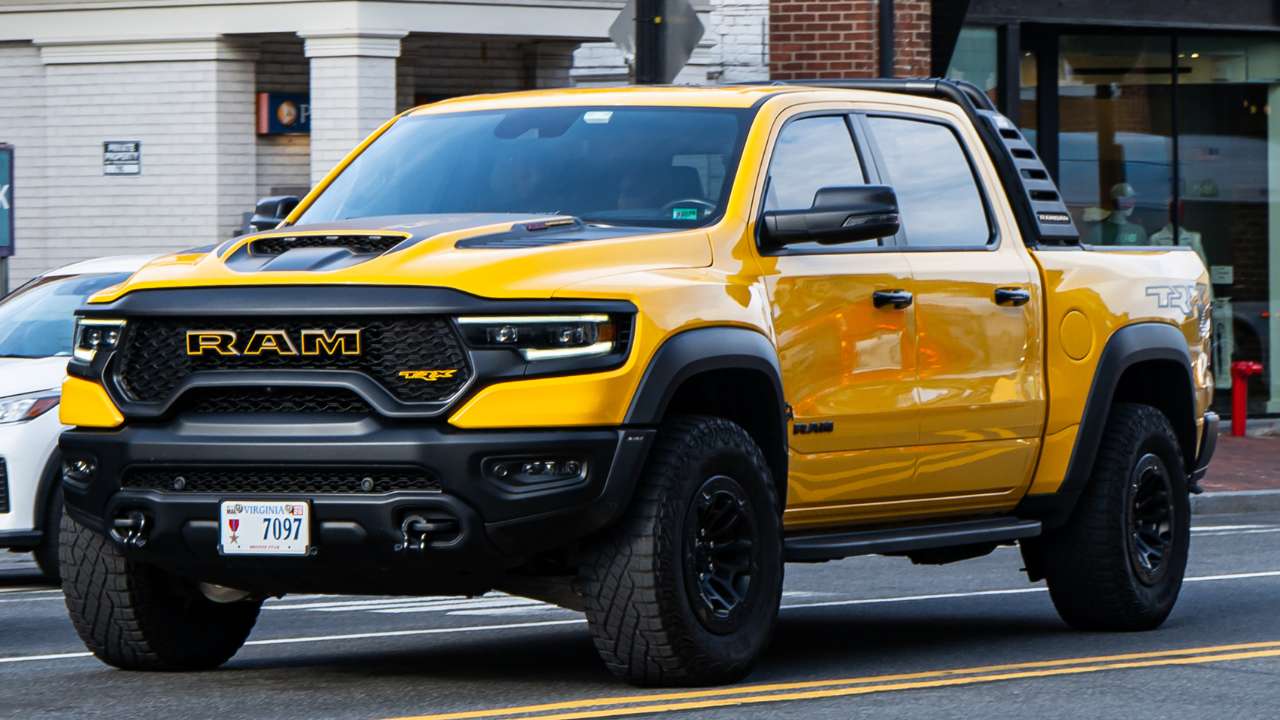
Once Ram reopened the order books, demand for Hemi trucks surged far beyond what the company had forecast. Early in the summer, Ram announced that it would be bringing back the Hemi V8 engine, and the response turned into a 24-hour ordering frenzy that quickly soaked up the initial allocation. Reporting on that launch describes how the Hemi V8 “Returns After Customer Demand Surge,” with Ram seeing orders pile up as soon as buyers had a chance to lock in V8 trucks again.
That early spike was not a one-day anomaly. Subsequent reporting describes Ram as unable to keep up with all the Hemi 1500 orders, with the company acknowledging that the V8 has effectively become a brand within a brand. One detailed account notes that “Hemi Outsells Hurricane Six Two to One,” a ratio that underlines how far actual buyer behavior has diverged from Ram’s internal expectations for its new six-cylinder family. When a legacy engine outsells its replacement two to one, the bottleneck is no longer demand, it is the physical capacity to cast blocks, machine heads, and assemble complete powertrains fast enough.
Factories scramble as Hemi crowds out other projects
Meeting this surge has required Ram and its parent company to reconfigure their manufacturing footprint. According to reporting on the powertrain restart, The Hemi V8 will be manufactured at the Dundee Engine Plant in Michigan, with insiders describing how production in Michigan is being ramped back up to feed Ram’s truck lines. That decision effectively resurrects a V8 line that had been winding down, and it comes with tradeoffs, because every hour spent building Hemi engines is an hour not spent on newer programs.
The ripple effects are already visible. Coverage of The Ram 1500 HEMI notes that the truck’s renewed popularity has generated so much demand that firing up production is pushing other projects back. The Ram 1500 HEMI has generated a lot of demand, and firing up production is delaying other initiatives as the company prioritizes getting V8 trucks out the door. I read that as a clear sign that Ram is reallocating engineering and plant resources to chase the hottest product in its portfolio, even if that means slowing the rollout of future-focused powertrains or trims that were supposed to define the next phase of the brand.
V8 loyalty reshapes Ram’s competitive strategy
The Hemi’s comeback is not just a production story, it is a competitive one. In a fiercely contested full-size truck market, Ram cannot afford to let loyalists drift to rivals that still offer burly V8s. Reporting on the V8’s return describes Very Strong Demand For V8-Powered Ram Trucks, with a Ram spokesperson saying the company is seeing “very strong” interest in these configurations. Ram now offers the V8 alongside the high-output Hurricane six, but the sales mix tilting toward the Hemi shows that, for many buyers, displacement and cylinder count still carry more weight than newer technology.
That loyalty has forced Ram to rethink how it positions its powertrains. One account of the Hemi’s reintroduction notes that the quick action to restore the 5.7-liter engine resulted in the V8 outselling the six by a considerable margin, even as Ram insists that the Hurricane lives up to its performance promises. I see a brand trying to walk a tightrope: it must keep the Hemi available for customers who equate it with capability and authenticity, while still nudging the market toward more efficient options that will be essential for meeting future regulations and corporate targets.
Ram’s long-term engine roadmap faces new uncertainty
Behind the immediate scramble to build more Hemi engines, there is a deeper strategic tension. Ram and its parent company had been steering toward a future anchored by downsized turbocharged sixes and electrified powertrains, with the Hemi V8 fading into history. The current surge in V8 orders complicates that roadmap. Reporting that “Hemi Outsells Hurricane Six Two to One” suggests that the market is not yet ready to follow Ram as quickly as planners had hoped, at least not in the high-volume heart of the Ram 1500 lineup.
At the same time, the company cannot simply abandon its newer engines. The Hurricane six is still central to Ram’s long-term plans, and coverage of the V8’s return stresses that the Hurricane lives up to its performance billing even as the Hemi wins the popularity contest. I read the present moment as a holding pattern: Ram is buying itself time by restarting Hemi production at the Dundee Engine Plant in Michigan and reshuffling projects to satisfy today’s buyers, while it works behind the scenes to refine and better market the Hurricane and other future-focused options so that, eventually, the transition away from big V8s can resume on firmer ground.