The top-selling vehicle in the United States is about to become a diplomatic tool in Tokyo, as Japanese leaders scramble to ease trade tensions with President Donald Trump. Instead of arguing over tariffs and deficits in abstract terms, they are preparing to put American metal on Japanese roads, turning pickup trucks and sedans into rolling symbols of goodwill.
At the center of this shift is a plan to bring U.S.-built models, including the Ford F-150, into a market that has long resisted American cars. I see this as less a sudden embrace of Detroit styling and more a calculated move to answer Trump’s complaints about a lopsided auto trade, using high-profile imports to show that Japan is listening.
Japan’s auto imbalance problem meets Trump’s pressure
For years, the auto relationship between the United States and Japan has been defined by a stark imbalance, with Japanese brands thriving in America while U.S. nameplates barely register in Japan. In 2024 only 16,707 American cars were imported into Japan, a figure that represented less than 1 percent of the Japanese car market and underscored how marginal U.S. brands remain there. Analysts have long pointed to factors such as vehicle size, left-hand-drive layouts, and the challenge of navigating Japan’s left-side traffic as reasons that American cars struggle to gain traction.
President Trump has seized on that imbalance as a political talking point, framing Japan’s auto surplus as proof that the trading relationship is unfair. Earlier this year, In July, President Trump announced a landmark economic and trade agreement with Japan in which Japan agreed to invest in the United States and expand purchases of American goods, including autos, as part of a broader framework agreement. That deal set the stage for more visible gestures, and I see the sudden enthusiasm for importing U.S.-built vehicles as a direct response to Trump’s insistence that Japan “buy American” to prove its goodwill.
Toyota’s U.S.-built lineup heads home
The most dramatic move so far is coming from Toyota, which is preparing to reverse the usual flow of trade by shipping American-built models into Japan. Toyota aims to begin selling three U.S.-made models in Japan from 2026, a plan that will bring the Camry sedan, the Highlander SU and the Tundra pickup into a market where they have typically been exported from Japan in the opposite direction. Company executives have framed the decision as a way to test demand for larger vehicles and highlight the appeal of its American factories, with Toyota Motor Corp positioning the move as both a commercial experiment and a political signal.
Political pressure is clearly part of the story. After Trump publicly griped about Japan’s auto surplus and the lack of U.S. vehicles on Japanese streets, Toyota confirmed that it would import three U.S.-built models to Japan by 2026, explicitly tying the decision to the need to improve trade relations and respond to criticism from Washington. The company has now officially committed to selling U.S.-built Camry, Highlander and Tundra models in Japan from next year, presenting the pickups and SUVs as proof that it is investing in North American labor and shipping while also giving Japanese consumers a taste of American-style vehicles. In my view, the timing and framing of these Toyota imports make them as much a diplomatic offering as a market test.
Ford F-150 becomes a diplomatic calling card
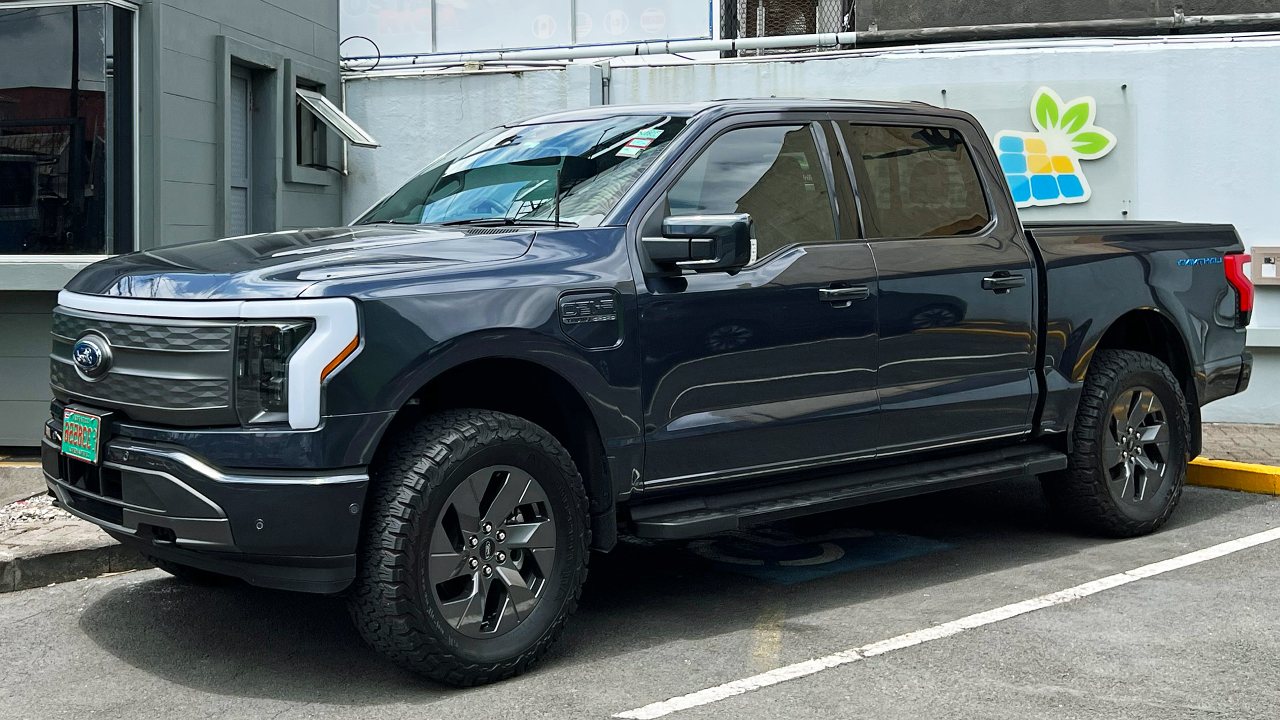
If Toyota’s move is about optics and volume, the Ford F-150 is about symbolism. The F-150 is the top-selling vehicle in the United States, and Japanese officials have zeroed in on it as a way to connect personally with Trump and address his complaints about the auto trade. For Japan’s new leader, the key to connecting with Trump could be a Ford F-150 truck, a recognition that the president’s affinity for American pickups can be leveraged in high-level diplomacy and that showcasing the truck in Tokyo and other Japanese cities would send a highly visible message. I see this as a savvy attempt to translate abstract trade concessions into something Trump can literally see and touch, using a Ford F-150 as a rolling prop in the relationship.
Behind the scenes, the Japanese government is considering concrete purchases that go beyond photo opportunities. Officials are weighing the purchase of 100 Ford F-150 pickup trucks for government use, particularly for the transport ministry to inspect roads and infrastructure, a move that would put a fleet of American trucks into daily service. Reports indicate that Japan’s government is considering the purchase of 100 Ford F-150 pickup trucks ahead of President Donald Trump’s late visit, explicitly linking the order to the desire to ease trade tensions and demonstrate responsiveness to U.S. concerns. If The Japanese authorities follow through, the F-150 would shift from a symbol to a practical tool of state, with 100 trucks on Japanese roads serving as a daily reminder of the new political calculus.
Other Japanese automakers join the U.S.-import experiment
Toyota is not alone in rethinking the direction of its trans-Pacific supply chains. Other Japanese automakers are reportedly exploring similar strategies, considering whether to import U.S.-built models into Japan as a way to showcase their American manufacturing footprint. Political pressure is reportedly driving this policy change, with companies keenly aware that Trump has singled out the auto sector as a test of Japan’s commitment to fairer trade. The idea is backed by Japan’s Ministry of Economy, Trade and Industry and has gained currency among other Japanese automakers, which are weighing exports of U.S.-built models such as the Murano and Pathfinder to Japan to demonstrate that the flow of vehicles can move in both directions. I read this as a coordinated response, encouraged by the Ministry of Economy, Trade and Industry and designed to defuse criticism before it hardens into new trade barriers.
At the same time, Japanese brands are trying to turn a political obligation into a marketing opportunity. By importing U.S.-built vehicles, they can highlight the scale of their investment in American plants and workers, pointing to billions of dollars spent on U.S. manufacturing over the past five years as evidence that they are already major contributors to the American economy. Toyota has emphasized that its decision to sell three U.S.-made models in Japan reflects both political realities and a desire to showcase the unique appeal of vehicles like the Tundra, which are deeply associated with American culture. Other Japanese companies are watching closely to see whether these reimports gain traction with consumers or remain primarily a diplomatic gesture.
Can American vehicles really win over Japanese drivers?
Even as political incentives push Japan to import more U.S.-built vehicles, the structural challenges that have long limited American brands in Japan have not disappeared. The larger models favored by American consumers may prove difficult to operate on narrower Japanese roads, and parking spaces in dense cities are often too tight for full-size pickups and SUVs. That is one reason why, despite decades of effort, American vehicles only account for a tiny fraction of the Japanese market, with just 16,707 American cars imported in 2024. The F-150 and Tundra may impress as diplomatic symbols, but I am skeptical that they will suddenly become mainstream choices for everyday drivers navigating crowded Japanese streets, a concern even Japanese analysts have raised when discussing American and Japanese preferences.
There are, however, pockets of success that show how American brands can adapt. Jeep And Japan Go Way Back, and Jeep has quietly become the top-selling American car brand in Japan by leaning into its image as a compact, rugged import that fits better into Japanese urban life than a full-size pickup. According to a report published on NHK World Japan, Jeep ranks as the seventh most popular import brand in the country, even though American vehicles only account for a sliver of overall sales. That suggests that with the right sizing, branding, and dealer support, U.S. nameplates can find a niche. The question is whether high-profile imports like the Ford F-150 and the Highlander and Tundra can follow a similar path, or whether they will remain primarily tools of World Japan diplomacy rather than genuine market contenders.