
Tesla has drawn a stark new line between its past and its future. After years of defining the modern electric vehicle market, the company is now telling investors that humanoid robots and autonomous taxis will matter more to its destiny than sedans and SUVs. The shift is not a distant thought experiment but a capital plan, a factory retooling, and a product roadmap that together signal that the robot era has overtaken the EV era inside Tesla’s own hierarchy of priorities.
The pivot comes at a moment when Tesla’s growth story in cars is under pressure and its profits have slipped from earlier highs. Rather than retreat, Elon Musk is using that stress as justification to double down on artificial intelligence, robotaxis, and a humanoid machine called Optimus that he has described as the company’s most important product.
From EV champion to “autonomy first” company
Tesla is openly recasting itself from an electric car manufacturer into what executives describe as an AI and robotics leader. On the latest earnings call, Elon Musk urged investors to focus less on vehicle deliveries and more on what he framed as a “bright new artificial intelligence future,” arguing that the company’s long term value will be driven by software, robotaxis, and humanoid robots rather than traditional car sales. Internal messaging now emphasizes a Tesla “Transition From EV Maker to AI and Robotics Leader,” underscoring that autonomy and robotics are no longer side projects but the core thesis for the next decade.
This rhetorical shift is backed by product plans. Musk and Tesla executives have highlighted a coming fleet of autonomous “Cybercabs,” with The Tesla CEO predicting that over time the company will build far more of these robotaxis than all other vehicles combined. In parallel, Tesla is accelerating development of Optimus, a bipedal robot that Musk has repeatedly called the “biggest product in history,” and which the company positions as a general purpose worker for factories, homes, and even medical settings. Together, Cybercabs and Optimus form the backbone of a strategy that treats autonomy as the primary business, with EV hardware increasingly cast as a platform for AI rather than an end in itself.
Financial pressure is pushing Tesla toward robots
The timing of Tesla’s pivot is not accidental. The company has just reported its first annual revenue decline, with sales down 3% to $94.8B and EV deliveries falling 8.6%, a reversal that undercuts the narrative of unbroken growth that once surrounded the brand. Revenue is described as “Down 3% year over year,” and Tesla has also logged its smallest annual profit since the pandemic, a sign that price cuts and intensifying competition are squeezing margins even as the broader EV market becomes more crowded. These figures have forced investors to reassess how much of Tesla’s valuation can still be justified by car sales alone.
Despite the top line pressure, Tesla’s latest quarter showed that it can still generate healthy profitability, with a Q4 gross margin of 20.1% compared with 17.1% estimated. That margin beat helped lift the stock in premarket trading and gave Musk room to argue that the company can fund a new wave of capital spending. He has outlined a roughly $20 billion plan for new projects, a scale of investment that analysts say confirms that “the Tesla of yesterday is gone” and that the company is prepared to sacrifice near term earnings to build out its AI and robotics ambitions.
Ending Model S and Model X to make room for Optimus
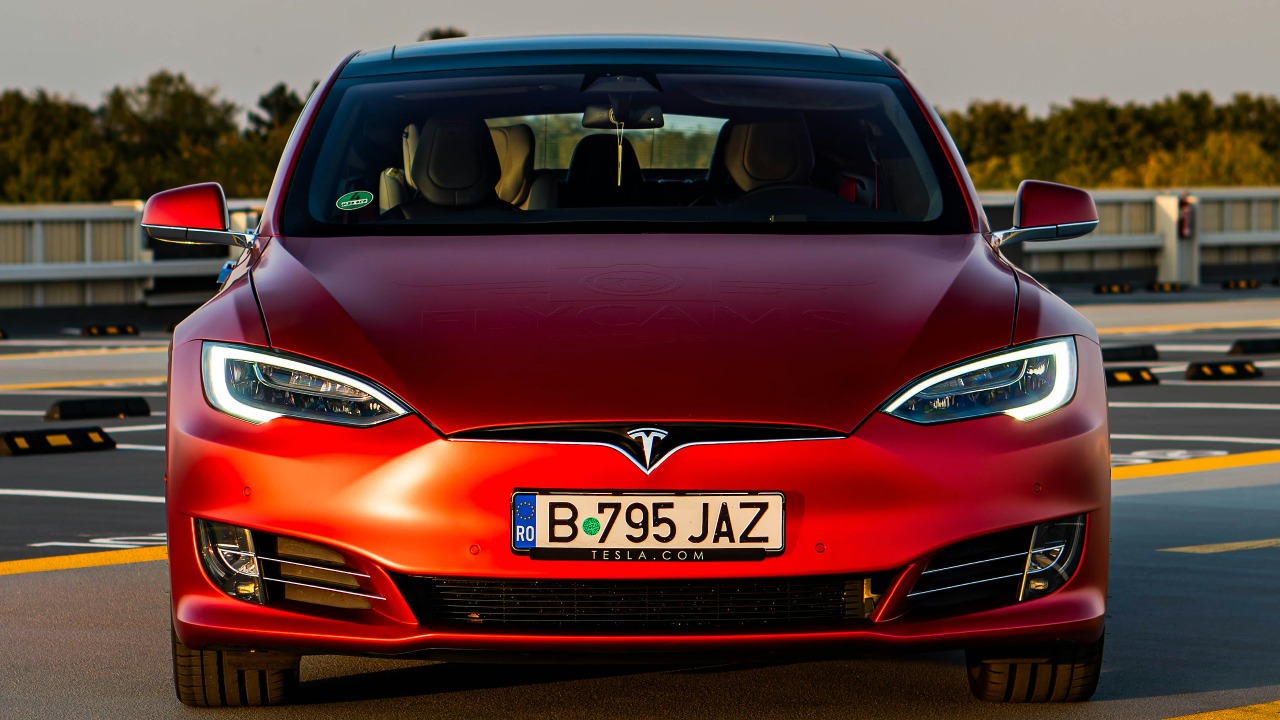
Nothing illustrates the changing hierarchy inside Tesla more clearly than the decision to discontinue the Model S and Model X. Tesla CEO Elon Musk told investors on a Jan earnings call that the company will end production of the two luxury flagships, a move later described as the “end of an era” for the brand. Tesla will discontinue its Model S and Model X in order to free capacity and capital for what Musk describes as the company’s future in robotaxis and Optimus robots, effectively trading its earliest halo cars for a bet on humanoid machines.
The practical impact is most visible in Fremont, California. Musk has said that the lines that were producing Model S and Model X in Fremont will be converted into a factory for building Optimus robots, turning one of Tesla’s original car plants into a robotics hub. Tesla and Musk are looking ahead to an Optimus Gen 3 model and have discussed ambitions to scale to as many as 1 million robots per year once the platform matures. That retooling choice sends a clear message: when forced to choose between more premium EVs and a new robotics line, Tesla chose the robots.
Inside Musk’s humanoid robot and robotaxi vision
Elon Musk has sketched an expansive vision for Optimus that goes far beyond a factory assistant. He has said that Tesla’s Optimus humanoid robot will become so impressive and capable that it will transform both industrial work and everyday life, handling tasks from household chores to surgery. In social media posts and investor presentations, Musk has called humanoid robots the “biggest product in history,” arguing that a general purpose android could eventually be more valuable than any car platform. Tesla has already told investors it is targeting mass production of Optimus by 2027, with plans to make up to 1 million Optimus robots per year once the program is fully ramped.
The robotaxi side of the plan is equally sweeping. Musk and Tesla executives have described a future in which fleets of Cybercabs operate as fully autonomous taxis, generating recurring software and service revenue rather than one time vehicle sales. The Tesla CEO has said that over time he expects to make far more Cybercabs than all other vehicles combined, and Musk has been urging investors to value the company as a platform for robotaxis and robots instead of a conventional automaker. In his telling, Tesla’s future will not depend on cars, and the company is preparing to spend heavily on AI training, compute, and new factories to make that statement real.
Risks, rewards, and what the pivot means for Tesla’s identity
For all its ambition, Tesla’s shift into robots and autonomy carries significant risk. The company is moving aggressively into markets that are still largely unproven, where technical hurdles, regulation, and public acceptance remain uncertain. Even Musk has acknowledged that the timelines he describes for full autonomy and mass market humanoid robots are highly uncertain, and external analysts note that Tesla is making this bet at a time when its core EV business is facing its first sustained slowdown. If robotaxis and Optimus fail to scale as envisioned, Tesla could find itself having sacrificed profitable car lines and billions in capital for products that arrive later and earn less than promised.
Yet the potential rewards are equally large, which is why investors and critics alike are treating this as a defining moment for the company. Tesla has made it evident that it is no longer simply an automotive company, but a firm that sees itself at the intersection of AI, robotics, and transportation services. Reuters has reported that Tesla is shifting its focus to artificial intelligence and humanoid robots known as Optimus, while internal messaging frames the change as a Bold Shift Toward Autonomy. If Musk is right that taxis and androids will succeed where car sales are stalling, Tesla could emerge as the dominant platform for physical AI in the real world. If he is wrong, the robot era he has declared more important than the EV era may be remembered instead as the moment Tesla walked away from the business that made it a household name.
More from Fast Lane Only

Leave a Reply