
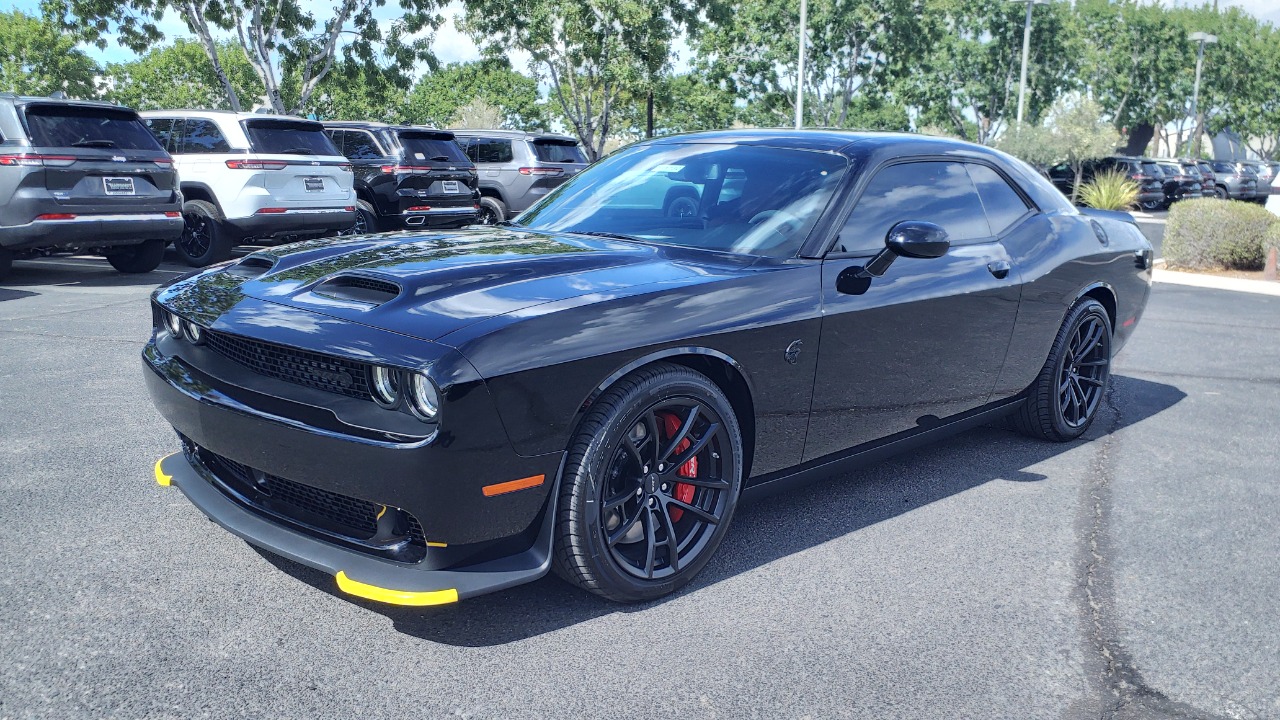
The Dodge Challenger SRT Hellcat is not a car that politely asks for traction. It overwhelms it, converts it into smoke, and sends the bill straight to your tire budget. The result is a muscle coupe that can feel as if it was engineered less to preserve rubber and more to turn every set of rear tires into a consumable performance part.
That is the bargain at the heart of this car: staggering power, relentless drama, and a constant negotiation with how much grip you can afford. The Hellcat Challenger does not just wear out tires, it exposes every weakness in your tire choice, your driving habits, and even your warranty expectations.
The experiment that turned into a tire-shredding icon
The modern Hellcat story starts with an experiment that was never supposed to be mainstream. What began as a limited, almost outrageous idea around the Challenger and Charger platforms evolved into a full production phenomenon, with the Challenger and Charger Hellcats proving that there was a deep appetite for supercharged V8 excess. Originally, the idea was simply to see how far the platform could be pushed, but the Charger Hellcats and their two-door sibling quickly became poster cars for fans to admire and salivate over, precisely because they made so much power that traction became a secondary concern.
That experiment matured into a production Hellcat that still feels unruly in the best way. Test drives of the Challenger describe a car that is packed with technology yet remains defined by its supercharged V8 personality, with the Hellcat still so much fun to drive precisely because it is always flirting with the limits of grip. That balance between modern electronics and old-school tire-roasting power is what turned the Hellcat from a one-off experiment into a lasting fixture of American performance culture.
Why Hellcat power devours rubber
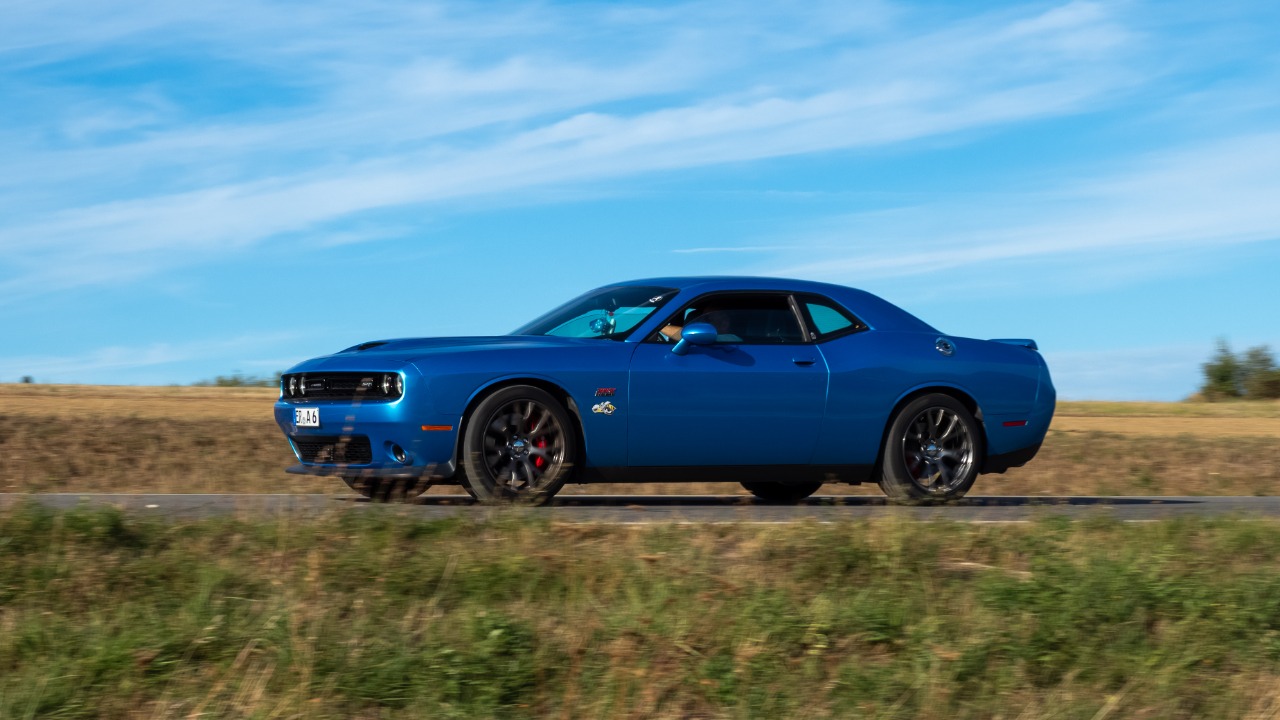
Once you understand the Hellcat’s mission, the tire carnage stops being a surprise and starts looking like a feature. Owners openly acknowledge that with a Hellcat you will go through tires faster than with a milder setup like a Scat Pack, and they point to the sheer amount of unusable power that simply overwhelms street rubber when traction control is relaxed. One driver summed it up bluntly in a discussion of tire life and recommended brands, noting that with a Hellcat you will burn through rubber quickly, but it is all driving habits, a reminder that the car’s output magnifies every throttle stab and every launch, as seen in candid comments on tire life expectancy.
The numbers behind that experience are not subtle. The Hellcat Redeye variant pushes its supercharged V8 to a quoted 797 horsepower, a figure that turns even wide performance tires into a consumable line item. In one clip shared in Nov, the Hellcat Redeye is described with that 797 output and framed as the meanest, nastiest version of the breed, a car that simply cannot be driven hard without accepting that the rear tires are sacrificial, as highlighted in a Hellcat Redeye reel. When that kind of power meets cold pavement or an enthusiastic right foot, the result is not just acceleration, it is rubber left behind on the asphalt.
From $220-a-piece to “serious issue with Tires”
The financial side of that drama is as real as the smoke. Performance rubber for a big coupe is not cheap, and the Hellcat’s appetite for it can feel relentless. One detailed comparison of Dodge’s supercharged lineup notes that if you just want a motor that will roast $220-a-piece tires, then you want a Hellcat, contrasting it with the more drag-focused Demon. That $220 figure, repeated as $220-a-piece, is not just a throwaway number, it is a reminder that every smoky launch has a line item attached to it.
Social media has turned that cost into a running joke and a badge of honor. In one clip captioned “This hellcat has a serious issue with Tires,” a Hellcat driver is shown annihilating rubber to the delight of viewers, with the post drawing 95 likes and a nod to the car’s ongoing war with its own Tires. That reel, shared in Mar and tagged with street culture references, captures how owners lean into the absurdity of a car that seems to exist to turn rear tires into content, as seen in the 95 likes on that burnout-heavy post.
Choosing the right rubber for a car that hates tires
For all the jokes, Hellcat owners still have to pick actual tires, and that decision shapes how survivable the car is on the street. Tire specialists frame the choice around how you use the car, noting that Dodge Challenger tires range in size and performance level depending on whether you want all-season civility or maximum grip. Guides that answer What are the best tires for my Dodge Challenger emphasize that the right Dodge Challenger Tire depends on how much wet-weather security you want versus how much you are willing to trade for dry traction, and they invite drivers to Shop Online Tire Deals tailored to the exact Challenger configuration they own, as laid out in a detailed Dodge Challenger Tire fitment guide.
Even if you cross-shop with the related Charger platform, the logic is similar. Performance-focused recommendations for that sedan point drivers who are Looking for pedal-to-the-metal power toward options like the Toyo Extensa HP II, a tire pitched as a way to keep up with the car’s acceleration while still being livable day to day. That same mindset applies when you are speccing rubber for a Hellcat Challenger, where a tire like the Toyo Extensa HP II is held up as an example of how to balance grip, longevity, and cost for a high-output Mopar, as seen in a Charger-specific Toyo Extensa HP II recommendation.
Warranty fine print and the reality of Hellcat driving
Even before the first burnout, the Hellcat’s relationship with tires is shaped by warranty language that was written for more ordinary driving. Dealers explain that when you purchase a new vehicle, the tires are frequently covered under a specific Dodge Challenger Tire Warranty, but that coverage is limited by what actually damages the rubber. Exclusions for road hazards, improper inflation, and aggressive driving are common, and service departments spell out What damages tires on my car and how to extend the life of your tires with regular rotation and alignment checks, as outlined in a Dodge Challenger Tire Warranty overview.
For a Hellcat owner, that means the most entertaining use of the car is often the least defensible under warranty. Hard launches, smoky burnouts, and repeated high-speed pulls are exactly the behaviors that shorten tire life and fall outside normal wear. The gap between how the car is marketed and how the warranty is written leaves drivers in a gray area where the fun is effectively self-funded, and the only real protection is a disciplined approach to tire care that runs counter to the car’s personality.
Chasing traction: from Street RS to drag-strip setups
Because the Hellcat’s stock setup can feel traction-limited, owners have turned tire choice into a tuning tool. Drag racers in particular experiment with wheel and tire combinations that trade daily comfort for grip, moving to smaller-diameter wheels and specialized compounds. In one widely shared video, a Hellcat owner urges others to stop racing immediately until they address traction, explaining that changing to different Wheels and pairing them with Street RS style drag radials or similar compounds gives a little bit more traction compared with the factory setup, even if it is not as extreme as a full 17inch drag package, as discussed in a Dec clip aimed squarely at Hellcat racers.
Those changes do not just improve quarter-mile times, they reshape how the car behaves on the street. A Hellcat on sticky Street RS type rubber hooks harder, breaks loose more predictably, and lets drivers use more of the engine’s power without instantly vaporizing the rear tires. The tradeoff is that such setups often wear quickly and can be noisy or less effective in the rain, reinforcing the idea that every step toward more traction is also a step toward higher operating costs and narrower usability.
Living with a car that treats tires as fuel
At its core, the Hellcat Challenger is a study in excess, and that excess is written most clearly in rubber. Still, the Challenger Hellcat remains compelling because it pairs that tire-shredding personality with real usability and technology, making it possible to commute in a car that can also annihilate a set of rear tires on command. Enthusiasts who accept that bargain treat tires as a recurring performance expense, not a one-time purchase, and they budget accordingly.
For those who want the spectacle without quite as much sacrifice, there are alternatives like the Demon that shift the focus toward actual performance on the street or strip rather than constant tire roasting. Yet even there, the Hellcat stands apart as the car you choose if you just want a motor that will roast $220 rubber and make you laugh at your own tire budget. In that sense, the Hellcat Challenger does exactly what it promises: it turns every drive into a negotiation between horsepower, traction, and how much you are willing to spend to keep the rear tires spinning.



Leave a Reply