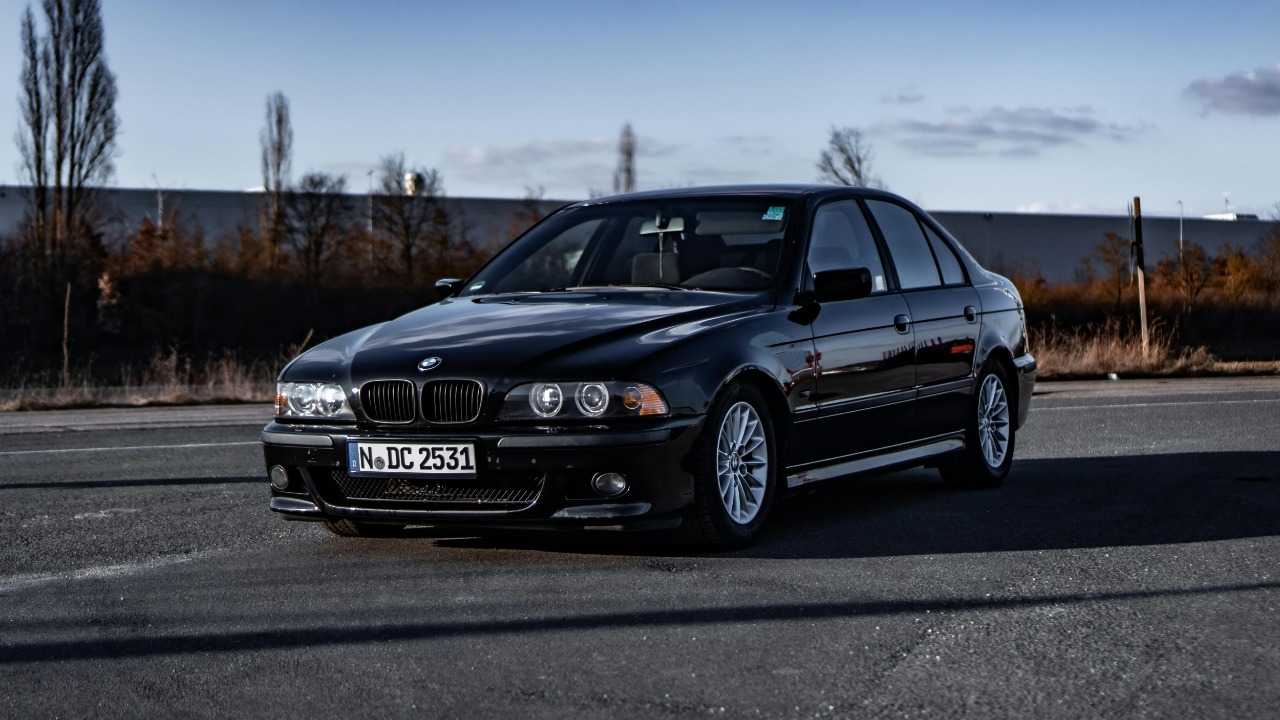
The BMW E39 M5 arrived at the end of the 1990s as a paradox on four wheels, a car that looked like a well-tailored business suit yet moved with the lethal intent of a supercar. It did not shout about its capabilities, it simply combined a discreet body, a hand-built V8, and a manual gearbox into a sedan that could humble almost anything on the road. That quiet duality is how it evolved into what I see as the archetypal gentleman-assassin sedan, a car that still feels unnervingly capable even in an era of 600 horsepower four-doors.
To understand why this particular M5 still looms so large, you have to look beyond nostalgia and focus on what it actually did differently. The E39 fused understated design, serious engineering, and a very specific driving character that modern performance sedans rarely match, and it did so while remaining practical enough to commute, carry a family, or cross a continent without drama.
The moment the E39 M5 rewrote the super-sedan script
When the BMW E39 M5 debuted in 1998, it immediately reset expectations for what a four-door could be by becoming the fastest 4‑door production sedan that money could buy, with its 4.9 liter V8 and a top speed quoted at 186 mph once derestricted, a combination that turned a conservative executive car into a genuine high speed weapon on the autobahn, as highlighted in period coverage of its BMW M5 (E39) debut. That performance mattered because it did not come wrapped in wings or flares, it came in a body that still looked like a senior manager’s company car, which only sharpened the sense that this was a sleeper with serious intent. In an era when many fast sedans still leaned on turbocharged sixes or big, lazy V8s, the E39’s specific blend of revs, response, and speed felt like something closer to a supercar in disguise.
Contemporary comparisons made clear that if you wanted anything approaching this level of sport sedan prowess at the turn of the millennium, you were either looking at very expensive exotica like a Bentl Arnage or accepting major compromises in comfort and refinement, which is why reviewers framed the 2000 BMW M5 as a kind of peak in the segment when it initially hit the streets, a judgment that still echoes in modern retrospectives on the 2000 BMW M5. That context matters because it shows the E39 did not just join an existing club of fast sedans, it effectively defined the modern template: a car that could run with supercars on a back road, then settle down and behave like a luxury cruiser on the highway.
The engineering that made brutality feel civilized
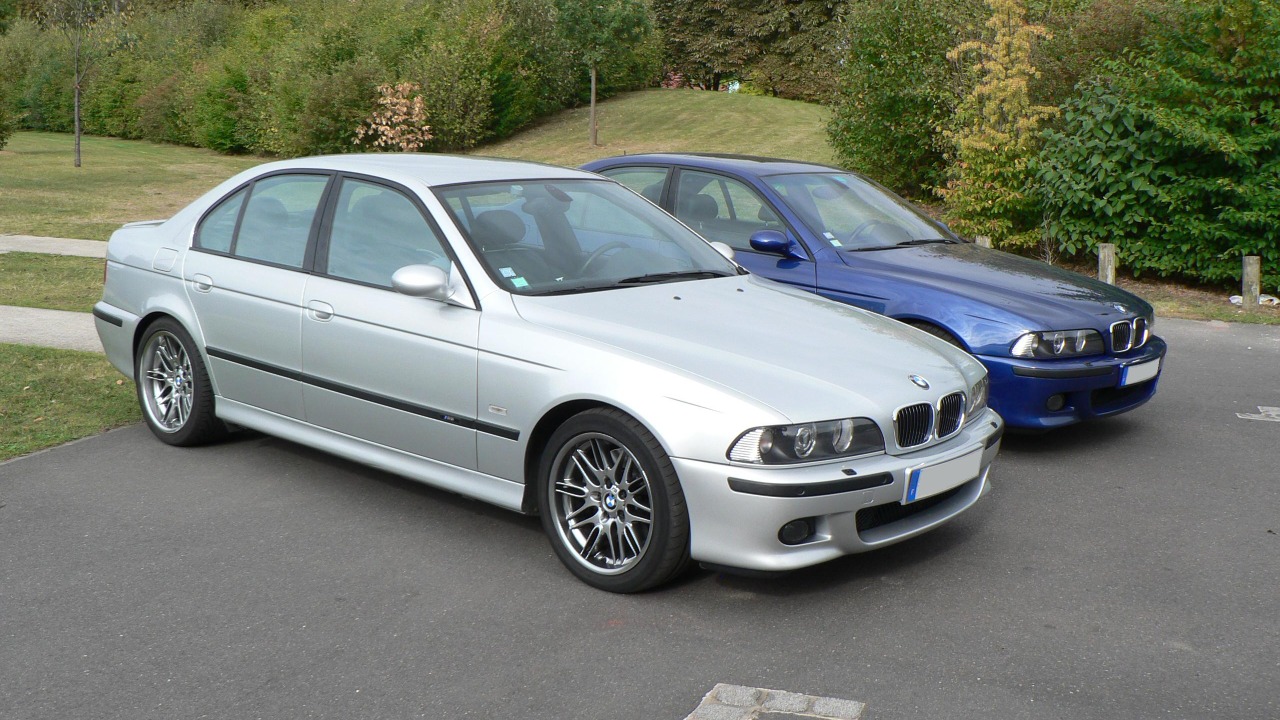
The E39 M5’s reputation as a gentleman-assassin rests heavily on how its hardware delivered speed without drama, starting with the S62 V8 that was both BMW M division’s first street-going V8 and a unit designed to be paired exclusively with a six speed transmission, meaning three pedals were the only option if you wanted an M5, a pairing that gave the car a uniquely analog, deliberate feel according to detailed driving impressions of the BMW M division’s first V8 sedan. That engine was not just about peak numbers, it was about the way it built power smoothly and predictably, which let the driver meter out serious pace with a precision that suited both spirited driving and long distance cruising. The manual gearbox reinforced that sense of control, turning every overtake into a conscious decision rather than a flick of a paddle.
Underneath, most chassis components were replaced with aluminum, making the M5 both lighter and stiffer than the regular 5 Series, while stronger anti-roll bars and other suspension tweaks helped it corner with a balance that enthusiasts still regard as a benchmark, a combination that detailed retrospectives on the car’s chassis describe as a key reason it is regarded so highly by enthusiasts who study how most chassis components were reworked. That engineering focus meant the E39 did not just feel fast in a straight line, it felt composed and confidence inspiring when pushed hard, which is essential to the assassin metaphor: the car delivered its performance with calm precision rather than theatrics, letting the driver exploit its capabilities without feeling like they were wrestling a barely contained muscle car.
Design that whispered while the V8 shouted
Visually, the E39 M5 leaned into understatement, with a design marked by subtle M-specific enhancements, quad exhaust pipes, and distinctive alloy wheels that signaled intent only to those who knew what to look for, while the interior combined a sophisticated layout with just enough sportiness to hint at its capabilities, a balance that modern auction listings still highlight when describing how Its BMW E39 M5 design blended comfort and aggression. That restraint is central to its appeal, because it allowed owners to fly under the radar in a way that more extroverted rivals could not, turning the car into a kind of insider’s choice rather than a rolling status symbol. The quad pipes and slightly deeper front bumper were tells, but they were never loud enough to draw unwanted attention in a corporate parking lot or a quiet neighborhood.
Even today, well preserved examples that remain original and unmodified, with relatively low mileage for their age, are praised for how they blend impressive performance with everyday usability, making them both collectible and a fine choice for weekend blasts, a dual role that recent auction descriptions of a 1999 BMW (E39) M5 emphasize. That ongoing desirability underscores how the design has aged: it still looks like a tasteful executive sedan first and a performance car second, which is exactly what many buyers of fast four-doors quietly want.
The driving character that turned owners into true believers
What really cements the E39 M5’s legend is how it feels from behind the wheel, where its perfect balance of power, handling, and comfort creates a sense of rightness that owners struggle to find in newer machinery, a trait that enthusiast breakdowns of what makes the E39 M5 unique repeatedly highlight. The steering is weighty and communicative, the chassis is playful without being nervous, and the ride quality remains supple enough for daily use, which means the car encourages you to drive it properly rather than simply rely on electronics to tidy up mistakes. That analog, feedback-rich experience is increasingly rare in a world of drive-by-wire everything, and it is a big part of why the car’s reputation has only grown.
Modern commentators often compare the E39 to later M5 generations and find that while newer cars like the F10 M5 or smaller M models such as the M135 and M235 are objectively quicker, they lack some of the tactile connection that made this car special, a point that comes through clearly in long form video essays that argue why the BMW M5 E39 still stands out. That contrast reinforces the idea that the E39’s assassin quality is not just about numbers, it is about the way it invites the driver into the process, demanding skill but rewarding it with a sense of partnership that many modern, heavily assisted performance sedans struggle to replicate.
How the E39 M5 quietly conquered America
In the United States, the E39 M5 did something even more significant than just impress enthusiasts, it helped rescue BMW M’s image by becoming the thinking man’s muscle car, a stylish rebel that could storm the power-top of the Autobahn yet still feel like a bit of leather-clad mischief on American freeways, a transformation that detailed histories of how the E39 M5 V8 saved BMW M in the US describe vividly. That positioning mattered in a market that had long favored big displacement domestic sedans, because it allowed BMW to offer something that felt familiar in its power delivery yet distinctly European in its refinement and chassis tuning. The car’s ability to cruise quietly one moment and erupt into a snarling V8 the next made it an easy sell to drivers who wanted both comfort and drama.
Crucially, it was a sedan that did not feel like one from behind the wheel, with its numbers only telling part of the story and the real magic coming from how those figures came together in a package that encouraged owners to learn how to really drive it, a point that recent analyses of how the Sedan That Didn’t Feel Like One What made the E39 M5 special emphasize. That combination of accessibility and depth helped the car build a loyal following in the US without massive marketing campaigns, turning it into a word-of-mouth success that still shapes how American buyers think about fast BMW sedans today.
The E39’s shadow over its siblings and successors
The E39 M5’s influence is so strong that it even colors how enthusiasts view its non-M siblings, particularly the E39 540i V8, which shares much of the same basic architecture and quietly benefits from the halo effect while often flying under the radar in the used market, a pattern that broader discussions of future classics note when pointing out how this is ably demonstrated in BMWs where anything without an M badge tends to go under the radar, especially cars like the BMW E39 540i. That dynamic underscores how the M5 set a benchmark for the entire platform, making even the lesser models feel more special by association. It also shows how the idea of a discreet, V8 powered executive sedan with real dynamic ability has become a kind of cult template for enthusiasts hunting value.
At the same time, the E39’s legend has arguably made life harder for its successors, which are constantly measured against a car that many owners consider the greatest all rounder BMW has ever built. Later M5s have chased bigger power figures, more complex electronics, and increasingly extroverted styling, but they often struggle to match the simple clarity of purpose that defined the E39, where every major decision, from the manual-only gearbox to the aluminum intensive chassis, served the goal of making a fast sedan that felt natural and unforced. That is why, even as the market fills with ever quicker four-doors, the E39 M5 still stands apart as the archetype of the refined assassin, a car that hides its intent behind a calm face and then delivers when it matters.
Why the gentleman-assassin formula still resonates
Looking back now, the E39 M5’s enduring appeal comes down to how completely it nailed the balance between civility and menace, a balance that modern performance sedans often overshoot in one direction or the other. It was fast enough to earn its place among the quickest cars of its era, yet comfortable and understated enough to live with every day, which is why so many owners still use them as both cherished collectibles and regular drivers. That duality is not an accident, it is the result of deliberate engineering and design choices that prioritized feel and subtlety over raw specification sheet dominance.
Even as the broader E39 range gains recognition, with non-M models quietly appreciated by those who understand how well the platform ages, the M5 remains the definitive expression of the idea, the car that distilled BMW’s late 1990s philosophy into a single, coherent package. In a landscape where many modern cars chase attention with aggressive styling and digital theatrics, the E39 M5’s quiet confidence feels almost radical, a reminder that the most compelling performance cars do not need to shout. They just need to deliver, precisely and relentlessly, like a gentleman who happens to be very, very good at getting away.