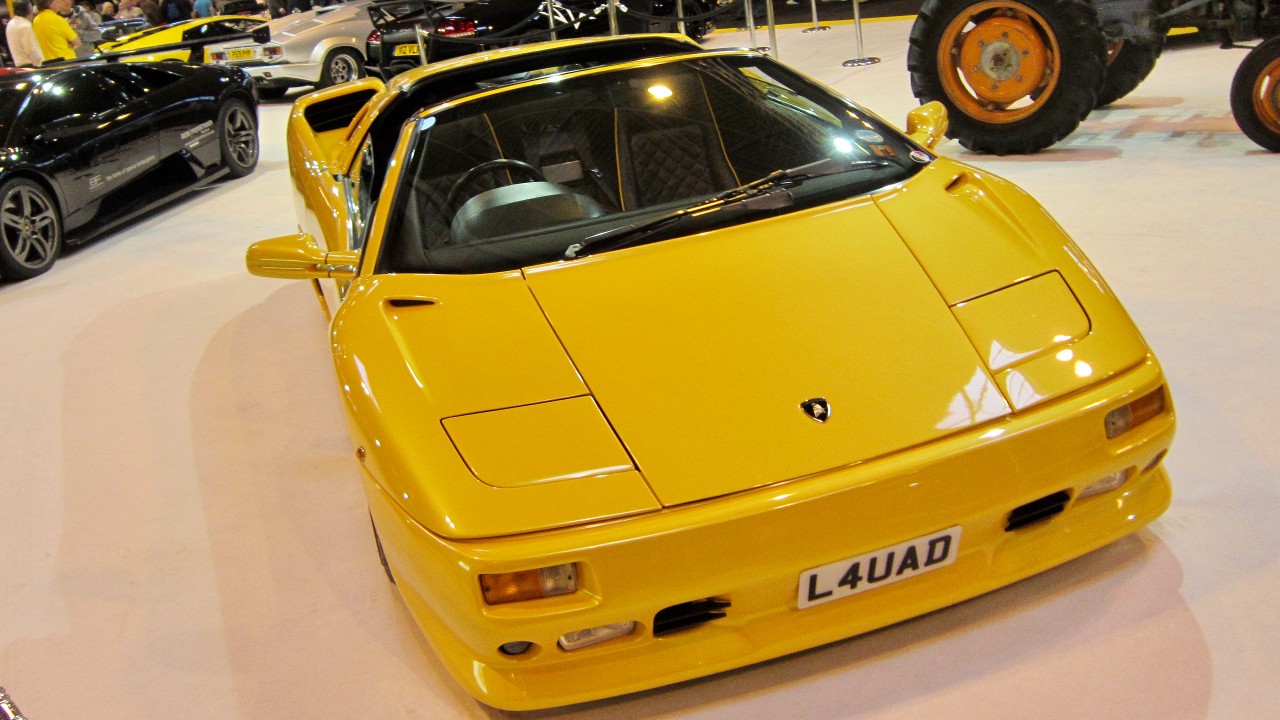
The Lamborghini Diablo has long been shorthand for excess, a wedge of 1990s bravado that looked more like a teenager’s sketch than a rational product plan. Yet the same qualities that once made it an outrageous punchline are now driving a decisive reappraisal, with collectors treating the car as a serious, investment grade asset rather than a guilty pleasure. I see that shift as a story about changing tastes, maturing nostalgia and a market that has finally caught up with what the Diablo always was: a wild but deeply significant supercar.
From poster fantasy to serious asset
For my generation, Diablos were the archetypal bedroom wall car, and that cultural imprint never really faded. The car’s scissor doors, vast rear haunches and V12 soundtrack ensured it stayed in the imagination even as newer, more polished Lambos arrived. Reporting on the model’s market history notes that Diablos never truly became cheap, but that 15 years ago there was still a meaningful gap between poster status and blue chip pricing, a gap that has now largely closed as values have moved from pricey to genuinely expensive.
Part of the appeal is that the Diablo represents the last Lamborghini built before the fully “German-ized” era of cleaner, more efficient Lambos of the modern age. It sits at the end of a lineage that prized drama over usability, with a cabin that feels hand built and a driving experience that is more analog than anything that followed. That sense of finality, of a door closing on a certain kind of supercar, has become a powerful narrative for collectors who increasingly see the Diablo as a historical marker rather than a mere curiosity.
Why the market finally woke up
What has changed most in recent years is not the car itself but the way sophisticated buyers interpret it. Values for 1990s supercars have shifted from what one analysis describes as nostalgia pricing into a more rigorous assessment of long term significance, and the Diablo sits at the center of that reassessment. Auction data from the end of 2024 showed that the Diablo and the wider cohort of 1990s investment grade supercars experienced broad appreciation, a pattern that suggests structural demand rather than a passing fad.
Specialists who track the model professionally reinforce that picture. Alex Ahlgrim, an appraiser, broker and exotic car expert who monitors the Diablo market for the Hagerty Price Guide, has described a buyer base that is less interested in lap times and more focused on the car’s presence and rarity. That shift dovetails with a broader move among collectors toward analog, characterful machines that feel distinct from today’s highly optimized performance cars. In that context, the Diablo’s once mocked impracticality now reads as authenticity, a reminder of a time when a flagship supercar could still feel slightly unhinged.
Numbers that turned a joke into a blue-chip
The most compelling evidence that the Diablo has crossed into blue chip territory lies in the hard data. According to Bring A Trailer, the average transaction price on their platform for a Lamborghini Diablo has increased by 136% over the past few years, a figure that would be remarkable in any asset class, let alone one that was once treated as a risky indulgence. Separate market tracking under the banner “Data Shows Diablo Prices Are on Fire!” puts the 2024 Average Price at $362,800 and the Max Price at $543,000, figures that align with the surge seen in individual online sales.
Dedicated valuation research focused on the Diablo adds further detail. One study of recent auction results highlights a highest recorded sale of $747,500 for an exceptional example, underlining how the very best cars are now treated as rolling art rather than mere transportation. Broader Auction data from the end of 2024 showed remarkable price appreciation across all Diablo variants, confirming that the rising tide is not limited to a single trim or one off special. When an entire model range moves in concert, it is difficult to argue that the market still views it as a speculative sideshow.
The rare variants leading the charge
Within that broader upswing, the rarest Diablos are setting the tone for the rest of the market. Hawken notes that the Diablo 6.0 VT SE, limited to just 42 examples, is usually priced at around £325,000, approximately $442,000, even before the most recent wave of appreciation. That car’s combination of low production, refined engineering and end of line status has made it a bellwether for where top tier Diablos can go, and its trajectory is watched closely by serious collectors.
Other variants are drawing similar attention. According to Farmeschi, the model that is creating the most interest is the SE30, which commemorates the 30th anniversary of Lamborghin and blends motorsport inspired hardware with distinctive styling cues. The Diablo SV, highlighted in a detailed auction listing as one of the most exclusive Lamborghinis, adds another layer of scarcity to the story. When Bonhams specialists such as Allan Greenfield speak about the Diablo with clear optimism, noting that There is substantial room for further growth, they are often looking at these halo versions as the tip of the spear for the entire model line.
Driving experience and cultural cachet
Price charts alone do not explain why the Diablo has captured the imagination of a new generation of buyers, and here the driving experience matters. Contemporary reviews and retrospective drives stress that it is still modern car fast, and that you would not think it is slow even by current standards. More importantly, they emphasize how the car makes you very happy when you hear and feel what the big V12 is doing, a sensory overload that modern turbocharged or hybrid supercars often struggle to replicate. The swing up doors, stubby bonnet, V12 roar and almost non existent rear visibility are all Diablo trademarks, and the Diablo GT variant pushed that formula even further with track focused hardware and a camera relaying pictures to a dash mounted monitor in place of a conventional rear window.
Cultural memory amplifies those physical traits. Enthusiasts who grew up with the car now have the means to buy it, and they are vocal about what it represents. One owner captured the sentiment succinctly, saying that They simply do not make cars like the Diablo anymore and that Hell, they hardly made them then, as fewer than a thousand examples of some variants ever left the factory. Another observer of the market framed it in generational terms, arguing that as younger buyers start spending real money on the cars they idolized, the Diablo is no longer the outrageous joke in the corner but a core piece of any serious 1990s collection.
More from Fast Lane Only