Internal combustion is quietly being shuffled toward the exit, and the first engines getting pushed out the door are the naturally aspirated ones that love to scream their lungs out. Turbos and batteries are taking over, but a handful of new cars still let you enjoy throttle response that feels wired directly to your right foot. These are the last big, loud, unfiltered machines I would actually spend my own money on before the volume knob gets turned down for good.
The affordable screamers: Subaru BRZ and Toyota GR86
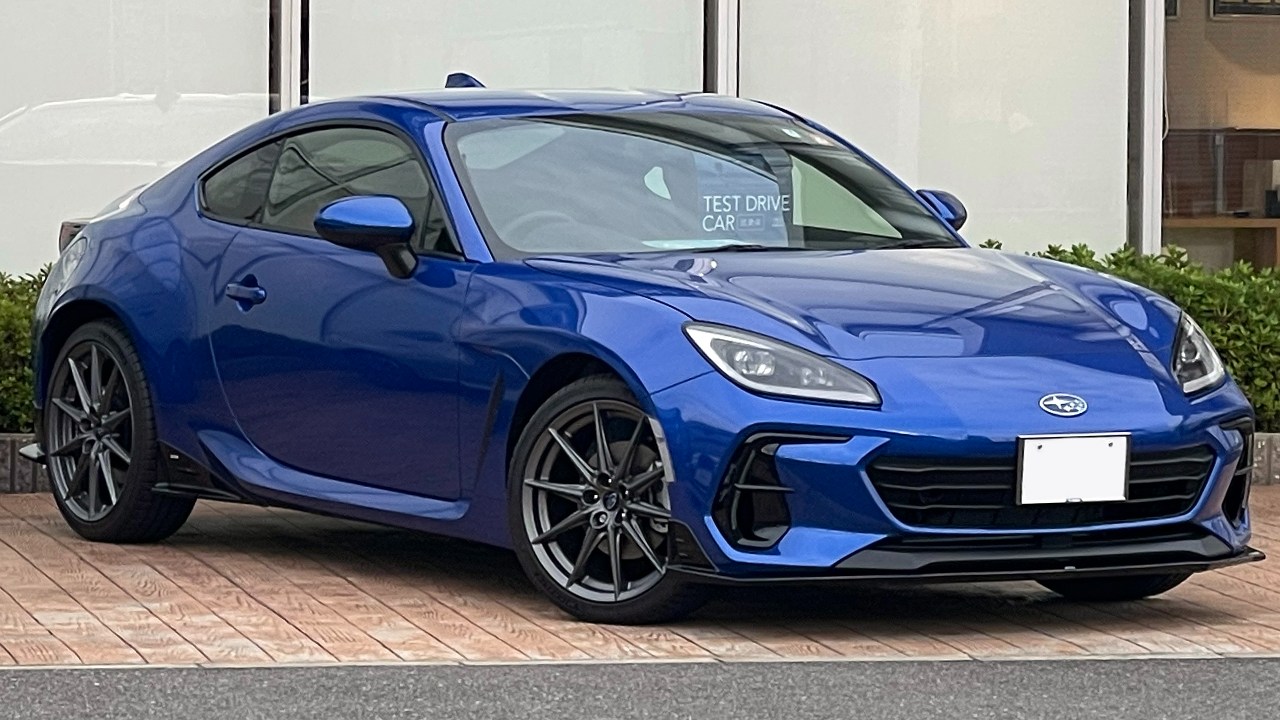
If you want a naturally aspirated sports car that does not require a hedge fund, the Subaru BRZ and Toyota GR86 are the obvious starting point. The Subaru BRZ is held up as proof that simple, light, rear wheel drive fun is not dead, with a Current MSRP of $32,265 and a focus on balance rather than brute force, as highlighted in coverage of the best naturally aspirated sports cars. I like that the car’s whole personality is built around its 2.4-Liter Flat-Four, which trades big torque numbers for a rev-happy character that rewards you for using every inch of the tachometer instead of surfing a turbocharged wave.
The Toyota side of this duo is just as compelling, especially when you look at how the 2025 Toyota GR86 is ranked among naturally aspirated sports cars. Reporting on every naturally aspirated sports car in 2025 notes that the 2025 Toyota GR86 and Subaru BRZ share a 2.4-Liter flat-four with 228 HP, and that Subaru is mentioned alongside the Miata as a benchmark for lightweight fun in that same analysis of horsepower rankings. I see these twins as the last honest sports coupes you can buy new without selling a kidney, and the fact that they still rely on a naturally aspirated engine instead of a small turbo keeps the steering feel and throttle response delightfully old school.
The eternal roadster: Mazda MX-5 Miata
Every time someone declares the sports car dead, the Mazda MX-5 Miata quietly shows up, drops its top, and proves them wrong. In rankings of naturally aspirated sports cars for 2025, the 2025 Mazda MX-5 Miata and Mazda MX-5 Miata RF are singled out with 181 HP from a 2.0-Liter Inline-Four, which is not a headline number but is more than enough when you are moving so little mass, as detailed in the breakdown of every naturally aspirated sports car. I love that Mazda keeps resisting the urge to turbocharge it, because the whole charm of the Miata is how eagerly that Liter Inline Four spins when you give it room to breathe.
From my perspective, the Miata is the car you buy when you care more about feel than figures, and the naturally aspirated engine is the heart of that philosophy. The same reporting that lists the Miata’s 181 HP also positions it alongside the Subaru BRZ and Toyota GR86 as part of a shrinking club of simple, revvy sports cars that still prioritize driver engagement over spec sheet bragging rights in those horsepower rankings. If you want to understand why enthusiasts get misty-eyed about naturally aspirated engines, a back road, a Miata, and a clear afternoon will explain it faster than any dyno chart.
The last V8 holdouts: Ford Mustang GT and friends

At the louder, thirstier end of the spectrum sit the final naturally aspirated V8 sports cars, and the Ford Mustang GT is carrying a lot of that weight on its broad shoulders. Coverage of the remaining naturally aspirated V8 sports cars spells it out bluntly, noting that there are only a few such cars left and that the 2025 Ford Mustang GT and 2024 Ford Mustang are among the last of their kind, as detailed in reporting that opens with the line that Here are the last naturally aspirated V8 cars. I see the Ford Mustang GT as the spiritual successor to every loud, slightly irresponsible coupe that ever woke up a sleeping neighborhood, and the fact that it still breathes without turbos makes its soundtrack and throttle feel that much more special.
The Mustang’s status as a standard bearer becomes even clearer when you look at how naturally aspirated sports cars are ranked by power. In a detailed ranking of 2025 models, the 2025 Ford Mustang GT and Mustang Dark Horse are highlighted as key entries, with the Ford Mustang standing out now that With Dodge discontinuing the Challenger, leaving the Mustang as the primary naturally aspirated V8 pony car in that horsepower-focused comparison. When I look at that landscape, I see the Mustang GT not just as a fun car, but as one of the last accessible ways to experience a naturally aspirated V8 that still feels raw, mechanical, and gloriously excessive.
The high-revving elite: Ferrari and the great NA engines
Not every naturally aspirated monster is remotely affordable, of course, and some of the most memorable ones now live mostly in the history books. A detailed look at the best naturally aspirated engines ever made points to Ferrari’s legendary V8 that was later replaced by the twin-turbocharged F154 V8 engine in 2015, where it debuted on the Ferrari 488 GTB, and also highlights the Lamborghini and Audi 5.2 liter V10 as one of the standout high revving designs in that survey of iconic engines. When I think about naturally aspirated greatness, I picture those Ferrari and Lamborghini engines spinning toward redlines that sound like mechanical opera, the kind of experience no turbocharged torque curve can really replace.
Even if most of us will never park a Ferrari or a Lamborghini in the garage, their engines set the tone for what makes a naturally aspirated powerplant feel special. The same reporting that celebrates the Ferrari 488 GTB’s twin-turbo successor also treats the earlier naturally aspirated Ferrari units and the Lamborghini and Audi 5.2 V10 as benchmarks for response and sound, which is exactly what enthusiasts are chasing when they hunt for the last new cars that still breathe on their own in that roundup of legendary engines. When I drive something like a humble BRZ or Miata, I can feel a faint echo of that same philosophy, even if the cylinder count and price tag are on a very different planet.
Why these cars are worth buying now
What ties all of these machines together is not just the lack of turbos, but the way they make you work for your speed and reward you for it. Analyses of the best naturally aspirated sports cars still on sale emphasize how the Subaru BRZ, the 2025 Toyota GR86, and the Mazda MX-5 Miata rely on modest power, light weight, and high revs to deliver fun, with specific mentions of the Subaru BRZ In Galaxy Purple Pearl Subaru and the way The Subaru BRZ proves that Sub compact sports cars can still be engaging at a Current MSRP of $32,265 in that roundup of current NA sports cars. I find that combination addictive, because it turns every on-ramp into a mini track session without requiring triple digit speeds or a race license.
On the more serious side of the spectrum, reporting on high-revving naturally aspirated cars notes that with a quick switch of drive modes, some of these cars transform from daily drivers into true sports cars, with damping and suspension that are second to none, as described in a feature that opens with the word However while discussing high-revving NA options. When I combine that insight with the reality that there are only a handful of naturally aspirated V8 sports cars left, including the Ford Mustang GT and related Ford Mustang models highlighted in the pieces that start with Here are the last naturally aspirated V8 cars, it becomes clear that these vehicles are not just fun toys, they are the closing chapter of a very loud, very analog era of performance.
Even mainstream brands are quietly acknowledging that this era is winding down. The official sites for Chevrolet and Ferrari showcase increasingly electrified and turbocharged lineups, with naturally aspirated engines becoming rarer in their performance catalogs, as you can see by browsing the current offerings on Chevrolet and Ferrari. When I look across all of this reporting, from the affordable Subaru BRZ and Mazda MX-5 Miata to the last Ford Mustang GT V8s and the historic Ferrari and Lamborghini engines, I see a clear message: if you want to own a new car that still sings without forced induction, your shopping list is short and the clock is ticking.