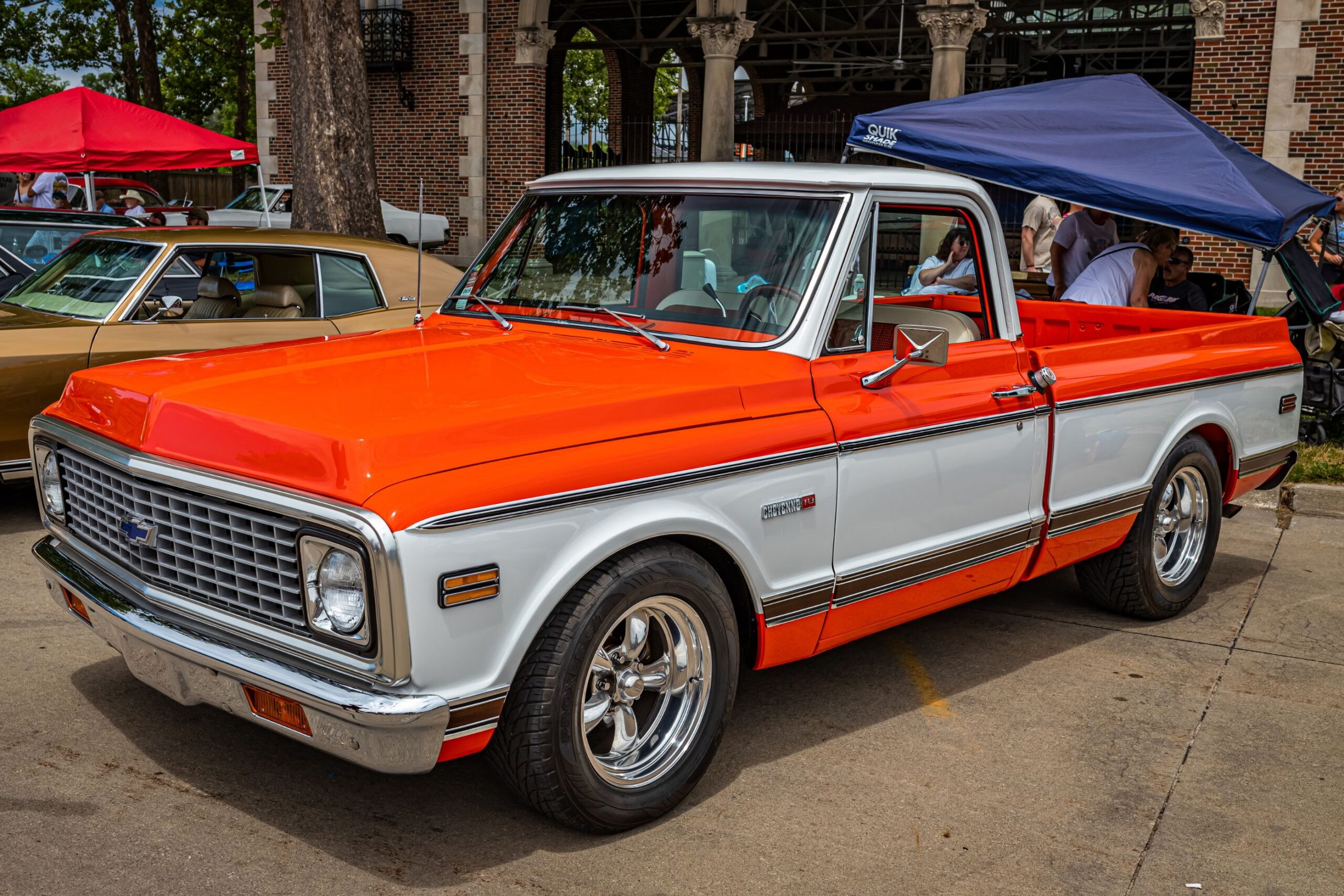
There’s a funny thing that happens when a decades-old vehicle platform shows up at a job site, a farm, or a long-haul route. People notice it, not because it’s flashy, but because it’s calm. Where newer rigs might start throwing warning lights the moment conditions get messy, this classic platform tends to just… keep going.
It’s not nostalgia talking, either. It’s about how certain older designs were built to tolerate abuse, heat, vibration, questionable maintenance schedules, and the kind of “we’ll fix it later” decisions that would make a modern sensor suite break into a sweat.
Stress, in vehicle terms, is more than hard driving
When folks say a vehicle is “under stress,” they usually mean hard acceleration, big loads, steep grades, or rough roads. But mechanical stress is only part of the story. Thermal stress, electrical stress, and even software stress (yes, that’s a real thing now) can bring a modern vehicle to its knees just as quickly.
This classic platform had an advantage: it faced fewer categories of stress in the first place. No sprawling network of modules negotiating with each other over a digital backbone. Fewer systems that can disagree, throw a fault, and quietly put the vehicle into a reduced-power mood.
Built around tolerance, not perfection
Modern vehicles are engineered like precision instruments. They’re brilliant when everything is within spec, and they deliver amazing efficiency and performance because of it. The trade-off is that they can be less forgiving when something drifts out of spec, especially under heat or heavy load.
This older platform was often designed with a different mindset: assume real-world conditions will be messy, and make sure the basics still function. Larger safety margins were common. Components were sized like the vehicle might spend its life slightly overloaded, slightly under-maintained, and slightly annoyed.
Cooling systems that didn’t cut it close
Heat is the silent killer of reliability, and it’s where the old platform quietly shines. Older cooling setups were frequently overbuilt—bigger radiators, simpler airflow paths, and fewer stacked heat exchangers fighting for the same breeze. If ambient temps climbed or the load stayed high for hours, it often had more headroom before things got dicey.
Modern vehicles can be thermally efficient but tightly packaged. There’s less spare capacity, and more things generating heat in more places—turbochargers, high-pressure fuel systems, tightly managed emissions hardware, and cramped engine bays. When everything’s crammed in and calibrated to the edge, the system can feel less relaxed about long, brutal days.
Simpler electronics, fewer “soft failures”
A lot of modern breakdowns don’t look like broken parts. They look like a vehicle that’s technically fine, except it refuses to cooperate because a sensor reading drifted, a connector got a bit of moisture, or a module didn’t like the voltage it saw during a start. That’s not “bad engineering” so much as the reality of complex systems.
This classic platform had electronics too, but typically fewer of them, and they were less intertwined. When something went wrong, it was more likely to be a straightforward problem with a straightforward workaround. And if a circuit did act up, it was less likely to trigger a cascade of warnings that turned a minor hiccup into a full-blown driveability drama.
Drivetrains that liked being used, not coddled
There’s a certain toughness in older transmissions, axles, and transfer cases that were designed for sustained work. Not “one impressive towing video,” but steady hauling, day after day, with fluid changes happening whenever someone remembered. The parts were often heavier, the cooling more generous, and the expectations more realistic.
Today’s drivetrains are incredibly capable, but they’re also optimized. More gears, tighter tolerances, smarter controls, and sometimes lighter components all help efficiency. Under prolonged stress, though—high temps, repeated load cycles, off-road shock—an older, beefier setup can feel like it’s shrugging while a modern one is carefully negotiating limits.
Emissions tech changed the stress equation
One of the biggest differences isn’t horsepower or suspension geometry. It’s emissions equipment and the way it interacts with heat, driving patterns, fuel quality, and maintenance. Modern systems do a lot of work in the background, and they often need specific conditions to stay happy.
Under constant heavy use, emissions hardware can actually do fine. The trouble comes with mixed use: short trips, idle-heavy operation, or inconsistent loads that prevent the system from completing its routines. The classic platform, built before today’s emissions complexity, simply had fewer ways to get upset about how it was being driven.
Serviceability: the underrated form of stress resistance
A vehicle can’t handle stress if it can’t be maintained quickly. This is where the classic platform gets a quiet victory: access. More room to reach things, fewer specialty tools, and less time spent removing unrelated parts just to replace the part that actually failed.
That matters because real-world stress includes downtime. If a fix takes an afternoon instead of a week waiting on parts and a booking slot, the whole operation stays resilient. And yes, there’s something comforting about repairs that don’t require a software subscription and a prayer.
Why modern vehicles still struggle with the same old reality
To be fair, modern vehicles are doing more than older ones ever did. They’re cleaner, quieter, safer, and often faster while using less fuel. The issue is that the real world is still full of dust, heat, salt, vibration, and the occasional “it’ll be fine” wiring repair that absolutely will not be fine.
This classic platform wasn’t magical. It just had fewer points of failure, more mechanical simplicity, and designs that assumed imperfect conditions. In a stress test that looks like actual life—overload, rough terrain, long idles, delayed maintenance—those qualities can beat raw sophistication.
The weird lesson: reliability is a personality trait
When people talk about old platforms being “built different,” they’re often describing how they behave under pressure. They don’t always perform the best on paper, but they stay predictable when things get ugly. That predictability is its own kind of luxury.
And that’s why this classic platform keeps earning respect. Not because it’s immune to wear, but because it’s hard to rattle. In a world where a small sensor disagreement can sideline a modern vehicle, a tough old setup that simply keeps its composure starts to look pretty advanced after all.
More from Fast Lane Only