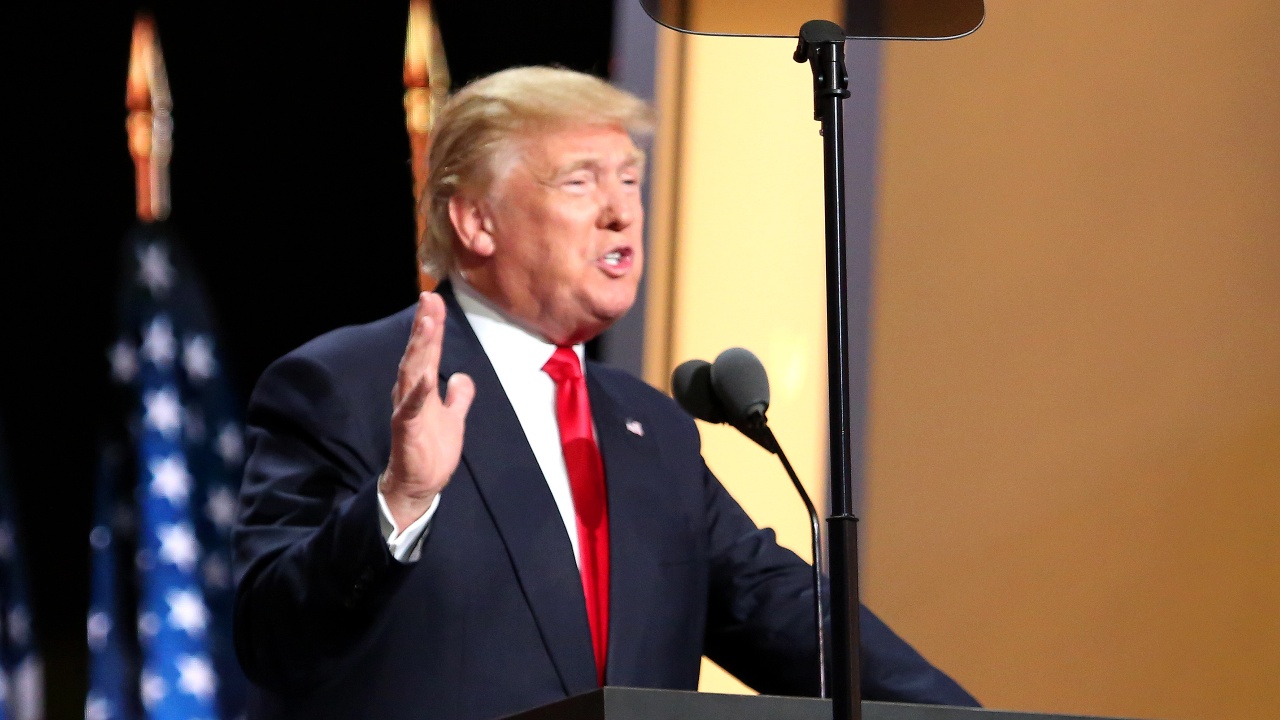
When President Donald Trump warns that the United States will hit back “very substantially” if a close ally signs a trade pact with a rival power, you are not just hearing a sound bite, you are watching the rules of North American commerce being tested in real time. His latest threat to punish Canada if it forges ahead with a trade deal with China pulls you directly into a three way tug of war over security, sovereignty, and economic leverage.
If you live, work, or invest anywhere along this triangle, the stakes are personal. The confrontation pits Trump’s tariff heavy playbook against Canada’s search for economic options and China’s push to deepen its reach, and it raises a blunt question about how much room a middle power really has to maneuver when Washington decides its core interests are on the line.
Trump’s “very substantial” warning, in his own words
You can start with the phrase that set the tone. Speaking to reporters ABOARD AIR FORCE ONE, Trump said the United States would have a “very substantial” response if Canada went ahead with a trade agreement with China, framing the move as a direct challenge to American interests rather than a routine diversification of partners. In that same exchange, he made clear that he sees the issue not as a technical trade dispute but as a test of loyalty inside the North American neighborhood, a message that lands hardest for a country whose economy is deeply tied to the United States.
The warning did not come out of nowhere. Earlier, Trump had already threatened to slap tariffs of 100% on Canadian goods if Ottawa “makes a deal with China,” a threat repeated across multiple briefings and live updates that underscored how serious he is about using tariffs as a stick. When he later told reporters that the United States would do something “very substantial” in response to any such pact, as relayed in coverage of his comments ABOARD AIR FORCE, he was essentially doubling down on that earlier tariff threat and signaling that the response could go beyond simple duties.
How the tariff threat escalated the Canada–China debate
To understand why this clash escalated so quickly, you need to look at how Trump has framed Canada’s relationship with the United States. While in Davos in Switzerland, he said that “Canada lives because of the United States,” a line that captured his view of the power imbalance and his belief that Washington can dictate the terms of its neighbors’ economic choices. That remark, reported in coverage of his appearance in Davos, set the stage for a more confrontational approach when talk of a China deal resurfaced.
From there, the tariff rhetoric hardened. In WASHINGTON, reports from TNND described President Donald Trump warning Canadian leaders that he was prepared to impose a 100% tariff on imported goods that enter the United States through Canadian ports if Ottawa pressed ahead with a China pact. Live coverage of his tariff moves noted that President Trump was threatening 100% Canada tariffs over a potential trade deal with China, a level that would hit everything from autos to agriculture.
Canada’s tightrope: sovereignty, security, and China
If you are in Ottawa, the pressure is coming from both sides. On one hand, Canada has long sought to diversify beyond the United States, exploring closer ties with partners like China to reduce its vulnerability to U.S. political swings. On the other hand, the sheer scale of trade with the United States, and the reality that so much of Canada’s export infrastructure points south, means any move that triggers tariffs or other retaliation can quickly boomerang back into domestic politics.
That is why you saw Canadian leaders move to cool the situation after Trump’s threats. Reporting on Prime Minister Mark Carney’s response noted that Carney said Canada has no plans to pursue a China free trade deal after the tariff threat, even as he acknowledged that earlier cuts to U.S. tariffs on vehicles and canola had been important for his country. At the same time, social media posts amplified how some in Canada saw Trump’s warning as part of a broader pattern of pressure that has already pushed Ottawa to back away from a broad free trade push with China.
China’s message and the wider geopolitical chessboard
From Beijing’s perspective, the optics are delicate. Chinese officials have tried to reassure Washington that any potential trade arrangement with Ottawa is not aimed at undermining the United States, with one account noting that China said a possible deal with Canada does not target the U.S. even after Trump’s tariff threat. That message, reported in coverage of the dispute that also quoted Trump’s response that “Canada lives because of the United States,” appeared in analysis of how Trump was reacting to the idea that Canada might be serious about shifting away from the United States.
At the same time, you can see how China’s broader strategy intersects with this fight. Beijing has been steadily expanding its economic footprint in North America and Europe, and a deal with a G7 partner like Canada would carry symbolic weight even if the immediate trade flows were modest. That is one reason Trump’s team has been so quick to frame the issue as part of a larger contest with China, rather than a narrow bilateral spat, and why Chinese officials have been at pains to say the deal would not be a direct challenge to the United States.
Inside Trump’s tariff toolbox and Canada’s economic exposure
For you as a consumer or business owner, the mechanics of Trump’s threat matter as much as the rhetoric. The president has repeatedly floated tariffs of 100% on imported goods from Canada, a level that would effectively double the price of affected products at the border and ripple through supply chains on both sides. Coverage of his warnings from WASHINGTON by TNND described President Donald Trump threatening a 100% tax on goods entering through Canadian ports, a move that would hit everything from energy shipments to consumer products.
Live tariff trackers have highlighted how this threat fits into a broader pattern of escalating measures against allies and rivals alike, with one update noting that Trump threatens 100% Canada tariffs over a potential trade deal with China. For Canada, which relies heavily on access to the U.S. market, that kind of shock would be felt in factories, farms, and ports almost immediately. It is no surprise that commentary inside Toronto culture circles and beyond has treated the tariff threat as a serious economic risk rather than a passing political jab.
More from Fast Lane Only