

The U.S. Army has fielded some serious hardware over the years—machines that weren’t just built tough, but designed to adapt, survive, and dominate. For those of us who appreciate engineering with presence, tanks offer their own kind of mechanical charisma—raw power, heavy armor, and purpose-first design that feels a world apart from anything on the street.
This list takes a look at 10 of the most important tanks in U.S. Army history. Some were fast, some hit hard, and a few changed everything. Each brought something different to the table—and not just in terms of firepower.
M4 Sherman

The M4 Sherman wasn’t flashy, but it got the job done. Powered by a 400–450 hp engine, this World War II workhorse hit about 26 mph on-road, which wasn’t bad considering its nearly 70,000-pound curb weight.
It wasn’t the best armored or the heaviest hitter, but it was easy to maintain, build, and move. That reliability made it a backbone tank across multiple fronts. Inside, things were cramped but functional—no frills, just room for a five-man crew to do their job under fire.
M26 Pershing

The M26 Pershing was America’s answer to the Tiger. It showed up late in WWII with a 90mm gun that could finally go toe-to-toe with German armor. Under the hood was a Ford GAF V8 making around 500 hp, which pushed the tank to about 30 mph.
It brought thicker armor and a lower silhouette compared to the Sherman. Crews appreciated the power upgrade and smoother ride thanks to torsion bar suspension. It wasn’t perfect, but it marked the start of a more serious approach to tank warfare for the U.S.
M41 Walker Bulldog

The M41 Walker Bulldog was a fast, lightweight reconnaissance tank built for speed and visibility, not brute force. It ran a Continental AOS 895-3 engine good for 500 hp and hit 45 mph—quick by tank standards.
Armed with a 76mm gun, it wasn’t meant to punch through heavy armor but rather to scout and respond fast. It was air-transportable, which made it a flexible tool in Korea and early Vietnam. Inside, it seated four and focused on basic functionality over comfort or protection.
M48 Patton

The M48 Patton brought modern features to Cold War armor. It ran a 12-cylinder gasoline engine with 810 hp, pushing its 50-ton frame up to 30 mph. The 90mm main gun gave it decent firepower against threats of the era.
Crew layout was smarter, and the cast steel hull improved survivability. Torsion bars and improved optics made it a smoother experience for the four-man crew. It was big, loud, and not subtle—but it marked a turning point in how the U.S. approached long-term armor design.
M60

The M60 took what the Patton started and gave it more bite. Its 105mm M68 gun was precise and powerful, and its diesel engine—churning out 750 hp—meant it had better range and reliability than its gas-guzzling predecessor.
It weighed over 50 tons but still managed up to 30 mph. Crews appreciated the updated fire control system and infrared night sights, which were ahead of their time. The M60 wasn’t flashy, but it was widely exported and stayed relevant well into the late 20th century.
M551 Sheridan

The M551 Sheridan was a weird mix of ideas—part tank, part air-droppable scout vehicle. Weighing under 17 tons, it had an aluminum body and could swim or parachute into battle. Power came from a 300 hp diesel that got it to 43 mph.
It mounted a 152mm gun/launcher that could fire conventional rounds or guided missiles. That combo made it interesting on paper, though finicky in the field. Crews liked its mobility, but reliability issues kept it from ever being fully trusted in frontline roles.
M1 Abrams
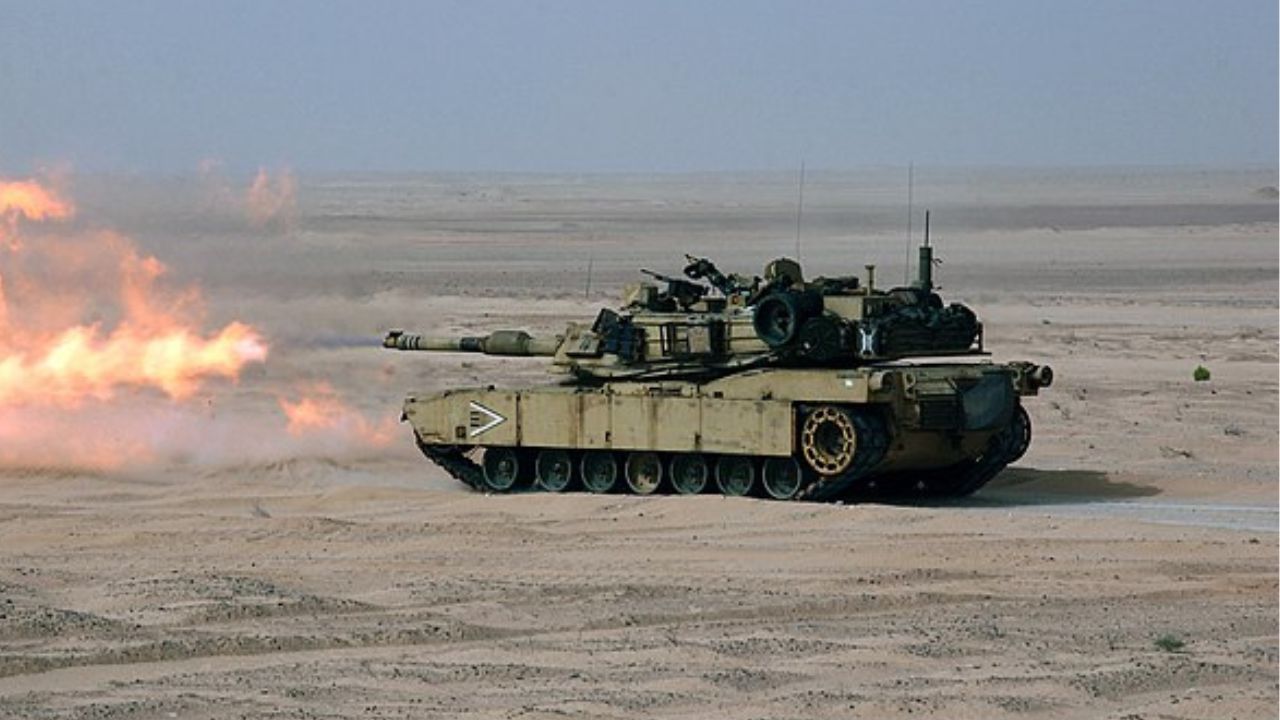
The M1 Abrams changed the game in 1980. It packed a turbine engine cranking out 1,500 hp, which moved its 60-ton bulk up to 45 mph. That jet-engine-like powertrain gave it acceleration most tanks couldn’t touch.
Its 105mm gun (later upgraded to 120mm in the M1A1) was paired with composite armor that added serious survivability. Inside, it felt like a cockpit—digital readouts, night vision, and a layout that respected the crew’s workload. This was the tank that finally made speed and firepower work in the same package.
M1A1 Abrams
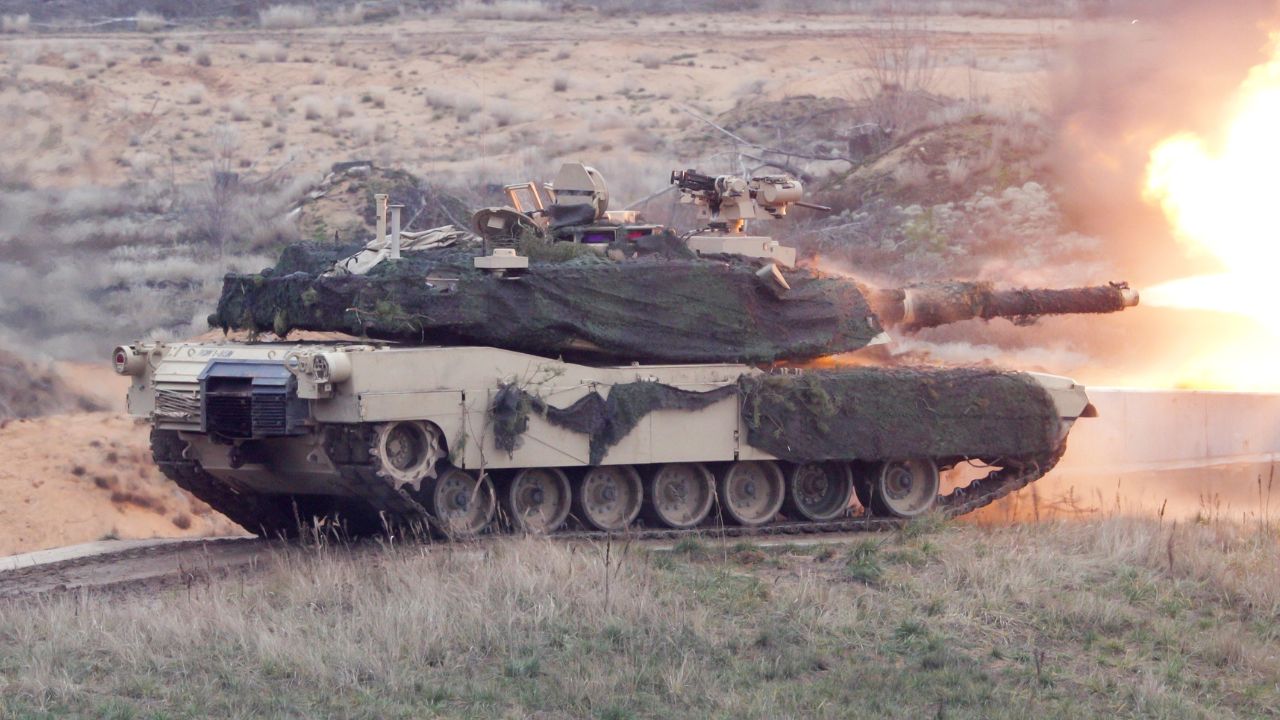
The M1A1 refined the original Abrams with a larger 120mm smoothbore gun, upgraded fire control, and more layered armor. It kept the same gas turbine engine, still putting out 1,500 hp, and maintained a similar top speed of 45 mph.
By the time of Desert Storm, this version was proving itself against Soviet-era tanks, often knocking out targets from over two miles away. The ride was surprisingly stable, and interior ergonomics were refined for crew efficiency under pressure. It earned its place as a modern legend.
M1A2 SEP v3

The M1A2 SEP v3 is the modern iteration of the Abrams, loaded with tech upgrades. Same 1,500 hp turbine engine, same 120mm gun, but now it’s packing advanced armor, electronic warfare defenses, and thermal sights that turn night into day.
At around 73 tons, it’s heavier than its predecessors, but smarter fire control and networking features give it a serious edge. Inside, it’s more connected and data-driven, with touchscreen controls and upgraded sensors. It’s a long way from the steel-and-analog days of WWII.
XM30 (Next-Gen Combat Vehicle)

Technically still in development, the XM30 is where the Army’s headed next. It’s meant to replace the Bradley, not the Abrams, but it brings tank-like presence. Hybrid diesel-electric drive, modular armor, and unmanned weapon stations set it apart.
It’ll use AI-assisted targeting and battlefield integration tech to link up with drones and sensors in real-time. Think of it as a combat vehicle designed with the brains of a networked system and the brawn of a tracked beast. It’s not science fiction—it’s already testing.
Like Fast Lane Only’s content? Be sure to follow us.
Here’s more from us:
*Created with AI assistance and editor review.


Leave a Reply