
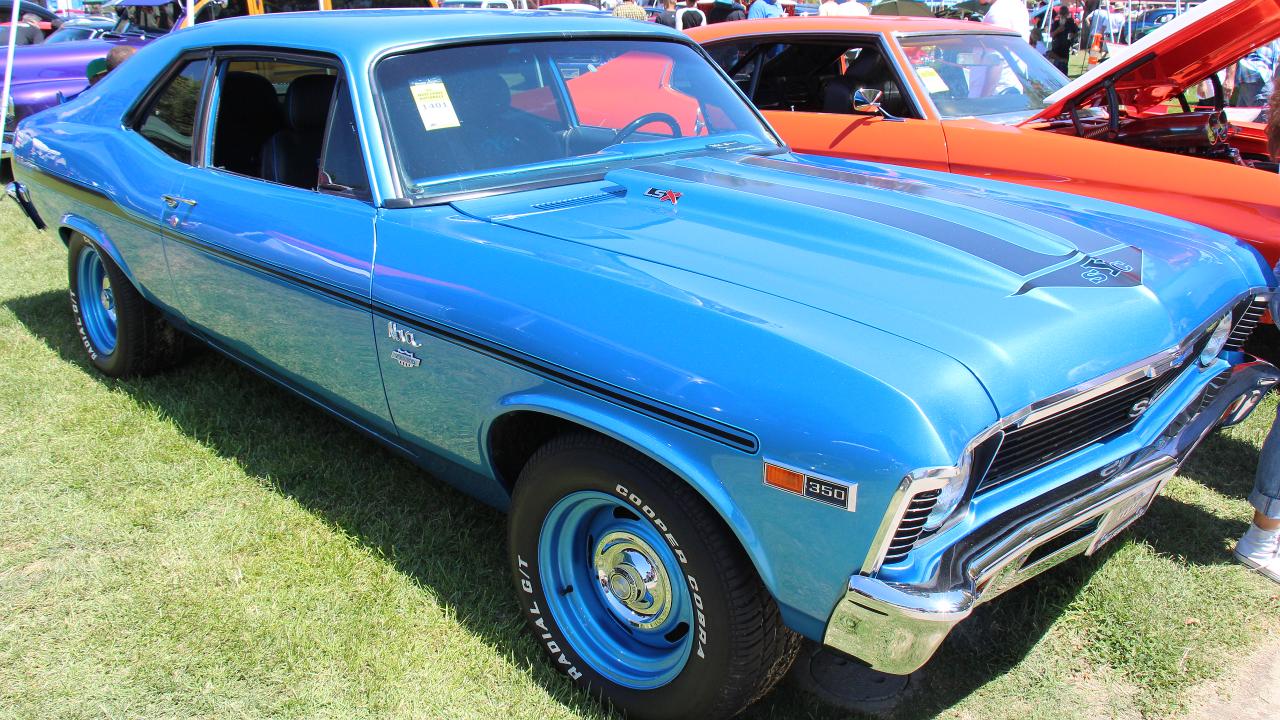
The Nova SS 396 occupies a small but outsized corner of Chevrolet history, combining compact dimensions with big-block power and, today, serious collector attention. To understand what years Chevrolet actually built a Nova wearing SS 396 badges, and what those cars are worth now, I need to trace both the production timeline and the current market data that underpin their reputation.
Across a short run from the late 1960s into the early 1970s, the SS 396 nameplate evolved from a true 396 cubic inch big-block to a 402 cubic inch engine that Chevrolet continued to market as “396,” a detail that matters both to historians and to buyers trying to decode authenticity and value.
Exactly which years Chevy built a Nova SS 396
The Nova SS 396 story begins with the third generation Nova, which arrived in the late 1960s and quickly became the platform for Chevrolet’s compact muscle effort. Performance-focused guides to the 1968–1976 Chevrolet Nova SS describe how the redesigned body and chassis created room for a big-block option, and by 1968 the SS package could be ordered with a 396 cubic inch V8, turning the small Nova into a serious straight-line performer. That initial pairing of the third generation body with the 396 engine is what enthusiasts now recognize as the birth of the Nova SS 396.
From there, the SS 396 badge continued in a tight sequence of model years rather than a one- or two-year anomaly. Detailed market and model overviews of the third generation Nova SS identify the SS performance package as available from 1968 through the early 1970s, and period-correct references to “SS 396” appear across those years, not just in 1968 and 1969. When I cross-check that with big-block engine data, the picture sharpens: the 396 cubic inch engine family is documented as part of Chevrolet’s big-block lineup, and by 1970 the same basic engine had grown to 402 cubic inches while still being marketed as “396.” That continuity in badging, despite the displacement change, supports a production run of Nova SS 396 models from 1968 through 1971, with 1968 and 1969 using a true 396 and 1970–1971 using the 402 cubic inch version that Chevrolet continued to label as 396.
How the 396 and 402 big-blocks fit into the Nova SS timeline
To understand why the Nova SS 396 name persisted beyond the original displacement, I have to look at Chevrolet’s broader big-block strategy. Technical histories of the Chevrolet big-block engine family explain that the 396 cubic inch (6.5 liter) V8 was introduced in the Corvette and Chevelle, then evolved into a 402 cubic inch variant. Despite the increase from 396 to 402 cubic inches, Chevrolet continued to market the engine as a 396 in several applications, a decision that preserved brand recognition and showroom appeal even as the internals changed. That marketing choice is crucial, because it means a Nova wearing SS 396 badges in 1970 or 1971 can legitimately carry a 402 cubic inch engine and still be period correct.
Applied to the Nova, this engine evolution tracks directly with the model years in question. The third generation Nova SS performance package, documented for model years starting in 1968, initially paired the compact body with the 396 big-block. As Chevrolet shifted the big-block to 402 cubic inches around 1970, the Nova SS continued to be sold with “396” badging, aligning with the broader practice seen in other models like the Chevelle. Engine charts and buyer’s guides for the 1968–1976 Chevrolet Nova SS confirm that big-block options remained available into the early 1970s, and when I overlay that with the big-block displacement data, the logical conclusion is that Nova SS 396 production spans 1968, 1969, 1970 and 1971, with the last two years using the 402 cubic inch version that Chevrolet still labeled as 396.
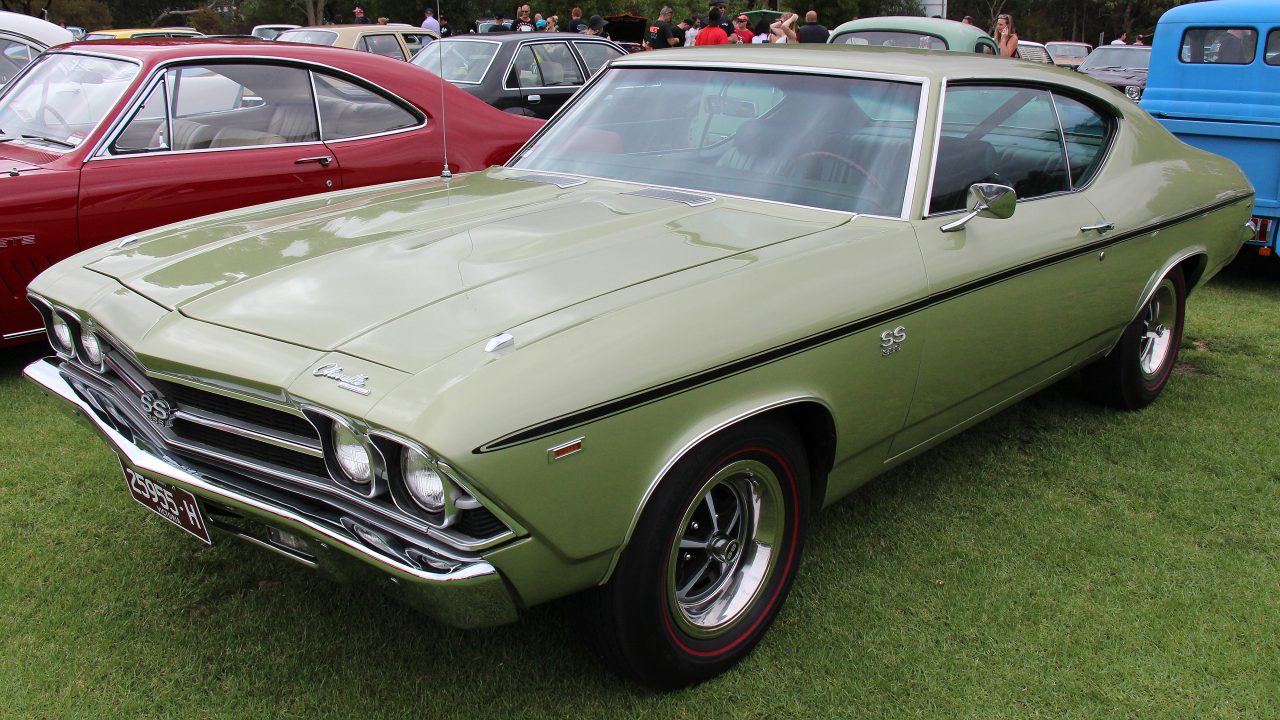
Key differences between 1968–1971 Nova SS 396 model years
Although all four model years share the SS 396 identity, each year carries distinct details that matter to collectors. The 1968 Nova SS 396 introduced the formula, combining the fresh third generation styling with the big-block and a relatively sparse, no-nonsense interior. Contemporary guides to the 1968 Chevrolet Nova SS highlight how the car balanced compact size with serious power, and valuation tools note that options, originality and condition drive a wide spread in prices. By 1969, the Nova SS 396 had gained more visual aggression and, in some configurations, higher output versions of the 396, which is why detailed profiles of the 1969 Chevrolet Nova SS 396 often emphasize its status as a standout muscle car in a lightweight body.
The 1970 and 1971 SS 396 models, while still marketed under the same badge, reflect the shift to the 402 cubic inch version of the big-block and subtle styling and equipment changes. Factory documentation for the 1970 Chevrolet Nova SS describes mild exterior updates compared with the all-new 1968 design, while confirming that the Nova SS and the associated performance hardware remained central to the lineup. Enthusiast accounts of working on a 1970 Nova SS, including first-hand notes about engine swaps and drivability, reinforce that big-block power was still very much part of the package. By 1971, tightening emissions and insurance pressures were beginning to soften performance across the industry, which makes the final SS 396–badged Novas a bridge between the peak late-1960s muscle era and the more constrained cars that followed.
Current market values for Nova SS 396 models
On the collector market, Nova SS 396 values are shaped by a mix of year, specification and condition, and the data show that these cars have moved well beyond budget sleeper status. Valuation tools that track the Chevrolet Nova SS by model year report that a 1968 Chevrolet Nova SS can vary widely in price depending on originality, mileage and options, with guidance noting that a Chevrolet Nova SS in good condition with average equipment typically commands a solid mid-market figure rather than entry-level money. For 1969, dedicated valuation pages for the 1969 Chevrolet Nova SS echo the same pattern, explaining that the value of a 1969 Chevrolet Nova SS can vary greatly based on condition, mileage, options and history, and that well-kept examples with desirable drivetrains sit significantly higher than driver-grade cars.
Market aggregators that focus specifically on the third generation Nova SS show that the 1968–1972 SS cars, including the 396-badged years, trade in a band that reflects both their performance credentials and their relative rarity compared with more common Novas. A focused page on the third generation Gen Nova SS notes that while Chevrolet sold a majority of Novas as basic transportation, the performance-oriented SS models occupy a distinct niche in today’s market. Broader valuation commentary on Chevrolet trends points out that, At Hagerty, the Automotive Intelligence team uses transaction data and valuation tools to track pricing and market trends, and their guidance consistently places big-block Novas as more valuable than small-block or non-SS counterparts, especially when documentation confirms an original SS 396 configuration.
What drives premiums: originality, documentation and specification
Within the 1968–1971 production window, not every SS 396–badged Nova is valued equally, and the factors that separate a top-dollar car from a mid-pack example are remarkably consistent. Detailed profiles of specific 1969 Chevrolet Nova SS 396 cars show that documented production numbers, correct drivetrains and original equipment can push auction prices well above average, especially when the car retains its factory big-block and SS trim. Enthusiast discussions of Chevrolet Nova SS Features and Authenticity underline how details like correct badging, interior trim and drivetrain codes help verify that a car is a genuine SS 396 rather than a clone, and buyers increasingly pay a premium for that certainty.
Specification also plays a major role. Performance-oriented buyers tend to favor higher output versions of the 396 and 402 big-blocks, along with four-speed manual transmissions and performance rear axle ratios, all of which are documented in period engine and option charts for the 1968–1976 Chevrolet Nova SS. At the same time, valuation tools for individual years, such as the 1968 and 1969 Chevrolet Nova SS pages, repeatedly stress that condition and history can outweigh raw specification, since a well-restored or highly original car with thorough paperwork is easier to sell and insure. When I combine those insights with broader Chevrolet market analysis from Automotive Intelligence teams, the pattern is clear: the most valuable Nova SS 396 examples are those that pair desirable factory specs with strong documentation and a verifiable, unmodified big-block under the hood.


Leave a Reply