
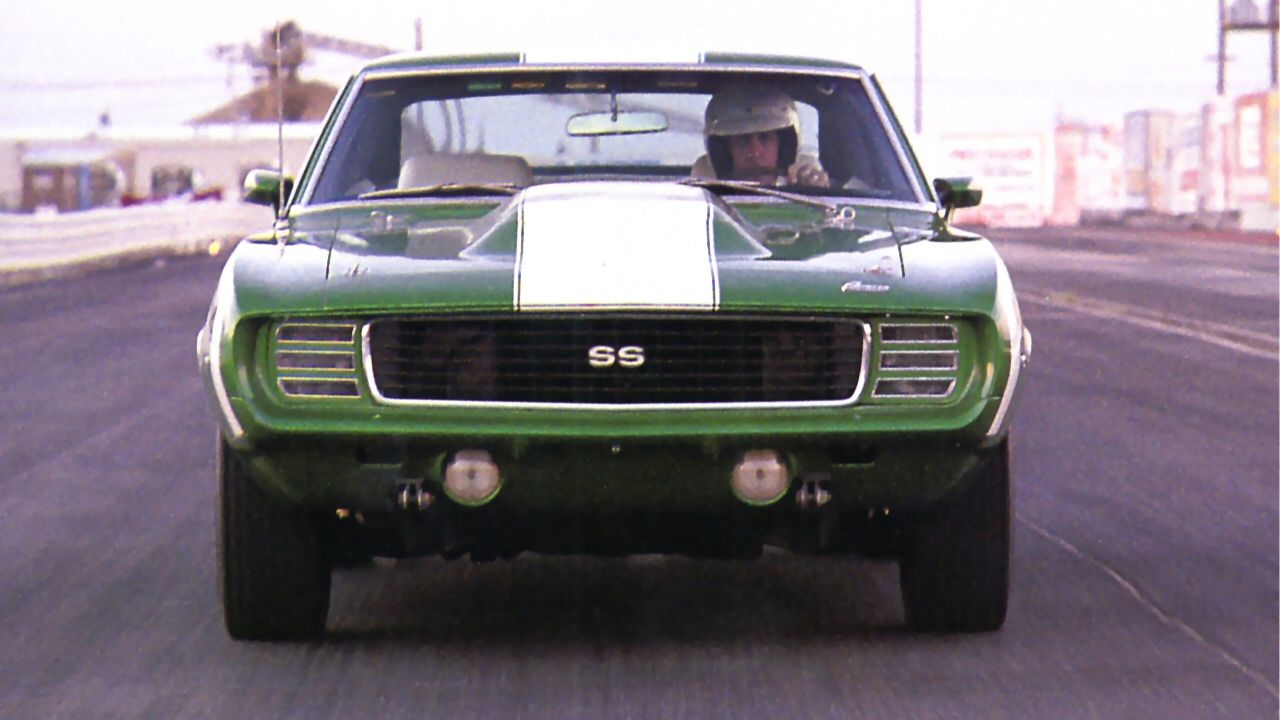
The Baldwin-Motion Camaro sits at the intersection of factory muscle and bespoke tuner culture, a short-lived collaboration that turned ordinary Chevrolets into guaranteed quarter-mile terrors. Understanding when these cars were actually built, and how that narrow production window shapes their values today, is essential for anyone trying to separate genuine Baldwin-Motion history from tribute builds and optimistic asking prices.
I want to trace how the partnership between Baldwin Auto Company and Motion Performance evolved into a series of Camaros across the late 1960s and early 1970s, then connect that timeline to hard numbers from recent auctions and market guides. The goal is simple: clarify which years saw real Baldwin-Motion Camaros leave the showroom, and show how that rarity now translates into six-figure valuations, with a wide gulf between authentic cars and modern recreations.
How Baldwin-Motion Camaro history began
The story of the Baldwin-Motion Camaro starts with Motion Performance, a speed shop that grew out of a Sunoco service station in Brooklyn, New York. That operation took shape in 1963, when Motion Performance and tuner Joel Rosen began building a reputation for turning showroom Chevrolets into serious street and strip machines, laying the groundwork for the later Camaro program that would carry both the Baldwin and Motion names. The key shift came in 1967, when Baldwin Auto Company and Motion Performance formally teamed up, creating a pipeline where a customer could order a new Chevrolet through the dealer and have it transformed into a high-performance special before delivery, a process that would soon include the Camaro.
From that 1967 partnership onward, the Camaro became one of the signature platforms for the Baldwin-Motion formula, which blended dealer paperwork with tuner engineering. Period accounts of Baldwin-Motion drag racing Camaros describe cars that were not just cosmetically modified but engineered for quarter-mile performance, often with big-block power and aggressive gearing. Later coverage of the partnership notes that when Baldwin Auto Company and Motion Performance joined forces in 1967, the result was an array of high-performance Chevrolets that set the template for dealer-tuned muscle, with the Camaro quickly emerging as one of the most visible examples of that collaboration.
Which years Chevy sold Baldwin-Motion Camaros
Pinning down the exact years Chevrolet customers could walk into Baldwin Auto Company and order a Baldwin-Motion Camaro means looking at specific documented builds. The most famous examples cluster around the first-generation Camaro, particularly 1969, when big-block Phase III conversions turned the F-body into a street-legal drag car. A documented 1969 Chevrolet Camaro SS Baldwin-Motion 454 LS7 shows how far the program had evolved by that point, pairing a 454-cubic-inch LS7 engine with Motion upgrades and dealer delivery, confirming that 1969 sits squarely within the Baldwin-Motion Camaro production window. Another 1969 Chevrolet Camaro Baldwin Motion LS7, built to similar specifications, reinforces that late first-generation cars were a core part of the program rather than one-off experiments.
The Baldwin-Motion story did not end with the first-generation body style. Evidence of a 1970 Chevrolet Camaro Baldwin Motion Stage III indicates that the partnership carried into the second-generation Camaro, with Stage III packages applied to the redesigned car. A later 1973 Chevrolet Camaro Baldwin Motion Phase III, documented as a specific Vehicle with a recorded Number Produced, shows that by the early 1970s the Phase III branding was still active on Camaros, even as insurance pressures and emissions rules were reshaping the muscle car landscape. Taken together, these examples show that genuine Baldwin-Motion Camaros were built and sold across at least three key model years: 1969, 1970 and 1973, with the broader Baldwin and Motion collaboration on Chevrolets beginning in 1967 and extending through the early 1970s.
What made Phase III Baldwin-Motion Camaros so extreme

The Phase III label is central to understanding why Baldwin-Motion Camaros from specific years command such attention today. These were not mild appearance packages but heavily modified cars built around big-block engines and a written performance promise. Period descriptions of Phase III 427 and 454 cars emphasize that they came with a written, money back, quarter-mile performance guaranty from Joel Rosen, a bold commitment that set them apart from typical dealer specials. That guarantee, tied directly to the Phase III branding, meant that a buyer in the late 1960s or early 1970s was not just purchasing a Camaro with stripes and badges but a car that had been tuned and tested to hit a specific performance target at the drag strip.
By the time the 1973 Chevrolet Camaro Baldwin Motion Phase III appeared, the formula had evolved but the core idea remained the same: a Camaro that blended showroom origins with tuner-level engineering and a focus on straight-line speed. Documentation for that 1973 Vehicle, including a recorded Number Produced, underscores how limited these Phase III cars were, which feeds directly into their modern collectability. When I look at the combination of big-block engines like the 427 and 454, the written quarter-mile guaranty, and the small production numbers, it becomes clear why Phase III Baldwin-Motion Camaros from 1969 through 1973 sit at the top of the value hierarchy among modified Chevrolets from the period.
Current market values for authentic Baldwin-Motion Camaros
Modern auction data shows just how far values have climbed for documented Baldwin-Motion Camaros, especially the most extreme LS7 builds. A 1969 Chevrolet Camaro Baldwin Motion LS7 recently crossed the block with a reported high bid of $750,000, where the car went Unsold despite that figure, according to the Seller and Auction record dated Jan 11, 2024, with the High bid noted on January 12, 2024. That single number illustrates how collectors now treat top-spec Baldwin-Motion Camaros as blue-chip muscle, with expectations that can exceed three quarters of a million dollars when documentation, originality and specification all align. A separate listing for a 1969 Chevrolet Camaro SS Baldwin-Motion 454 LS7 reinforces that these LS7-equipped cars sit at the very top of the market, combining the desirable 1969 model year with the most potent engine and Motion upgrades.
Values for second-generation Baldwin-Motion Camaros are also substantial, though they typically sit below the record-chasing LS7 cars. Market data for a 1970 Chevrolet Camaro Baldwin Motion Stage III notes that What it is Worth is informed by 30 comparable sales, indicating a price range from $57,000 to $252,641 for Chevrolet Camaro Baldwin Motion Stage III examples. That spread reflects how condition, originality and documentation can move a car from the lower end of the range into six-figure territory, especially when a Phase III or Stage III package is verified. The 1973 Chevrolet Camaro Baldwin Motion Phase III profile, which records the Vehicle and its Number Produced, further supports the idea that scarcity and specification drive values, with later Phase III cars appealing to collectors who want a documented piece of the final years of the Baldwin-Motion program.
How Baldwin-Motion values compare to standard and tribute Camaros
To understand just how strong Baldwin-Motion pricing has become, it helps to compare those figures with broader 1969 Camaro valuations and with modern tribute builds. A general valuation guide for the 1969 Chevrolet Camaro shows that a car in Perfect Condition is typically valued between $81,000 and $1,094,500, while an Excellent Condition example falls between $55,000 and $81,000. Good Condition cars are listed between $39,000 and $55,000, with Fair examples below that threshold. Those ranges cover the entire 1969 Camaro spectrum, from base models to top-tier factory performance variants, and they show that even a very strong standard car usually sits well below the $750,000 high bid seen for a documented 1969 Chevrolet Camaro Baldwin Motion LS7. In other words, the Baldwin-Motion pedigree can multiply value far beyond what condition and model year alone would suggest.
The gap is even clearer when I look at tribute cars that mimic the Baldwin-Motion look without the original dealer and Motion Performance connection. A 1969 Chevrolet Camaro Baldwin Motion Tribute currently offered at $56,995, with 71 listed in the details, illustrates how a well-executed recreation can command a solid price but still sits closer to the Excellent Condition range for a standard 1969 Camaro than to the six-figure territory of authentic Baldwin-Motion builds. That Chevrolet Camaro Baldwin Motion Tribute, noted in the Sto inventory, underscores the importance of documentation: styling cues and performance upgrades can be replicated, but the original paperwork linking Baldwin Auto Company and Motion Performance cannot. For collectors, that distinction is what separates a roughly $57,000 tribute from a car that might attract bids in the hundreds of thousands.
When I put all of these numbers side by side, a clear hierarchy emerges. At the top sit the most extreme, well-documented Baldwin-Motion Camaros, such as the 1969 LS7 cars and Phase III or Stage III builds from 1970 and 1973, which can reach from the low six figures up to the $750,000 range and beyond. Below them are standard but highly optioned 1969 Camaros in Perfect Condition, which can approach $1,094,500 in the most exceptional cases but more commonly trade in the five- to low six-figure band. Finally, tribute cars like the Chevrolet Camaro Baldwin Motion Tribute occupy a more accessible tier, often priced around $56,995, offering the look and some of the performance of the originals without the same investment potential. For buyers and sellers trying to navigate this landscape, verifying whether a car is a genuine product of When Baldwin Auto Company and Motion Performance worked together in 1967 and the years that followed is the single most important step in understanding both its history and its true market value.

Leave a Reply