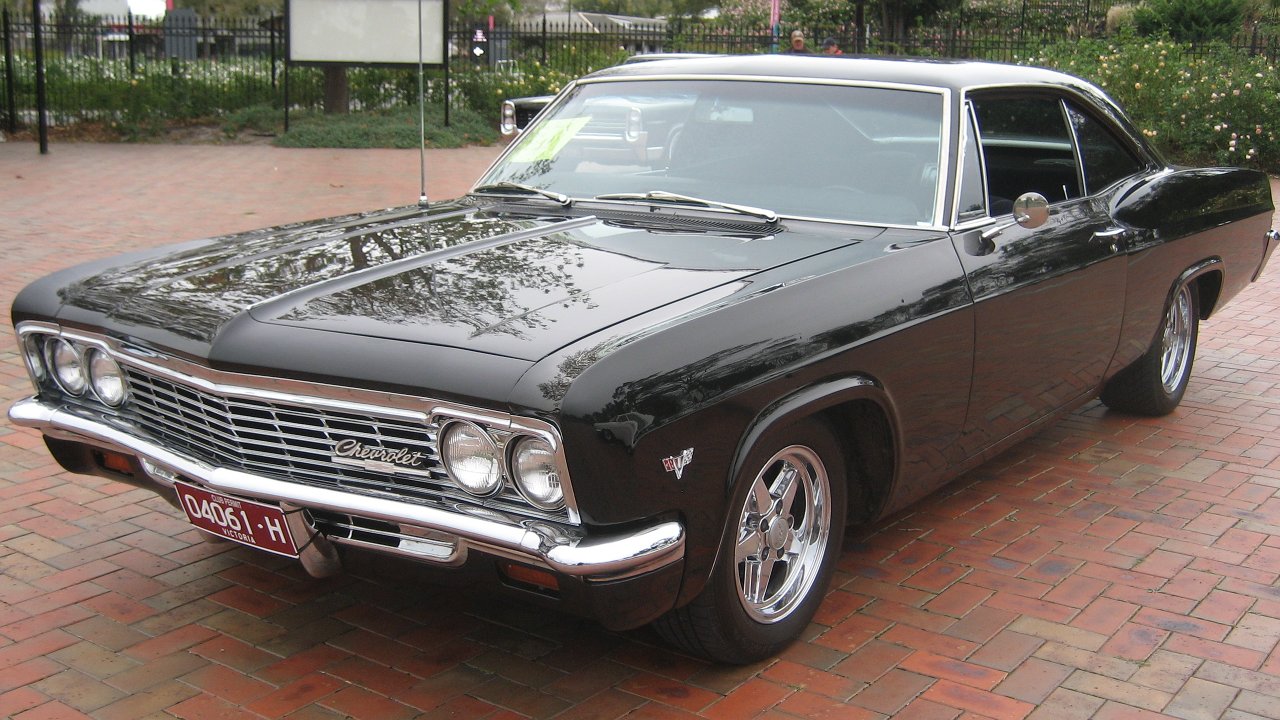
The Chevy Biscayne 427 sleeper occupies a strange sweet spot in muscle car history, hiding brutal big block performance inside one of the most unassuming full-size bodies Detroit ever stamped. I am looking at when that combination first appeared, how it evolved through the late 1960s, and what today’s market says about the value of these low-profile heavy hitters. Along the way, the numbers on surviving cars and current valuations show how a once budget-minded fleet sedan has become a serious blue-chip collectible.
How the Biscayne became Chevy’s unlikely performance platform
Chevy did not design the Biscayne as a halo muscle car, it was the stripped, budget-conscious end of the full-size lineup that sat below the Bel Air and Impala. By the mid 1960s, however, the fourth-generation Biscayne had grown larger and could be ordered with a surprisingly wide range of engines, which opened the door for buyers who wanted maximum power with minimum flash. That combination of plain styling and serious hardware is what later enthusiasts would recognize as a classic sleeper formula, even though the factory brochures treated the car as basic transportation.
By the time the big block era hit its stride, Chevy was quietly allowing customers to pair the bare-bones Biscayne body with some of the most potent engines in the corporate catalog. Reporting on the model’s history notes that the fourth generation, which ran from 1965 through 1970, offered multiple high-displacement options that turned the car into a legitimate performance threat despite its taxi-spec image. In other words, the platform was ready for the 427 long before most people realized it, and that mismatch between appearance and capability is exactly what makes the later 427 combinations so compelling today.
When the Biscayne 427 sleeper arrived
The sleeper reputation of the Biscayne crystallized in the mid 1960s when Chevy allowed buyers to bolt the 427 big block into the lightest full-size shell it sold. Coverage of the period highlights the 1966 model year as a turning point, with enthusiasts pointing to the 1966 Biscayne 427 as Chevy’s Ultimate Full, Size Sleeper From the Golden Age of Muscle. In that configuration, the car could be ordered with the L72 version of the 427, a race-bred big block that transformed the unadorned sedan into one of the quickest full-size Chevrolets of its day. The key was that all of this performance was wrapped in a body that still looked like a fleet car, with minimal trim and few visual cues to hint at what was under the hood.
Enthusiast accounts from earlier this year describe how a 1966 Chevy Biscayne with the 427 was rated at a stout 425 horsepower, with some owners suggesting the real output was even higher in factory trim. One detailed discussion of a 1966 Chevy Biscayne 427 notes the factory rating of 425 horsepower and treats the car and engine pairing as a rarely seen, high performance combination. Another enthusiast piece, dated Mar 26, 2025, invites readers to Imagine walking into a dealership and ordering a 1966 Chevy Biscayne L72, underscoring how unusual it was for buyers to spec the cheapest full-size body with the most aggressive big block. Together, those accounts support the view that 1966 is the moment when the Biscayne 427 sleeper truly arrived in showrooms.
The 1968 Biscayne L72 and the evolution of the sleeper formula
While 1966 marked the breakout year for the big block sleeper concept, the formula matured by 1968 as Chevy continued to offer the 427 in the Biscayne. Enthusiast commentary on the 1968 Chevrolet Biscayne L72 describes it as The Ultimate Sleeper Beast, a phrase that captures how far the idea had come in just a couple of years. The 1968 cars retained the plain styling and minimal trim that defined the model, but by then the 427 cubic inch (7.0 liter) engine had an established reputation among racers and street performance fans. Dropping that powerplant into a base-level sedan created a car that could embarrass many purpose-built muscle machines while still looking like a company car.
Discussions of the 1968 specification emphasize that the Chevrolet Biscayne with the 427 remained a low-volume, special order proposition rather than a mass-market package. That scarcity is part of why the 1968 L72 cars are so coveted now, and it also explains why they are often referenced in the same breath as the earlier 1966 examples when enthusiasts talk about the purest sleeper builds. The continuity between those years shows that Chevy did not treat the 427 Biscayne as a one-off experiment. Instead, the company quietly kept the option alive for buyers who knew how to read the order sheets, which is why the sleeper legend stretches across multiple model years rather than being tied to a single production run.
How much a Biscayne 427 is worth now
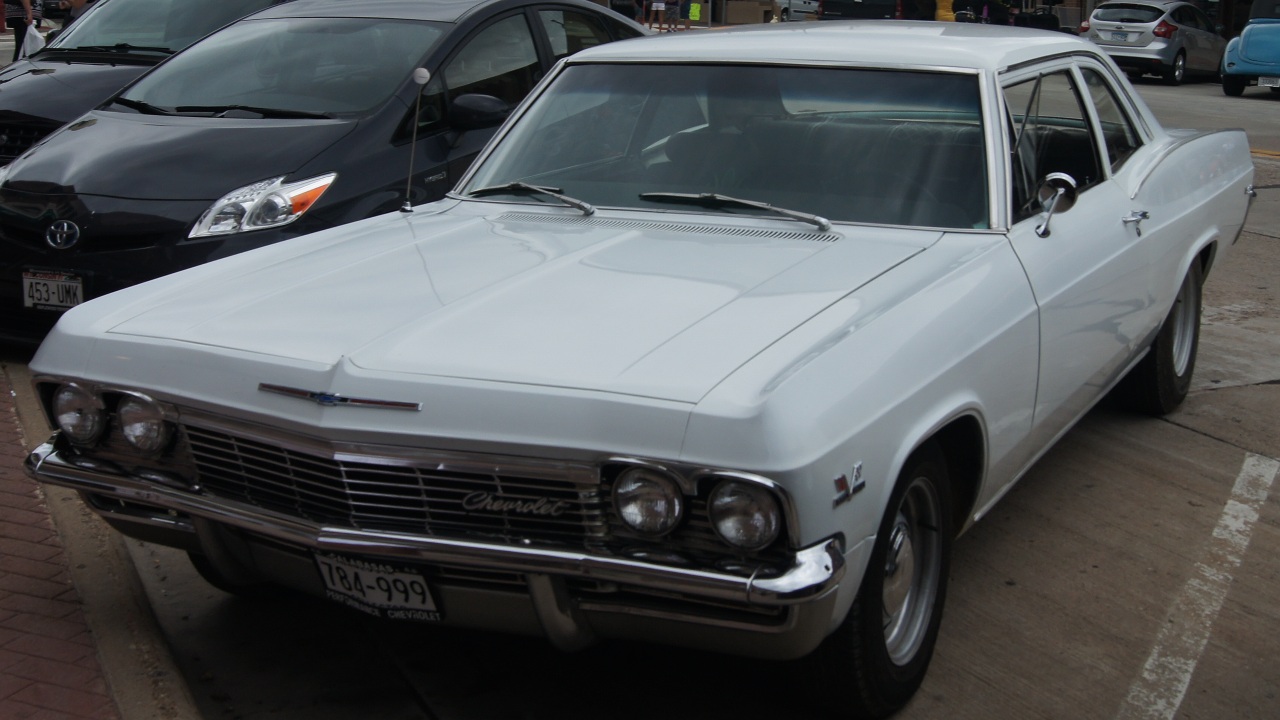
Assessing the current value of a Biscayne 427 sleeper means starting with baseline pricing for the broader model range, then layering in the premiums that collectors pay for rare big block configurations. Valuation tools for the 1966 Chevrolet Biscayne show that even a standard 2 door sedan with an 8 cylinder engine commands solid money in today’s market, with condition playing a major role in the spread. The Common Questions section that addresses How much a 1966 Chevrolet Biscayne is worth notes that values vary greatly depending on specification and state of preservation, and it lists detailed figures for different body styles and conditions. Those numbers apply to the broader population of cars, which means a genuine 427 sleeper sits above that curve, often significantly so, because of its rarity and performance pedigree.
The same pattern holds when I look at later years. Pricing data for the 1968 Chevrolet Biscayne and the 1969 Chevrolet Biscayne show that base cars can still be relatively attainable compared with headline muscle models, but the spread between average examples and top tier, highly optioned cars is wide. The 1969 valuation page, framed again around the question of How much a Chevrolet Biscayne is worth, reinforces that condition, originality, and drivetrain are the main drivers of price. Since the 427 combinations were built in very small numbers and are heavily documented by enthusiasts, any verified L72 or similar big block sleeper will typically trade at a substantial premium over those baseline figures, even if the valuation tools do not break out a separate line item for that exact configuration.
Why collectors prize the Biscayne 427 sleeper today
Market interest in the Biscayne 427 is not just about raw horsepower, it is also about the story the car tells. Enthusiast coverage of the 1966 Biscayne 427 as Chevy’s Ultimate Full, Size Sleeper From the Golden Age of Muscle highlights how the car captures a specific moment when Detroit quietly sold race capable hardware to buyers who were willing to look past chrome and badges. The fact that a 1966 Chevy Biscayne 427 with a 425 horsepower rating could be ordered with almost no visual drama makes surviving examples feel like time capsules from a more freewheeling era of product planning. That narrative, combined with the documented rarity of combinations like the 1966 L72 and the 1968 The Ultimate Sleeper Beast, gives collectors a reason to chase these cars even when more famous nameplates might be easier to find.
There is also a practical angle that helps explain current values. Because the Biscayne started life as a budget model, many were used hard as fleet cars or basic family transportation, which means relatively few high performance versions survived intact. Modern discussions in enthusiast groups treat the discovery of a real 1966 Chevy Biscayne L72 or a 1968 Chevrolet Biscayne 427 as a major event, and they often reference how these cars rank among the rarest classic muscle machines. When I combine that scarcity with the solid baseline pricing shown in valuation tools for the broader Biscayne range, it is clear why the sleeper variants command strong money and continue to climb. For collectors who want a car that can still surprise people at a stoplight while carrying a deep backstory, the Biscayne 427 remains one of the most compelling full-size Chevys they can buy.