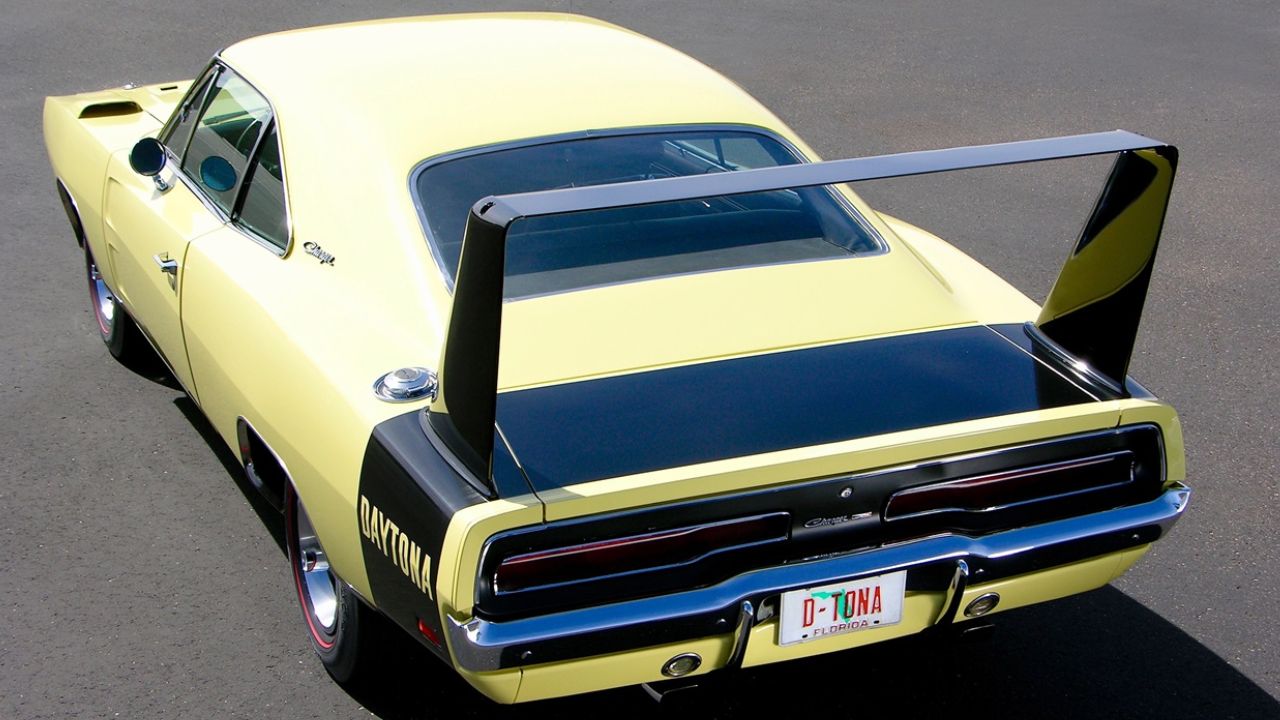
The Dodge Charger Daytona, a high-performance variant of the iconic muscle car, was produced exclusively in 1969 and 1970, with just 503 units built to dominate NASCAR racing. Recent reporting highlights its status among the hottest muscle cars of the 1960s and 1970s, where collector values have surged due to rarity and historical significance. As of late 2025, these classics command premium prices in the market, reflecting renewed interest from enthusiasts and investors.
Origins and Development
Dodge’s decision to create the Daytona aero package in late 1968 grew directly out of NASCAR rule changes that required production-based aerodynamic modifications for high-speed tracks. The standard Charger, even in potent R/T trim, struggled with front-end lift and high-speed stability on superspeedways, so Dodge engineers set out to design a purpose-built package that could slice through the air more efficiently while still meeting homologation rules. The stakes were clear for the brand, because success in NASCAR’s Grand National Series translated into showroom traffic and validated Dodge’s performance image at a time when muscle car buyers closely followed stock car results.
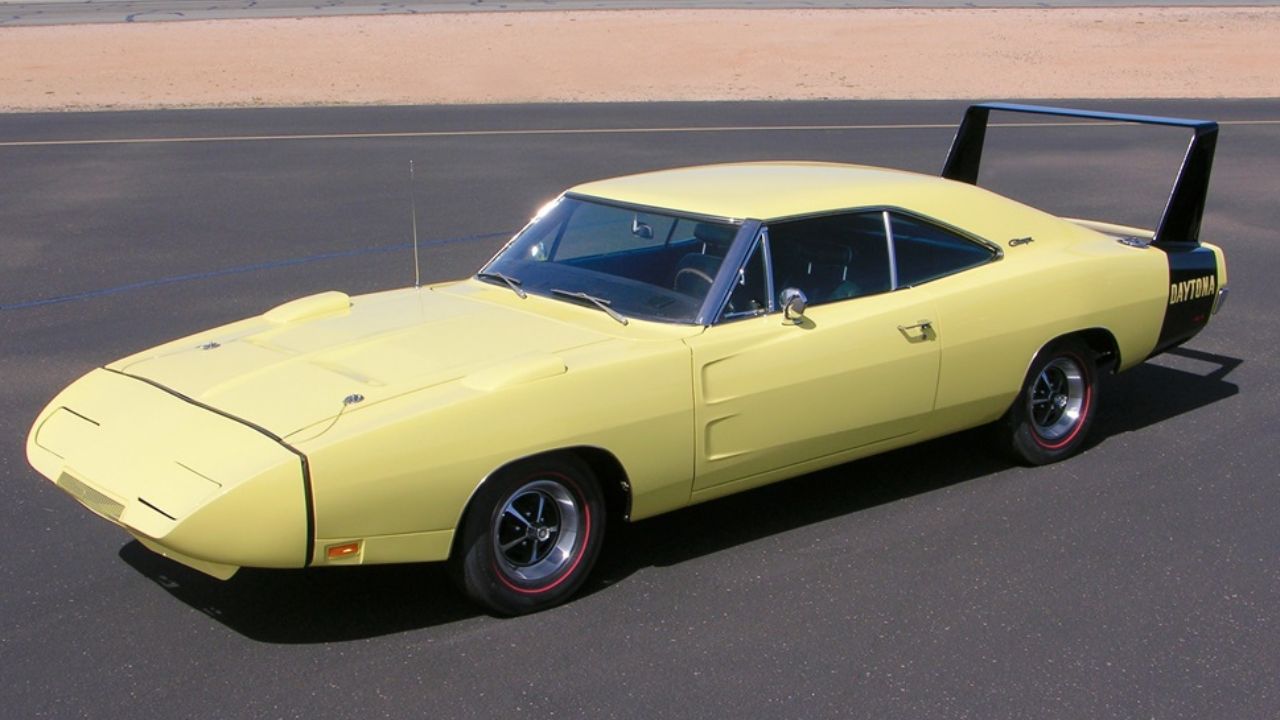
To solve the aerodynamic problem, Dodge engineers worked closely with stylist Harvey Allen, who helped integrate radical wind-cheating components into the Charger’s familiar fastback shape. The most visible changes were a 23-inch nose cone that replaced the conventional front grille and a towering 63-inch rear spoiler that sat high in clean air, both of which transformed the car’s profile into something closer to a race prototype than a street coupe. By combining these elements with the existing B-body platform, Dodge created a package that contemporary analysts now describe as one of the most aggressive factory aero cars of its era, and modern coverage of what the hottest classic muscle cars are worth right now consistently positions the Daytona as a top contender in the muscle car era’s competitive landscape, underscoring how its engineering-first design has become a central driver of its collector appeal.
1969 Production Launch
The 1969 production launch marked the first appearance of the Daytona Charger on public roads, with Dodge building 434 units to satisfy NASCAR’s homologation requirements. Buyers could order the car with the legendary 426 Hemi V8 engine option, rated at 425 horsepower, which turned the already slippery body into a genuine high-speed weapon. The base price of $3,995 placed the Daytona at the upper end of the muscle car market, but Dodge justified the premium with race-bred hardware and a specification sheet that read like a competition catalog, signaling to performance-focused customers that this was not a cosmetic package but a street-legal extension of the brand’s NASCAR program.
Market reception at the time was mixed, because the Daytona’s extreme styling, including its long nose and towering wing, divided traditional Charger buyers even as it captivated racing fans. Dodge offered the car in high-visibility colors such as Go Mango and Top Banana, choices that were as much about trackside recognition as they were about showroom flair, and those hues have since become shorthand for the model’s extroverted character. Early racing results quickly validated the engineering, with Buddy Baker setting a 200 mph speed record at Daytona International Speedway in March 1970 in a Daytona, a milestone that proved the aero package worked as intended and cemented the car’s reputation among competitors and collectors who now view that achievement as a key reason the 1969 models command strong prices.
1970 Model Year Changes
The 1970 model year brought a sharp reduction in production, with only 69 Daytona units built as regulatory and market pressures began to squeeze the muscle car segment. Stricter emissions regulations were starting to limit how aggressively manufacturers could tune big-block engines, and the early stages of the oil crisis buildup were already shifting public sentiment away from thirsty high-performance cars. Within that context, Dodge repositioned the Daytona as an even more specialized offering, which has had lasting implications for collectors because the tiny 1970 production run created a scarcity that now drives some of the highest valuations in the vintage Mopar world.
Mechanical changes reflected both performance ambitions and regulatory realities, with the 1970 Daytona adopting the 440 Six Pack engine as standard equipment, using three two-barrel carburetors to produce 390 horsepower while still offering the optional 426 Hemi for buyers who wanted maximum output. Dodge also adjusted its sales strategy, leaning more heavily on dealer-installed conversions and homologation-focused builds that could satisfy certification requirements while keeping showroom inventory manageable. That approach created a patchwork of configurations that modern buyers scrutinize closely, because verifying whether a car was factory-built or converted at the dealer can significantly affect value, and the complexity of those histories is one reason detailed documentation has become so critical in today’s market.
Racing Heritage and NASCAR Dominance
The Charger Daytona’s entire existence was rooted in NASCAR competition, and its impact on the 1969 Grand National Series remains central to its legend. Dodge developed the car as a purpose-built response to the aerodynamic arms race on high-speed ovals, and the results were immediate, with Daytona entries securing 21 wins out of 29 Hemi-powered victories that season. Those numbers underscored how effectively the aero package translated engineering theory into on-track dominance, and they also reinforced the perception among fans and rivals that Dodge had pushed the boundaries of what a “stock” car could be within the rulebook, a perception that still shapes how regulators and historians talk about the era.
Key drivers played a major role in cementing the Daytona’s reputation, particularly Bobby Isaac, who captured the 1969 championship in a Daytona and demonstrated how the combination of Hemi power and wind-tunnel-informed bodywork could deliver consistent results over a full season. At the same time, Richard Petty’s transition to Plymouth after Dodge’s withdrawal from certain factory efforts highlighted the broader corporate strategy behind the aero cars, as Chrysler spread its racing bets across multiple brands while NASCAR officials grew increasingly concerned about escalating speeds. The radical design of the Daytona and its sibling aero cars ultimately influenced stock car racing rules, leading to a 1971 ban on such extreme aerodynamic modifications, and that regulatory clampdown effectively marked the end of the Daytona’s front-line track era, a finite window of dominance that now adds to its mystique and investment appeal.
Restoration and Preservation Efforts
Decades after production ended, restoration and preservation have become critical to keeping the Charger Daytona’s legacy visible, but the process is far from straightforward. Owners and shops face significant challenges sourcing original fiberglass nose cones, rear wings, and other unique aero components, many of which were discarded or damaged when the cars were still inexpensive used vehicles. Authentic 426 Hemi engines and correct 440 Six Pack components are similarly difficult to locate, and the scarcity of these parts means that restorers must often choose between painstaking searches for period-correct pieces and carefully documented high-quality reproductions, a choice that can materially affect a car’s value at auction.
Enthusiast groups have stepped in to fill some of these gaps, with organizations such as the Daytona Charger Club organizing events, registry efforts, and technical sessions focused on preserving accurate information about how these cars were originally built. Those gatherings allow owners to compare casting numbers, paint codes, and aero details, helping to weed out clones and poorly documented cars that might otherwise distort the market. In 2025, meticulous restorations that adhere closely to factory specifications have become a key driver of rising values, aligning with a broader muscle car revival in which buyers reward authenticity and provenance, and that trend has encouraged more owners to invest in high-quality preservation rather than quick cosmetic refreshes.
Current Collector Market Values
As of late 2025, the Charger Daytona sits near the top of the classic muscle car value charts, reflecting both its limited production and its outsized racing history. Entry-level values for driver-quality 1969 Daytonas typically start around $150,000, with prices climbing quickly for cars that retain original drivetrains, documentation, and factory-correct aero components. Low-mileage examples with strong provenance can exceed $300,000 based on condition, color, and options, and those figures place the Daytona firmly in the realm of serious collectors rather than casual hobbyists, which in turn shapes how often these cars appear on the open market.
The rarest and most sought-after configurations are the 1970 Hemi models, of which only 22 units were produced, and those cars often reach $500,000 or more at major auctions when they are fully documented and correctly restored. Reporting on the broader muscle car segment indicates that values for the hottest 1960s and 1970s models have risen by roughly 20 to 30 percent over 2024 levels amid economic recovery and renewed collector demand, and the Daytona has been a prime beneficiary of that surge. Analysts point out that this appreciation reflects both the car’s intrinsic desirability and a shift in investor behavior, as buyers look for tangible assets with strong historical narratives, and the Daytona’s combination of homologation pedigree and limited supply makes it a natural focal point for that capital.
Future Outlook and Investment Potential
Looking ahead, the Charger Daytona’s investment potential appears closely tied to broader shifts in the automotive landscape, particularly the rise of electric vehicles and the nostalgia cycles that follow major technological transitions. As new performance cars move toward battery power and advanced driver assistance systems, younger enthusiasts are increasingly drawn to analog classics that offer a direct mechanical connection and a clear sense of historical context, and the Daytona fits that profile with unusual clarity. Market observers note that this generational interest, combined with the finite supply of genuine cars, is likely to support continued value growth, although the pace of appreciation may moderate as prices reach levels that limit the pool of potential buyers.
Investment advice from specialists in the classic muscle sector consistently emphasizes the importance of original documentation, matching-numbers engines, and verifiable ownership histories when evaluating a Daytona purchase. Cars that can be traced back to their original selling dealers, especially those with known racing or show histories, tend to command the strongest premiums and are better positioned to weather market fluctuations. Changes since the immediate post-pandemic period, including auction surges reported in late 2025, have reinforced the perception of the Daytona as a relatively stable hedge against modern car depreciation, and for buyers willing to prioritize authenticity and long-term stewardship over short-term speculation, the model remains one of the most compelling blue-chip muscle car investments available.