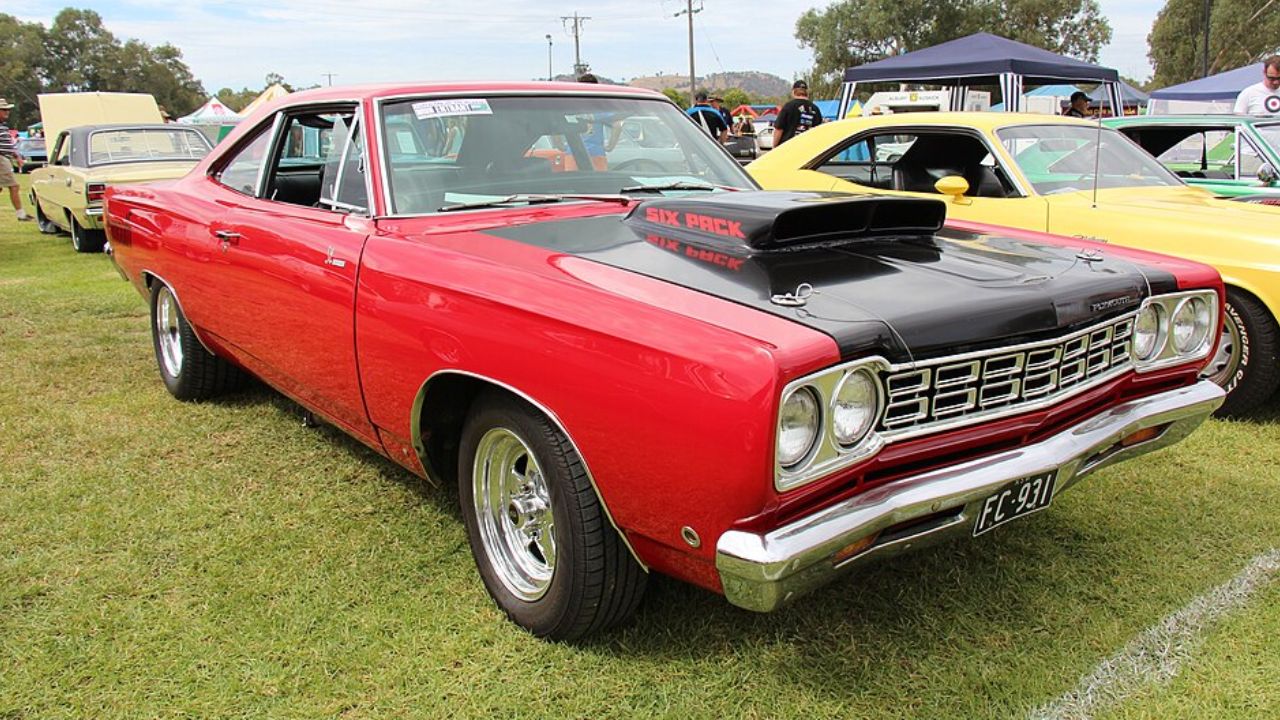
The Plymouth Road Runner 440+6 arrived at the height of the muscle car wars, turning a budget bruiser into a street terror that could run with the era’s most expensive hardware. Understanding when that package hit showrooms, and what collectors pay for it today, means tracing how a bare‑bones performance idea evolved into one of the most coveted Mopar combinations ever built.
I will walk through how The Plymouth Road Runner was conceived, how the 440 “Six Pack” (or “440+6”) option emerged in 1969, and why values for these cars now stretch from attainable driver money to serious auction territory for the best documented examples.
From bargain muscle to big‑block menace
The Plymouth Road Runner began as a deliberate throwback, a stripped, affordable way to get serious performance without the frills that had crept into other muscle cars. The Plymouth Road Runner was introduced by Chrysler in the United States for the 1968 model year, positioned to undercut better‑equipped siblings on price while still delivering genuine quarter‑mile capability. That formula of low cost, minimal trim and big power quickly resonated with buyers who cared more about elapsed times than vinyl roofs.
By the time the second model year rolled around, Plymouth had proof that the concept worked and room to push the car further up the performance ladder. For the 1969 model year, production exploded, with For the 1969 model year a total of 84,420 Road Runners left the factory and 76,693 of those were delivered within the United States, a clear sign that the market wanted exactly what this car offered. That success set the stage for Plymouth to experiment with more extreme engine options without abandoning the car’s blue‑collar roots.
When Plymouth released the 440 “Six Pack” Road Runner
The Road Runner 440+6 story really begins when Plymouth decided to drop its hottest big‑block into the car as a special package. Released in February 1969, Plymouth offered their potent 440 “Six Pack” engine in the Road Runner as part of a focused performance option known internally as the A12 package. Contemporary descriptions of the 1969 Plymouth Road Runner 440 A12 emphasize that it was Released in February and that Plymouth paired the 440 with a trio of two‑barrel carburetors, the famous “Six Pack” setup that gave the car its 440+6 identity.
Enthusiast accounts of the A12 Road Runner echo that same timeline and configuration. One widely shared description of the 1969 Plymouth Road Runner 440 A12 notes that it was Released in February 1969, that Plymouth offered their potent 440 “Six Pack” engine in the Plymouth Road Runner, and that the combination quickly became a muscle car legend. Another enthusiast discussion dated Jan 19, 2025, repeats that the Plymouth Road Runner 440 A12 package was Released in February and again highlights Plymouth’s use of the 440 “Six Pack” engine, reinforcing February 1969 as the launch window for the 440+6 Road Runner.
How the 440+6 package changed the Road Runner
Adding the 440 “Six Pack” did more than bump the spec sheet, it fundamentally shifted how the Road Runner was perceived among street racers and collectors. The A12 cars combined the 440 with three Holley carburetors, heavy‑duty internals and a host of supporting upgrades that turned the budget muscle car into a serious threat to more expensive rivals. Period‑style write‑ups of the 1969 Plymouth Road Runner 440 A12 stress the presence of the 440 engine and the “Six Pack” induction, describing how Plymouth used that setup to create a car that could embarrass better‑equipped machines while still wearing the Road Runner badge.
Beyond the engine bay, the 440+6 Road Runner adopted visual and hardware cues that signaled its intent. Contemporary overviews of the A12 package mention a distinctive fiberglass hood and bare H‑series wheels that differentiated these cars from standard models, details that are highlighted in performance‑focused profiles of the Produced 1969 to 1970 Plymouth Road Runner 440+6 HT Coupe. Those same profiles note that the 440+6 configuration was Produced from 1969 to 1970 and that Competition from other companies and new Chrysler products would eventually pressure Road Runner sales, underscoring how the 440+6 arrived at a very specific peak in the muscle car timeline.
Production span: 1969–1970 and the A12’s place in it
Although the A12 package itself is tied tightly to that February 1969 release, the broader 440+6 story stretches across two model years. Detailed model histories of the Plymouth Road Runner 440+6 HT Coupe state that it was Produced from 1969 to 1970, placing the 440+6 configuration squarely in that brief window before insurance costs and emissions rules began to reshape the market. Those same accounts, dated Nov 13, 2005, point out that Competition from other companies and new Chrysler offerings eroded the Road Runner’s dominance, which helps explain why the 440+6 option did not last longer.
The 1970 model year added its own twist to the 440+6 formula, with new colors and minor styling changes that have become highly prized among collectors. A recent auction preview of a rare 1970 Road Runner 440+6 finished in Sassy Grass green notes that Mecum expects this Road Runner to bring between $140,000 and $160,000, and that the car’s combination of rarity, color and condition is central to that estimate. That preview, published on Jul 30, 2025, underscores how a well‑documented 1970 440+6 car can command six‑figure attention at a major sale, especially when it carries the kind of visual punch that defined Mopar’s 1970 palette, and it anchors the 440+6’s second model year firmly in today’s high‑end market through a Mecum valuation.
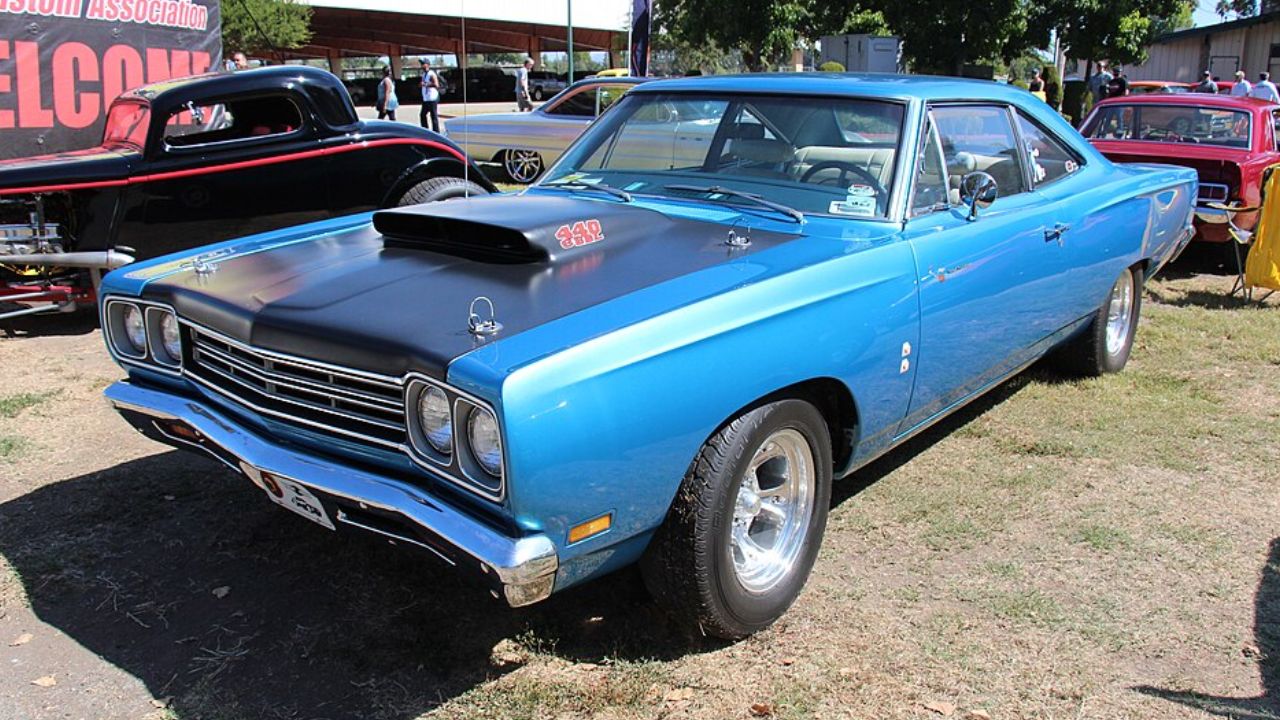
How many Road Runners, and how rare is 440+6?
To understand how special the 440+6 cars are, it helps to set them against overall Road Runner production. For the 1969 model year, For the 1969 model year a total of 84,420 Road Runners were built and 76,693 of those Road Runners were delivered within the United States, figures that illustrate just how popular the basic formula had become by the time the A12 package arrived. Those totals, highlighted in a feature dated Jun 29, 2020, show that the 440+6 cars were always going to be a small slice of a very large pie, even before attrition and modifications thinned their ranks, and they are documented in a Jun 29, 2020 feature.
Exact factory counts for 440+6 Road Runners are not detailed in the available sources, so the precise number of surviving A12 and 1970 440+6 cars remains unverified based on available sources. What is clear is that the 440+6 configuration sat above the standard engines and was marketed as a focused performance upgrade, which by definition limited its take‑rate compared with the base cars. The rarity narrative is reinforced by modern auction commentary that singles out 440+6 Road Runners as special finds, such as the Sassy Grass 1970 example that Mecum expects to bring $140,000, and by enthusiast discussions that still call the 1969 Plymouth Road Runner 440 A12 a “Muscle Car Legend” when they describe the Plymouth Road Runner 440 A12 package.
Price benchmarks: what Road Runners cost today
Modern pricing for Road Runners spans a wide range, from driver‑grade cars to concours‑level restorations, and the 440+6 examples sit near the top of that spectrum. A widely used valuation guide notes that Typically, you can expect to pay around $64,463 for a 1969 Plymouth Road Runner in good condition with average specification, and that the highest sale recorded in the last three years was $275,000. Those figures, attached to the Typically cited valuation for a 1969 Plymouth Road Runner, provide a baseline for standard cars and suggest that the very best examples can already push into the mid‑six‑figure range.
Market‑wide data for the Plymouth Road Runner line reinforces that spread between entry‑level and top‑tier cars. A summary of auction results for the Plymouth Road Runner notes that the lowest recorded sale price was $6,700 for a 1971 Plymouth Road Runner and that the average price across the model line is $72,454. Those figures, presented in response to the question “What is the lowest sale price of a Plymouth Road Runner?”, show how broad the market has become, with tired or less desirable years trading hands for used‑car money while strong cars command far more. For buyers trying to understand where a 440+6 fits, that context from the What Plymouth Road Runner market summary is essential.
Where the 440+6 sits in that value ladder
Within that broad pricing landscape, the 440+6 Road Runners occupy a premium niche driven by performance, rarity and documentation. The Sassy Grass 1970 Road Runner 440+6 that Mecum expects to bring between $140,000 and $160,000 illustrates how a well‑restored, correctly optioned car can sit roughly double the average Road Runner price and well above the $64,463 figure cited for a typical 1969 example in good condition. That estimate, tied directly to a specific 440+6 car, suggests that collectors are willing to pay a substantial premium for the combination of the 440 “Six Pack” engine, desirable color and strong provenance that define the best of these cars, as highlighted in the Road Runner auction preview.
At the same time, the broader valuation tools remind buyers that not every Road Runner, and not every 440+6, will command that kind of money. The general 1969 Plymouth Road Runner valuation that pegs a good car at $64,463 and records a $275,000 high sale, combined with the market‑wide average of $72,454 and the $6,700 low sale for a 1971 car, shows that condition, originality and specification are decisive. A 440+6 car with incorrect parts or a weak history may sit closer to the upper end of standard Road Runner values, while a documented A12 or 1970 440+6 in a standout color can push toward the top of the range. For anyone shopping today, cross‑checking a specific car against those benchmarks in the Plymouth Road Runner valuation tools and the broader Plymouth Road market data is the most reliable way to gauge whether an asking price reflects the car’s true place in the 440+6 hierarchy.