
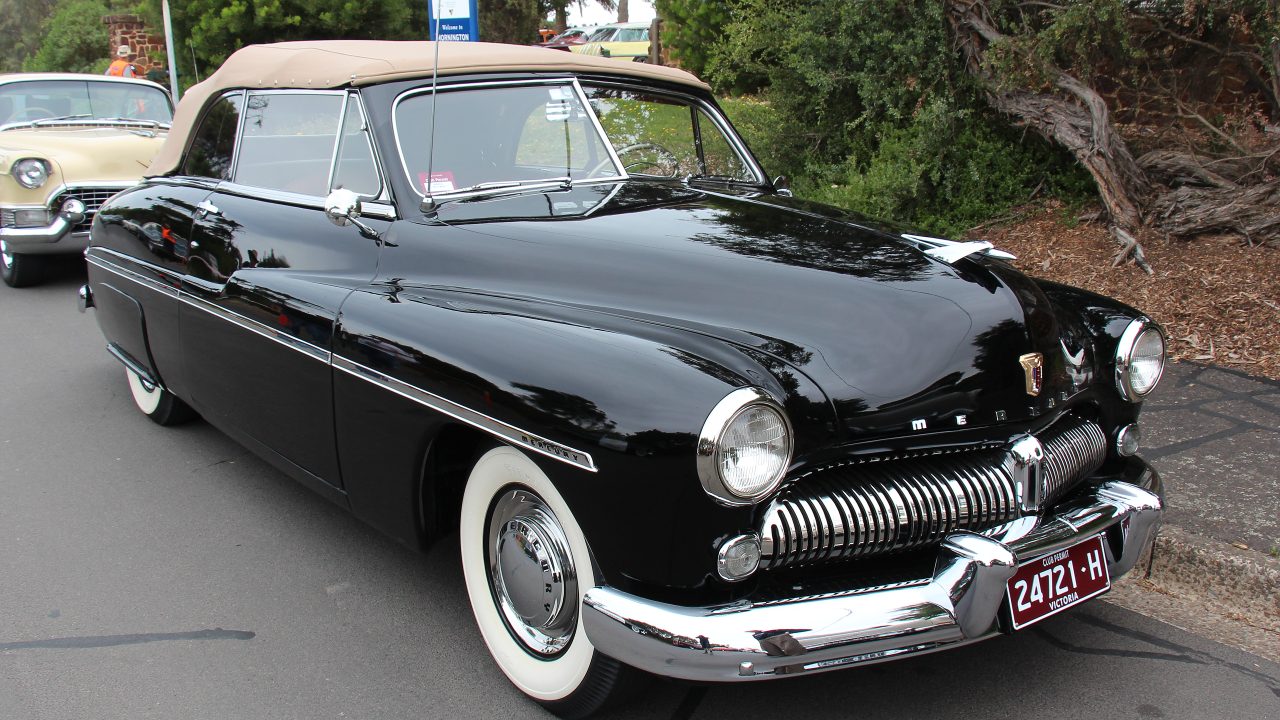
The 1951 Mercury Monterey did not arrive as an instant icon. Its reputation grew over time, as postwar styling, Hollywood exposure, and custom culture slowly turned a well-priced American coupe into a touchstone for collectors and builders. When I look at how that following formed, I see a mix of smart factory design and the creativity of owners who saw the car as raw material for something more personal.
By tracing the Monterey’s evolution from showroom model to custom legend, it becomes clear that its appeal rests on a specific blend of proportions, mechanical simplicity, and cultural timing. The car emerged just as Mercury, positioned between Ford and Lincoln, was redefining its postwar identity, and that context shaped how enthusiasts would later embrace the 1951 model year.
From postwar redesign to Monterey badge
The groundwork for the 1951 Mercury Monterey’s later fan base was laid in the immediate postwar years, when Mercury moved away from prewar carryover designs and into a cleaner, more modern look. Starting with the 1949 model year, Mercury received what period observers described as an all new, postwar styling shift, with nearly everything changed in terms of body and mechanical components compared with earlier cars. That redesign created the rounded, slab-sided profile and integrated fenders that would define Mercury’s image and give the 1951 cars their distinctive stance.
Within the broader Mercury lineup, the Monterey name arrived as part of this push to refresh the brand and give buyers a more upscale trim without stepping all the way up to Lincoln. Mercury sat between Lincoln and Ford in the corporate hierarchy, and the Monterey badge helped signal a more premium interpretation of the same basic platform that underpinned other American models from the company. By 1951, that strategy meant the Monterey could offer richer interior appointments and a more stylish roofline while still sharing the robust mechanicals that made Mercury products practical daily transportation.
Why the 1951 update mattered
Although the 1949 redesign was dramatic, the specific 1951 changes gave the Monterey the look that enthusiasts would later fixate on. Mercurys had undergone little more than trim changes from 1949 to 1950, but the 1951 model year brought more drastic updates to the front and rear styling. The new grille treatment, revised bumper details, and reshaped rear fenders sharpened the car’s presence and made the body appear lower and more substantial, even before any custom work was done.
Those factory tweaks mattered because they created a better starting canvas. The 1951 cars retained the rounded, flowing lines introduced earlier, yet the updated trim and proportions made the coupe and two door body styles especially attractive to buyers who wanted something that looked more expensive than a standard Ford. Period descriptions of the 1951 Mercurys emphasize how easily the car could be turned into a custom, and that ease of transformation is a key reason the Monterey from that year, rather than its immediate predecessors, became the version that later generations sought out.
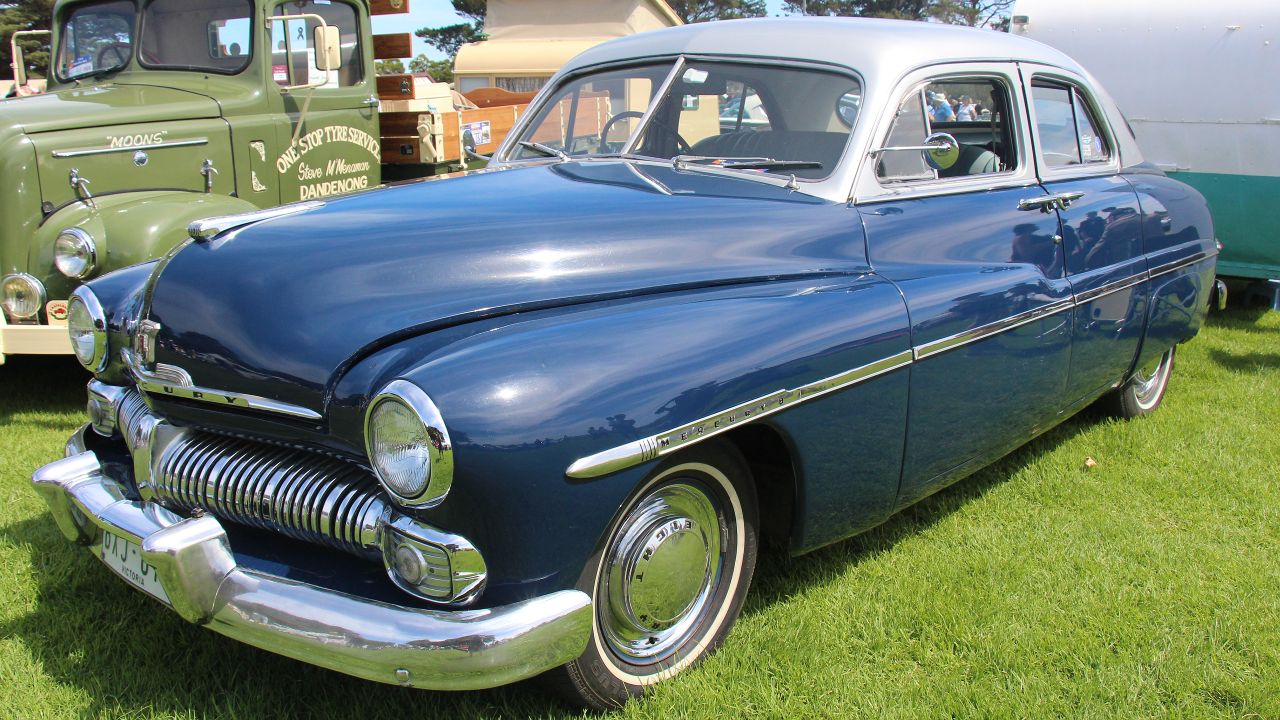
Hollywood, customs, and the rise of the ’51 Merc
The Monterey’s following did not grow in isolation on dealer lots; it was amplified by the way 1951 Mercurys appeared in American popular culture and in the hands of customizers. Mercury models from this era made an appearance in several films, which helped cement the basic silhouette in the public imagination as a quintessential early fifties American car. On screen, the long hood, low roof, and heavy beltline read as both modern and slightly menacing, a combination that would later appeal to hot rodders and custom builders.
Custom culture then took that cinematic image and pushed it further. One of the most influential examples was the chopped 1951 Mercury built for Bob Hirohata by Barris Kustoms. Bob Hirohata commissioned Barris Kustoms to create a heavily modified 1951 Mercury that he intended to drive, not just show, and the resulting car has been described as one of the most important custom cars of all time. The Hirohata Mercury, with its lowered roof, smoothed bodywork, and reworked trim, showed how far the basic 1951 shell could be taken, and it inspired countless copies and tributes that kept interest in the model alive long after it left production.
From used car to cult object
As the years passed and newer models arrived, the 1951 Mercury Monterey shifted from everyday transportation to sought after project car. Enthusiasts noticed that the car’s body lent itself to chopping, channeling, and other classic custom techniques without losing its proportions, which is why period accounts stress how easily a 1951 Merc could be turned into a custom. The combination of a sturdy frame, simple mechanical layout, and generous sheet metal gave builders room to experiment while still relying on proven components that traced back to Mercury’s postwar redesign.
That flexibility helped the Monterey cross generational lines. In more recent coverage of car culture, television segments have highlighted how modern builders still react when they spot what they think is a 51 M era Merc on the street or in a yard, treating it as a rare opportunity rather than just another old car. The excitement captured in those moments reflects decades of accumulated reputation, where the 1951 Mercury is no longer just a used coupe but a platform with a recognized place in American automotive history.
The Monterey’s legacy in today’s enthusiast world
Today, the 1951 Mercury Monterey occupies a specific niche that blends historical significance with ongoing usability. Collectors value original examples that retain the factory styling cues introduced in the early postwar years, including the rounded body and distinctive 1951 trim, because those details connect directly back to Mercury’s effort to distinguish itself between Lincoln and Ford in the American market. At the same time, the car’s mechanical simplicity, rooted in the nearly all new components that arrived for 1949, means that a well maintained Monterey can still be driven and enjoyed without exotic parts or specialized knowledge.
Customizers, meanwhile, continue to look back to landmark builds like the Bob Hirohata Mercury as proof of what a 1951 body can become in the right hands. The enduring status of that Barris Kustoms project, and the way it is still cited as a benchmark for chopped 1951 Mercury work, keeps demand strong for solid project cars and original sheet metal. When I see how often enthusiasts reference the 51 M era Merc in conversations about traditional customs, it is clear that the Monterey’s following is not a nostalgic accident but the result of design decisions, cultural exposure, and individual creativity that converged around the 1951 model year.
More from Fast Lane Only:



Leave a Reply