
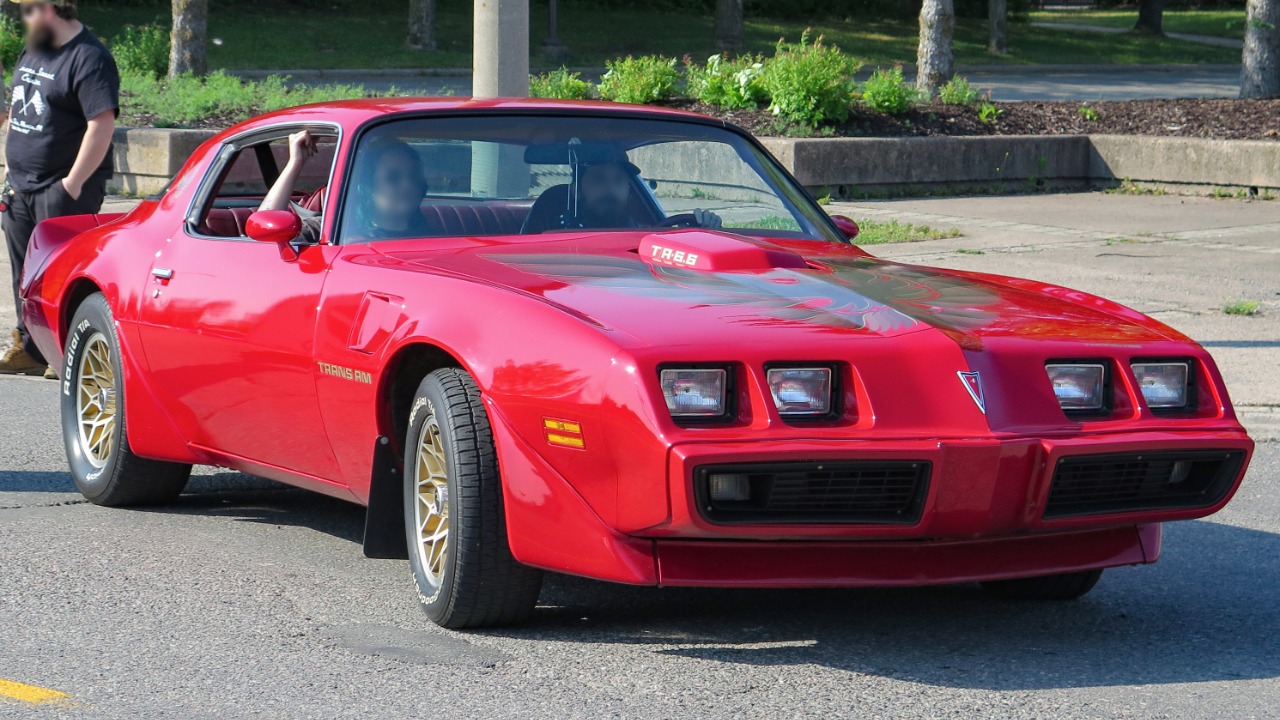
The 1979 Pontiac Firebird Trans Am did not just close out a decade, it crystallized everything loud, flashy, and unapologetically American about late‑seventies performance. You still feel that when you see the long hood, the T‑tops, and the giant bird spreading its wings across the nose. If you are drawn to cars that mix movie‑star charisma with real mechanical bite, this is the moment when the Firebird Trans Am truly owned the spotlight.
By the time that model year rolled around, the muscle‑car era was supposed to be fading, yet the Firebird Trans Am was selling harder than ever and burrowing into pop culture. You can trace that staying power today in auction prices, fan communities, and the way a single black and gold coupe still dominates any parking lot you roll into.
The last, loud peak of the second‑gen Firebird
When you look at the 1979 Pontiac Firebird Trans Am, you are seeing the final act of the second‑generation Firebird, a car that had been evolving since the early seventies. Earlier versions, like the Pontiac Firebird from the mid‑decade, had already adapted to new safety rules with heavier bumpers and revised styling. By 1979, Pontiac leaned into drama, giving the Trans Am a more aggressive nose and a full‑width rear light panel that made the car look wider and meaner at night.
Fans in groups like the one run by Jun still point out that the 1979 Pontiac Firebird Trans was the last model year of that second‑generation body, and it went out with a bang. Another post from Jun calls the 1979 Pontiac Trans Am a classic American muscle car from the height of the Firebird line, tying it directly to the era when the car’s image was cemented on screen and on the street.
Styling that shouted across the parking lot
Even if you never drove one, you can probably sketch the 1979 Pontiac Firebird Trans Am from memory, because the styling was designed to be unforgettable. Owners in enthusiast groups describe the 1979 Pontiac Firebird Trans as a standout classic muscle car, calling out its distinctive lines, flared fenders, and the way the shaker scoop rises through the hood. Another fan post from Sep leans on the same language, underscoring how that shape still reads as pure Pontiac muscle decades later.
Jun and other enthusiasts rave about the “screaming chicken” hood graphic that dominated the 1979 Pontiac Trans Am, a decal so large and bold that it turned the entire front of the car into a rolling billboard. Another detailed write‑up from Jul calls the 1979 Pontiac Firebird Trans a Late ’70s Legend, highlighting the T‑top roof, turbine‑style wheels, and color schemes that made the car look as wild standing still as it did at full throttle.
Hollywood, “Smokey,” and a car that stole the scene
If you are wondering how a single model year ended up so famous, you have to look at the way Hollywood turned the Trans Am into a co‑star. One fan page notes that the 1979 Pontiac Trans Am soared into fame thanks to its association with Smokey and the Bandit, crediting that movie connection and the giant Firebird decal for turning the car into an American icon. Another post spells out how the 1979 Firebird Trans Am was riding high culturally on the wave generated by the Smokey and the Bandit films, framing the car as an enduring symbol of the American muscle car experience.
That screen presence did not come out of nowhere. Another enthusiast group points out that a 1977 Pontiac Trans Am became The Star of Smokey and the Bandit Few cars are as synonymous with Hollywood as that black and gold coupe. A separate nostalgia post recalls how a black Pontiac Firebird Trans with a gold firebird gained immense popularity because of its appearance in that film, cementing its place in automotive history and setting the stage for the 1979 model to bask in the same glow.
Under the skin, still a real muscle car
For all the decals and movie glamour, you still care about what sits under the hood, and the 1979 Trans Am gave you options. Technical write‑ups explain that Lower rung Firebirds might have the Buick V‑6, a 150-bhp four‑barrel 301 V‑8, or a Chevrolet built 305, while a final batch of 400-cid V‑8 engines kept the performance flame alive for buyers who wanted serious torque. That mix of engines shows you how Pontiac was threading the needle between tightening emissions rules and drivers who still expected a muscle car to feel fast.
Chassis upgrades helped too, especially if you stepped up to the 1979 Pontiac Firebird Trans WS6, which enthusiasts describe as a standout from the golden era of late ’70s American muscle, with bold styling matched by more aggressive suspension and handling. Another detailed comparison of the 1978 and 1979 front ends notes that the 1979 Pontiac Trans Am marked the final peak of the second‑generation Firebird, blending that aggressive new nose and full‑width tail with muscle car attitude even as performance was being choked by tightening emissions standards.
Sales highs and collector heat today
When you put all of that together, it is no surprise that buyers flocked to showrooms. Period analysis notes that Firebird and TA sales soared and hit a phenomenal peak in 1979, with some 210k Firebi units sold across the range. That kind of volume, at a time when many muscle‑car nameplates were shrinking or disappearing, shows you how strongly the Trans Am’s image resonated with drivers who wanted something that still felt rebellious.
Decades later, you can see that demand reflected in the market. Valuation guides explain that Pontiac Firebird Trans prices have climbed, and another breakdown notes that Typically you can expect to pay around $32,529 for a 1979 Pontiac Firebird Trans in good condition with average spec. Auction records show how far the top of the market can go, with one like‑new 1979 Pontiac Firebird Trans with just 37 miles selling at Barrett for $220,000, a figure that would have sounded impossible when the car was new.
Special editions only intensify that heat. One 10th Anniversary Pontiac Firebird with just 782 actual miles, matching‑numbers engine, and original 15×8 turbine‑style wheels shows how collectors chase the rarest, most untouched examples. Auction databases invite you to dig into specific cars, such as a 1979 Pontiac Firebird Trans that lets you see how individual histories and options affect the final hammer price. Put simply, if you decide to chase a 1979 Trans Am today, you are not just buying a car, you are buying into a moment when the Firebird sat squarely at the center of American car culture.
More from Fast Lane Only

Leave a Reply