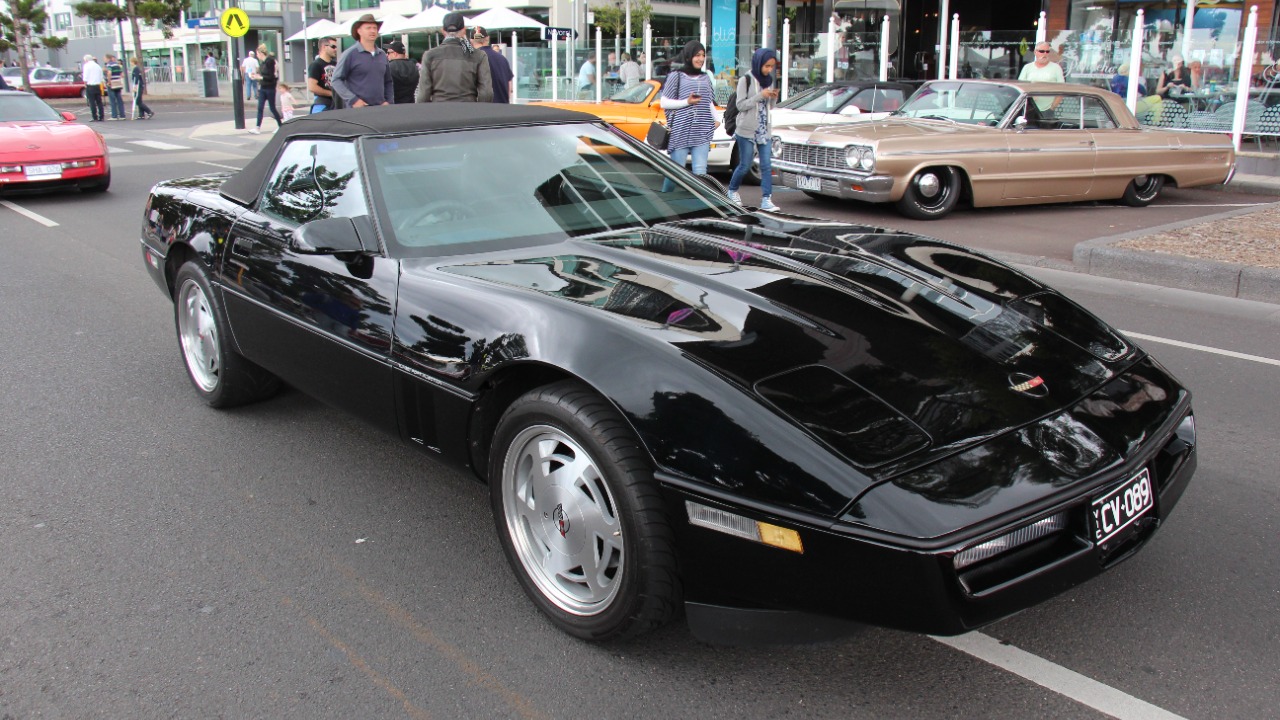
The 1990 Corvette ZR-1 arrived at a moment when American performance cars were fighting to prove they could run with the world’s best, not just in a straight line but on a road course. What made it different was not only raw speed but a quiet revolution under the hood, where British engineering know‑how met Detroit muscle. When Lotus engineering crossed the Atlantic and slipped into the heart of Chevrolet’s icon, the result was a Corvette that finally behaved like a true global supercar.
I see that car as a turning point, the moment the Corvette stopped apologizing for its compromises and started chasing excellence on its own terms. The partnership with Lotus did not dilute the car’s identity, it sharpened it, and the 1990 ZR-1 still feels like the moment America decided to take the sports car game personally.
The unlikely marriage of an American icon and Lotus engineering
For decades the Corvette had been treated as an all‑American institution, a fiberglass flag on four wheels, so the idea of inviting outside help bordered on heresy. Being such an all‑American car, many fans saw any foreign influence as blasphemy, yet General Motors quietly turned to the expertise of Lotus, an English carmaker known for lightweight precision, to push its halo model into new territory. That tension between patriotic pride and pragmatic engineering set the stage for a collaboration that would redefine what the Corvette could be.
Inside GM, leaders understood that the fourth‑generation Corvette, even after its debut in 1984, was still a work in progress that needed a more sophisticated powertrain to match its ambitions. As the C4 hit the middle of its life, engineers were already sketching a new kind of engine, and the idea of a high‑revving, all‑aluminum V8 was exactly the sort of challenge Lotus relished. The C4 ZR1’s LT5 engine became the centerpiece of that effort, a project that delivered far more power than the standard L98 small‑block and signaled that this Corvette was playing in a different league.
Designing the LT5: when Detroit met Hethel
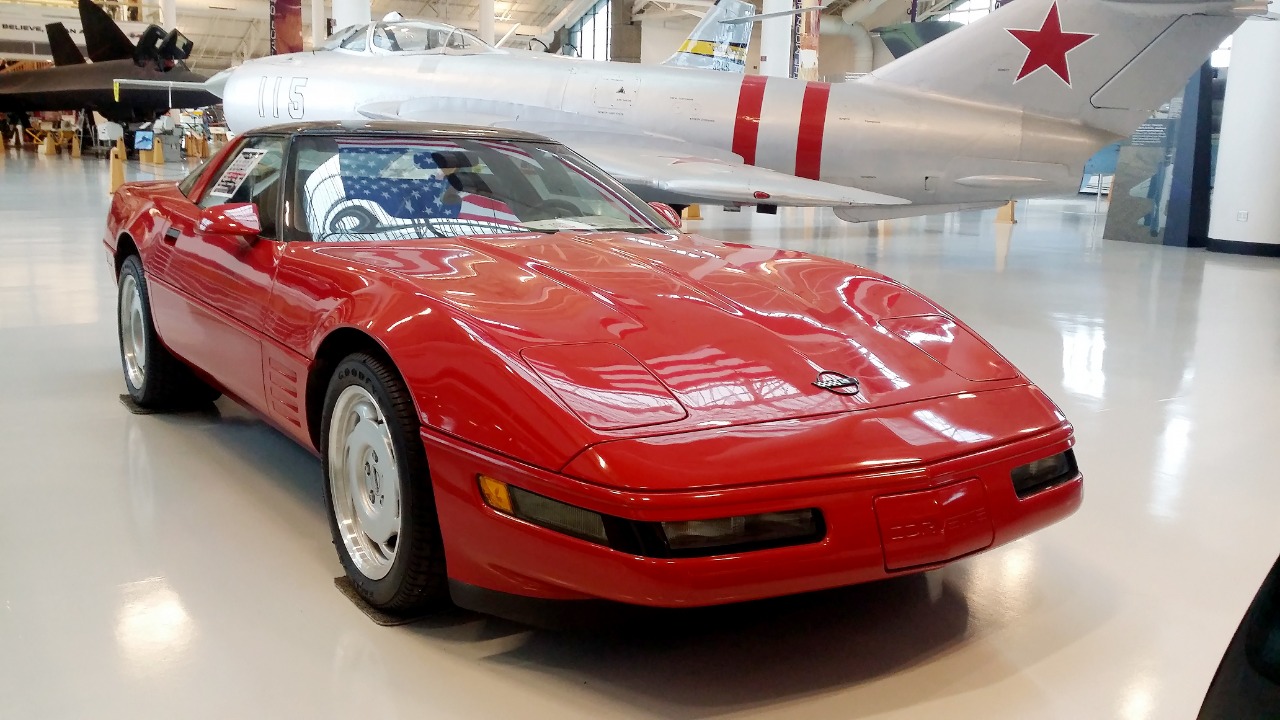
The heart of the ZR-1 story is the LT5, a 5.7 liter V8 that shared displacement with Chevrolet’s familiar small‑block but almost nothing else. Designed by Lotus and Corvette Engineers in Detroit, the all‑aluminum 5.7 engine used dual overhead camshafts and four valves per cylinder, a layout that felt more like something from Maranello than from Bowling Green. That architecture let the LT5 breathe at high rpm in a way the pushrod V8 never could, and it turned the ZR-1 into a car that loved to chase its redline rather than just surf low‑end torque.
What made the ZR‑1 so special was not only the power figure but the way the engine delivered it, with a smooth, relentless pull that matched the best European exotics of its day. Inside GM, the LT5 was championed as a technological showcase, an idea that Reuss favored as a way to prove that American engineering could master advanced valvetrain and combustion design. The LT5 Engine program became a rolling laboratory, and its success rested on the way Lotus translated racing‑style thinking into something that could survive daily driving and mass production.
From concept to “King of the Hill”
Inside GM’s planning rooms, the Corvette team wanted more than a quicker C4, they wanted a true halo sports car that could stand as a technological flagship. Wanting to use the C4 Corvette as a base, GM felt Lotus could extract performance that the venerable Chevy small block could not, and the result was a new engine that produced 375 horsepower and instantly turned the ZR-1 into the star of the show. That output might not shock modern readers, but at the turn of the 1990s it pushed the car into rarefied company and justified its internal nickname.
By the time the 1990 Corvette ZR-1 reached showrooms, it had already earned the “King of the Hill” moniker among engineers and enthusiasts who understood what Lotus had helped create. The car combined its advanced engine, designed in collaboration with Lotus Engineering, with a strengthened driveline and chassis tuning that finally let the Corvette exploit its power on a road course. In period footage, the Corvette ZR looks almost understated, but the “King of the Hill” nickname captured how it towered over the rest of the American performance landscape.
How the ZR-1 reshaped Corvette’s place in the 1990s
When I look back at the early 1990s, the ZR-1 feels like the moment the Corvette stopped being defined by its past and started setting benchmarks for others. Earlier C4 models had hovered around the 200‑horsepower mark, respectable but hardly world‑beating, and the jump to a 375‑horsepower flagship signaled a new era. The 1990s Renaissance It was not just about numbers, it was about a mindset shift inside Chevrolet that treated the Corvette as a platform for innovation rather than a nostalgia piece.
That shift is clear when you trace the ZR-1’s production run from 1990 through the mid‑1990s, a period that enthusiasts now recognize as The Dawn of an American Supercar. The car’s combination of speed, durability, and long‑distance comfort helped it become a benchmark for sports car excellence, and it forced rivals to respond with more serious hardware of their own. When I read accounts that discover the legendary C4 Corvette ZR-1, what stands out is how often it is mentioned in the same breath as European exotics that once seemed untouchable.
The ZR-1’s legacy in today’s market
More than three decades later, the 1990 ZR-1 has settled into that sweet spot where it is old enough to be collectible but modern enough to drive without drama. It was in the late 1980s that rumors started swirling about a high‑performance Corvette that would need wider rear bodywork to accommodate much fatter tires, and those visual cues still give the ZR-1 a subtle menace on the road. In today’s market, that blend of understated styling and serious engineering makes it especially appealing to enthusiasts who want something more interesting than a typical 1990s sports coupe.
Under the skin, the story of the first production LT5 engines has become part of Corvette lore, with collectors chasing early examples that trace directly back to the original collaboration. The very first production 1990 Corvette ZR-1 LT5 unit, designed by Lotus and Corvette Engineers in Detroit, is treated almost like a museum piece, a physical reminder of the moment when American pride and British ingenuity shared the same engine bay. When I see how carefully those engines are preserved and traded, it is clear that the ZR-1’s legacy is not just about lap times, it is about a rare instance of corporate bravery paying off.
Why the Lotus‑Corvette experiment still matters
For all the nostalgia that surrounds the ZR-1, I think its most important lesson is about openness. Being such an all‑American Corvette, the decision to invite Lotus into the project could have been seen as an admission of weakness, yet it turned out to be a show of confidence. The collaboration proved that you could respect tradition while still learning from outsiders, and that is a mindset that continues to shape how performance divisions operate today. However you phrase it, the partnership with Lotus showed that national pride and global thinking do not have to be at odds.
It also reframed what a top‑tier Corvette should be. Earlier generations had often been defined by straight‑line speed and brash styling, but the ZR-1 introduced a more rounded vision of performance that valued balance, endurance, and engineering depth. When I see later high‑performance Corvettes, from the C6 ZR1 to the mid‑engine C8, I can trace a direct line back to that 1990 car and the way Lotus saw extra potential in Chevy and its Halo Sports Car. The decision, captured in the way GM was wanting Corvette to rethink the venerable small‑block formula, still feels bold today, and it is why the 1990 ZR-1 remains more than just a fast C4. It is the moment Lotus engineering came to America and left the Corvette forever changed.
Looking across the broader ZR1 lineage, that 1990s Renaissance helped reset expectations for what a factory Corvette could deliver, and it nudged rivals to move beyond the 200‑horsepower comfort zone that had defined much of the previous decade. The modern ZR1s that followed, with their towering outputs and track‑ready hardware, owe a quiet debt to the first car that dared to mix British brains with American brawn. When I think about the 1990 Corvette ZR-1 today, I see less a period curiosity and more a blueprint, a reminder that the bravest moves in car culture often start with the simple admission that someone else might help you build something better.
Even now, enthusiasts still discover the echoes of that original experiment every time a new high‑performance Corvette is unveiled, and the story continues to resonate with anyone who loves seeing boundaries pushed in unexpected ways. The 1990 ZR-1 did not just bring Lotus engineering to America, it invited American performance into a wider conversation, and that is why its influence still lingers far beyond the spec sheet.
For collectors and drivers alike, the car’s appeal lies in that blend of heritage and disruption. It is a Corvette through and through, yet it carries the fingerprints of Hethel in every cam lobe and combustion chamber, a rolling reminder that even icons sometimes need a little help from overseas to become their best selves. When I picture that long‑hooded C4 with its subtle widebody and LT5 badge, I see a handshake across the Atlantic, sealed in aluminum and gasoline.
In the end, the 1990 Corvette ZR-1 stands as proof that collaboration can be the most American move of all, especially when the goal is to build a car that does not just wave the flag but earns its place on the world stage. The fact that it did so with the help of Lotus is not a footnote, it is the headline, and it is why that car still feels like a milestone every time the starter whirs and the LT5 clears its throat.
As enthusiasts continue to debate which generation of Corvette is the greatest, the original ZR-1 quietly holds its ground, confident in the knowledge that it changed the conversation. It may not shout the loudest at a cars‑and‑coffee meet, but for those who know the story, it represents something deeper: the moment when American ambition and British engineering met in the middle and decided to build a supercar together.
That is why, decades later, I still see the 1990 ZR-1 not just as a fast Corvette, but as a turning point in how American performance cars see themselves. It is a reminder that the most interesting chapters in automotive history often begin when someone is willing to ask for help, then bolt that help into the engine bay and send it screaming down the front straight.
And if you ever find yourself behind the wheel of one, listening to that LT5 climb toward redline, you will feel that history in the way the car pulls, steady and insistent, as if it knows exactly what it achieved back in 1990 and is still eager to prove it all over again.
More from Fast Lane Only: