
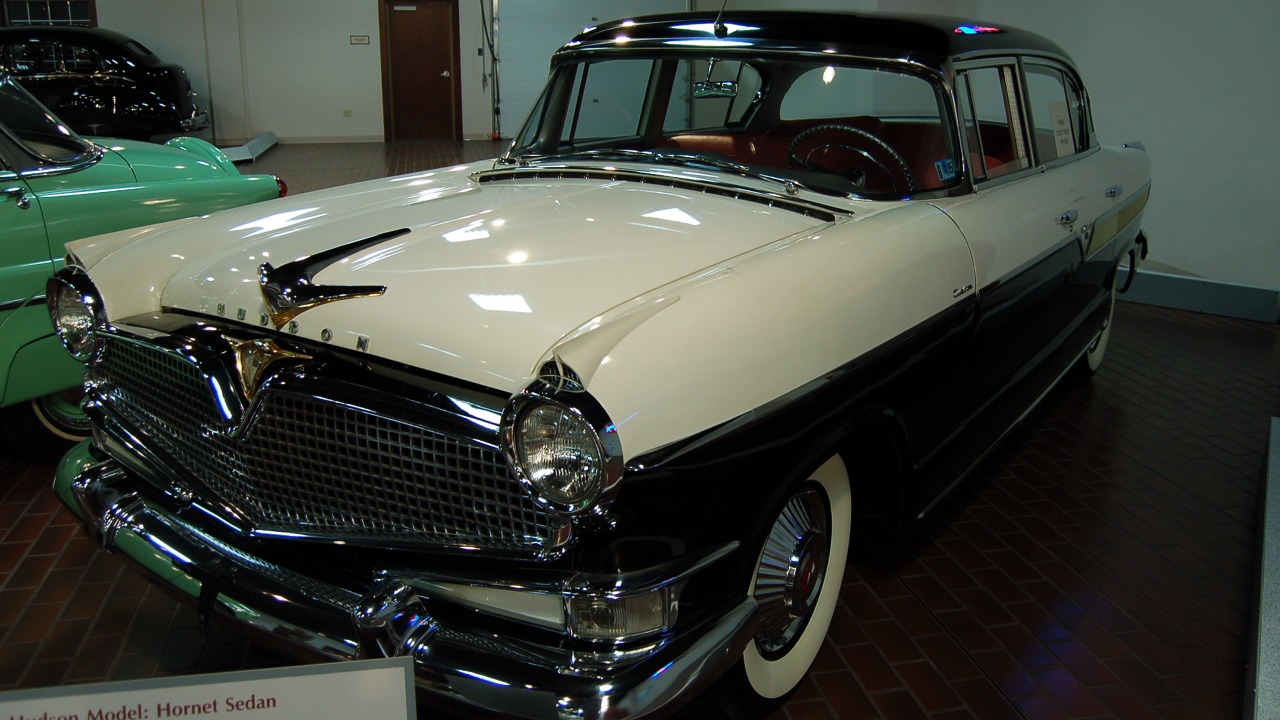
The 1956 Hudson Hornet arrived as a stylish, slightly desperate attempt to keep a storied nameplate alive in a market that had moved on. It carried the echoes of a racing legend and a once-innovative engineering philosophy, yet it rolled into showrooms as a rebadged product of corporate consolidation rather than a fresh Hudson breakthrough. In that tension between past glory and present compromise, the 1956 Hornet signaled that an era of independent ingenuity in American motoring was effectively over.
From “step-down” pioneer to corporate badge
To understand why the 1956 Hudson Hornet feels like a closing chapter, I have to start with what made the original cars so special. The Hudson Motor Car Company built its reputation on engineering that did not simply follow Detroit fashion, and its postwar “step-down” design put that philosophy into metal. On those early cars, passengers literally stepped down into a recessed floor pan inside the perimeter frame, which lowered the center of gravity, improved handling, and gave the sedans a road-hugging stance that rivals struggled to match. That layout underpinned the first generation of the Hornet and helped create the performance image that later fans would associate with the phrase “Fabulous Hudson Hornets,” a link that period histories of the Step Down Hudsons and the Fabulous Hudson Hornet both underline.
By the mid 1950s, however, the company that had pioneered that “step-down” chassis was running out of room to maneuver. The Hudson Motor Car Company, which the record describes simply and starkly as an Industry entry in Automobile now marked Defunct, could not keep pace with the capital spending and rapid model cycles of Ford, General Motors, and Chrysler. Analysts of the brand’s trajectory point to strategic missteps, including a costly attempt to chase the low end of the market with the compact Step Jet, and a failure to invest in a modern V8 at the moment when Ford and Chrysler, with its Hemi V8, were arming their salespeople with exactly the kind of powertrain story buyers wanted to hear. Those pressures set the stage for the merger that created American Motors Corporation and turned the Hornet from a pure Hudson product into something more complicated.
The Hornet that no longer belonged to Hudson
By the time the 1956 Hudson Hornet reached customers, the car was already a product of American Motors Corporation rather than an independent Hudson effort. Reporting on the model’s final years notes that in its last three seasons the Hornet was built under the AMC umbrella, with the Hudson name applied to a body and chassis that owed more to corporate rationalization than to the old “step-down” engineering. The Hornet still rode on what sources describe as Hudson’s unique step-down chassis concept, inviting passengers to step into a recessed floor pan rather than climb over a high sill, but the car’s overall package reflected AMC’s need to share components and sheet metal across brands. In practice, that meant the 1956 Hornet looked and felt less like a bespoke Hudson and more like a carefully trimmed variant of a larger corporate lineup.
Contemporary and retrospective accounts of the 1956 Hudson Hornet emphasize this sense of borrowed identity. One detailed look at a surviving 1956 example describes it as “waiting for death in a borrowed four-tone suit,” a phrase that captures how the car’s styling and proportions echoed other American Motors products more than the low-slung Step Down Hudsons that had made the name. The same analysis notes that Hudson’s earlier attempt to broaden its appeal with the Step Jet had already stretched the brand’s resources and muddied its image, leaving the Hornet to carry the performance and prestige story almost alone. By 1956, that story was being told on a platform and with mechanicals that no longer originated in Hudson’s own engineering offices, which is why the car feels like a badge-engineered epilogue rather than a new chapter.
Racing legend, showroom reality
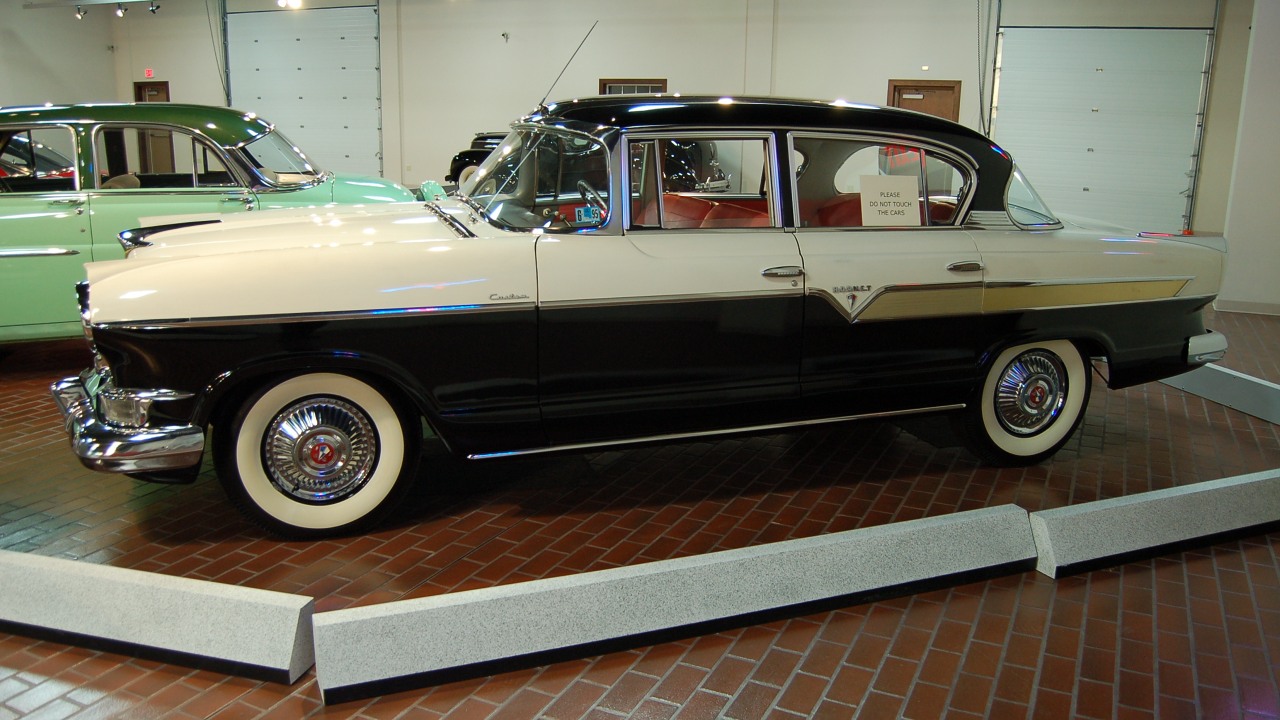
The emotional weight carried by the 1956 Hornet comes from the contrast between its corporate reality and the legend that preceded it. The Fabulous Hudson Hornet, campaigned in NASCAR Grand National Series and AAA stock car competition, had shown how the step-down chassis and a strong inline six could dominate on the track. That racing success turned the Hornet name into shorthand for speed, durability, and a kind of underdog brilliance, especially because it came from a company smaller than the Detroit giants. Later cultural treatments of the car, including modern retrospectives that frame the Hudson Hornet as a Racing Legend with a Tragic Demise, lean heavily on those early 1950s seasons when the cars were feared in stock car racing.
By contrast, the 1956 Hudson Hornet had to sell in a market that no longer cared as much about an aging racing résumé and cared a lot more about V8 power, annual styling changes, and the security of buying from a big, well-funded brand. Analyses of the Hornet’s decline point out that While AMC tried to adapt, the iconic status of the original Hornet remained tied to its first era, when the car’s engineering and competition record were fresh. In the showroom, the 1956 model could not fully bridge that gap. It carried the Hornet badge and some echoes of the step-down feel, but it lacked the technical edge and clear performance narrative that had once made the Fabulous Hudson Hornet a terror in NASCAR and AAA events. The result was a car that traded on past glory without offering a compelling new reason for buyers to choose it over a contemporary Ford or Chrysler product.
Why the V8 gap and market shift mattered
Under the surface, the 1956 Hudson Hornet also embodied a deeper strategic problem that had been building for years. Commentators who have examined why they stopped making the Hudson car highlight a Failure To Develop a competitive V8 as a central factor. While Ford was selling its V8 and Chrysler was touting its “dual rocker” Hemi V8, Hudson was still leaning on its big inline six and incremental updates. That engine had been enough when the step-down chassis gave the Hornet a handling advantage and when stock car rules kept the playing field relatively level. Once the market shifted toward higher advertised horsepower and the prestige of eight cylinders, the absence of a modern V8 became a liability that no amount of trim or marketing could fully hide.
By the mid 1950s, this mechanical gap intersected with a broader consolidation of the American auto industry. The Rise and Fall of the Hudson Hornet narrative situates the car within the story of The Hudson Motor Car Company, founded in Detroit in 1909 and eventually absorbed into American Motors Corporation as competitive pressures mounted. In that context, the 1956 Hornet looks less like a failed one-off and more like the visible symptom of an independent automaker that had run out of capital and time. The car’s reliance on shared AMC components, its lack of a headline-grabbing powertrain to counter Ford and Chrysler, and its distance from the original step-down innovation all signaled that Hudson’s days as a standalone force in the Industry of Automobile were effectively finished.
The last Hudsons and the fading of a name
The 1956 model year did not immediately erase the Hudson name, but it did mark the point at which the Hornet became the primary, and then the only, vessel for that identity. Sources on the Hudson Hornet’s later years note that in 1957 the historic Hudson name appeared only on a Hornet model, offered in Super and Custom trims as a four-door sedan and related body styles. That narrowing of the lineup shows how thoroughly the brand had been folded into American Motors Corporation planning. Instead of a full range of Hudson-branded vehicles, there was a single Hornet wearing the badge, positioned as a trim and marketing exercise within a larger corporate portfolio.
From my perspective, that is why the 1956 Hudson Hornet feels like the end of an era rather than just another model year. It arrived after the merger that created American Motors Corporation, it carried a chassis concept that had once been cutting edge but was now aging, and it lacked the mechanical firepower that Ford and Chrysler were using to win over buyers. At the same time, the car still wore a name made famous by the Fabulous Hudson Hornet in NASCAR Grand National Series and AAA competition, and it still drew on the Step Down Hudsons heritage that had once made the company a technical leader. That combination of lingering prestige and dwindling independence is what makes the 1956 Hornet such a poignant artifact: it is the moment when the Hudson story, from Detroit upstart to Defunct entry in the record books, passed from living history into memory.
More from Fast Lane Only:



Leave a Reply