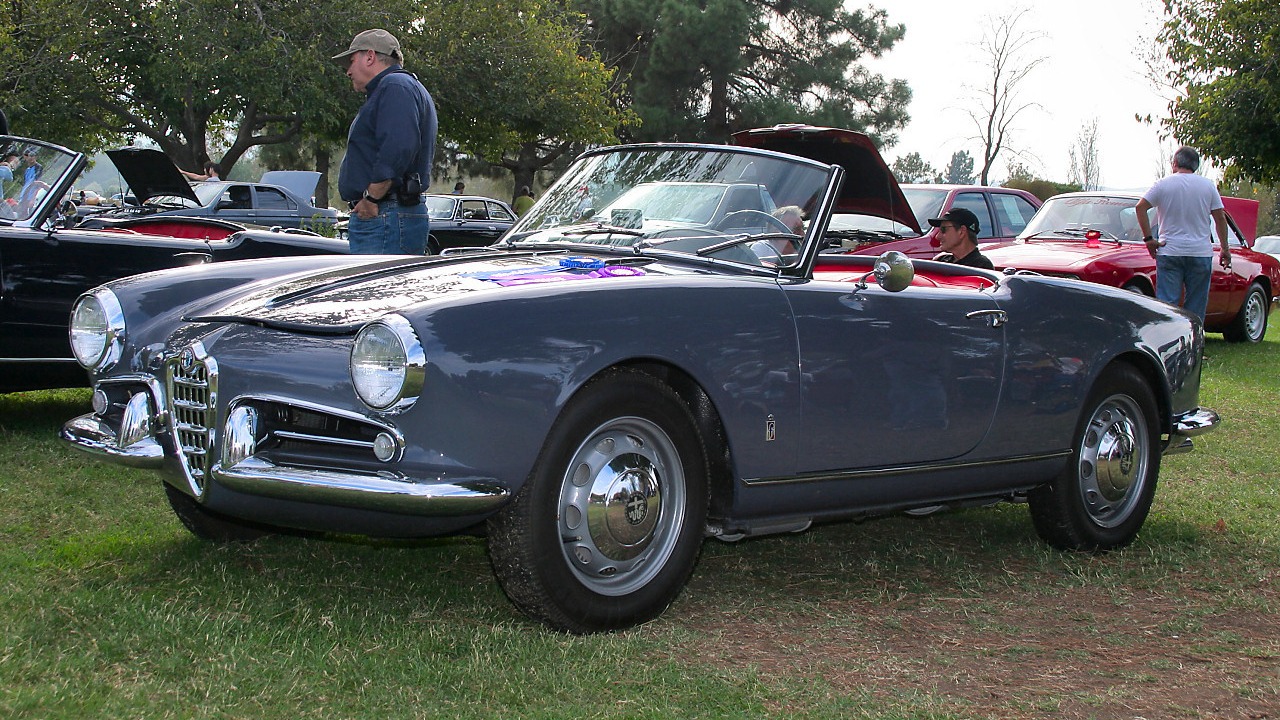
The 1958 Alfa Romeo Giulietta Spider did not win hearts by accident. It arrived as a compact Italian roadster with race-bred engineering, movie-star looks, and just enough practicality to make everyday drives feel like a holiday on the Riviera. Decades later, I still see that same mix of charm and purpose every time one appears in traffic or on a concours lawn, and it explains why this little Spider continues to inspire such fierce affection.
The moment an Italian idea met American dreams
When I look at the 1958 Alfa Romeo Giulietta Spider, I see a car shaped as much by ambition as by sheet metal. Alfa Romeo wanted a small sports car that could carry its racing reputation into suburban driveways, and the Giulietta Spider became that bridge, especially once Production for the United States ramped up for the 1956 model year. Those early 1956–58 cars, built on the short-wheelbase platform that designers at Pinin Farina developed in 1954, distilled the Alfa ethos into something light, approachable, and surprisingly refined for a compact open car.
That balance is why, when enthusiasts talk about the Giulietta Spider today, they often describe it as an easy car to fall for rather than a machine to be measured only in lap times. In one widely shared video, an Aug review of the model notes that there are faster Alfas and rarer Alfas, yet the Alfa Romeo Giulietta Spider still stands out because it simply feels right at real-world speeds. I find that point crucial: the car was never about brute performance, it was about making everyday driving feel like a special occasion, which is exactly the kind of experience that tends to linger in memory.
Design that looked like a baby Ferrari, and felt like freedom

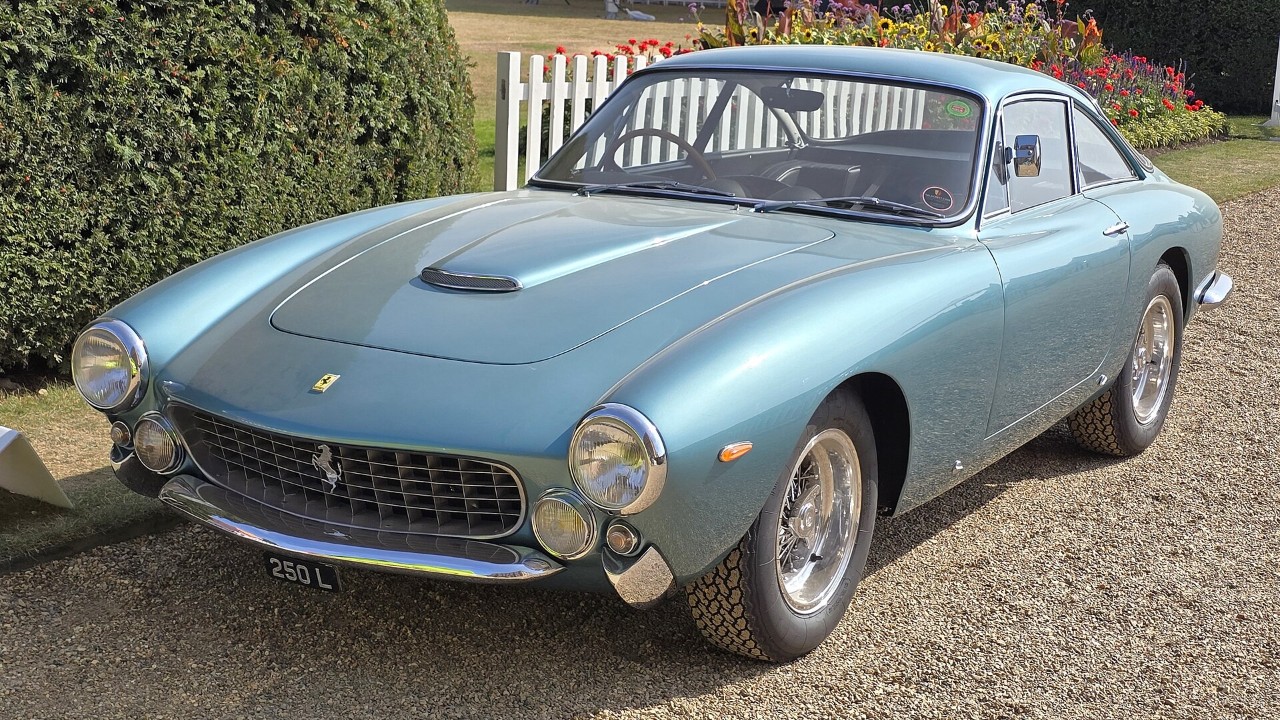
Visually, the 1958 Giulietta Spider walks a fine line between elegance and mischief, and that is a big part of its emotional pull. The low nose, delicate grille, and rounded tail give it a lightness that photographs cannot fully capture, especially when the top is folded and the cabin opens up like a terrace. Period observers remarked that the new Alfa looked like a baby exotic, and one racing account put it bluntly: Technically, the new Alfa looked like a baby Ferrari, with its aluminum block and head underscoring that the beauty was backed by serious engineering.
That sense of style did not stay confined to racetracks or club meets. Alfa Romeo itself later celebrated how All versions of the Giulietta became icons of their era, starring in films of the 1960s and even fronting advertising campaigns where drivers shouted slogans like “With API you flyyyyy!” That cultural saturation matters, because it means the Giulietta Spider was not just a car people drove, it was a car they saw on screen and in magazines, quietly teaching generations what an Italian sports car should look like.
Engineering that punched above its weight
Under the pretty body, the Giulietta Spider had a mechanical personality that still feels unusually sophisticated for a small-displacement roadster of its time. The Giulietta used an Alfa Romeo Twin Cam engine of 1290 cc straight-4, with a light alloy cylinder block and an alloy cylinder head with twin overhead camshafts. That specification reads like a miniature version of the hardware in far more expensive sports cars of the period, and it gave the Spider a free-revving character that encouraged drivers to explore the upper half of the tachometer without fear.
In its hotter form, the Giulietta Spider Veloce sharpened that character even further. A detailed profile of the Giulietta Spider Veloce notes that this 1300 model was ahead of its time when first introduced in the 1950s, with History highlighting how the Pininfar bodywork wrapped around a more focused mechanical package. Another period description of the Alfa Romeo Giulietta Spider Veloce Alfas points out that it was tied to Alfa’s first monocoque design and references how the 1900 cc inline-4 engine in that lineage would produce as much power as some larger contemporaries, underlining how the Alfa Romeo Giulietta Spider Veloce Alfas sat within a broader push for advanced construction and lively performance.
From racetrack credibility to everyday affection
What really cements the Giulietta Spider’s appeal for me is how naturally it moved between competition and daily life. Contemporary accounts of American club racing describe how privateers hustled these small Alfas around circuits, taking advantage of their light weight and rev-happy engines. One such narrative recalls that Alfa drivers enjoyed a car that looked like a scaled-down Ferrari yet cost a fraction to buy and run, which made it an accessible entry point into serious motorsport.
That same dual personality shows up in how collectors and commentators talk about the car today. In a modern buyer-focused video, an Aug presenter walks through why the Alfa Romeo Giulietta Spider is an easy car to love, stressing that while there are faster and more valuable Alfas, few deliver such a friendly blend of feedback, comfort, and style. I share that view: the Spider is quick enough to be engaging, but its real strength lies in how it invites you to use all of its performance without intimidation, turning even a short commute into something that feels like a Sunday drive.
A classic that still feels alive today
Decades after 1958, the Giulietta Spider continues to attract new admirers, and the way it shows up in today’s marketplace says a lot about its enduring magnetism. Auction listings invite enthusiasts to Discover the beauty and charm of the 1958 Alfa Romeo Giulietta Spider Race Car, describing it as a rare find for any classic car enthusiast and emphasizing its history as a key part of the model’s story. That language mirrors how owners talk about their cars at shows: not as fragile museum pieces, but as living artifacts that still want to be driven.
Restorers and boutique builders have also embraced the Spider as a symbol of Italian open-air motoring. One specialist describes a 1958 example as a beautifully restored piece of Italian motoring heritage, calling the Alfa Romeo Giulietta Spider one of the most elegant open-top sports cars of its era. When I put all of this together, from the short-wheelbase 1956–58 run that defined its proportions to the race-bred Alfa Romeo Twin Cam engine and the baby Ferrari looks, it becomes clear why the 1958 Spider captured hearts and never really let go: it delivers style, sound, and sensation in a package that still feels wonderfully human in a world of ever-faster, ever-heavier machines.
More from Fast Lane Only: