
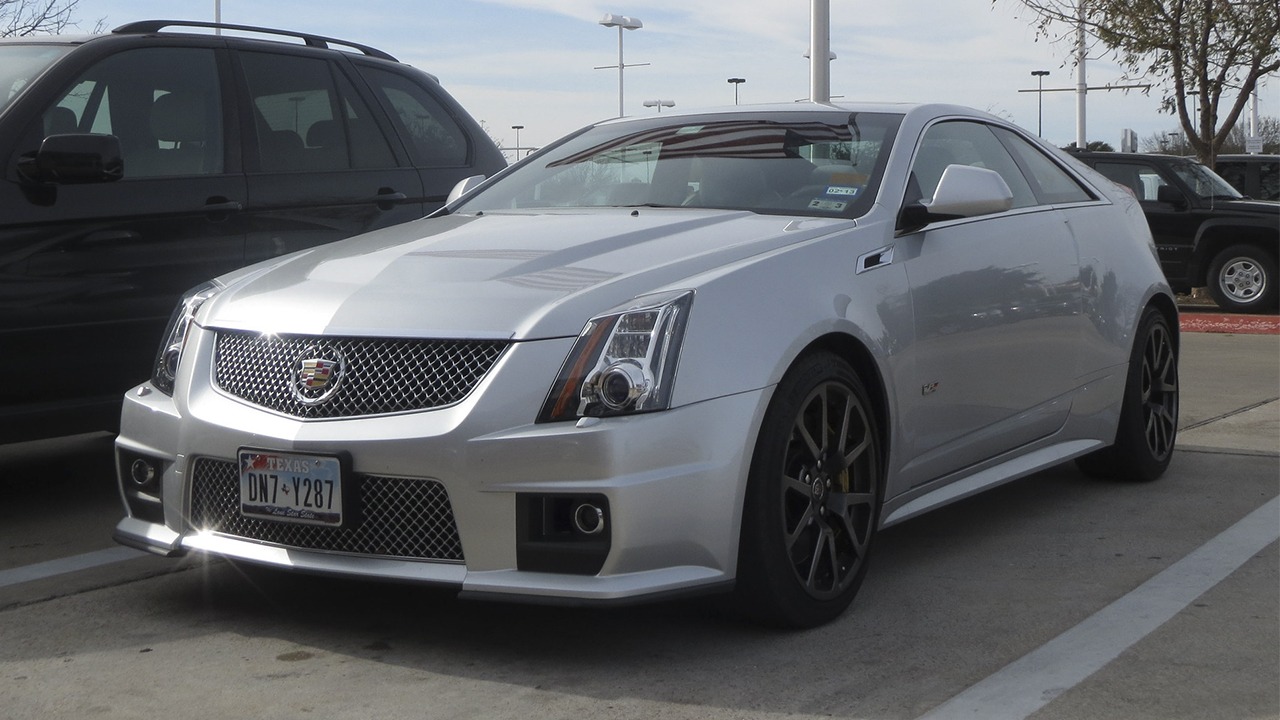
The Cadillac CTS-V has always been the kind of sedan that treats the speed limit as a suggestion, not a rule, and that reputation has only hardened with time. Even as performance crossovers and electric rockets crowd the market, this supercharged four-door still feels like a rolling indictment of restraint, combining brutal pace with a straight-faced executive profile. The result is a car that behaves like a felony in motion while looking, at a glance, like a responsible commute choice.
That tension between appearance and intent is what keeps the CTS-V relevant long after its showroom run ended. It is not just quick for a luxury sedan, it is engineered and priced to punch above its weight, and it wraps that aggression in a package that can carry kids, clients, or luggage without ever hinting at what happens when the road opens up.
The supercharged heart of a “four-door Corvette”
At the core of the CTS-V’s outlaw character is an engine that belongs in a track toy, not a family car. The CTS, in its V guise, uses a supercharged version of the Corvette (C7) 6.2-liter LT4 V8, an arrangement that effectively turns this sedan into what enthusiasts have long called a four-door sports car. The CTS-V’s identity is inseparable from that 6.2-liter lump of aluminum and boost, which gives The CTS the kind of instant, surging power delivery that feels more muscle car than executive transport, and that is exactly why it still looms large in performance circles.
That shared hardware is not just a trivia point, it is the mechanical reason the CTS-V earned an unofficial nickname as a “four-door Corvette” in the first place, a label that captures how closely its character tracks with the two-door icon it borrows from. When I look at the way the CTS platform was adapted to house that engine, I see a deliberate attempt to smuggle Corvette-grade performance into a sedan body, a strategy that still resonates with drivers who want supercar thrust without supercar compromises, as detailed in the history of the CTS-V.
Felonious speed, everyday usability
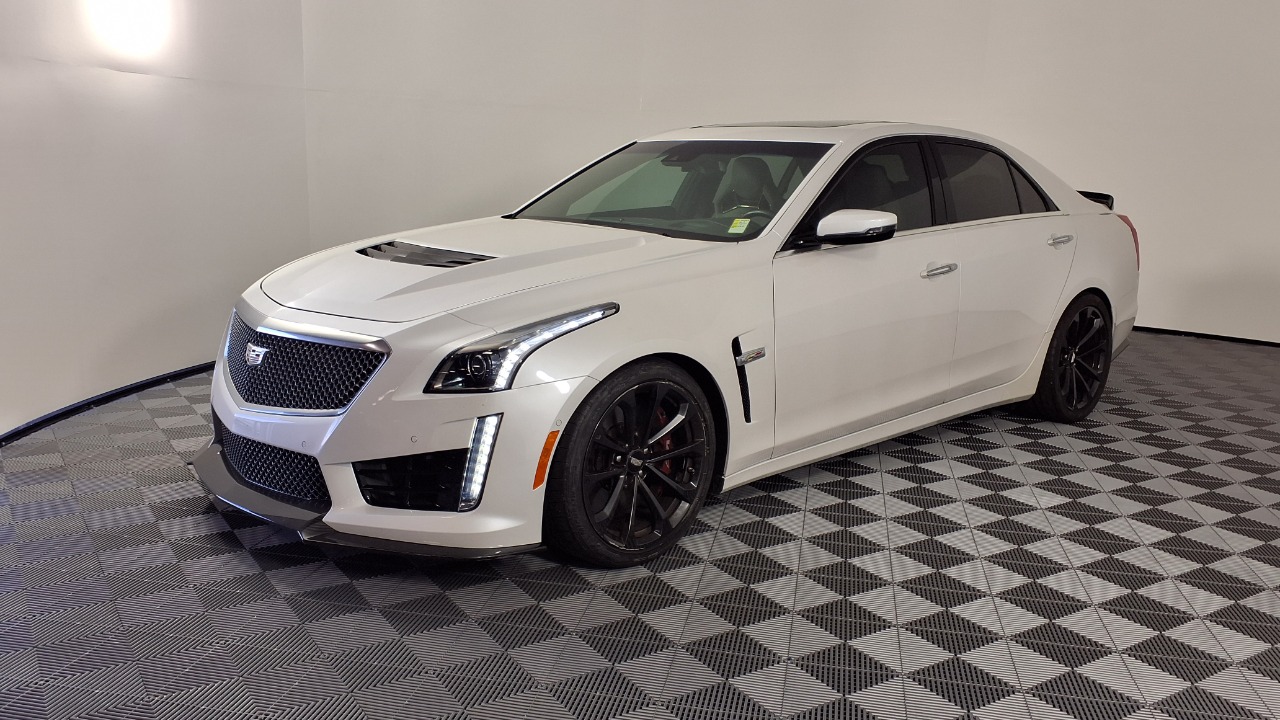
Raw numbers are what turn that engine into a genuine threat to your license. In its final generation, the CTS-V delivered 640 horsepower, a figure that put it squarely in super-sedan territory and made full-throttle acceleration feel like a legal gray area every time you merged. That same third-generation car carried a J.D. Power Reliability Score of 78 out of 100, a reminder that this was not a fragile tuner special but a factory-built machine designed to survive daily abuse while still hitting 640 on the dyno sheet. I see that blend of reliability and excess as central to its appeal, because it lets owners treat outrageous performance as part of their routine rather than a weekend-only indulgence, a balance underscored by the Power Reliability Score.
The way that power is delivered only deepens the sense that the CTS-V is getting away with something. The car is Powered by a 6.2-liter supercharged V-8 engine that produces 640 horsepower and 630 pound-feet of torque, and that combination is good for a 0 to 60 mph sprint in just 3.7 seconds, numbers that would have embarrassed many exotics not long ago. When I consider those figures in the context of a four-door Sedan with a usable trunk and back seat, it is clear why the CTS-V still feels like a crime scene waiting to happen, a point driven home by the factory claim that this is the fastest street model the brand had ever built, as laid out in the official Powered V-8 specs.
Brakes, data, and the hardware that keeps it (barely) legal
Of course, a sedan this fast needs serious hardware to keep its antics on the right side of survivable. From its quad exhaust and Brembo brakes to the available Performance Data Recorder, the CTS-V Sedan was engineered to stand out in every way, pairing its straight-line pace with track-ready control systems. I see those Brembo components and the data-logging tech as the car’s conscience, the tools that let drivers explore its limits with at least a nod to responsibility, and they are a big part of why the CTS-V still feels modern in an era obsessed with telemetry and lap times, as highlighted in the official V Series description.
Independent reviews have long stressed how crucial those brakes are to making the car livable. Brembo brake calipers bring the vehicle back to earth after each full-throttle run, turning what could be a one-dimensional drag-strip monster into a machine that can be hustled down a back road or hauled down from highway speeds with confidence. When I weigh that stopping power against the CTS-V’s mass and speed, it is clear that the braking system is not just a supporting character but a co-star in the car’s story, the piece of hardware that keeps its felony-level acceleration from crossing into outright recklessness, a role emphasized in coverage that singled out the Brembo calipers.
Price, stealth, and the “responsible adult” disguise
Part of what makes the CTS-V feel like such a subversive choice is how it undercuts its European rivals on price while matching or beating them on performance. Earlier reporting noted that the CTS-V started at $10,000 to $25,000 below comparable competitors, a gap that effectively let buyers pocket the cost of a compact car while stepping into a 600-plus-horsepower sedan. When I look at that spread, I see a deliberate value play that turned the CTS-V into a kind of financial loophole, a way to access super-sedan performance without paying the traditional German premium, a point underscored in reviews of the Cadillac CTS that highlighted those $10,000 and $25,000 figures.
The other half of the disguise is visual. In one detailed walkaround, a V3 Cadillac CTS-V finished in a solemn paint color called Velocity Red is described as the ultimate sleeper sedan, a car that looks subdued even under cloudy skies despite its capabilities. I find that choice of Velocity Red telling, because it is a hue that reads more boardroom than burnout, especially when paired with the CTS’s clean, angular lines. That understated styling lets owners blend into traffic or a corporate parking lot while hiding a powertrain that can shred a back road, a duality captured vividly in the video tour of the Velocity Red example.
From track-bred roots to future collectible
The CTS-V’s outlaw streak did not appear out of nowhere, it grew out of a lineage that includes earlier, slightly rougher versions of the car. In the mid-2000s, for instance, There was a racing version of the CTS-V that pushed output to 500 HP, a configuration that was not street-legal, while the 400 HP model was tuned to be civil enough for commuting to work or weekend family outings. When I consider that split between a 500-horsepower track special and a 400-horsepower road car, I see the blueprint for what the CTS-V would become in later generations, a sedan that always kept one foot in the paddock even as it learned to play nicely on public roads, as documented in period specs for the 2006 CTS.
That motorsport-adjacent heritage is a big reason some observers now see the CTS-V as a future performance collectible. In one widely watched segment, Jay Leno points out that the cool thing about buying a car like this is that you look like a responsible adult, but actually you have a car that can deliver serious thrills when the opportunity arises. I share that view that the CTS-V’s straight-faced exterior and wild mechanicals make it a prime candidate for long-term appreciation, because it captures a specific moment when big-displacement, supercharged V8 sedans were still viable, a perspective laid out in the future collectible discussion.
Why the CTS-V’s outlaw spirit still matters
Even as the industry pivots toward electrification and software-defined everything, the CTS-V’s formula still feels relevant because it is so unapologetically mechanical. The car’s identity is built on displacement, boost, and rear-drive theatrics, not drive modes and over-the-air updates, and that makes it a touchstone for drivers who value analog sensations in a digital age. When I think about the CTS-V today, I see more than a fast sedan; I see a rolling reminder of what it meant when a manufacturer took a Corvette-grade engine, wrapped it in a CTS shell, and priced it to undercut the establishment, a combination that still reads like a minor act of rebellion.
That is why the CTS-V continues to loom large in enthusiast conversations, even as newer, quicker machines arrive. Its mix of 6.2-liter supercharged power, Brembo stopping force, sleeper styling, and relatively attainable pricing created a car that behaves like a four-door felony yet functions as a daily driver, a contradiction that few modern vehicles manage to replicate. In an era increasingly defined by efficiency targets and algorithmic restraint, the CTS-V’s unfiltered approach to speed feels almost transgressive, and that lingering sense of mischief is exactly what keeps its legend alive.


Leave a Reply