It started as one of those little “maybe it’s just the road” moments. A woman says her nearly-new car began tugging to one side on her daily drive, subtle at first, then annoying enough that she found herself gripping the wheel a little tighter than usual.
She did what most people do: took it to a shop, asked for an alignment, and expected to be back to cruising in a straight line. But after paying and pulling out of the lot, she says the car still didn’t feel right.
A pull that wouldn’t quit
According to her account, the steering wheel kept drifting off-center, and the car wanted to wander even on flat, familiar roads. Some days it felt like a gentle nudge; other times it was more like the car had a preference for a particular lane.
At first, she questioned herself. Was it wind? Was it the crown of the road? Was she imagining it because she’d just read something online about alignments?
But the pattern kept showing up, and it was consistent enough to be distracting. When your car is “new,” any odd behavior feels louder, like a brand-new fridge making a weird noise at 2 a.m.
The first visit: “Alignment looks fine”
She says the first shop ran an alignment check and told her everything was within spec. The paperwork looked official, full of numbers and before-and-after columns, and she left thinking the problem had to be solved.
Except it wasn’t. She noticed the pull almost immediately, and over the next few days it didn’t improve—if anything, it became easier to notice once she was paying attention.
When she called back, she says she got the classic shrug in verbal form: roads vary, tires can do that, bring it back if it gets worse. It wasn’t rude, just not especially curious.
Why “pulling” is trickier than it sounds
Plenty of things can make a car pull, and not all of them show up neatly on an alignment rack. Tire pressure differences, uneven tire wear, a tire that’s slightly out of round, or a brake caliper that’s dragging can all mimic alignment issues.
And then there’s the reality that “within spec” doesn’t always mean “feels good.” Manufacturers allow a range, and a car can technically be inside that range while still feeling a bit off to the driver—especially if the steering wheel isn’t perfectly centered or the left and right sides aren’t balanced.
On top of that, a quick alignment check might not include a deeper inspection of suspension and steering parts. If a component is loose, bent, or shifting under load, it can behave nicely while stationary and get weird the moment the car is moving.
The second opinion that changed everything
After another week of correcting the wheel on every straight stretch, she went to a second shop. She didn’t go in swinging; she simply explained what the car was doing and mentioned the recent alignment.
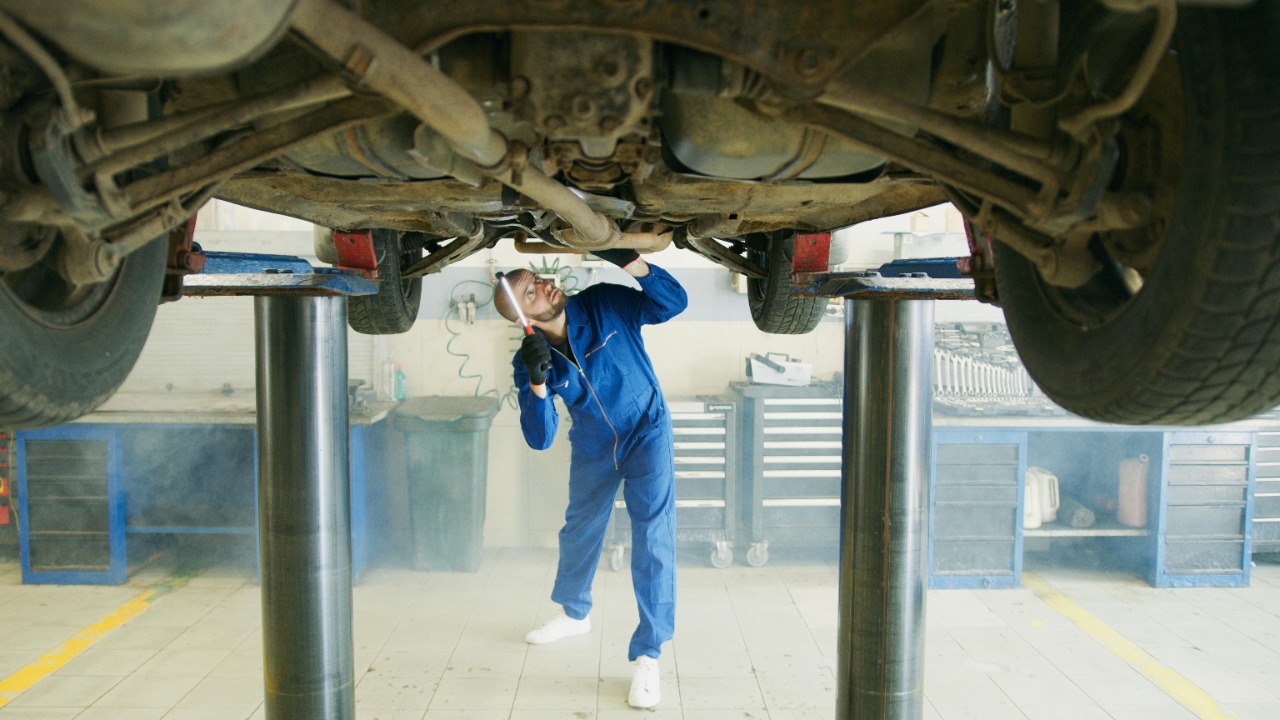
This time, she says the approach felt different right away. Instead of jumping straight to the alignment machine, the technician took the car for a road test and then put it on a lift for a hands-on inspection.
That’s when the second shop found what the first one missed: a problem that wasn’t going to be fixed by toe and camber adjustments alone. In her case, the issue was traced to a tire-related defect—an internal belt shift that can cause a steady pull even when the alignment numbers look “good.”
What the first shop likely missed (and why it happens)
A tire with an internal defect can be sneaky. Visually, it may look fine, balance fine, and still behave badly on the road, especially as it warms up and flexes.
The second shop confirmed it with a simple test: swapping the front tires side-to-side and seeing whether the pull changed direction. She says the pull did change, which is a big clue that the tire—not the alignment—was the main culprit.
It’s not that the first shop had to be incompetent to miss it. Some places default to alignment as the answer because it often is, and tire defects don’t always announce themselves with obvious bulges or noise.
The fix: small swap, huge relief
Once the tire issue was identified, the path forward was straightforward. The shop recommended replacing the suspect tire, and because the car was still fairly new, she says they also helped her document the finding so she could pursue a warranty replacement.
After the tire was replaced, the change was immediate. The steering wheel sat straighter, the car tracked normally, and she stopped doing that constant micro-correction that makes a simple drive feel like a low-stakes video game.
What drivers can watch for when a car pulls
If your car suddenly starts pulling, the first step is to rule out the easy stuff. Check tire pressures with a real gauge (not just the dash light) and make sure both front tires match the recommended PSI on the door jamb sticker.
Next, pay attention to when it happens. If the pull gets worse during braking, it could be a brake issue; if it changes with different roads or speeds, it could point toward tires or alignment—or both.
If you’ve already had an alignment and the problem persists, ask for a road test and a tire swap test. Swapping front tires left-to-right is a quick diagnostic that can save a lot of time, and it’s one of those old-school tricks that still works.
Questions that help at the shop (without sounding like a know-it-all)
People sometimes worry they’ll come off as pushy, but clear questions actually make diagnosis easier. Try asking, “Can you road test it and tell me if you feel the pull?” and “If the alignment is in spec, what else could cause this?”
You can also ask whether they checked for a sticking brake caliper, uneven tire wear, or play in the suspension. And if you suspect a tire, asking, “Can we swap the front tires side-to-side to see if the pull changes?” is both polite and practical.
A small mystery with a very real takeaway
Her story is a good reminder that cars are a mix of math and feel. Alignment printouts are useful, but the road test matters, and sometimes the “boring” parts—like tires—are the actual plot twist.
It also shows the value of a second opinion when something doesn’t add up. Not because every first diagnosis is wrong, but because a fresh set of eyes (and a different routine) can catch the thing that slips past the checklist.
More from Fast Lane Only