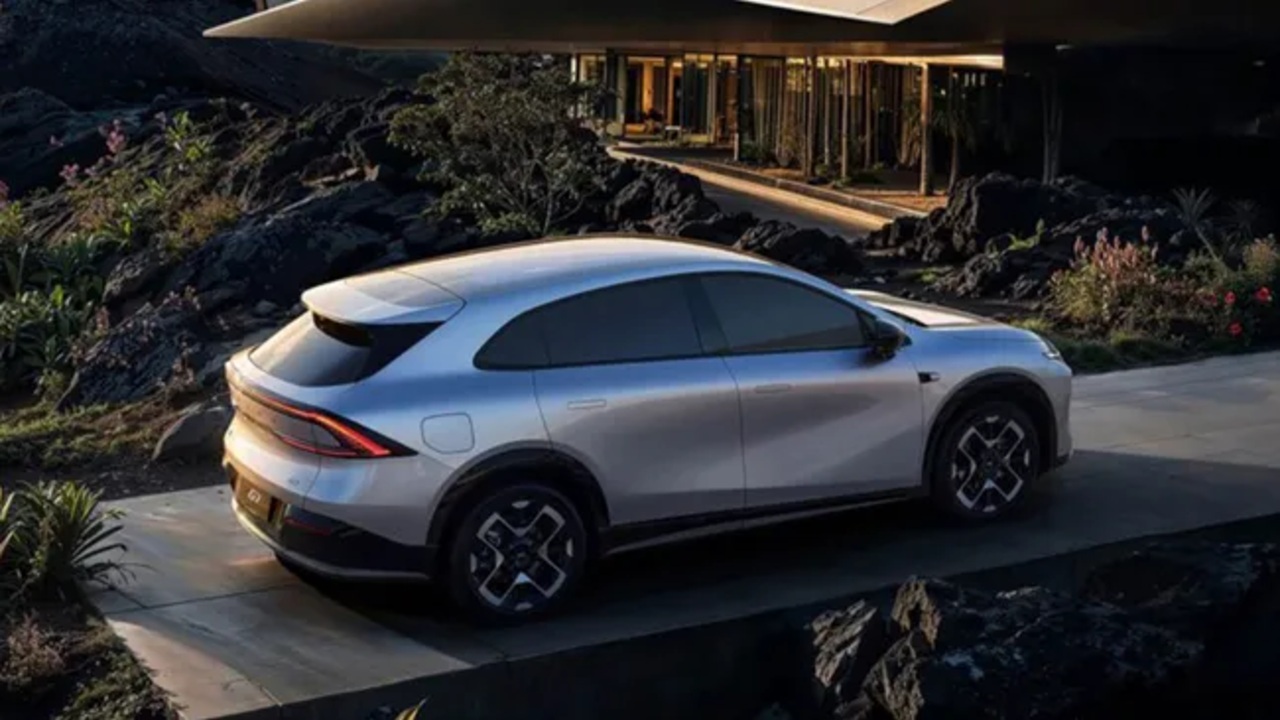
A new Chinese challenger has just turned the Pacific coast into a single uninterrupted test track, covering the roughly 1,058-mile stretch from Seattle to Los Angeles on one tank of fuel and a full battery. By pairing a conventional fuel tank with a substantial battery pack, this SUV has effectively redrawn the map of what long range means in an electric era. I see it less as a stunt and more as a signal that the next phase of the EV transition will be defined by distance, flexibility, and a quiet rethinking of what “electric” actually looks like under the skin.
The 1,058-mile statement run
The headline achievement is simple enough to grasp: a production SUV that can credibly link Seattle and Los Angeles in a single stint, a journey of roughly 1,058-mile, without stopping to refuel or recharge. That figure is not a theoretical lab result, it is a real world range claim that instantly vaults this model to the top of the global SUV leaderboard for distance between stops. Where most battery electric crossovers still ask drivers to plan around charging hubs, this vehicle invites them to think in terms of entire coastlines.
What makes that possible is a dual energy strategy that combines a conventional fuel tank with a sizable battery, then hands most of the propulsion work to an electrical system. Instead of treating the combustion engine as the primary power source, the design leans on electric drive for the bulk of everyday use, with the engine stepping in as a range extender that keeps the battery supplied over long hauls. In practice, that means the SUV behaves like an EV in city traffic yet has the legs of a long distance cruiser when the highway opens up between Seattle and the rest of the West Coast.
How this SUV bends the hybrid rulebook
What interests me most is not just that this is a long range vehicle, but that it quietly rewrites the rules of what a hybrid SUV can be. Unlike a traditional hybrid system that runs on electric motors only until relatively small battery packs are depleted and then hands the job back to an engine, this architecture keeps the electric side of the drivetrain at the center of the experience. The combustion unit is there to support, not to dominate, which is a philosophical shift as much as a technical one.
That approach matters because it addresses two of the biggest psychological barriers I still hear from drivers who are curious about EVs: anxiety over charging infrastructure and concern about being locked into a single energy source. By allowing the electrical system to do the heavy lifting while a fuel tank quietly extends the horizon, the SUV offers a kind of transitional comfort. Drivers can plug in at home when it suits them, rely on gasoline when it does not, and still enjoy the smooth, instant torque that has made electric propulsion so compelling in the first place.
China’s new leverage in the range race
The fact that this breakthrough SUV arrives from China is not incidental, it is central to the story. Chinese manufacturers have spent the past few years building a dense ecosystem of battery suppliers, software talent, and aggressive EV brands, and this 1,058-mile achievement is a distilled expression of that momentum. By fielding what is now described as the world’s longest range SUV EV in its home market, China is signaling that it intends to compete not only on price or volume, but on technical bragging rights that once seemed reserved for established Western and Japanese players.
From my vantage point, this is also a strategic export play. A vehicle that can cross a major stretch of the American West without stopping is tailor made for markets where distance and sparse infrastructure have been used as arguments against rapid electrification. If a Chinese SUV can glide from Seattle to Southern California on a single tank and charge, it undercuts the narrative that only domestic brands understand the realities of North American road trips. It also raises the stakes for any automaker that has been content to iterate on modest range gains rather than leapfrogging the competition.
Why Tesla and legacy brands should be paying attention
For Tesla and the legacy manufacturers that have spent the past decade defining the EV conversation, this new SUV is a pointed reminder that the race is far from settled. Tesla built its reputation on long range battery electric vehicles, yet here is a rival SUV that uses a blended energy strategy to deliver a figure that outstrips the company’s current production crossovers. Even if the underlying technologies differ, the comparison will be made in showrooms and on social media, where shoppers tend to focus on the simple question of how far they can go between stops.
Traditional automakers, many of which still rely heavily on conventional hybrids and plug in hybrids, face a different kind of pressure. They now have to explain why their own electrified SUVs, often marketed as the best of both worlds, cannot match the distance of a Chinese newcomer that treats the engine as a supporting actor. I expect this will accelerate internal debates over whether to double down on pure battery electric platforms, invest in more sophisticated range extender concepts, or attempt to straddle both paths. Either way, the bar for what counts as competitive range in an SUV has just been raised.
What it means for drivers and the road ahead
For drivers, the practical implications are straightforward yet profound. A vehicle that can cover the Seattle to Los Angeles corridor in one uninterrupted push changes how people think about planning long trips, especially in regions where charging networks remain patchy. It reduces the need to study charging maps in advance, softens the fear of being stranded with a depleted battery, and makes the idea of switching to an electrified SUV feel less like a lifestyle adjustment and more like a simple upgrade in comfort and capability.
Looking ahead, I see this 1,058-mile run as an early glimpse of a more nuanced electric future, one where the binary debate between pure EVs and combustion engines gives way to a spectrum of solutions tailored to different use cases. Some drivers will still prefer a fully battery powered crossover that fast charges every few hundred miles. Others will gravitate toward extended range SUVs that quietly blend a tank and a charge to erase distance anxiety. What is clear is that the old assumptions about what an SUV can do on a single energy fill are being rewritten, and the rest of the industry will have to decide whether to follow, leapfrog, or risk being left behind on the side of the highway.
More from Fast Lane Only