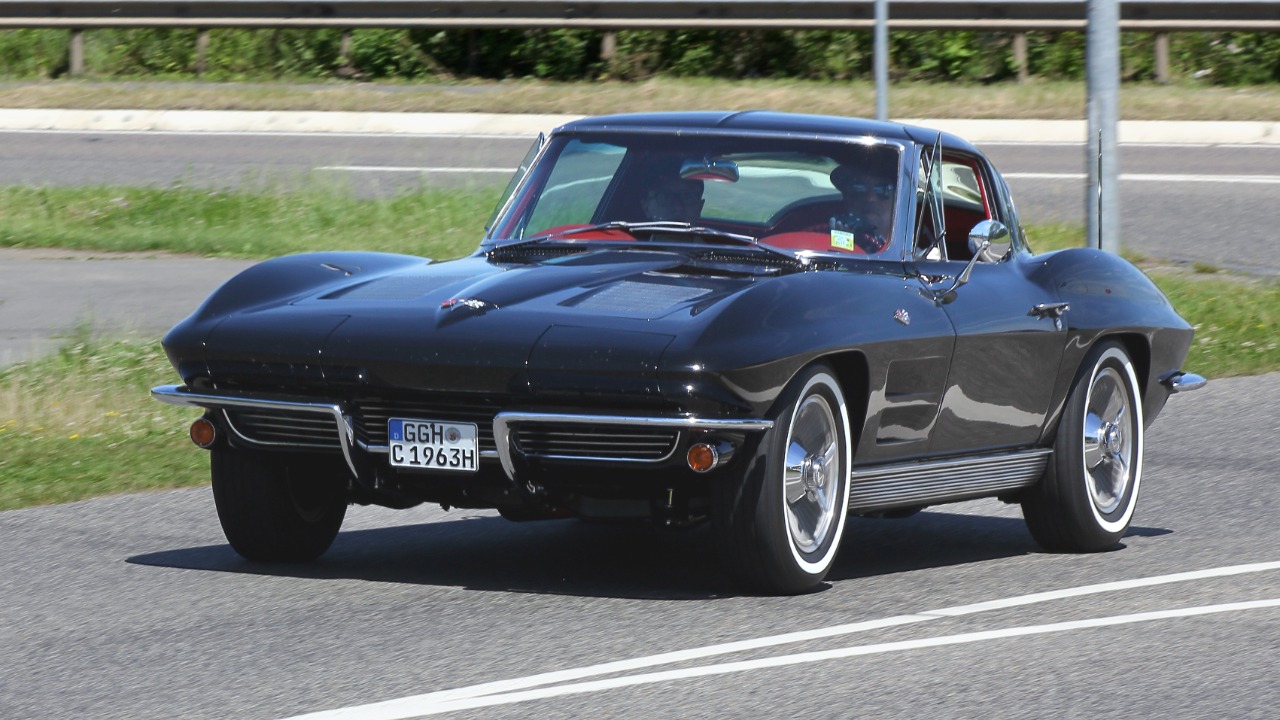
The 1963 Corvette split-window coupe did something no other American sports car quite managed: it became too distinctive, too controversial, and ultimately too valuable for anyone to casually mess with. In one model year, it turned the Corvette from a stylish roadster into a design-led performance icon, then vanished, leaving collectors to chase a body style that would never return. If you care about Corvettes, you are really chasing that one season when the car was both a moonshot and a mistake, and that is exactly why it became America’s most untouchable Vette.
To understand how that happened, you have to look past the pretty rear glass and see the tug-of-war inside General Motors, the production numbers that looked ordinary at the time, and the way values and folklore have snowballed ever since. Once you do, you see a car that started as a risky styling flourish and ended up as a six-figure benchmark that owners guard like a family heirloom.
The radical idea that split General Motors
When you trace the split-window back to its roots, you find a company that was feeling bold. In the postwar boom, In the 1950s, General Motors treated styling and engineering as a kind of internal arms race, and the Corvette was the perfect canvas. Designers pushed for a futuristic fastback coupe with a spine of bodywork running through the rear glass, while engineers worried about visibility and practicality. That tension is why the 1963 car feels so dramatic even today, as if you are looking at a concept car that somehow slipped into showrooms.
The split rear glass was not just a flourish, it was the defining line of the new Chevrolet Corvette Sting Ray silhouette. Inside GM, Designers fought to keep that spine, while engineers argued that the bar down the middle compromised rearward vision and made the car harder to live with. Safety and usability concerns were not theoretical; they were serious enough that the split lasted only a single year before being replaced by a single-piece window. That brief run is the first step in turning a styling experiment into something you now treat as untouchable metal sculpture.
From one-year quirk to instant collectible
On paper, the 1963 model year did not look especially rare. Production totaled 21,513 Corvettes, split between 10,594 coupes and 10,919 convertibles, figures that looked healthy rather than scarce in period Automotive News coverage. What no one could foresee was that only that first batch of coupes would carry the split rear glass, instantly turning the body style into a one-year-only phenomenon. When you look back now, that production math reads like a recipe for a future blue-chip collectible.
Enthusiasts quickly realized that the 1963 Corvette was different, and not just because of the glass. Owners today still describe the Corvette from that year as a highly sought after model thanks to its unique split rear window design, a feature that never returned on later C2s. That one-year quirk, combined with the car’s role in launching the second generation, is why you now see the 1963 coupe singled out in registries, club posts, and auction catalogs as a separate species from other mid-year Corvettes.
Why the split-window feels so untouchable today
Part of what makes the split-window feel off-limits to modification is how completely it redefined the Corvette’s personality. The 1963 Corvette Sting Ray Split-Window coupe is often described as a car that changed everything, not just a new generation but a bold reinvention of America’s sports car, a point you see echoed in hobbyist discussions of the Corvette Sting Ray Window. When a design becomes shorthand for a turning point, owners start to treat originality as sacred, because changing the car feels like rewriting history.
That reverence is reinforced every time you see a pristine 1963 Corvette Stingray Split Window Coupe described as the first-ever production Corvette coupe with a fastback body, a detail that modern owners still celebrate when they share photos of their Corvette Stingray Split. You are not just looking at a pretty roofline, you are looking at the moment the Corvette stopped being only a roadster and embraced the idea of a closed, high-speed grand touring car. That shift is why even casual fans instinctively flinch at the thought of cutting up an original split-window shell.
Performance pedigree and the XP-87 connection
If the split-window were only about styling, it might have faded into novelty status. Instead, the car arrived with serious performance intent that still shapes how you view it. The second-generation Corvette drew heavily from the Sting Ray XP-87 concept, and enthusiasts still point to that link when explaining Why the C2 is special. Radical design, Inspired by the Sting Ray XP, and Sharp, aggressive lines were not just marketing phrases; they were baked into the chassis and aerodynamics, giving the 1963 car a competition-ready stance that matched its looks.
That racing edge is clearest in the ultra-rare Z06 versions, which combined the split-window body with serious hardware and endurance options. Museum curators still describe the 1963 Corvette Stingray Split Window as one of the rarest and most collectible American cars ever made, especially in Z06 “big tank” form. When you combine that competition pedigree with the one-year glass, you end up with a car that feels more like a homologation special than a regular production coupe, which only deepens the sense that you should preserve, not modify, every surviving example.
Safety worries, custom temptations, and the cost of changing one
Ironically, the same feature that makes the car so coveted today was once treated as a problem to be fixed. Period accounts of Split, Window Corvette Safety Concerns note that engineers flagged the rear visibility issues and pushed to replace the divided glass, even as stylists defended the Corvette Sting profile that made the car so distinctive. As one retrospective put it, Ironically, while the engineering, performance, and styling of the 1963 Corvette Sting Ray were celebrated, the split rear glass created enough headaches that it became one of the most famous asterisks in automotive history, a detail you can trace in Split Window Corvette Safety Concerns coverage.
Those early complaints led some owners to “correct” their cars by swapping in a single-piece rear window, a decision that now looks painful in hindsight. Custom builders still work with the 1963 Chevrolet Corvette Split, creating the occasional Window Custom Coupe that blends modern hardware with the classic shape, and enthusiasts note that only 10,594 units left the factory with that roofline. Every time one of those cars is heavily modified, the pool of original examples shrinks, which is why restorers now go to extraordinary lengths to reverse old conversions and put the split glass back where it belongs.
More from Fast Lane Only