The 1969 Mustang Mach 1 arrived at a moment when Detroit was locked in a horsepower arms race, and Ford needed a street car that could back up its racing bravado. By pairing aggressive fastback styling with serious big-block firepower, the Mach 1 turned Ford’s full-size V8s from workhorse engines into aspirational performance icons. It was not just another Mustang trim, it was the car that made Ford’s big-block image feel both attainable and unmistakably modern.
What set the Mach 1 apart was how deliberately it fused showroom appeal with track-bred hardware. Ford wrapped its most muscular engines in a package that looked ready for Trans-Am grids and drag strips, then priced it so buyers could realistically drive that image home. That combination of visual drama, cubic inches, and volume sales is what locked the Mach 1 into muscle-car history as Ford’s definitive big-block statement.
How the Mach 1 package turned cubic inches into a performance brand
Ford had offered big-block power in earlier Mustangs, but the Mach 1 was the first time the company built an entire identity around those engines. The 1969 model launched as a fastback-only package with a standard 351 cubic inch V8 and a clear path up to the 390 and 428 Cobra Jet big-blocks, so the car’s very name became shorthand for serious displacement. Period ordering data and surviving window stickers show how the Mach 1’s option structure nudged buyers toward larger engines, with the 428 Cobra Jet and Super Cobra Jet sitting at the top of the hierarchy as the halo choices for enthusiasts who wanted maximum straight-line performance backed by factory engineering.
That hierarchy mattered because it turned Ford’s big-blocks into a ladder of aspiration rather than a single, rare special-order code. Contemporary road tests highlighted how a 428 Cobra Jet Mach 1 could deliver quarter-mile times that rivaled dedicated drag packages while still carrying full interior trim and everyday drivability, which helped cement the engine’s reputation as both brutal and usable. By making the Mach 1 the most visible showcase for the 428, Ford effectively branded its big-block hardware as the heart of a mainstream performance car instead of a niche racer, a shift that still shapes how collectors and historians talk about the Mustang lineup today.
Design, marketing, and motorsport credibility around Ford’s big-block push

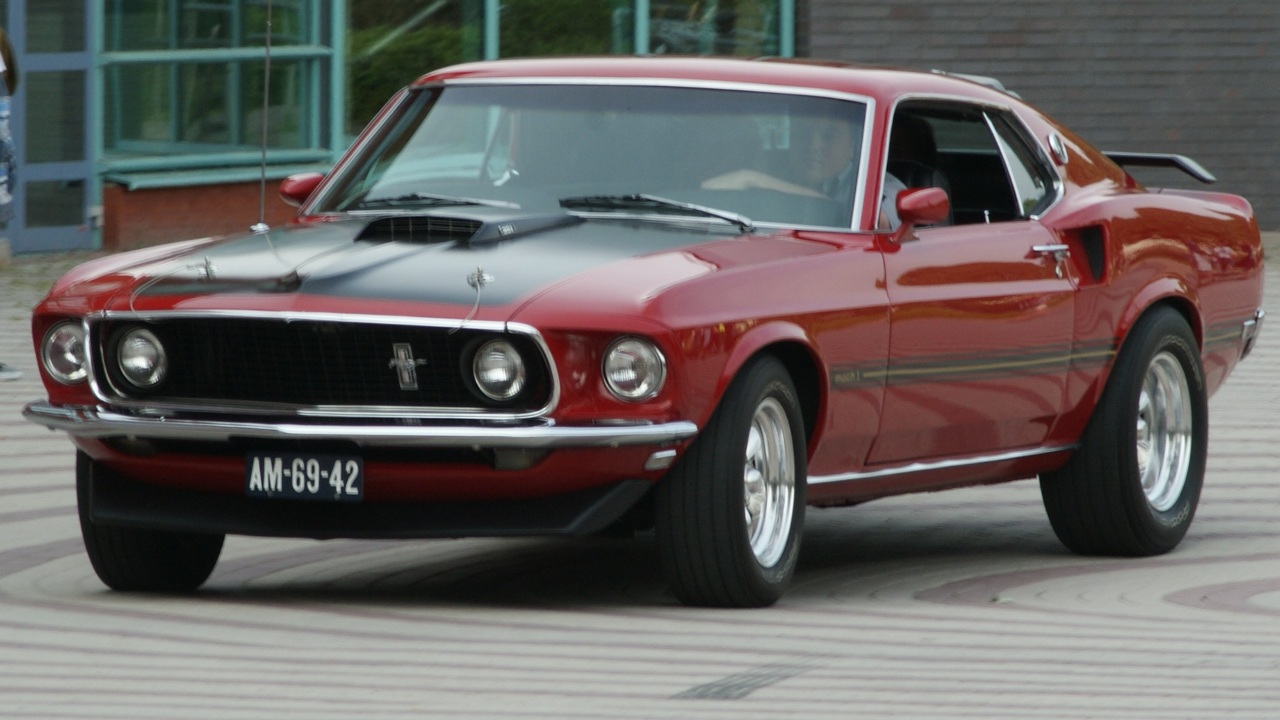
The Mach 1’s body and interior were engineered to broadcast power before the engine ever turned over, which is why its styling is so closely tied to Ford’s big-block image. The 1969 fastback shell gained a blackout hood with simulated or functional scoops, optional hood pins, bold side stripes, and a rear deck spoiler, all visual cues that signaled more than just cosmetic flair. Inside, high-back bucket seats, wood-grain accents, and a full gauge package framed the car as a serious driver’s machine, not a basic commuter with a big engine dropped in. Those details made the Mach 1 instantly recognizable in showrooms and on the street, so when buyers thought “big-block Mustang,” they pictured this specific, aggressive silhouette.
Ford’s marketing leaned into that visual identity by positioning the Mach 1 as the Mustang for drivers who wanted the look and feel of competition machinery without sacrificing comfort. Period advertising and dealer brochures paired images of fastback Mach 1s with language about speed, control, and advanced suspension tuning, reinforcing the idea that this was the car that translated Ford’s racing know-how into a street package. That messaging dovetailed with the company’s broader motorsport efforts, where big-block Fords were making headlines in drag racing and stock car competition, so the Mach 1 became the showroom proof that the same engineering philosophy was available to everyday buyers.
Legacy: why the 1969 Mach 1 still defines Ford’s big-block mystique
Over time, the 1969 Mach 1 has come to represent the peak of Ford’s big-block era because it captured the balance between raw power and mass appeal that later models struggled to match. Collectors consistently single out 428 Cobra Jet Mach 1s as blue-chip cars, not only for their performance but for what they symbolize about Ford’s willingness to put its most potent engines into a widely available package. Auction results and enthusiast price guides show that well-documented 1969 Mach 1s with big-block power command a premium over many comparable muscle cars, a market signal that the model’s reputation as Ford’s definitive big-block showcase has only grown stronger.
The Mach 1 badge has returned on later Mustangs, but those revivals tend to reference the 1969 car’s cues precisely because that original formula set the standard. Modern versions borrow the black hood treatment, side stripes, and performance-focused interiors to tap into the same aura of accessible muscle that the first Mach 1 created. When enthusiasts talk about Ford’s big-block legacy today, they might mention Galaxies or Fairlanes, yet the mental image that usually comes first is a 1969 Mustang Mach 1 fastback with a 428 under the hood, proof that this single model did more than any other to fix Ford’s big-block identity in the public imagination.
More from Fast Lane Only