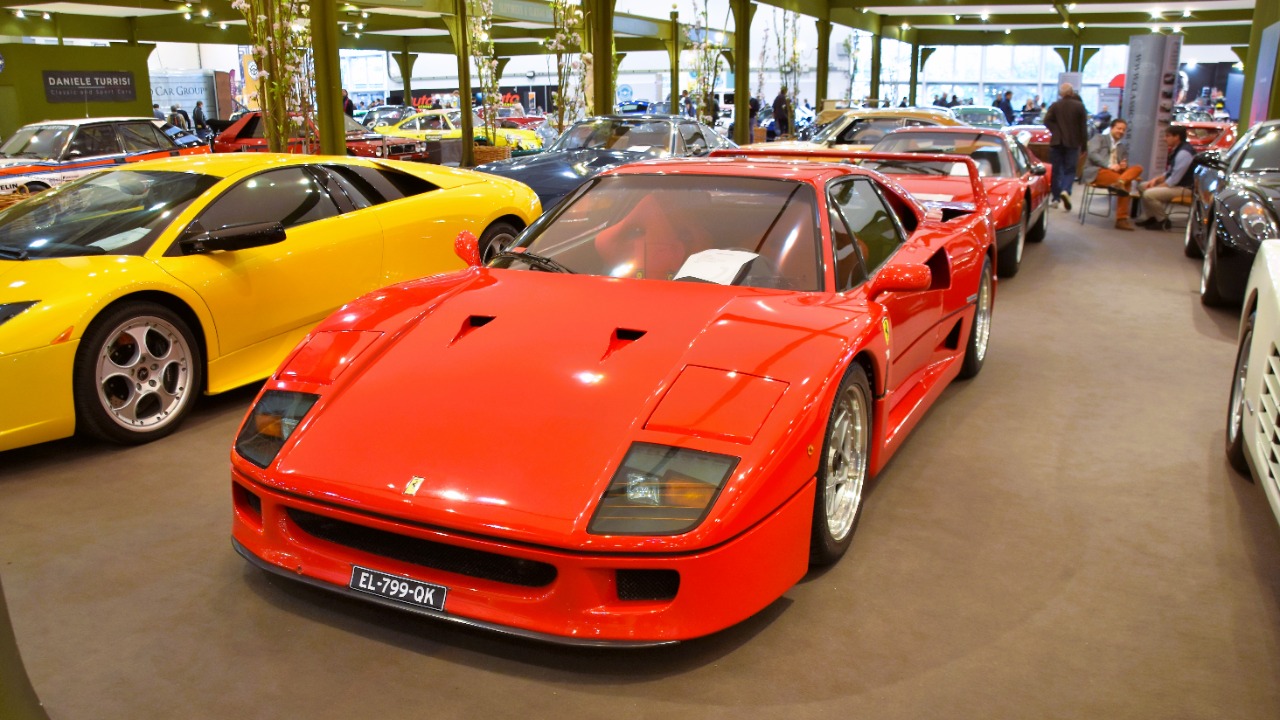
The 1987 Ferrari F40 arrived as a blunt statement of intent, a car that treated comfort as a distraction from speed. Built to celebrate Ferrari’s fortieth anniversary and to cap Enzo Ferrari’s own era, it stripped away luxury until only power, grip, and noise were left. I see it as the first modern Ferrari that refused to compromise, a road car that behaved like a racing prototype that just happened to wear a license plate.
Nearly four decades later, the F40 still feels like a benchmark for raw performance, not because of electronics or clever software, but because of how little stands between the driver and the mechanical violence behind their shoulders. When I look at the F40, I do not see nostalgia, I see a blueprint for every “no excuses” supercar that followed, from stripped GT3 specials to track-only hypercars that chase lap times at any cost.
The last word from Enzo and a birthday built on speed
Ferrari did not intend the F40 to be just another flagship, it was conceived as a rolling anniversary present to itself. The Ferrari F40 was launched in 1987 to mark the company’s fortieth year, and it carried the extra weight of being the last car personally approved by Enzo. That context matters, because it explains why the car feels almost defiant, as if the founder wanted to sign off with something that distilled his racing-first philosophy into a single, uncompromising shape.
Under the rear deck, the engineering brief was just as blunt. A twin turbocharged V8 was tuned to deliver 478 horsepower, a figure that still looks aggressive today and that, at the time, pushed a road car into territory usually reserved for prototypes on slicks. Period footage and modern clips alike still linger on that number, with one reel noting how the F40’s twin-turbo V8 pumping out 478 horsepower made it feel like a race car that had accidentally wandered onto public roads.
Carbon, Kevlar and a cockpit that feels like a pit lane
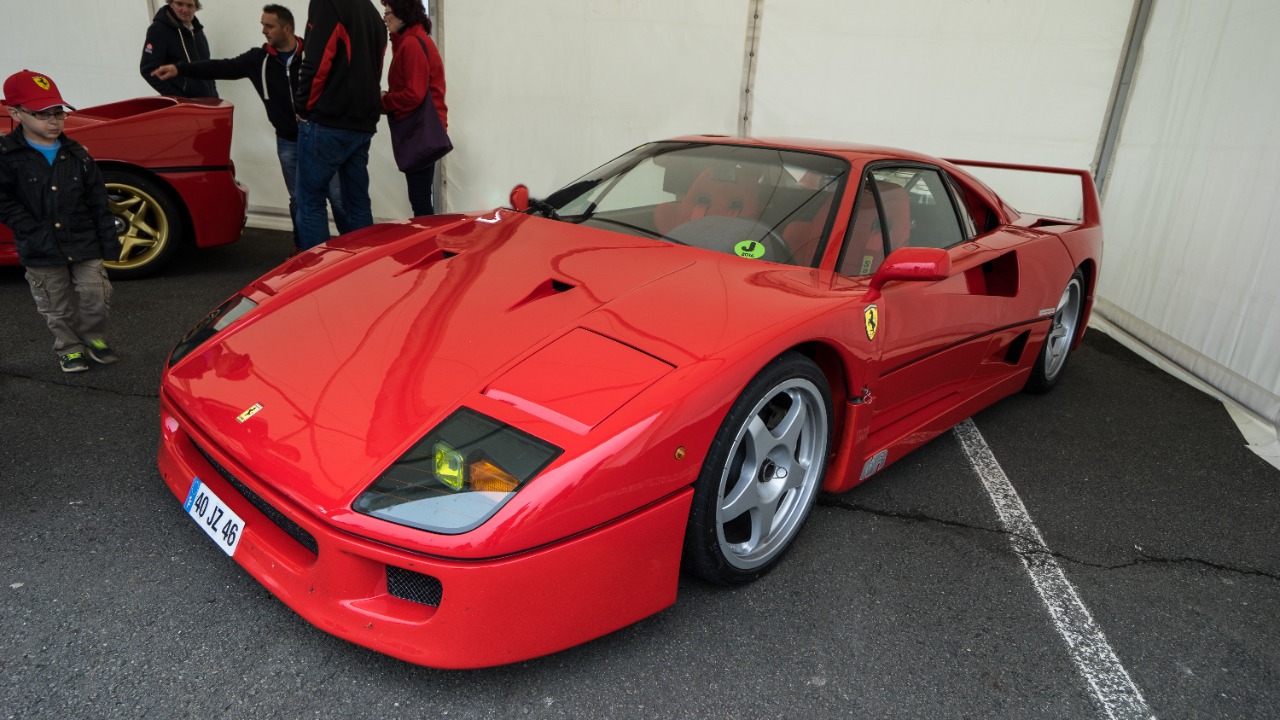
When I picture the F40’s cabin, I do not think of leather and stitching, I think of exposed weave and bare metal. Ferrari’s own retrospective describes a spartan cockpit with lightweight materials that helped keep the car’s mass low and its responses sharp, a design choice that made the F40 one of the most desirable analog supercars of its era. That stripped interior, with its thin door cards and visible bonding, was not an oversight, it was a deliberate attempt to make the driver feel like they were sitting inside a racing car rather than a grand tourer, a point underscored in detailed breakdowns of the F40’s construction.
The bodywork followed the same philosophy, relying on advanced composites for the time. Engineers leaned on Kevlar and carbon fiber to create a shell that was both rigid and light, then draped it over a chassis tuned for stability at extreme speed. Official material on the F40’s thirtieth anniversary notes how this combination of a lightweight cockpit and focused structure helped cement its reputation as one of the most desirable Ferraris, with Ferrari itself highlighting that the car’s minimalism was a feature, not a flaw.
Boost, violence and the first road car past 200 mph
On the move, the F40 is defined by its turbocharged split personality. Below 3,500 rpm, the car feels almost tame, the twin IHI turbochargers sitting quietly as the engine gathers itself. Then the boost arrives, and the car lunges forward with a ferocity that still intimidates seasoned drivers, a surge that turns the experience into a wrestling match with barely contained fury rather than a casual Sunday drive.
That brutality translated into numbers that rewrote expectations for road cars. Factory data lists a claimed top speed of 324 km/h, a figure that pushed the F40 into a realm previously reserved for race machinery and that still looks impressive in an era of electronically limited supercars. Contemporary and modern analysis alike point out that the Ferrari F40 set a new gold standard when it became the first street legal car to break the 200-mph barrier, and Ferrari’s own technical sheet underlines that the F40’s performance was that of a true supercar, with a top speed of 324 km per hour and acceleration that still feels savage today.
From factory skunkworks to LM-spec monsters
The F40 did not emerge from a vacuum, it grew out of a development program that blurred the line between race car and road car. Detailed histories describe how test driver Dario Benuzzi worked with engineer Nicola Bonfiglioli and his team to reconcile vast power, low weight and new Kevlar carbon technology into something that could survive public roads. One in depth video essay on the car’s gestation notes how the engineers essentially started with a racing platform and then just made it roadworthy, turning their hard work into something they could showcase to Ferrari as he was on his way out of day to day control.
That racing DNA became even clearer when the F40 went back to the track in LM form. The F40 LM racing cars were prepared by Michelotto, the specialist based in Padua who had already carried out extensive work on competition projects for Ferrari. Those LM cars, with their more extreme aero and power, simply made explicit what the road car had hinted at all along, that the F40 was essentially a racing chassis wearing just enough civility to pass homologation.
Analog legend in a digital age
What fascinates me most is how the F40’s reputation has not faded in a world of hybrid hypercars and active everything. A detailed specification sheet from a specialist workshop notes that under the rear deck of the Ferrari F40 sits a 2.9 liter twin turbo V8 that can launch the car from 0 to 100 km/h in just 3.8 seconds, figures that still feel brisk even as modern cars chase ever smaller numbers. That same document, titled Ferrari F40 Specifications, frames the car’s Development and Launch as a turning point, a moment when Ferrari’s 40th anniversary project reset expectations for what a road legal machine could be.
The cultural pull is just as strong. Earlier this year, coverage of the car’s enduring appeal pointed out how Lewis Hamilton, one of Formula 1’s most significant drivers, posed with an F40 as a kind of tribute to its analog driving experience, a car built for driving, not comfort. Social media clips echo that sentiment, with one post from Oct opening with the line “The Ferrari F40 is one of the most legendary supercars ever built” and lingering on the sound of the engine at full power, while another anniversary feature from Jul notes that “Life, legend has it, begins at 40” and that, at the very least, for Ferrari it proved one remarkable year.
Why the F40 still feels like the purest Ferrari
When I compare the F40 to the cars that came before and after, what stands out is how little it tries to please anyone who is not obsessed with driving. There are no driver aids to speak of, no plush seats, no insulation to mute the engine’s anger. Collectors and historians alike point out that the F40’s unveiling was an immediate worldwide hit, in part because it combined the most legendary name in performance with outrageous looks and, last but not least, a great chassis, a mix that one detailed history of the Ferrari F40 credits with turning the car into an instant icon.
That purity is why the F40 still feels like the first no compromise Ferrari built for speed above all else. Modern commentators regularly describe it as the most unfiltered supercar ever built, with one deep dive noting how, Below its wild styling and raw cabin, the car delivers an experience that is closer to a Group C racer than a road car. Another analysis of its boost behavior emphasizes how the turbos wake up only after 3,500 rpm, and that Then the car transforms from docile to feral in a heartbeat. In a world where speed is often filtered through layers of software, the F40’s refusal to compromise feels more radical than ever, a reminder that sometimes the most modern idea is simply to remove everything that is not essential and let the driver do the rest.