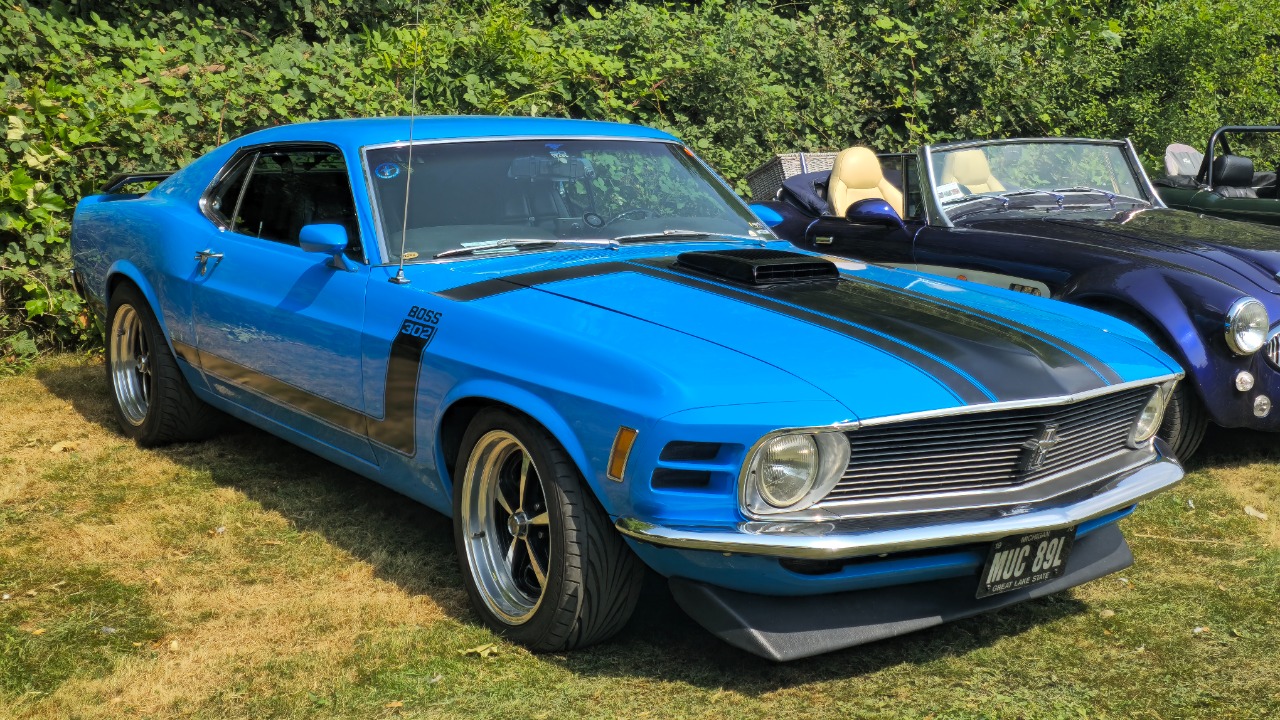
The 1970 Ford Mustang Boss 302 was built with a single purpose in mind: to turn a street pony car into a Trans-Am title contender. In an era when factory-backed teams treated the Sports Car Club of America’s series as a rolling arms race, this lean fastback arrived as Ford’s sharpest weapon, pairing a high-strung small-block with race-bred suspension and aero tweaks. Its chase for the SCCA Trans-Am Championship did more than fill trophy cases, it reshaped what a muscle car could be.
When I look at the 1970 Ford Mustang Boss 302 today, I see a car that blurs the line between pit lane and parking lot, a machine that still feels like it is idling on the grid. The same ingredients that carried it to Trans-Am glory, from its 302 cubic inch V-8 to its stripped-down bodywork, are exactly what make it so compelling for enthusiasts now.
Homologation pressure and the birth of a street fighter
The Boss 302 story starts with paperwork, not horsepower, because the SCCA required manufacturers to sell road-going versions of their race cars before they could compete. The specific impetus for the 1969–70 Boss 302 engine was meeting those homologation rules so Ford could run in Trans-Am rather than focus only on the NASCAR circuit. That meant the company had to engineer a small-block that could survive 7,000 rpm on Sunday and still idle in a dealership lot on Monday, a balancing act that shaped every part of the program.
To satisfy the Sports Car Club of America, Ford needed to build at least 6,500 examples of the car, a threshold it cleared with a total of 7,014 production Boss 302s. The regular-production street car was created specifically to legalize the Cleveland-head small-block for the SCCA’s Trans Am series, where Ford paired it with drivers Parnelli Jones and George Follmer. In other words, every Boss 302 that rolled onto public roads existed because Ford wanted to win a championship.
Designing “The Boss” for the grid and the boulevard
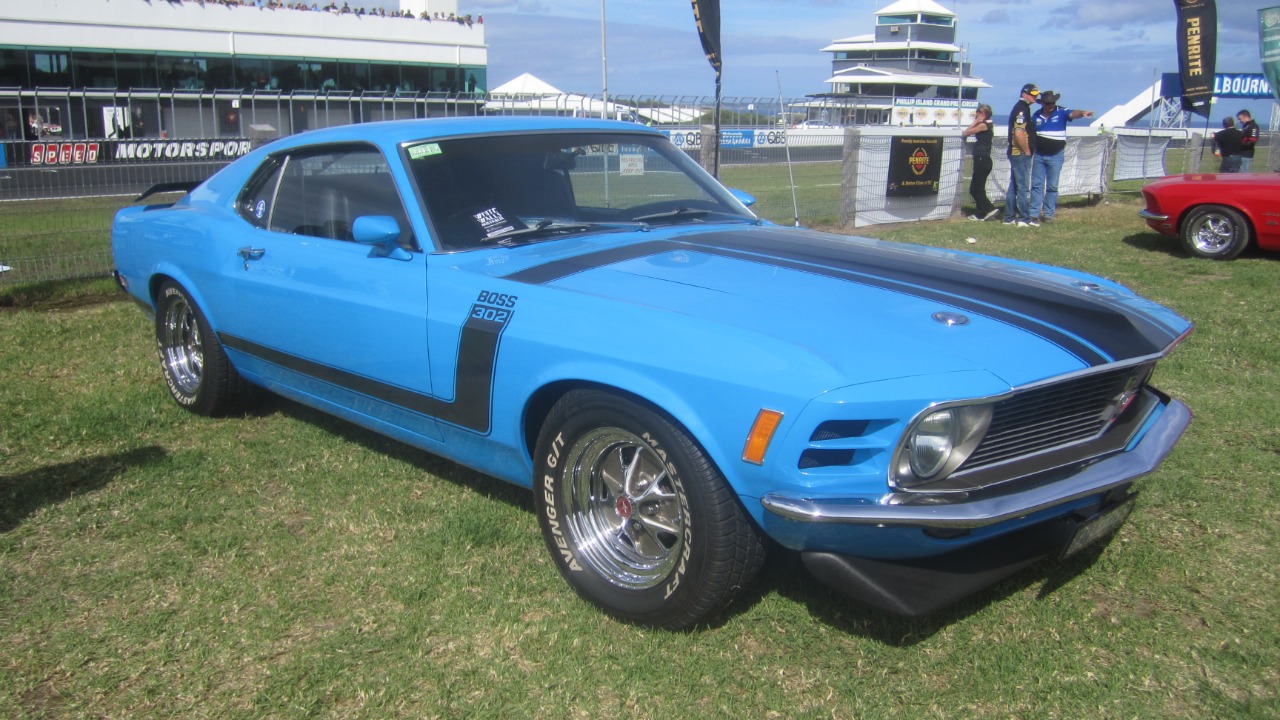
Stylist Larry Shinoda understood that the car had to look as serious as it drove, and he treated the Boss 302 Mustang as a complete package rather than just an engine swap. Designed by Larry Shinoda, the Boss 302 Ford Mustang Boss 302 gained subtle aerodynamic aids to enhance its track prowess, while the fake rear quarter scoops were deleted to clean up the profile. The name “The Boss” itself, attached to the Mustang, quickly became shorthand for a car that looked like it belonged in the paddock.
Underneath, the Boss 302 concept was packaged around the standard fastback body, but the chassis was anything but ordinary. Manufacturer’s curb weight was listed at 3,122 pounds, and the car carried heavier sway bars, reinforced shock towers, and stiffer spindles to cope with race-level cornering loads. A front spoiler and rear deck wing were added, and for 1970 the Boss 302 Ford Mustang Boss 302 gained distinctive hockey-stick side stripes that set it apart from regular Mustangs, along with heavier suspension hardware that made the car feel more like a factory club racer than a boulevard cruiser.
The high revving heart that made Trans-Am possible
At the core of the program sat a small-block that behaved like a race engine hiding in plain sight. The Heart of the Boss was a High Revving Small Block, a 302 cubic inch V-8 that combined a Windsor-style bottom end with big-port Cleveland cylinder heads. This unique setup gave the Boss Mustang a 302 that loved to spin, with an official power rating that many period observers believed was sandbagged for insurance purposes. Power for the Team Mustang cars came from a high-output version of Ford’s 302, first brought out in 1968, and then refined for the demands of Trans-Am racing.
On the street, the engine’s character was just as vivid. Its heart was Ford’s 302-cid V-8 treated to high-performance, big-port cylinder heads, a combination that let the 1970 Ford Mustang Boss 302 rev freely while still wearing bold 302-cid graphics down the flanks. Contemporary tests noted that the engine would willingly pull to 7,000 rpm in stock form, and the Manufacturer’s own literature framed The Boss as a car that could live at the top of the tach. That same basic 302 architecture powered the Team Mustang Trans-Am entries, tying every street car directly to the race effort.
1970: Trans-Am’s greatest season and Ford’s hard-fought title
By the time the 1970 season opened, Trans-Am racing had become a full-contact marketing war. The 1970 season has been called Trans-Am racing’s greatest year, with factory support at an all-time high and teams being fielded by Ford, Chevrolet, Dodge, Plymouth, and AMC. Ford’s entry, the 1970 Ford Mustang Boss 302, arrived as The Model That Won The SCCA Trans Am Championship, a car whose competition pedigree was baked in from the first sketch of the Ford Mustang Boss.
Behind the wheel, Ford relied on Parnelli Jones and George Follmer to turn that engineering into points. Parnelli Jones teamed up with car owner Bud Moore and fellow driver George Follmer to win the 1970 Trans Am Championsh for Ford, a result that cemented the Boss 302’s place in racing history. One of the three team cars from that season is now preserved as a reference point for how hard the factory pushed, a surviving Trans-Am Boss that still wears the scars of a year-long title fight.
From race track to collectible icon
On the surface, a 1970 Boss 302 Mustang might look like a slightly lowered fastback with flared wheel openings and period-correct decals, but the story runs deeper. What you see is not just a lowered 70 Boss Mustang with subtly enlarged arches and 8×15 wheels, it is a faithful echo of the cars that carried Ford to the championship while Follmer placed third in points. The hardest decals to find for accurate restorations are often the Bud Moore Engineering and Precision Valve Spring markings, a reminder that even the sticker packages on these cars were tied directly to the Bud Moore Engineering and Precision Valve Spring effort that kept the engines alive at 7,500 rpm.
On the road, the Boss 302 Ford Mustang Boss 302 still feels more focused than its contemporaries, and collectors have noticed. One example wears a yellow paint coat of code #3470-A, a detail that helps explain why Ford Mustang Boss cars command a premium over regular Mustangs. For 1970, Ford exceeded the homologation quota by 514 cars, building a grand total of 7,014 examples, and contemporary road tests recorded quarter-mile times of 14.9 seconds at 93.4 mph. Those numbers, combined with the car’s direct link to the Trans-Am title, have turned surviving Bosses into blue-chip pieces of Ford history.
The short life and long shadow of the Boss 302
For all its impact, the original Boss 302 Ford Mustang Boss 302 Ford Mustang was sold only in 1969 and 1970, but that was enough to accomplish its mission for Ford. The original Boss 302 program delivered the Trans-Am championship and gave the brand a halo car that enthusiasts still revere. In 1970 Ford cancelled their previous performance models, the Boss 302 and Boss 429, as insurance premiums climbed and the market shifted away from high-compression muscle.
Yet the legacy of The Boss has only grown. The Boss 302 Mustang was styled by Larry Shinoda, a former GM employee who gave the Mustang a purposeful stance and popularized the Boss name that still resonates with enthusiasts. Decades later, Ford revived the idea with modern interpretations that nodded directly to the original Ford Mustang that chased Trans-Am glory, proof that a car built to satisfy SCCA paperwork ended up defining what a factory-built track car could be.