The chrome era produced some of the most recognizable vehicles ever to come out of Detroit. The late 1940s started the styling shift, but by the middle of the 1950s, American cars were wearing bright bumpers, elaborate grilles, tail fins and enough polished trim to turn a dealership lot into a wall of chrome. Underneath all that decoration, however, manufacturers were also making some important mechanical advances.
This was the period when overhead-valve V8s became mainstream, automatic transmissions became more common, suspension designs improved and engines began offering the kind of power that would define the muscle-car era a few years later. Mechanics who work on these cars today often appreciate something else: many were built with straightforward mechanical systems that can still be understood, repaired and rebuilt without a computer. These 20 vehicles show why the chrome era continues to earn respect from people who actually know what is under the hood.
1956 Dodge D-500
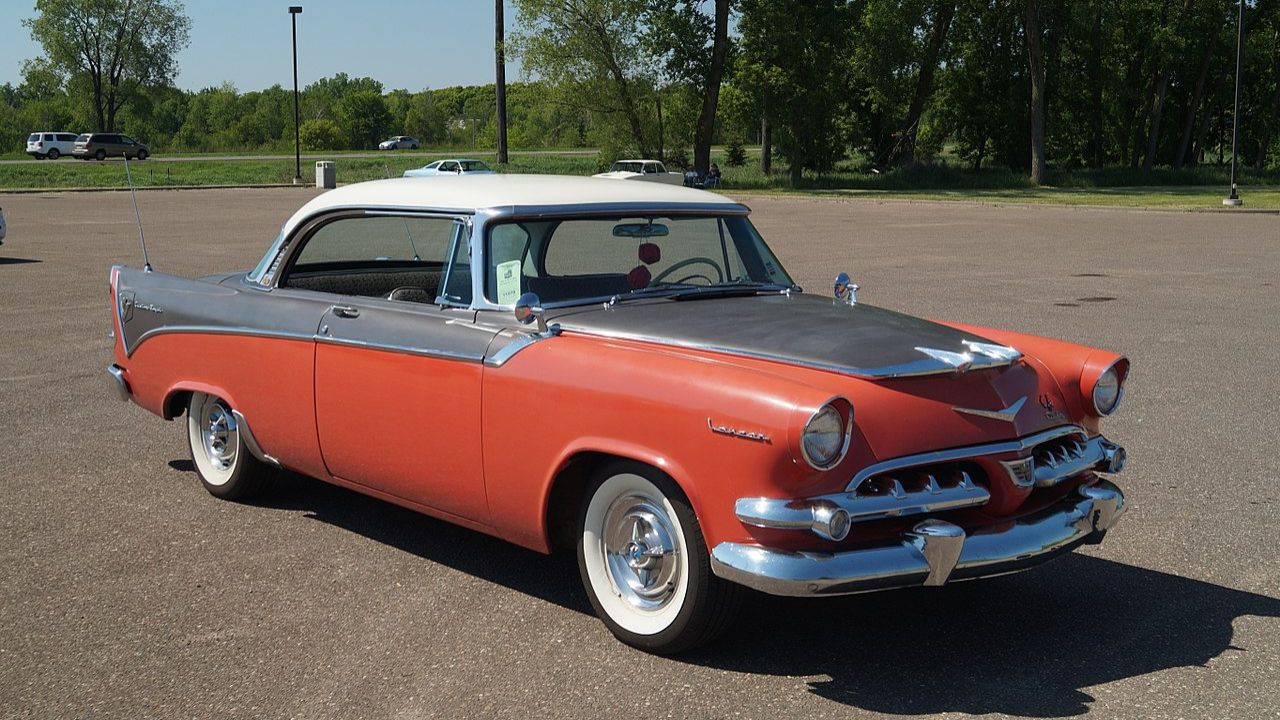
The D-500 was a factory option package rather than a separate model, and it turned the 1956 Dodge into one of the most completely engineered performance cars of its day. At its core sat a 315-cubic-inch Hemi V8 with a mechanical camshaft, 9.25:1 compression and a single Carter four-barrel, rated at 260 hp and 330 lb-ft. Dodge didn’t stop at the engine. The package added much stiffer springs, police-valved shocks, a ride height lowered by 1.5 inches and 12.75-inch brakes borrowed from the Chrysler 300, along with an 11-inch clutch, 2-inch dual exhaust and a heavy-duty rear axle. A twin-carburetor D-500-1 version was built for NASCAR and USAC competition. Wrapped in finned, chrome-trimmed bodywork, the D-500 shows a mechanic how a whole chassis was upgraded to match a strong engine, rather than simply dropping a big motor into a family car.
1959 Rambler Cross Country
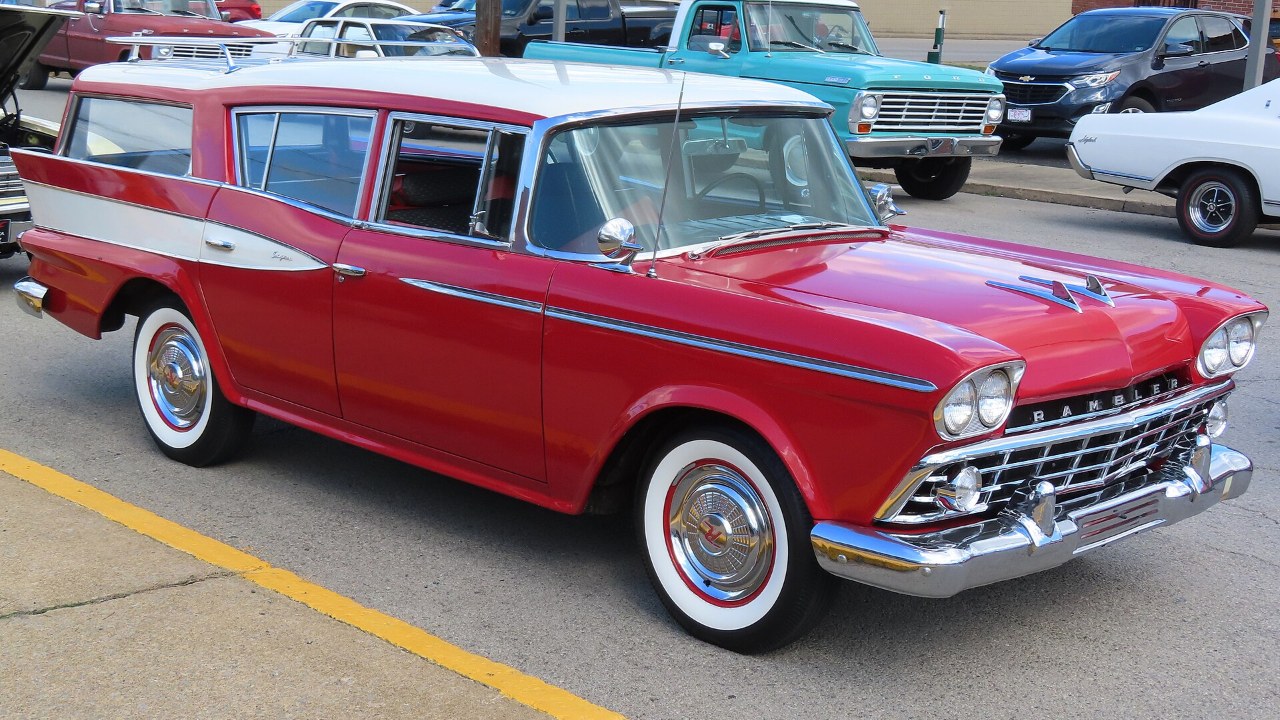
The 1959 Rambler Cross Country wagon earns its place through engineering that valued durability over flash. American Motors built it with what it called Single Unit construction, a welded body structure meant to keep squeaks and rattles to a minimum, on a compact 108-inch wheelbase. Most buyers got the 196-cubic-inch overhead-valve six rated at 127 hp, a simple, rugged engine that was the ancestor of later AMC sixes, while a 250-cubic-inch V8 was offered for those who wanted more. The basic body dated to 1956, and that long run gave AMC time to work out problems, producing cars that were well assembled and competently engineered. Practical touches like seats that folded into beds suited the brand’s sensible image, yet the wagon still wore tailfins and plenty of bright trim. Rambler had climbed to sixth in U.S. sales in 1958, and a ’59 wagon remains an easy, honest car to keep running.
1957 Ford Fairlane
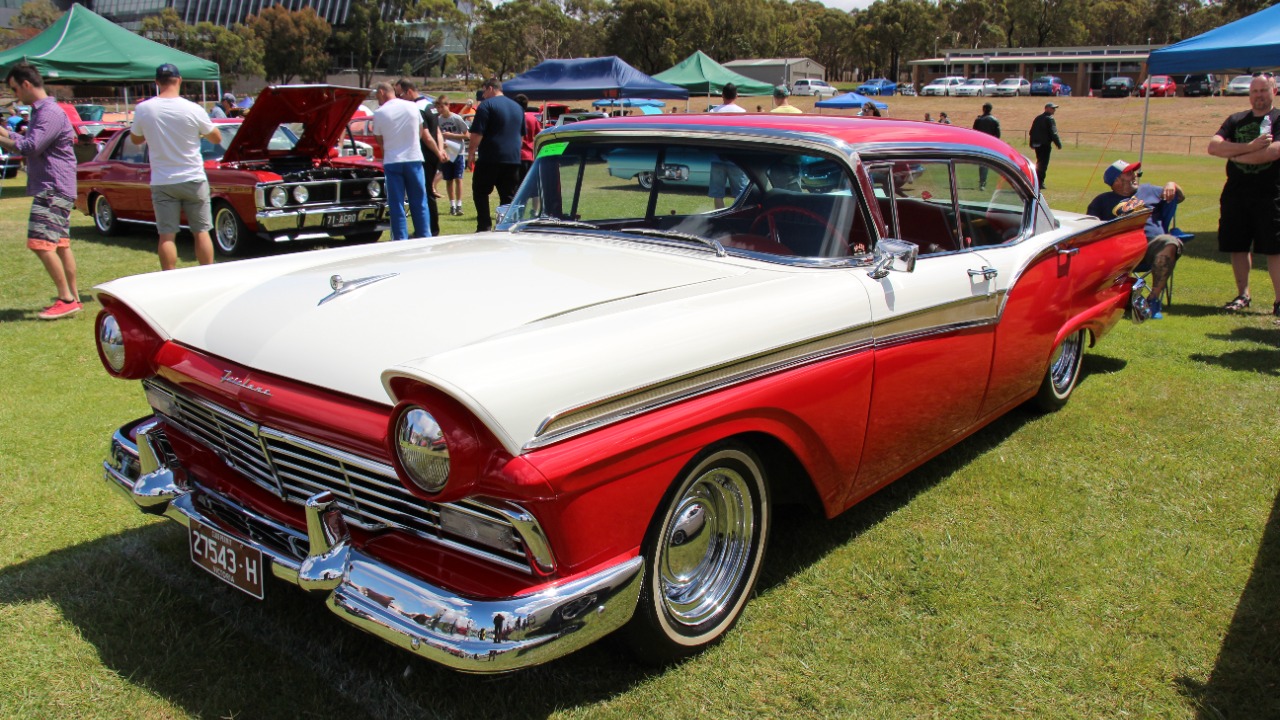
Ford answered Chevrolet’s chrome-heavy styling with the 1957 Fairlane, a car that combined extravagant bodywork with some serious mechanical hardware. The Fairlane could be ordered with Ford’s Y-block V8 in several configurations, giving buyers a considerable range of performance for the period. The engine bay was relatively open by modern standards, and the mechanical systems relied heavily on components that could be inspected, adjusted and rebuilt by hand. That matters to today’s mechanics because there is no electronic mystery hiding behind the dashboard or under the hood. The Fairlane also represented an interesting stage in Ford’s development before the company moved toward newer engine families and more compact designs. A properly maintained Fairlane gives a mechanic plenty to work with, from its V8 to its conventional suspension and brakes.
1956 Continental Mark II
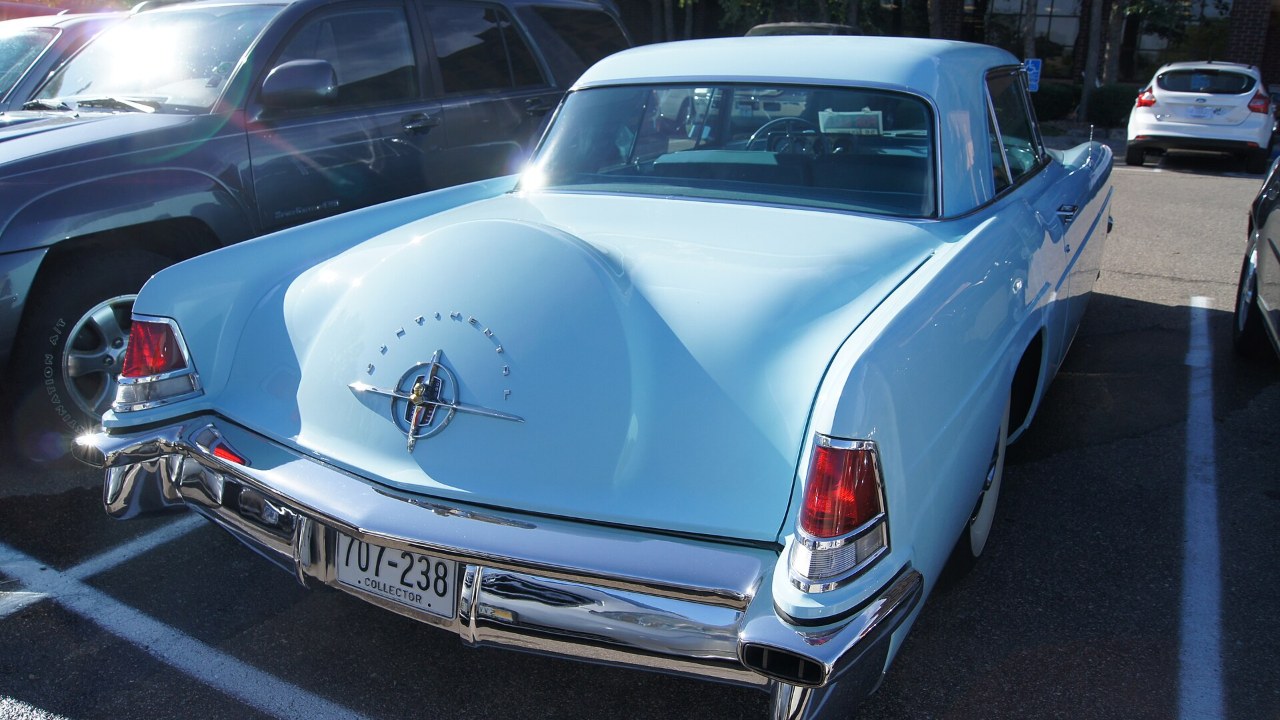
Ford created the Continental Mark II as a statement of craftsmanship, and the engineering behind it still impresses anyone who works on old cars. Much of each car was assembled by hand, and the bodies were painted by hand as well. Power came from a 368-cubic-inch Lincoln V8 rated at 300 hp with a four-barrel carburetor, driving through a three-speed Turbo-Drive automatic built by Lincoln and Borg-Warner. Priced at roughly $10,000, it was the most expensive American-built car of its time, and at 4,825 pounds it was one of the heaviest. Ford reportedly lost about $1,000 on every one it sold. Designers Gordon Buehrig and John Reinhart gave it long, restrained proportions that set it apart from the flashier cars around it. Production reached 2,550 for 1956 and only 444 more for 1957, so a well-kept Mark II offers a rare look at Ford’s most ambitious hand-finished car of the decade.
1959 Chrysler 300E
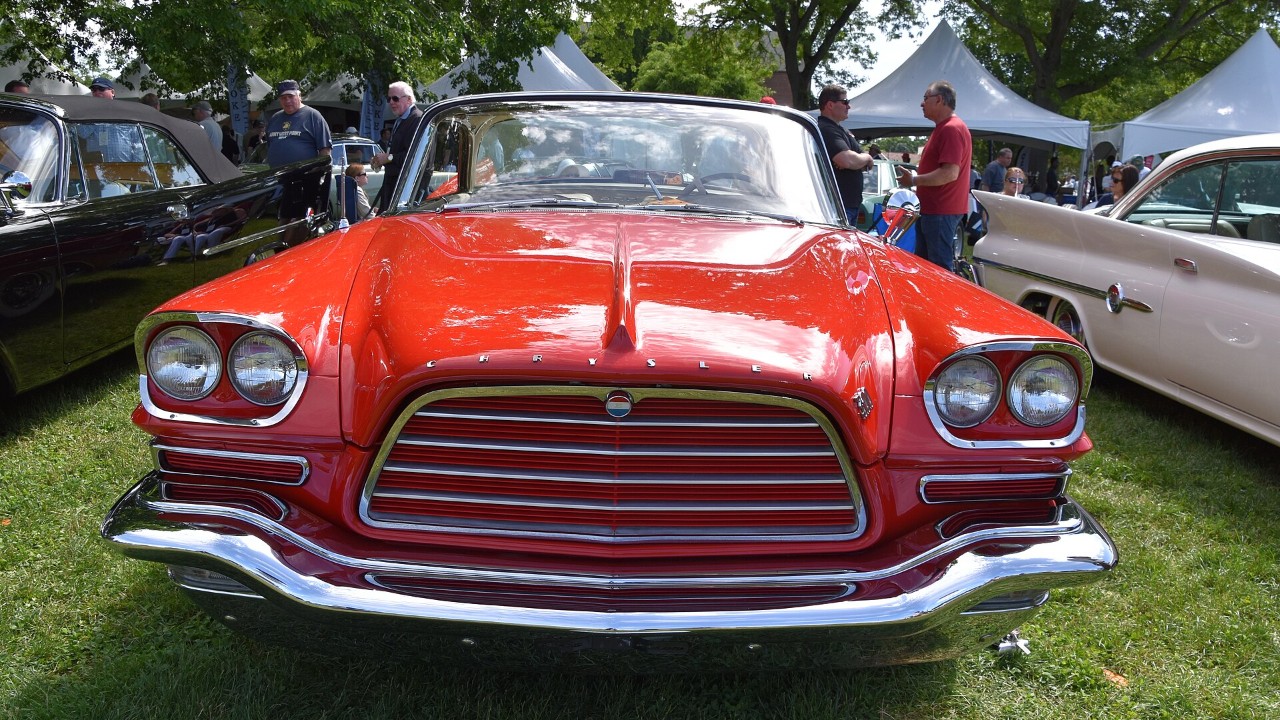
The 300E marked a turning point for Chrysler’s letter-series cars, and it proves the Hemi’s replacement was no step backward. Its 413-cubic-inch Golden Lion wedge V8 used two Carter AFB four-barrels, 10.1:1 compression and hydraulic lifters to make 380 hp at 5,000 rpm. The new engine also weighed 103 pounds less than the 392 Hemi it replaced, helped by a lighter cylinder head and a single rocker shaft in place of the Hemi’s more complex double-rocker setup. A three-speed TorqueFlite and power steering were standard, while front torsion bars and rear leaf springs kept the big car composed. Inside, leather front seats swiveled outward 60 degrees for easier entry, and Chrysler claimed a 0-60 mph time of 8.3 seconds. Buyers missed the Hemi, though, and fewer than 700 hardtops and convertibles were built, making the 300E a rare and well-engineered example of late chrome-era performance.
1955 Imperial Newport
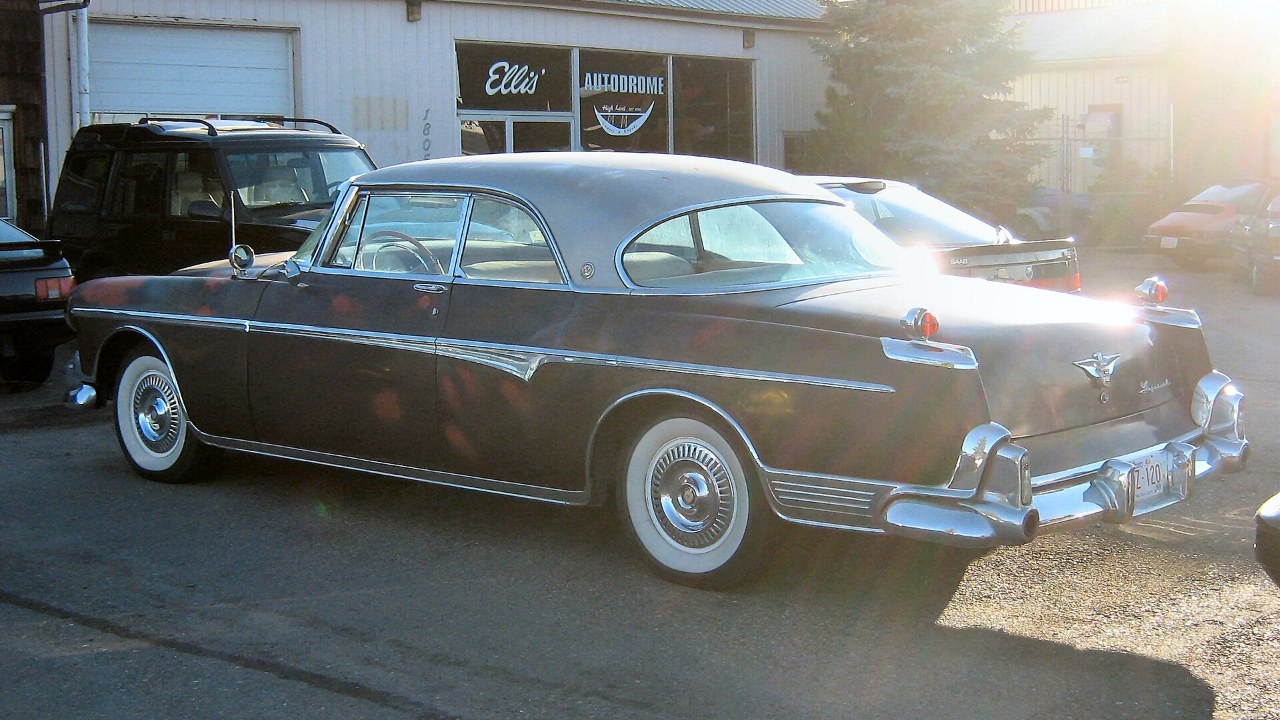
Chrysler had just split Imperial off as its own make, and the 1955 Newport two-door hardtop shows how much hardware went into that move. Every Imperial used the 331-cubic-inch FirePower Hemi, rated at 250 hp with a four-barrel carburetor, and its hemispherical combustion chambers remain a favorite subject for engine builders. The FirePower name even appeared on the exhaust manifolds. Power went through the two-speed PowerFlite automatic, controlled by a dash-mounted lever, and power steering and power brakes were standard. Virgil Exner’s styling drew on his Parade Phaeton show cars, with an eggcrate grille, a nearly full-length chrome spear and freestanding gunsight taillights used only on the Imperial. The exhaust even exited through openings in the rear bumper rather than from a hanging pipe. Only 3,418 Newports were built for 1955, and the series started at about $4,700. For a mechanic, it is a Hemi wrapped in one of Chrysler’s most carefully built luxury cars.
1957 Plymouth Savoy
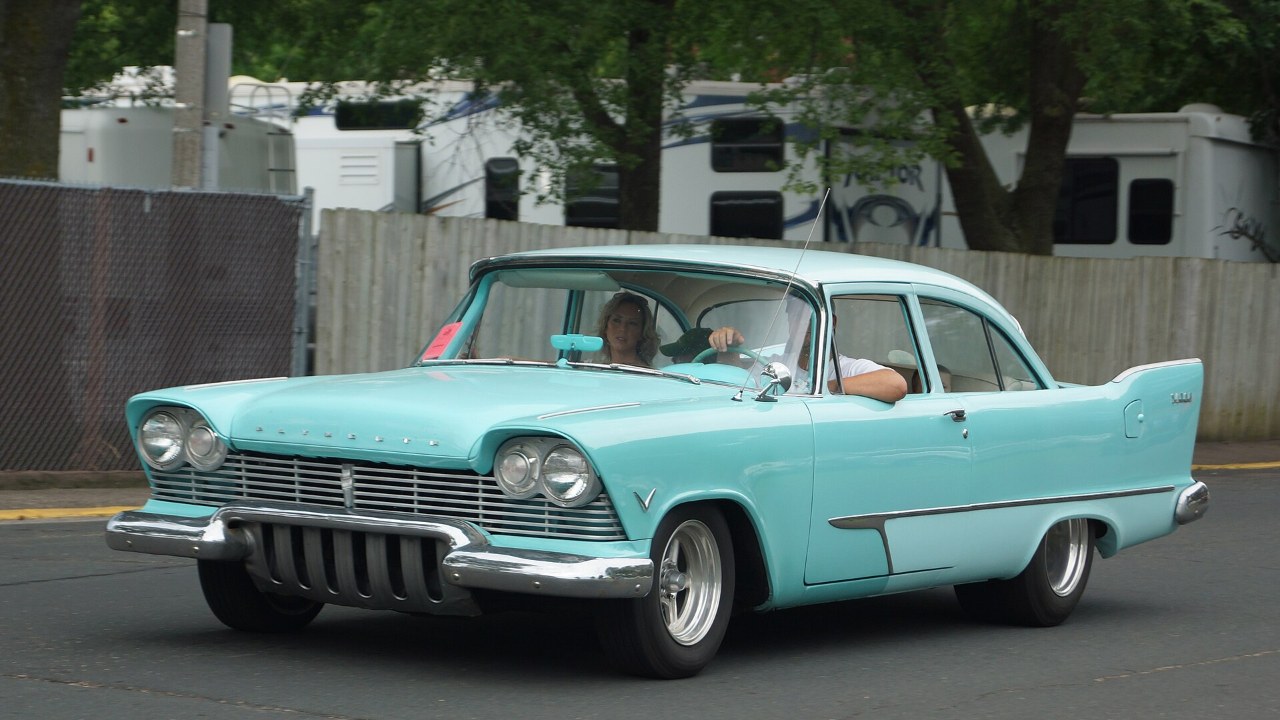
The 1957 Plymouth Savoy brought serious chassis engineering to the low-priced field. Chrysler’s new Torsion-Aire front suspension used torsion bars instead of coil springs, paired with rear leaf springs, and Consumer Reports praised its level ride and relatively flat cornering. The Savoy sat in the middle of Plymouth’s lineup, and buyers could choose a 230-cubic-inch six or V8s of 277 and 301 cubic inches, including a four-barrel Power Pak 301 rated at 235 hp. The optional pushbutton TorqueFlite added a three-speed automatic, while finned rear fenders and generous brightwork gave the car its chrome-era presence. It wasn’t flawless. Rushed production led to body rattles, early rust and some broken torsion bars, which is why survivors are scarce today. Still, the Savoy four-door sedan was Plymouth’s best seller that year at 153,093 units, and a sound example shows a mechanic the torsion-bar front end that Chrysler introduced across its 1957 lineup.
1956 Chevrolet 150
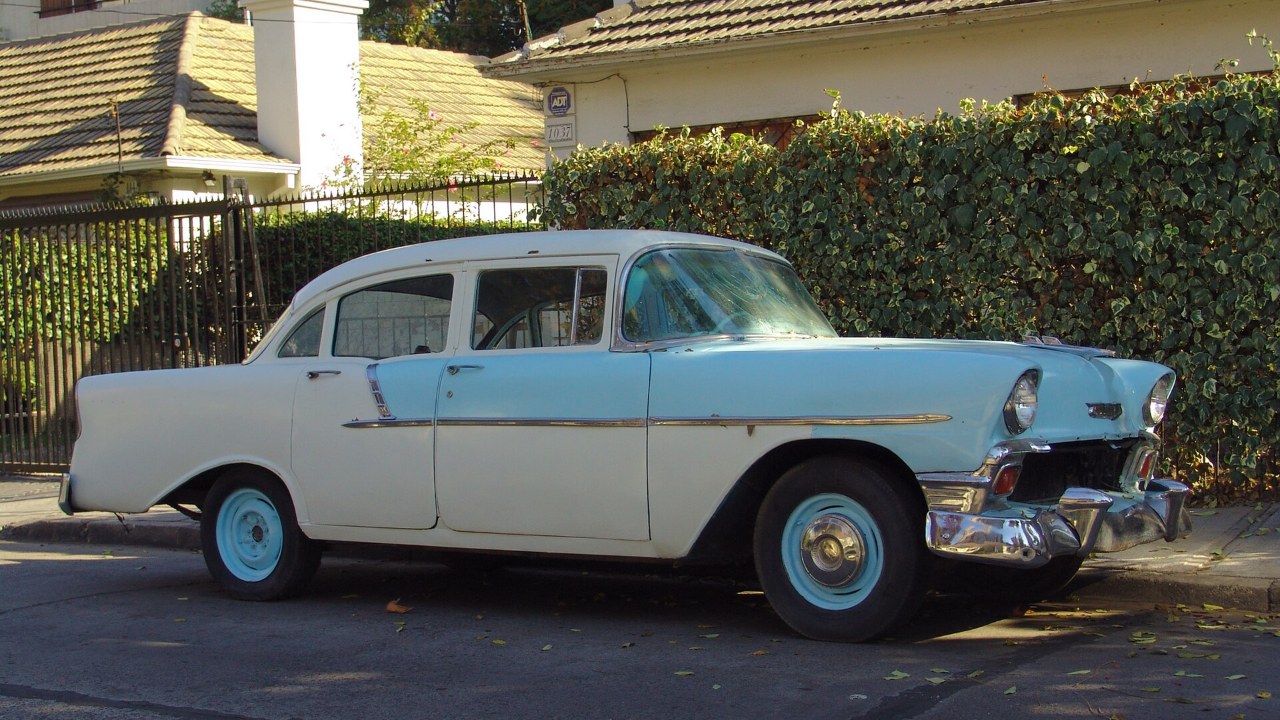
The One-Fifty was Chevrolet’s entry-level car for 1956, and its stripped-down simplicity is exactly what appeals to mechanics. It carried less trim than the Two-Ten and Bel Air, and the Utility Sedan even replaced the rear seat with a parcel shelf. The standard 235.5-cubic-inch six made 140 hp, but buyers could order the 265 V8, which got a redesigned block that year with improved cam oiling and a full-flow oil filter. Versions ranged from 162 hp up to 225 hp with dual four-barrel carburetors, and even that top engine could be ordered on a One-Fifty. The chassis carried over from 1955 with more anti-dive geometry up front and stronger rear spring mountings to reduce sway, all under freshly restyled front and rear sheet metal. Chevrolet built 125,446 One-Fifty models that year, with the Utility Sedan starting at about $1,735. It is a basic, honest Chevy that shares the same strong hardware as its pricier siblings.
1958 Edsel Bermuda

The Bermuda was Edsel’s top station wagon for 1958, and it rarely gets the mechanical credit it deserves. It rode on Ford’s 116-inch-wheelbase wagon platform but wore Edsel’s vertical grille, boomerang taillights and simulated wood paneling. The standard engine was the 361-cubic-inch V8 Edsel called the E-400 for its torque rating. It made 303 hp and 409 lb-ft with a four-barrel carburetor and 10.5:1 compression, and it was the first FE-family engine Ford sold to the public, so anyone familiar with that engine family will feel at home under the hood. The optional Teletouch automatic put its shift buttons in the steering wheel hub, an inventive idea that proved trouble-prone and didn’t return for 1959. The Bermuda itself lasted only one year, with 1,456 six-passenger and 779 nine-passenger wagons built, priced from $3,155. Only about a dozen nine-passenger cars are thought to survive, making a sorted example a rare find.
1957 Oldsmobile Super 88
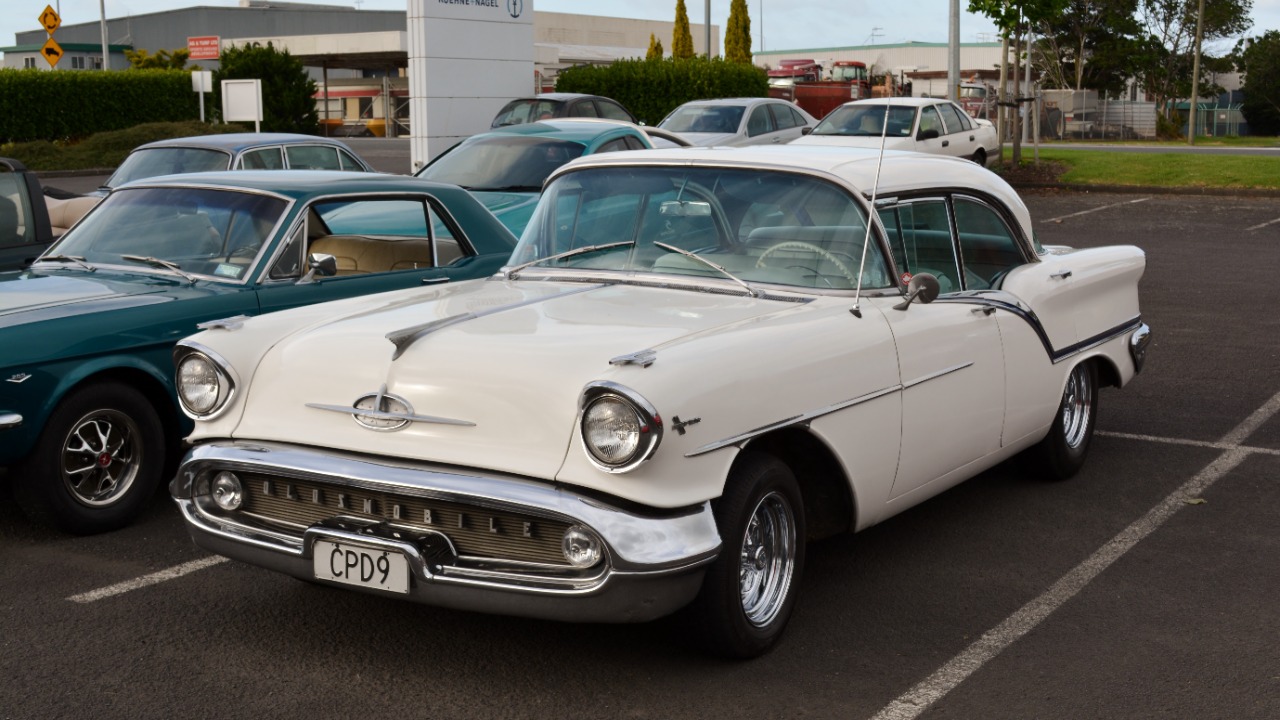
The 1957 Oldsmobile Super 88 combined extravagant styling with one of the more interesting V8 packages of the period. The Rocket engine had been evolving rapidly throughout the 1950s, and by this point Oldsmobile had established a reputation for building powerful overhead-valve engines that could withstand serious use when maintained correctly. The Super 88’s mechanical layout was still refreshingly direct by modern standards. Carburetion, ignition, cooling and lubrication were all systems a competent mechanic could diagnose independently. The car also had the kind of engine bay where major components could actually be reached without removing half the vehicle. That matters today because restoration often involves repairing decades-old components rather than simply replacing a sensor. The Super 88 therefore appeals to mechanics for more than nostalgia. It shows how much performance American manufacturers could extract from conventional V8 engineering before electronic controls became part of the equation.
1956 Packard Caribbean
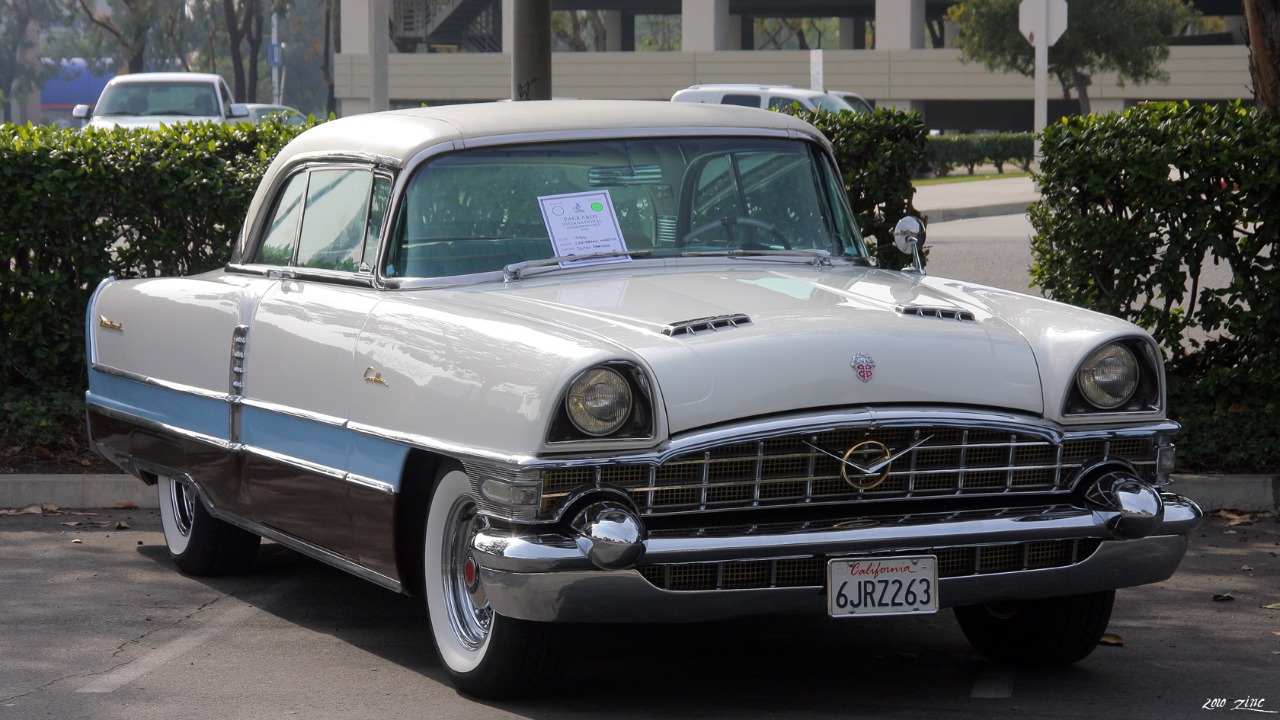
The 1956 Packard Caribbean stands apart from many Detroit cars because Packard was trying to maintain a distinct engineering identity during one of the most competitive periods in American automotive history. The Caribbean received Packard’s 374-cubic-inch V8, one of the company’s largest and most powerful engines, and the car was fitted with substantial mechanical hardware to match its luxury positioning. Packard also used its own torsion-level suspension system, which was considerably more sophisticated than the simple spring arrangements found on many contemporaries. That complexity is precisely why experienced mechanics find the Caribbean interesting. There is more engineering to understand, but it was still mechanical engineering rather than electronically controlled technology. The Caribbean demonstrates that chrome-era innovation was not limited to bigger fins and brighter bumpers. Companies like Packard were experimenting with suspension, engines and chassis design in ways that still give knowledgeable mechanics something to appreciate.
1955 Studebaker Speedster
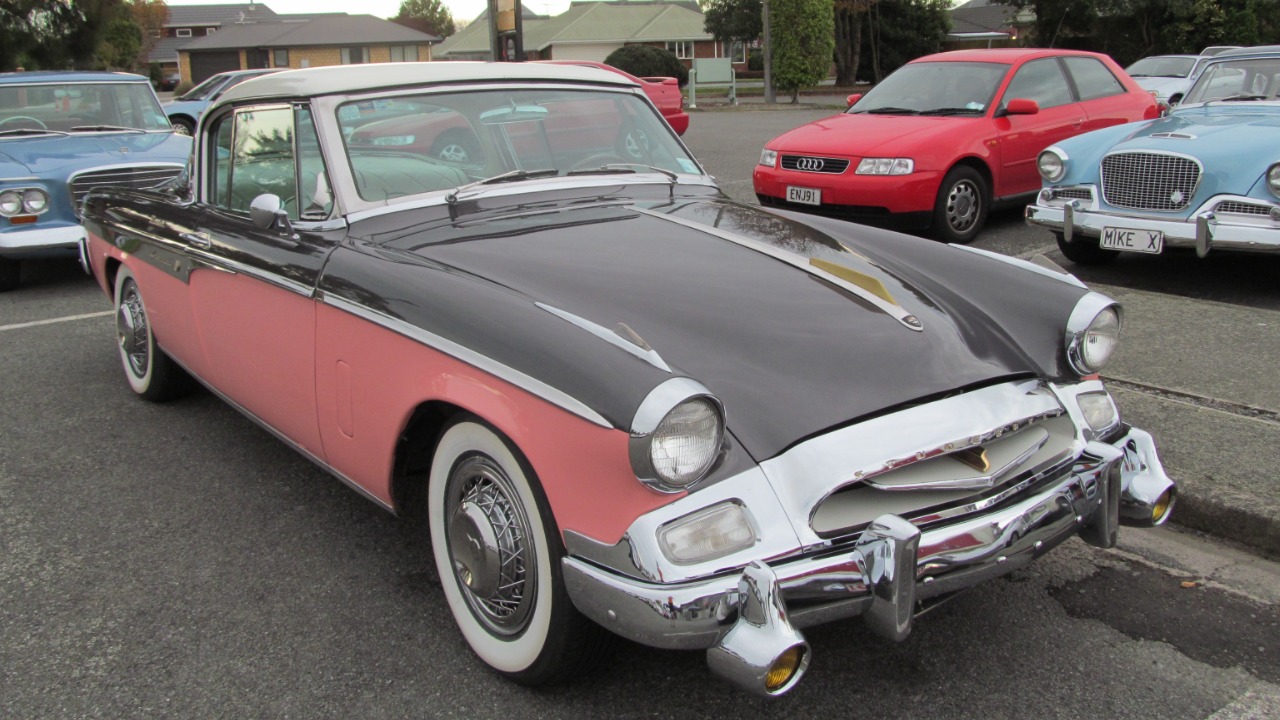
The Studebaker Speedster is a reminder that the chrome era was not exclusively about the Big Three. Based on the company’s handsome coupe, the Speedster combined distinctive styling with Studebaker’s 289-cubic-inch V8. The engine was an important development for the company, giving the relatively compact Studebaker a strong performance character without requiring the enormous dimensions common among Detroit’s largest cars. Mechanics tend to appreciate the Speedster because it is mechanically interesting without being unnecessarily exotic. Studebaker had to engineer competitive vehicles while operating with fewer resources than General Motors, Ford and Chrysler, which resulted in some clever packaging. The Speedster’s smaller dimensions also make its mechanical components feel less buried than those on a giant 1950s luxury car. It is one of those vehicles where the engineering story becomes more impressive once you look past the brightwork and examine what the independent manufacturer was actually trying to accomplish.
1955 Chevrolet 210 Delray

The 1955 Chevrolet Two-Ten Delray pairs a landmark engine with a thoroughly modernized chassis. The Delray was a trim package for two-door Two-Tens, adding pleated vinyl upholstery color-matched to the body, matching door panels and upgraded carpeting. Underneath, the 1955 Chevrolet got a new box-section frame, upper and lower ball joints in place of kingpins, recirculating-ball steering, anti-dive geometry, an open driveshaft instead of a torque tube and outboard-mounted rear leaf springs. The headline was the new 265-cubic-inch V8, offered at 162 hp with a two-barrel or 180 hp with a four-barrel, along with the 12-volt electrical system it required. The 235.5-cubic-inch six remained standard for buyers who wanted economy. Chevrolet built 115,584 Two-Ten club coupes that year, starting at $1,635. For mechanics, a Delray delivers the earliest small-block and a thoroughly modern chassis layout in a durable, nicely trimmed package.
1957 Chevrolet Cameo Carrier
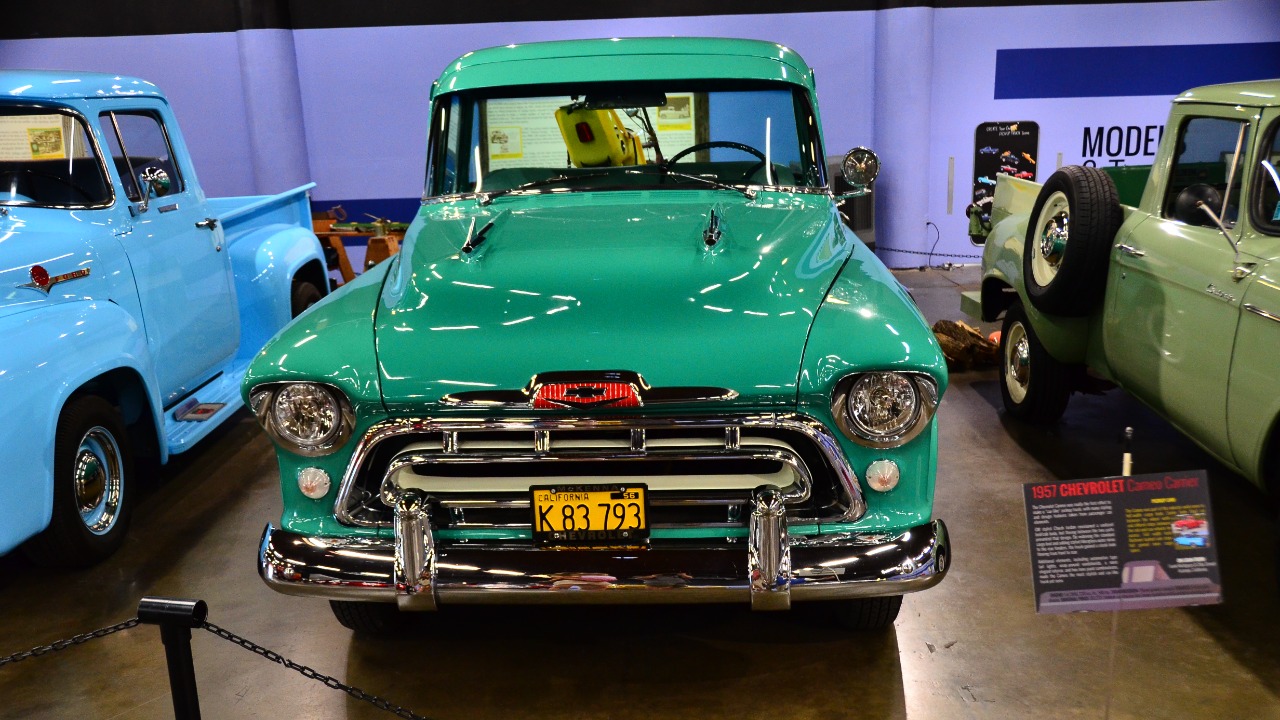
The Chevrolet Cameo Carrier occupies an interesting place between the traditional pickup truck and the stylish personal vehicle. Introduced for 1955 and continuing through 1958, the Cameo featured smooth rear bodywork that integrated the bed into a much more car-like design. Underneath, however, Chevrolet kept the mechanical package relatively conventional. The truck could use the same basic small-block V8 technology that was becoming such a major part of Chevrolet’s passenger-car lineup. That combination makes the Cameo particularly interesting to mechanics. It has the visual drama of the chrome era without sacrificing the straightforward mechanical architecture of a working truck. The 1957 version is especially attractive because it combines the updated styling of the year with the 283-cubic-inch small-block option. It was an early example of the performance and personal-use direction that American pickups would increasingly take.
1957 Pontiac Super Chief
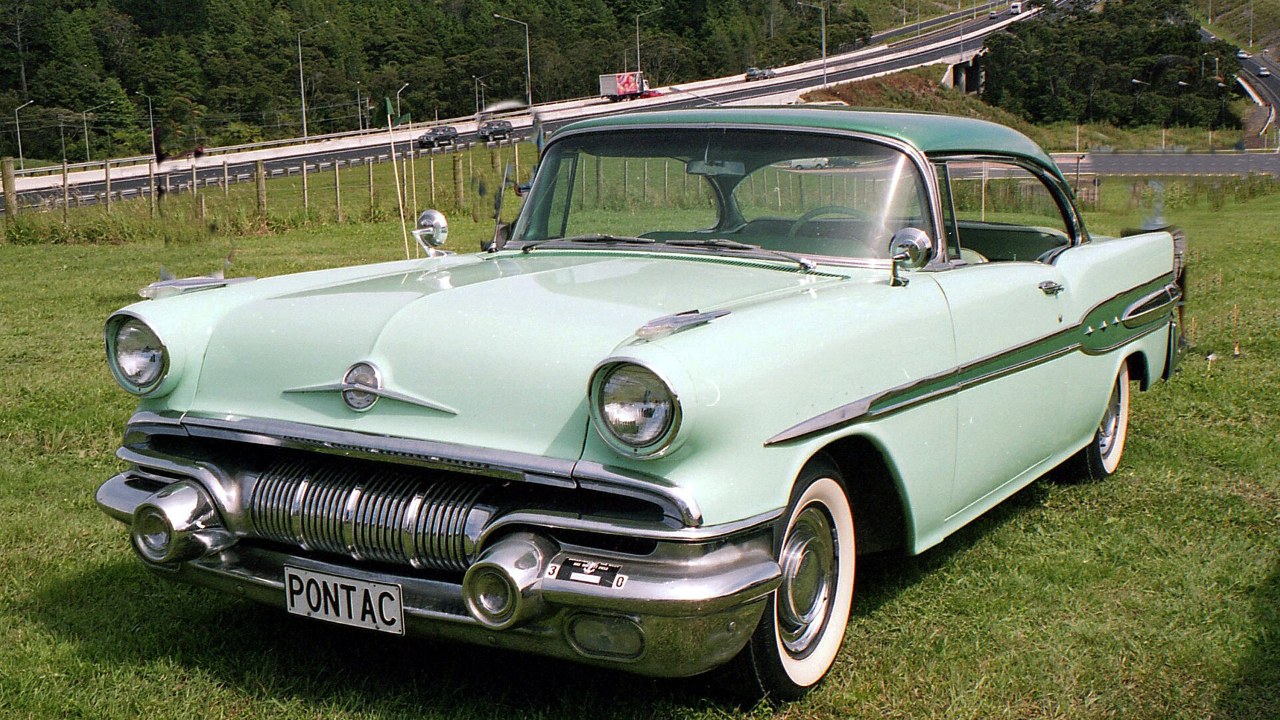
The Super Chief arrived as a new middle series for Pontiac in 1957, riding the same 122-inch chassis as the Chieftain while wearing dressier trim. Its 347-cubic-inch V8 is the real draw for mechanics. Super Chief models came with a four-barrel version rated at 244 hp with the three-speed manual or 270 hp with Hydra-Matic, and buyers could step up to Tri-Power engines with three two-barrel carburetors making 290 or 317 hp. Rochester mechanical fuel injection was eventually offered across the line, though few buyers ordered it. Pontiac even matched rear axle ratios to each transmission. That year’s Star Flight styling brought missile-shaped side trim, flatter fins, V-tipped rear fenders and a larger bumper and grille, with three stars on each rear fender marking the Super Chief. Catalina hardtops, sedans and Safari wagons in the series totaled roughly 64,500 cars. With a strong V8, Hydra-Matic and a straightforward chassis, it remains a rewarding car to sort out.
1957 Buick Century Caballero
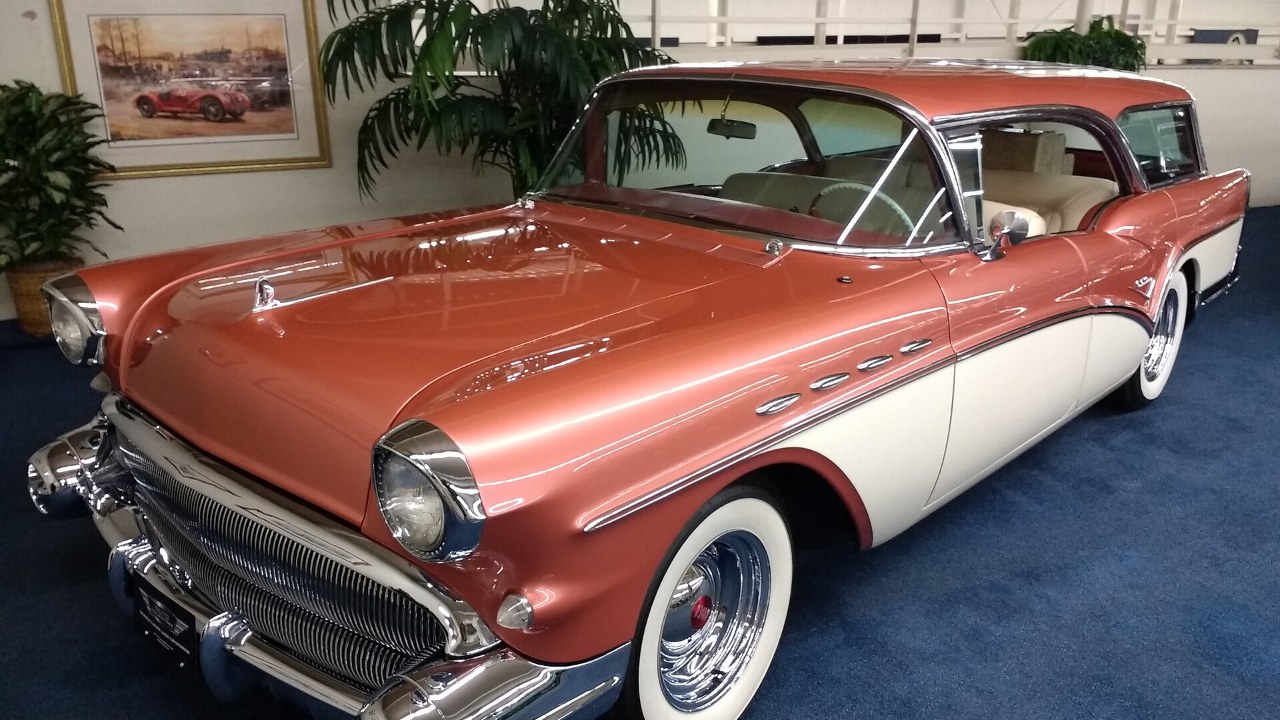
Buick introduced the Century Caballero for 1957 as an all-new pillarless four-door hardtop station wagon, a body style that still draws a crowd. It rode on the Century’s 122-inch wheelbase, with wagon bodies supplied by Ionia Manufacturing, and Buick’s new ball-joint front suspension improved handling that year. Power came from the 364-cubic-inch nailhead V8, which used five main bearings, hydraulic lifters, 10.0:1 compression and a four-barrel carburetor to make 300 hp and 400 lb-ft. The Variable Pitch Dynaflow automatic was standard. Inside, two-tone vinyl upholstery and thick carpeting in the cargo area set it apart, and an optional third-row Junior Seat added room. At $3,831, it was the most expensive Century, costing more than the convertible. Buick delivered 10,186 Caballeros for 1957 and 4,456 more for 1958, when a restyle added quad headlamps and even more chrome. For a mechanic, it pairs Buick’s big-torque nailhead with one of the era’s most unusual wagon bodies.
1955 Mercury Montclair Sun Valley
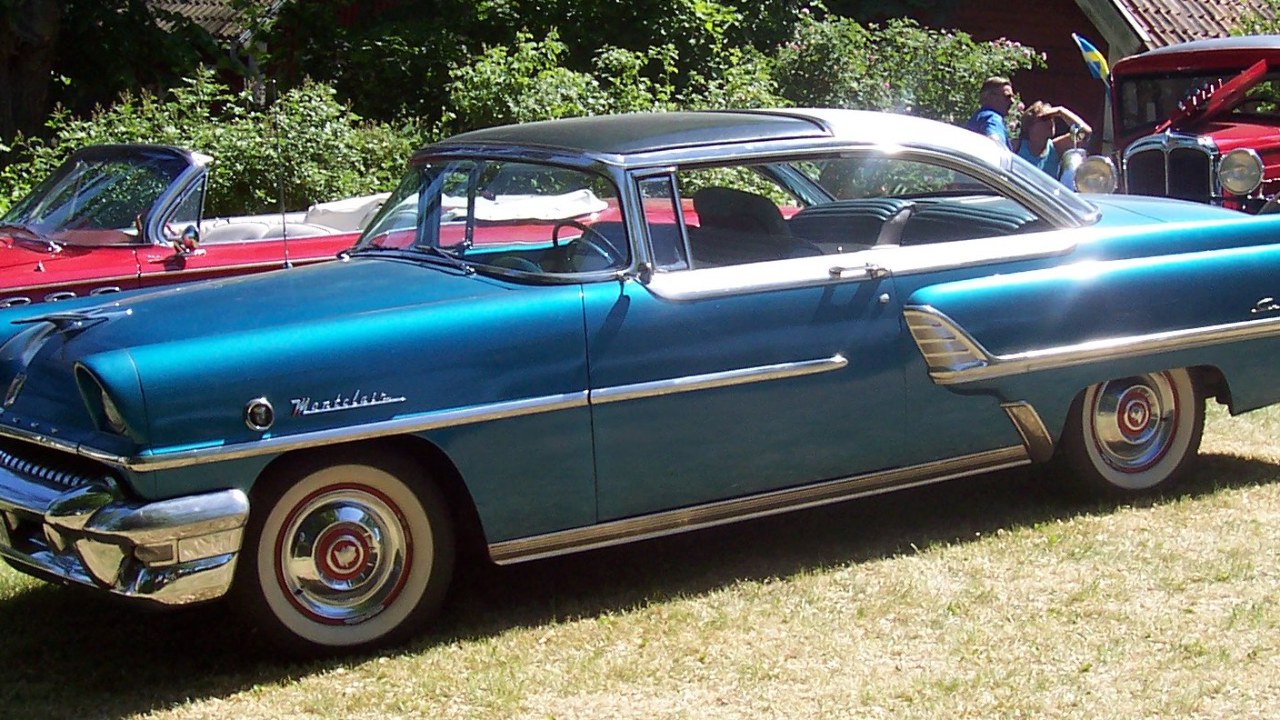
The Montclair Sun Valley is a chrome-era curiosity built on a solid mechanical foundation. Mercury made the front half of its roof from a tinted acrylic panel, filling the front seat with daylight decades before glass roofs became common. Beneath that futuristic top, the hardware was proven and easy to understand. Power came from a 292-cubic-inch overhead-valve Y-block V8, rated at 198 hp in Montclair form with 8.5:1 compression, and a three-speed automatic was available. Up front sat a ball-joint independent suspension, while a live axle on leaf springs handled the rear, all on a 119-inch wheelbase. Power steering and power brakes could be fitted as well. Mercury’s 1955 redesign gave the brand its own personality, longer, lower and wider than before, and the Sun Valley was its most daring expression. Only 1,787 were built, far fewer than the 10,668 Montclair convertibles, so a mechanically sorted survivor is a rare and rewarding find.
1956 GMC Suburban
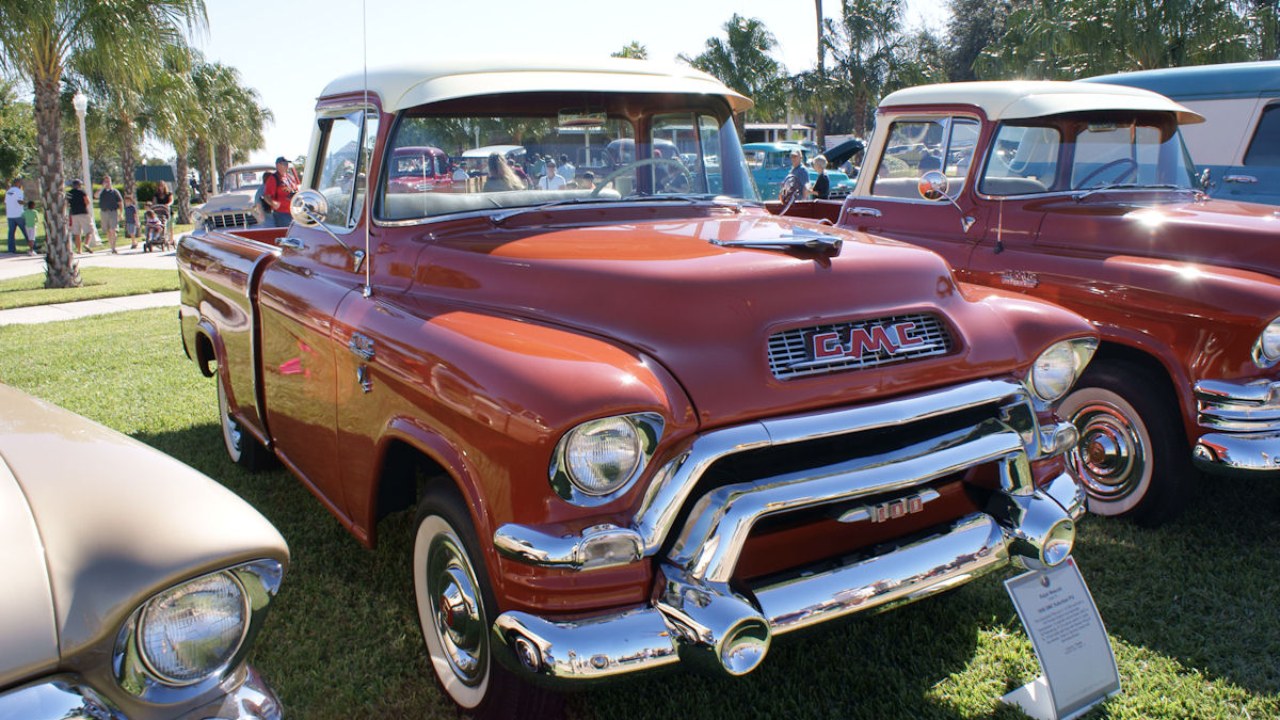
The 1956 GMC Suburban pickup was GMC’s version of the Chevrolet Cameo, but it brought some important mechanical differences under the skin. While the standard engine was GMC’s 248-cubic-inch six rated at 125 hp, buyers could order a 316-cubic-inch V8 sourced from Pontiac. The four-speed Hydra-Matic automatic was available, giving the truck a smooth, durable drivetrain that is still well understood today. GMC also set its truck apart with a larger grille, a heavier front bumper and its own dash, while the deluxe cab carried chrome bumpers, a panoramic windshield and distinctive taillights. The styling was nearly unchanged from 1955. Priced at $1,923 when new, the Suburban was built in very small numbers, so survivors are scarce. A well-restored example shows how GM blended car-like chrome with sturdy, serviceable truck hardware in the mid-1950s.
1954 Oldsmobile Holiday
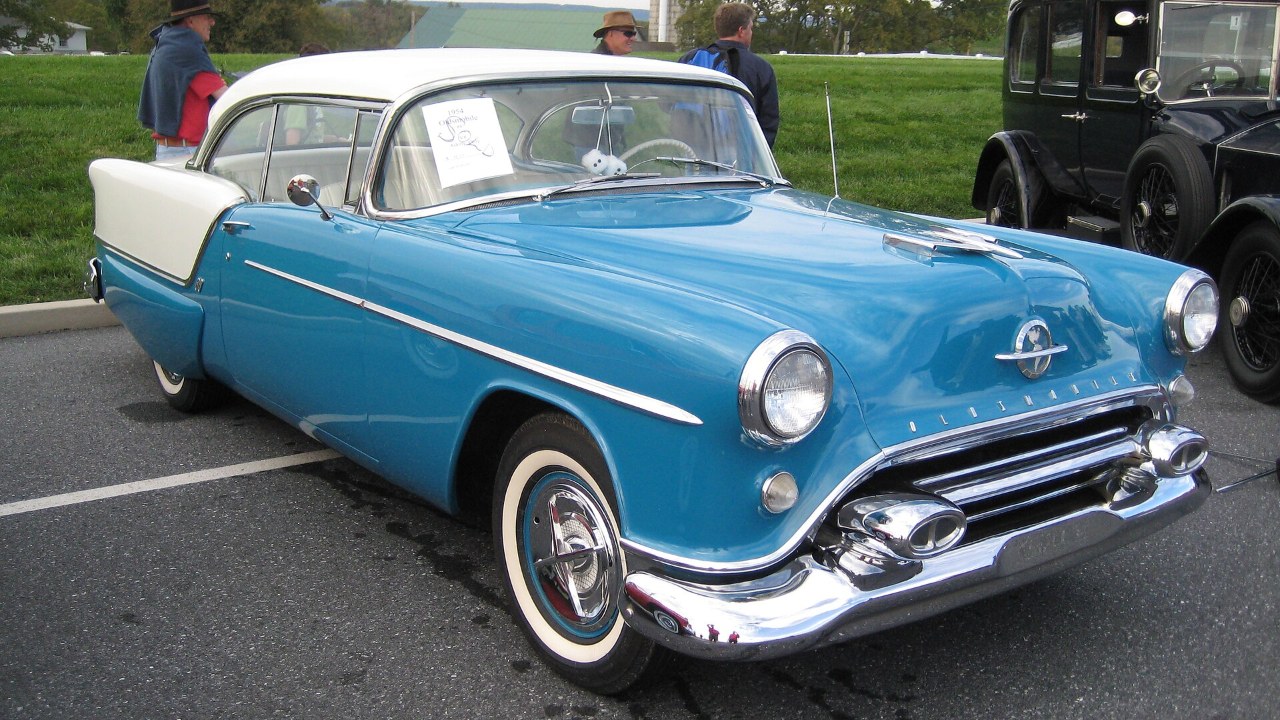
The 1954 Oldsmobile Holiday hardtop combined fresh chrome-era styling with one of the decade’s most respected engines. Oldsmobile redesigned its cars that year with a more rounded look, a panoramic wraparound windshield first previewed on the 1953 Fiesta, a new chassis and wheelbases stretched two inches. The Holiday two-door hardtop, now offered across the 88, Super 88 and 98 lines, helped drive a sales increase to 351,634 cars. Under the hood sat the Rocket V8, enlarged to 324 cubic inches with new cylinder heads and 8.25:1 compression. The 88 version made 170 hp with a two-barrel, while Super 88 and 98 models used a four-barrel. Hydra-Matic was a $165 option on any model, and power brakes and steering were also available. Oldsmobile sold 42,155 Super 88 Holidays and nearly 39,000 in the 98 series. For a mechanic, a ’54 Holiday offers an early overhead-valve Rocket V8 in a straightforward, well-built chassis.
1957 Ford Del Rio

The 1957 Ford Del Rio was Ford’s dressed-up two-door Ranch Wagon, aimed squarely at Chevrolet’s Nomad, and it sold far better than its rival while keeping things mechanically simple. It rode on the 116-inch wheelbase Ford used for its wagons and the Custom series, with two-tone paint and gold anodized trim available to add some chrome-era sparkle. Under the hood, buyers could choose a 223-cubic-inch overhead-valve six rated at 144 hp, a standard 272-cubic-inch V8 with 190 hp, or the Thunderbird Y-block V8s of 292 and 312 cubic inches. Because the Del Rio was a trim upgrade rather than a special chassis, everything underneath is ordinary Ford hardware, which keeps diagnosis and repairs refreshingly simple. Ford built 46,105 Del Rios for 1957, at about $2,500 each, compared with roughly 6,000 Nomads, making it one of the more practical chrome-era wagons to own and maintain.