
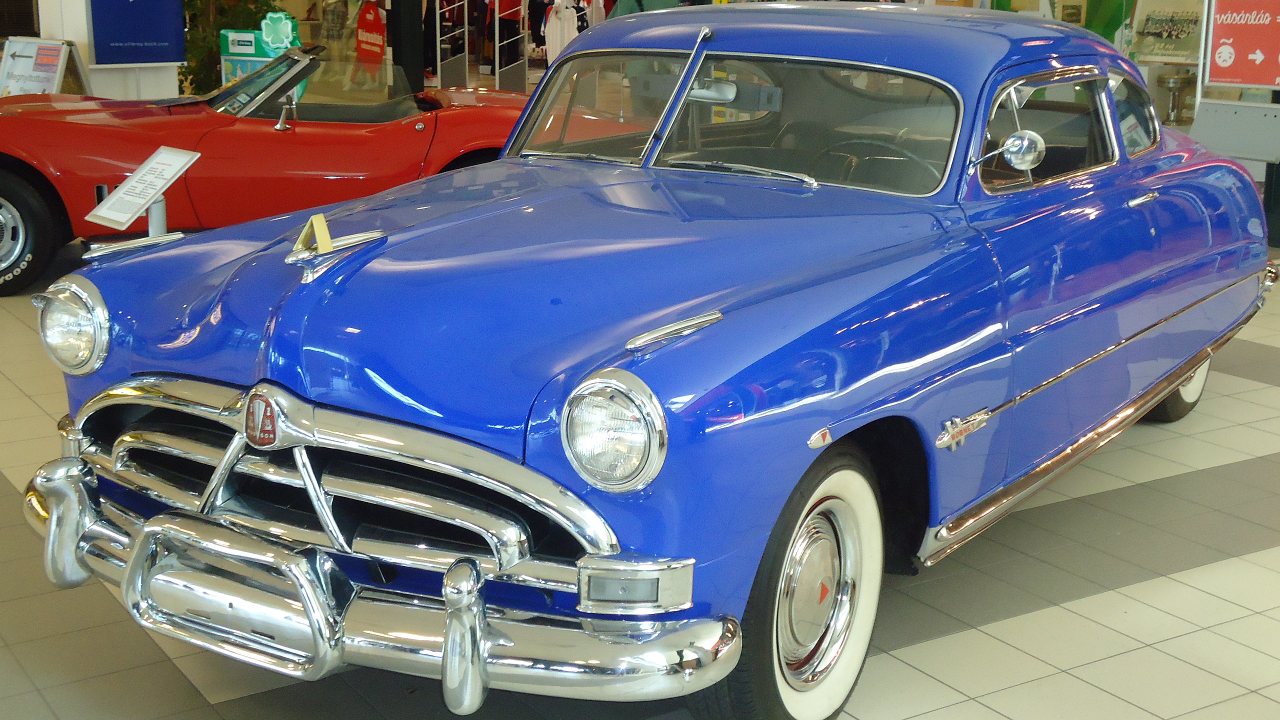
The 1951 Hudson Hornet did not just win races, it rewrote what a stock car could be. In the early years of NASCAR, when big V8s and body-on-frame sedans were supposed to rule, a low-slung straight-six from a smaller independent automaker turned the series on its head. I want to trace how that single model year became the foundation for a short but overwhelming era of dominance that still shapes how fans and historians talk about stock car racing.
How a low-slung sedan became a stock car weapon
The Hornet arrived as a road car first, but its basic engineering made it a natural race winner. Hudsons used a step-down chassis that dropped the floorpan between the frame rails, which lowered the center of gravity and let the 1951 Hornet sit closer to the track than rival sedans. That stance mattered on the rough dirt ovals and early paved circuits where body roll and weight transfer could decide whether a driver slid wide or held the inside line. According to a detailed vehicle history, Hudsons began dominating the burgeoning stock-car racing circuit in 1951 upon the release of the Hornet model, which underscores how quickly that engineering advantage translated into results.
Under the hood, the Hornet relied on a big straight-six rather than the V8s that would later define American performance. That choice did not limit it. Reporting on The Hudson Hornet notes that compared to Ford flatheads and Detroit’s biggest and baddest V8s, the Hornet’s straight-six proved brutally effective once tuned for racing. The combination of a torquey engine, low center of gravity, and robust chassis gave drivers a car that could dive into corners harder, stay planted over bumps, and put power down earlier on corner exit. In a series that still required cars to stay close to showroom specification, that kind of baked-in advantage was priceless.
The 1951 breakthrough and a three-year reign
The turning point came when the Hornet moved from showroom to starting grid. A curated list of facts about the car’s racing life notes that the first driver to win a NASCAR event in a Hudson Hornet did so soon after the model appeared, marking the moment when the brand’s engineering gamble paid off on track. That same overview explains that in a five-year span the Hornet became a fixture in victory lane, with the 1951 season as the launchpad for what followed. The early success validated Hudson’s decision to support racers and helped attract top drivers who wanted to be in the quickest equipment.
From there, the numbers tell the story. A technical history of The Hudson Hornet states that the car dominated three years, 1951 to 1953, of NASCAR Grand National racing, the series that would eventually become Sprin Cup competition. Over that window, the Hornet was not just competitive, it was the car to beat. Another analysis of NASCAR results credits the Hornet with 81 NASCAR wins and multiple championships from 1951 through 195, a staggering tally for a single model line in such a short span. Those figures confirm that the 1951 car did more than flash early promise, it opened a sustained era of control over the series.
Herb Thomas and the drivers who made the Hornet legendary
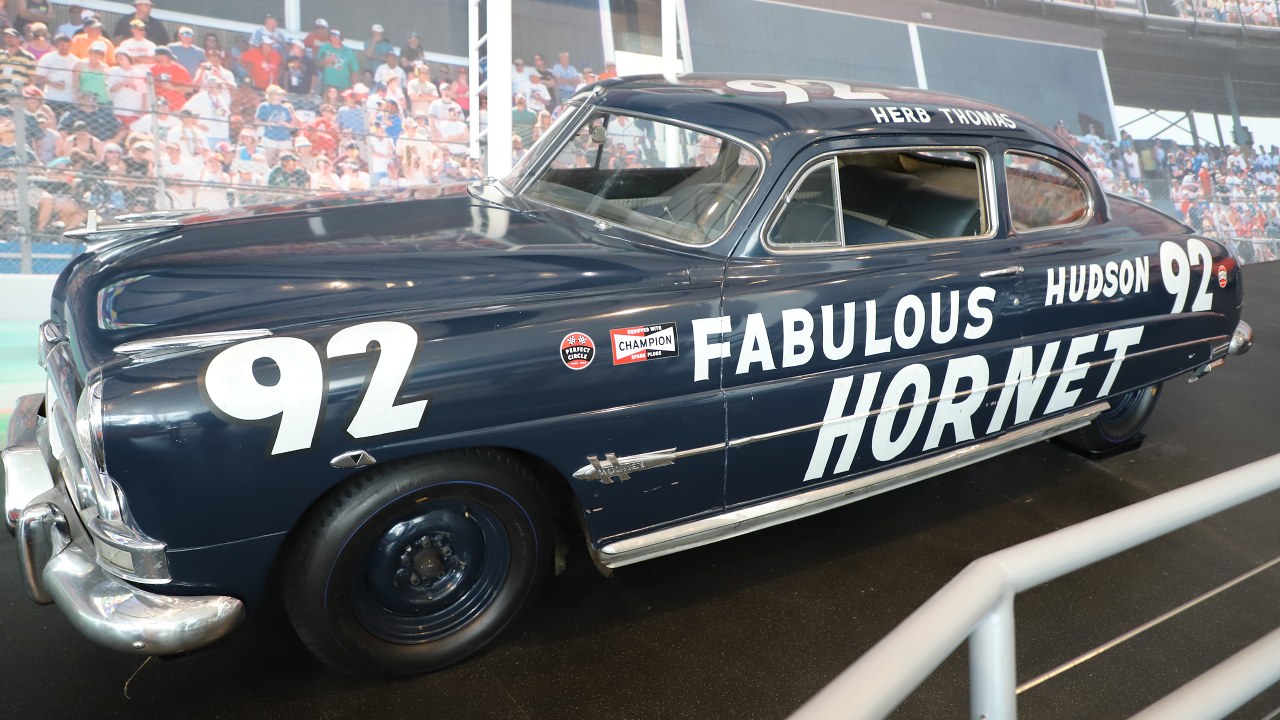
Hardware alone does not win championships, and the Hornet’s legend is inseparable from the drivers who exploited its strengths. Among them, Herb Thomas stands out as the clearest example of how the 1951 platform elevated a talented racer into a dominant champion. A profile of The Fabulous Career of Herb Thomas describes him as NASCAR’s first two-time Cup Series champion and emphasizes his roots as a North Carolina racer. That same account ties his rise directly to the Hornet, noting that his most successful seasons came behind the wheel of the Hudson sedan that was reshaping the competitive order.
Thomas was not alone in turning the Hornet into a serial winner. A focused list of racing milestones highlights Marshall Teague and Tim Flock as other key figures who added to Hudson’s place in NASCAR lore. The analysis of The Hudson Hornet notes that Marshall Teague earned a reputation for dominance at Daytona in a Hornet, while Tim Flock’s success further cemented the car’s reputation. Together, these drivers turned the 1951 design into a rolling dynasty, proving that in the right hands the low-slung Hudson could outclass Detroit’s more powerful but less nimble rivals.
Dirt tracks, early NASCAR, and the Hornet’s competitive edge
The context of early NASCAR racing magnified the Hornet’s strengths. In the early days of NASCAR, the series ran on a mix of dusty fairground ovals and emerging paved circuits, where durability and handling mattered as much as outright horsepower. A curator’s look at Fabulous Hudson Hornets explains that in the early days of NASCAR, Hudson Hornets dominated the dirt tracks and paved circuits that made up the schedule. That dominance was not just about speed on a single type of surface, it reflected a car that could survive rough conditions, absorb punishment, and still give drivers the confidence to push hard lap after lap.
From my perspective, the Hornet’s success on those varied tracks shows how closely its design aligned with the realities of stock car racing at the time. The step-down chassis and low center of gravity reduced body roll on loose dirt, while the sturdy construction helped the car withstand ruts, bumps, and contact that might have sidelined flimsier rivals. A feature on Fabulous Top facts about the Hornet notes that in a five-year span the car became a fixture at the front of the field, reinforcing the idea that its competitive edge was not track-specific. Whether on a short dirt oval or a faster paved layout, the 1951 Hornet gave its drivers a platform that matched the demands of the era better than anything else on the grid.
From period powerhouse to enduring cultural icon
Even after its competitive window closed, the Hornet’s reputation only grew. A historical overview of Vehicle records notes that Hudsons began dominating stock-car racing in 1951 with the Hornet and later gained renewed attention when a Hudson character appeared in an animated movie decades later. That pop culture nod helped introduce a new generation to a car that had already secured its place in racing history. It also underscored how unusual it was for a single model from a defunct brand to remain so recognizable in the broader automotive story.
The Hornet’s legacy is also preserved through the way historians and curators frame its achievements. A detailed look at Here are 10 fun facts about the Hudson Hornet in NASCAR highlights milestones such as its first win, its first championship, and the drivers who made it famous. Another deep dive into Grand National history reinforces that the Hornet dominated three years of top-level NASCAR competition, a feat that still stands out in the record books. When I look at that combination of hard statistics, driver legacies, and cultural afterlife, it is clear that the 1951 Hudson Hornet did more than dominate stock car racing for a brief moment. It set a template for how a well-engineered, purposefully raced production car can define an era, then live on as a benchmark for everything that followed.






Leave a Reply