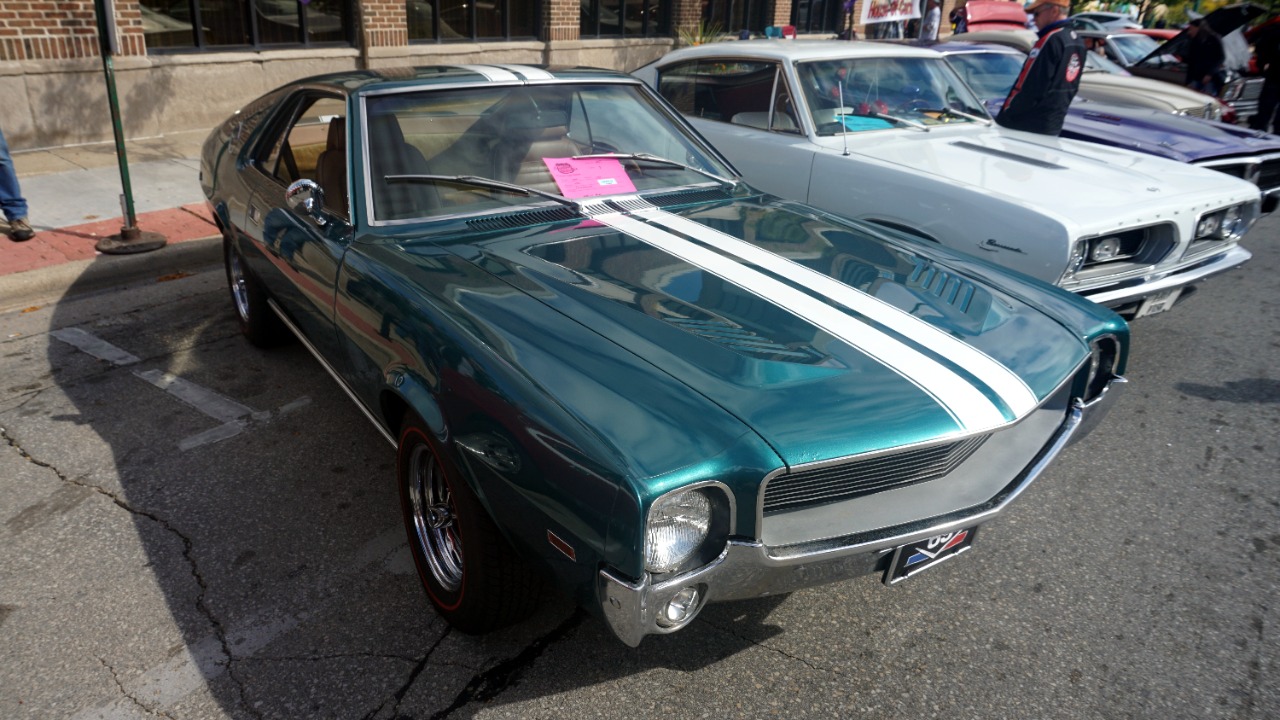
You discover the AMC AMX at a distance, and it feels like you have stumbled on a secret that bigger brands tried to bury. Before social media, hype cycles, and instant viral fame, this two-seat GT-style muscle car quietly built a legend on raw performance, clever engineering, and a stubborn underdog attitude. If you care about muscle cars that punch above their weight, you owe it to yourself to understand how the AMC AMX became iconic long before the wider world was really paying attention.
Rather than chasing the same formula as every other Detroit bruiser, you see American Motors Corporation treating the AMX as a rolling experiment in speed, safety, and style. That decision kept production numbers low and mainstream awareness modest, yet it also left you with one of the purest, most distinctive performance cars of its era, a machine that now rewards anyone willing to look beyond the usual big three badges.
Meeting the rebel: what the AMC AMX actually is
When you first look into the AMC AMX, you are not meeting just another trim package, you are meeting a purpose-built two-seat GT-style muscle car from American Motors Corporation, sold from 1968 through 1970. You see The AMC AMX described as a compact, steel-bodied two-seater, something that immediately sets it apart from the four-seat coupes that defined most of the era’s performance market, and you notice that AMC positioned it as a true two-door hardtop rather than a stripped-out econobox with a big engine. As you read through the background on AMC AMX, you find that this car sits at the intersection of grand touring style and American straight-line aggression, which is exactly why it feels so different when you picture it next to a contemporary Camaro or Mustang.
You also learn that The AMC AMX was intentionally engineered as a short-wheelbase derivative of the Javelin, which let AMC share components while giving you a tighter, more focused chassis. One Facebook history of the 1968 coupe spells out that The AMC AMX was a two-seat GT-style muscle car produced by American Motors Corporation between 1968 and 1970, and that The AMX was based on the Javelin but shortened into a true two-door hardtop so you could enjoy sports car proportions with muscle car power. When you see that same description repeated in another enthusiast post about how The AMC AMX was a two-seat GT-style muscle car produced by American Motors Corporation, you start to understand that AMC, or simply AMC as enthusiasts call it, was not dabbling but committing to a distinct formula that you can still recognize in any surviving AMX you encounter.
Industry firsts hiding in plain sight
As you dig deeper, you realize The AMX was not only sporty and attractive, it also carried engineering ideas that the industry had barely started to consider. You read that The American Society of Automotive Engineers recognized the AMX for introducing safety innovations, including interior features designed with small granules to reduce injuries, which tells you that AMC was thinking about how you would survive a crash as much as how fast you could get into one. When you follow that thread into a more detailed section on AMC AMX is, you see the car described again as a two-seat GT-style muscle car and a true two-door hardtop, and you start to appreciate how rare it was to combine that body style with serious attention to structural and interior safety in the late 1960s.
You also come across commentary that The AMX was a safety leader, with several innovations that would eventually become industry standards, in a piece explicitly framed around Safety First. That same analysis points out that The AMX blended performance with features that protected you, which is a contrast to the stereotype of the muscle era as pure horsepower and no restraint. When you connect that to a technical discussion that The AMX was also a safety leader with innovations like energy-absorbing interiors, as described in a feature on AMX was not, you start to see why engineers and historians treat this car as more than just an underdog drag-strip curiosity.
Performance that backed up the attitude
Once you move past the body and the safety talk, you find that the AMC AMX gives you the kind of performance numbers that make any muscle fan pay attention. A detailed profile of the 1968 model explains that Factory axle ratios ranged from 2.87:1 to 3.54:1, with dealer-installed 4.10:1 and 5.00:1 gears available, which means you could tailor the car from highway cruiser to quarter-mile specialist with a visit to the parts counter. Underneath was a heavy-duty suspension and standard V-8 power, so you were not just buying a flashy body, you were getting a serious hardware package that could keep up when you pushed it. When you imagine choosing between the 2.87 or 3.54 gears for daily use and then stepping up to the 4.10 or even 5.00 ratios for weekend racing, you can see how AMC quietly built a flexible performance platform that respected how you might actually drive.
If that is not enough, you learn that AMC also supported hardcore drag efforts with the Super Stock AMX, where the 390 engine was equipped with twin Holley carburetors and a 12.3:1 compression ratio to maximize quarter-mile performance. That combination put the AMX into serious competition territory, and you see that in period accounts of how the Super Stock AMX was prepared specifically for the strip. At the same time, you read that AMC was trying to prove a point with its experimental car and get some attention for it, even staging record attempts in early 1968 to show what the platform could do, according to a narrative that frames how AMC was trying to prove a point with the AMX. When you connect those racing efforts to the street car’s flexible gearing and robust V-8 lineup, the AMX’s performance reputation starts to look fully earned rather than fan myth.
Records, rarity, and the underdog mystique
The more you follow the AMX story, the more you see that AMC was willing to put the car on the line where it counted. At Bonneville, an AMX set over 100 international speed and endurance records, proving that this little two-seater could run flat out for long stretches instead of just sprinting through a quarter mile. When you picture At Bonneville as a proving ground where big-budget teams often dominated, the idea that an AMX could claim over 100 records gives you a sense of how determined AMC engineers were to show that their compact two-seater belonged in the same conversation as the giants. That determination fits with the way enthusiasts describe the 1969 AMC AMX as a bold, high-performance muscle car that showed American Motors Corporation could compete with the big players, a sentiment you see echoed in a post that calls the 1969 AMC AMX a distinctive American muscle car with a bold approach.
Yet even with that performance, you discover that Sales were a fraction of the competitions, with just 19,134 produced before it, the 2 seat AMX, reached the end of the road. When you compare that 19,134 figure with the production totals of more famous muscle coupes, you realize that scarcity is baked into the AMX story. Another enthusiast breakdown of AMC Muscle Cars, framed as The Ultimate List of what American Motors Corporation built from 1968 to 1974, describes the AMC AMX as one of the most radical and underrated models, which lines up with a valuation piece that calls The AMX something of an underrated classic because AMC, or American Motors, never enjoyed the same halo as its Detroit rivals. As you absorb those numbers and perspectives, you start to understand why the AMX feels like a secret handshake among muscle fans rather than a car everyone grew up seeing on posters.
More from Fast Lane Only