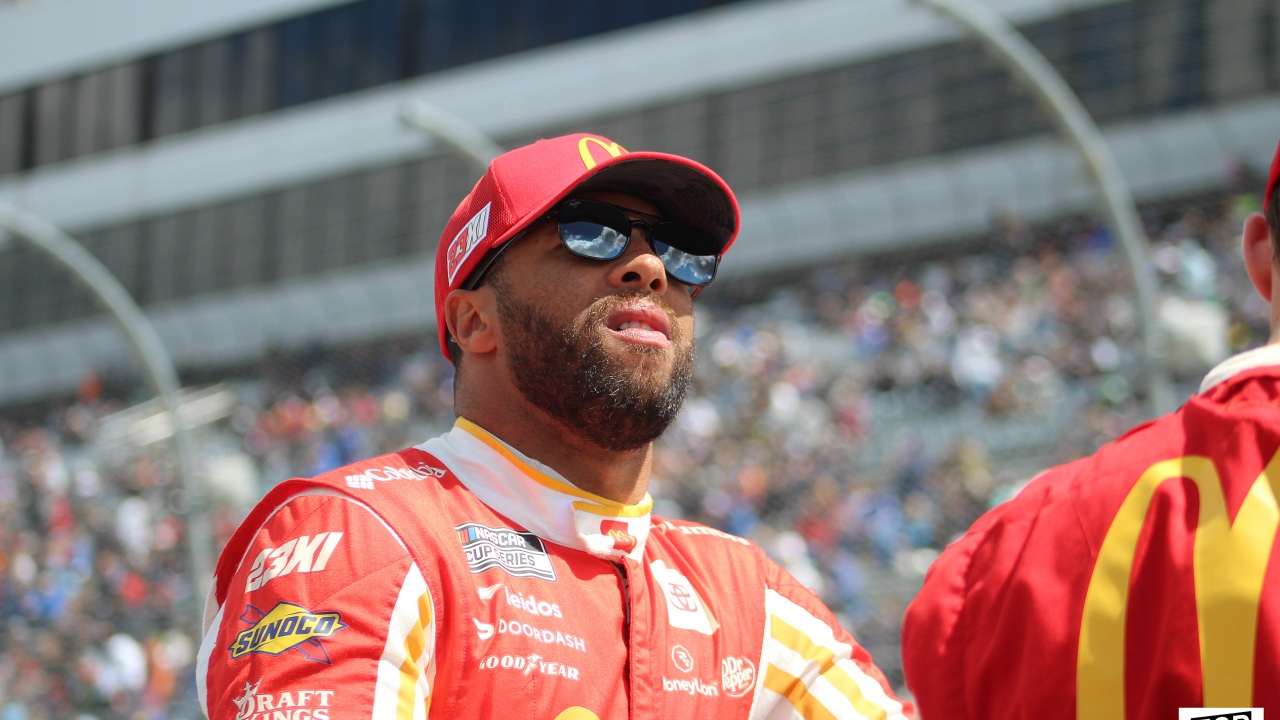
Bubba Wallace competes in the same roaring pack of stock cars as every other driver, but the weight on his shoulders is very different. His results are judged not only on lap times and finishes, but on what they signal about who belongs in a sport that has long struggled with race, representation, and change. His impact is not a finished chapter, it is an ongoing test of whether NASCAR can grow without losing itself.
When I look at Wallace’s career, I see more than a talented driver trying to win trophies. I see a visible challenge to decades of habit and expectation, a reminder that progress in a tradition-heavy series is fragile and often contested. That is why his presence still matters so much: he forces the garage, the grandstands, and the broader culture to decide, again and again, what kind of community stock-car racing wants to be.
From rarity to standard-bearer
Wallace’s very existence on the grid is still a statistical shock, which is part of why his role carries so much symbolic weight. He is the only Black driver on NASCAR’s top circuit, the Cup Series, and he is also described as the first Black driver to have a full-time entry in that championship in the modern era of the sport. Earlier reporting notes that he is the first full-time Black driver to race in the Cup Series in nearly 50 years, a gap that underlines just how rare his path has been. When I weigh that history against the weekly normalcy of seeing his car in the field, I am reminded that what looks routine on Sunday afternoons is actually a major break from the past.
That rarity has turned Wallace into a de facto standard-bearer, whether he wanted the job or not. Earlier in his life, he looked up to Bill Lester, a Black driver who started 142 races in the early 2000s and became a kind of proof of concept that a Black racer could belong in the NASCAR ecosystem. Now Wallace occupies that same role for a new generation, only with a bigger spotlight and far more scrutiny. The fact that he is still the only Black driver in the Cup Series shows how much work remains, but it also explains why every step he takes is watched so closely by fans who never saw themselves reflected in the sport before.
Visibility that reaches beyond the garage
Impact in modern sports is measured not just in wins, but in reach, and Wallace’s reach is unusually broad for a stock-car driver. Research from Morning Consult found that in 2020 he was NASCAR’s most well-known driver, with “63% of US adults” having heard of him, a figure that would be impressive for a champion, let alone someone still building his résumé. That level of name recognition tells me his story has broken through to people who may not know the difference between a short track and a superspeedway, but do understand what it means to see a Black driver in a sport that once leaned on Confederate imagery.
That visibility has been amplified by storytelling that leans into both his racing and his advocacy. A streaming docuseries built around Wallace’s life and career framed him as a central figure in NASCAR’s future, using his experiences to explain the pressures and possibilities of a changing paddock. When I watch how his public profile has grown, I see a feedback loop: his willingness to speak out makes him more visible, that visibility draws in new audiences, and those audiences in turn push NASCAR to keep evolving. It is not that he alone can transform the sport, but that his presence gives people a focal point for their hopes and frustrations about where stock-car racing is headed.
Challenging symbols and rewriting norms
Wallace’s impact is most obvious when you look at how he has confronted the symbols that once defined NASCAR’s culture. In 2020 he publicly advocated for NASCAR to ban the Confederate flag at events, arguing that the banner made many fans and competitors feel unwelcome. That push helped drive the series to act, and it marked a clear break from decades in which the Confederate flag was treated as part of the backdrop at tracks across the South. When I think about that moment, I see it as a line in the sand: a driver using his platform to say that inclusion is not a side issue, but a core value for the sport’s future.
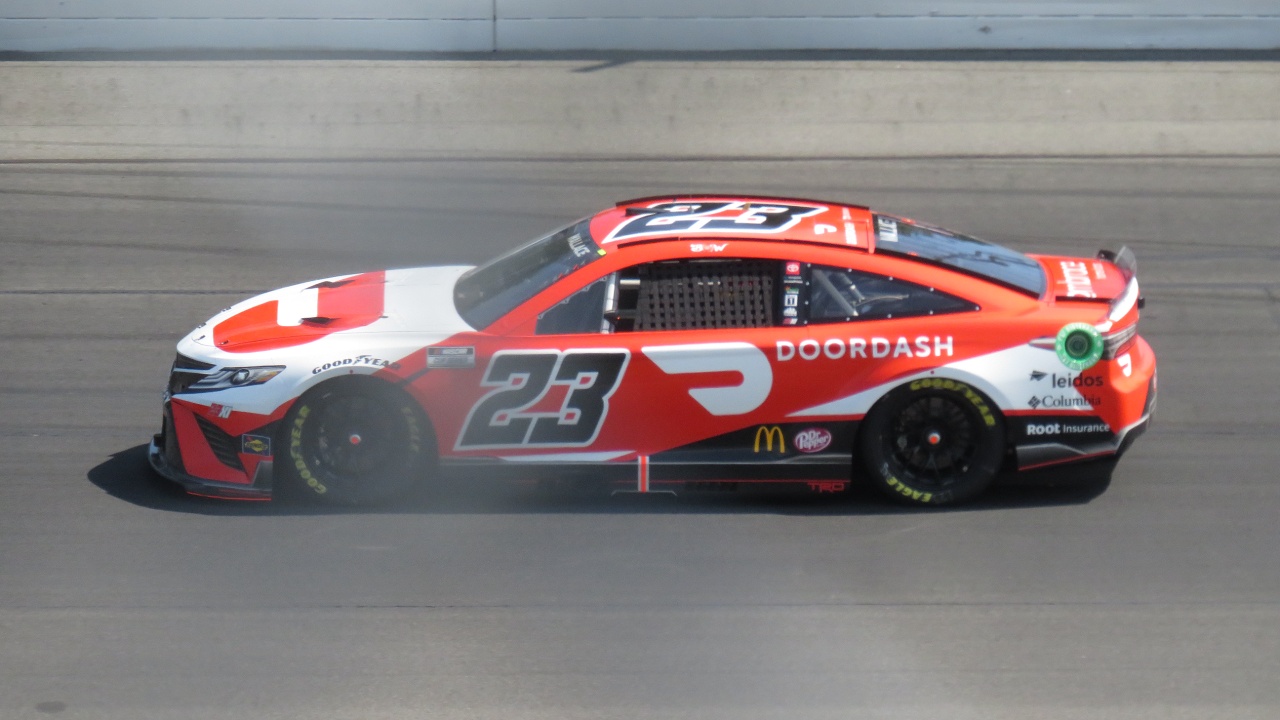
He has also used his car itself as a rolling statement about racial justice. At one point he ran a Black Lives Matter paint scheme in the Cup Series, replacing traditional sponsor branding with messages supporting the Black Lives Matter movement and racial equality. That decision, tied to his status as the first full-time Black driver in the Cup Series in nearly 50 years, turned a single race into a cultural flashpoint. It showed that a stock car could be more than a billboard for consumer brands, it could be a canvas for values. For fans who had never seen their concerns reflected on a NASCAR hood, that mattered as much as any finish.
From “reluctant activist” to architect of access
Wallace has often been described as a reluctant activist, someone who did not set out to be a spokesperson but grew into the role as circumstances demanded. He has credited what he calls a “persistent ego” for helping him push through backlash and drive social change within NASCAR, a phrase that captures the stubbornness required to keep speaking up when criticism gets personal. In interviews he has acknowledged that he did not always embrace the activist label, yet he recognized that being the only Black driver in the Nascar Cup Series and the first Black driver to have a full-time entry meant his silence would be interpreted as acceptance of the status quo.
Over time, that reluctant posture has evolved into a more deliberate strategy focused on access. At the AfroTech conference, a session titled Create Access By Sharing featured Bubba Wallace in conversation with moderator Imani Grant as they discussed how NASCAR can open doors to people who have never seen the sport as an option. Wallace talked about the importance of sharing contacts, knowledge, and opportunities, not just inspirational slogans. When I listen to that framing, I hear someone who has moved from reacting to events to actively designing pathways for others to follow, turning his own hard-won experience into a blueprint for broader participation.
Building pipelines, not just headlines
One of the most concrete ways Wallace’s presence matters is through his connection to formal diversity programs that aim to change who gets a shot in the first place. He is a graduate of the NASCAR Drive for Diversity Development Program, which was created to bring more women and people of color into the sport’s talent pipeline. His success is proof that the program can produce Cup-level drivers, not just token appearances in lower series. When I connect that to his ongoing partnerships with companies that share his commitment to inclusion, I see a model where corporate backing, league initiatives, and individual advocacy reinforce each other instead of operating in separate lanes.
That pipeline mindset extends to how Wallace talks about the next generation. He has emphasized that creating access means more than inviting kids to a single race weekend, it means sustained exposure, mentorship, and tangible support. In Chicago, for example, NASCAR highlighted how Wallace is leading the way in efforts to promote diversity and inclusivity, using his platform to encourage young people from underrepresented communities to see themselves at the track and perhaps attend a race. To me, that is where his influence becomes durable: not in a single headline-grabbing moment, but in the slow, steady work of making sure he is not the last person who looks like him to get this far.
Performance, pressure, and the noise around him
For all the focus on his activism, Wallace is still judged in the harsh light of competition, and that context shapes how his impact is perceived. Recent analysis of his results has framed the current version of Bubba Wallace as the best of his career, a Performance Breakdown that describes him as “The Best Version of Bubba Yet.” Yet that same coverage asks why doubt around him remains so loud, a question that hints at the double standard he often faces. When I compare the scrutiny he receives to that of peers with similar records, it is hard to ignore how much of the commentary about him is entangled with identity and politics, not just lap charts.
That tension is part of why his continued presence is so important. If Wallace were simply a symbol, his story would be easier to package and less threatening to those who prefer their sports insulated from social issues. Instead, he is a working driver fighting for playoff spots, dealing with the grind of the schedule, and making mistakes in real time. He is also, as one profile put it, still the only Black driver in the Nascar Cup Series and the first Black driver to have a full-time entry to reach the postseason. The fact that he can carry all of that and still be expected to justify his seat every season tells me that his impact is not just about what he represents, but about how he forces the sport to confront its own biases about who is “deserving” of opportunity.
In the end, I keep coming back to the idea that Wallace’s presence is a stress test for NASCAR’s stated values. The league has signaled that it wants to be more inclusive, more forward-looking, more open to fans and competitors who once felt pushed to the margins. Bubba Wallace is where those aspirations meet reality, in the form of a single driver who is at once a competitor, a symbol, and a catalyst. As long as he is in the field, the sport cannot quietly drift back to old habits without someone noticing, and that alone makes his ongoing role one of the most consequential stories in American motorsports.
More from Fast Lane Only: