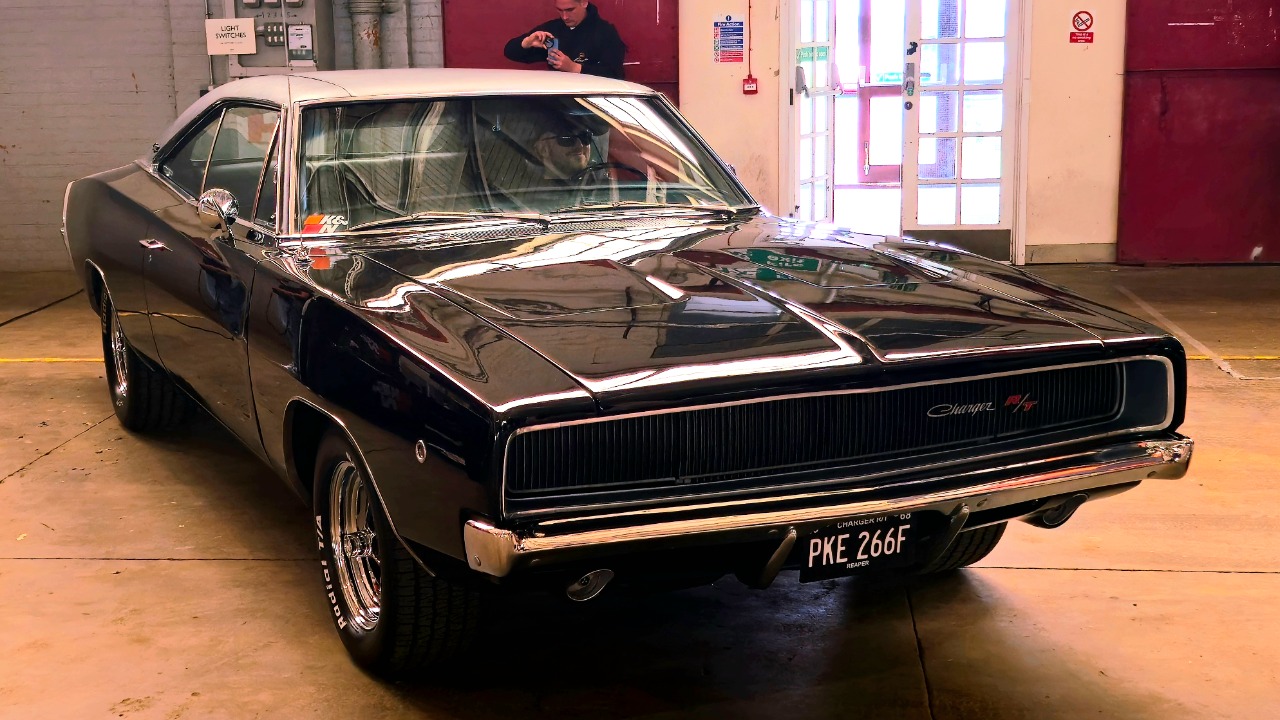
The deal felt like a movie scene: a classic 1968 Dodge Charger sitting under soft streetlights, paint gleaming, body lines crisp, and that unmistakable fastback silhouette doing all the talking. The buyer had been hunting for months, scrolling listings late at night, memorizing what “mostly original” is supposed to mean. When this one popped up, the photos looked clean, the price seemed just believable enough, and the seller sounded confident. So the buyer went to see it—after work, after sunset, with excitement doing most of the driving.
Under the lights, everything looked right. The car’s black paint seemed deep and glossy, like you could fall into it. Chrome trim popped the way chrome should, and the panel gaps looked respectable for a 56-year-old machine. It’s the kind of first impression that makes you think, “Okay, this is the one.”
A Nighttime Walkaround That Sealed the Deal
The inspection started the way a lot of private-sale meetups do: a slow loop around the car, a few crouches near the rocker panels, and a quick peek under the hood. The seller pointed out recent work—fresh fluids, a tune-up, and a “newer” paint job done a couple years back. The buyer listened, nodded, and did that mental math people do when they’re trying to be both responsible and wildly optimistic.
The lighting helped. Streetlamps and driveway LEDs can smooth over minor paint texture, hide shallow waves in body filler, and make tired finishes look like they’ve got another decade in them. Even the interior looked better at night, with the dash and upholstery details softly masked by shadow. The buyer took it for a short drive, heard nothing alarming, felt the brakes bite, and decided not to risk someone else snagging it.
By the end of the evening, they’d agreed on a price, shook hands, and arranged pickup. It felt clean, simple, and—at least at that moment—like the kind of story you love telling later.
Daylight Doesn’t Negotiate
The next morning, the buyer stepped outside with coffee in hand, ready for that “I really own this” moment. And for a second, it was there—the Charger looked mean, low, and unmistakably cool. Then the sun climbed a little higher, and the paint started telling the truth. Not the whole truth at once, either. It was more like a slow reveal, like a magic trick in reverse.
In direct daylight, the driver-side quarter panel didn’t match the door quite the way it had the night before. The reflection along the flank looked a little wavy, as if the body line was trying to decide where it wanted to be. A couple of small sanding marks showed through at the right angle, and there were faint “halo” outlines that suggested spot repairs under the paint. Not catastrophic, but definitely not “show-ready,” no matter how the listing had framed it.
The buyer walked around again—slower this time. What had seemed like a uniform gloss at night now looked like panels had slightly different sheen levels, like parts of the car were wearing different versions of black. And once you see that sort of thing, it’s hard to unsee it.
The Little Clues That Add Up Fast
It wasn’t just one big “gotcha.” It was a bunch of small tells that daylight loves to highlight: orange peel texture in one section, smoother paint in another, and a transition line near a trim edge that looked suspiciously like masking. The hood reflected the sky cleanly, but the roof looked like it had a subtle ripple. The trunk lid appeared to sit just a hair off on one corner, which could be adjustment… or could be history.
Then came the magnets. The buyer tried a small magnet along the lower areas—carefully, not scraping anything—and found a few spots where it didn’t cling as strongly. That doesn’t automatically mean disaster, but it does hint at body filler. On a car this old, some filler isn’t unheard of. The issue is whether it’s thin and honest, or thick and hiding something that’s still moving underneath.
The buyer also noticed paint overspray in places that are easy to miss at night: a light mist on the inner fender edges, a speckle near weatherstripping, and a slightly painted-over look around a bolt head or two. None of it screamed “scam.” It just quietly suggested the car had been freshened up quickly, not painstakingly restored.
Why Classic Cars Look Better After Dark
This isn’t a Charger-specific problem—it’s an old-car problem, a lighting problem, and a human nature problem all rolled together. At night, light sources are smaller and directional, which can make surfaces look smoother. Shadows fill in imperfections, and glossy paint can act like a mirror, reflecting points of light instead of revealing texture. Your brain also wants the story to be true: you want the dream car to be the dream car.
Daylight is broad, bright, and brutally even. It shows waves in panels, uneven filler, mismatched paint, and subtle differences in prep work. It also reveals color variance, even on black, because black isn’t just “black”—it’s a mix of undertones, clear coat depth, and surface texture. A panel that was repainted last year can look slightly different than one that’s older, even if the paint code is “right.”
What the Buyer Did Next
After the initial disappointment, the buyer did something smart: paused. Instead of spiraling into regret, they started documenting what they were seeing—photos from multiple angles, notes about where the reflections warped, and a quick check of common rust zones. They looked at the bottoms of the fenders, around the rear window area, the trunk floor, and the quarters near the wheel arches. Because paint flaws are one thing; structural rust is a whole other category of headache.
They also reached out to the seller with calm, specific questions. Not accusations—just clarity. Was the car painted as a full respray or partial? Were any panels replaced? Was there documentation or photos from before paint? Sometimes sellers genuinely don’t know, especially if they bought it mid-project. Sometimes they do know, and the response tells you everything you need to know.
In this case, the seller reportedly admitted the paint wasn’t as “perfect” as the listing made it sound, but insisted it was normal for a driver. That might be true. The tricky part is that the buyer paid based on a nighttime impression and a description that implied a higher standard. The mismatch between expectation and reality is where the sting lives.
A Relatable Lesson for Anyone Shopping the Classics Market
If you’ve ever bought something that looked amazing under flattering lighting—cars, apartments, even mirrors in clothing stores—you already get it. A 1968 Charger just makes the lesson louder because the stakes are higher and the sheet metal is bigger. The car can still be a great buy, a fun driver, and a head-turner at every gas station. But the price should match the truth, not the glow.
People who know the hobby tend to follow a simple rule: always inspect in daylight, or bring your own lighting and a skeptical friend. Check reflections along long panels, run your hand lightly over suspected areas, and look for overspray and masking lines. If possible, get it on a lift and don’t be shy about spending money on a pre-purchase inspection—because it’s cheaper than discovering “something else” after the title’s already in your name.
For the buyer, the Charger didn’t suddenly become worthless in the sun. It just became real. And in the classic car world, reality is still pretty cool—once you know what you’re actually buying.
More from Fast Lane Only