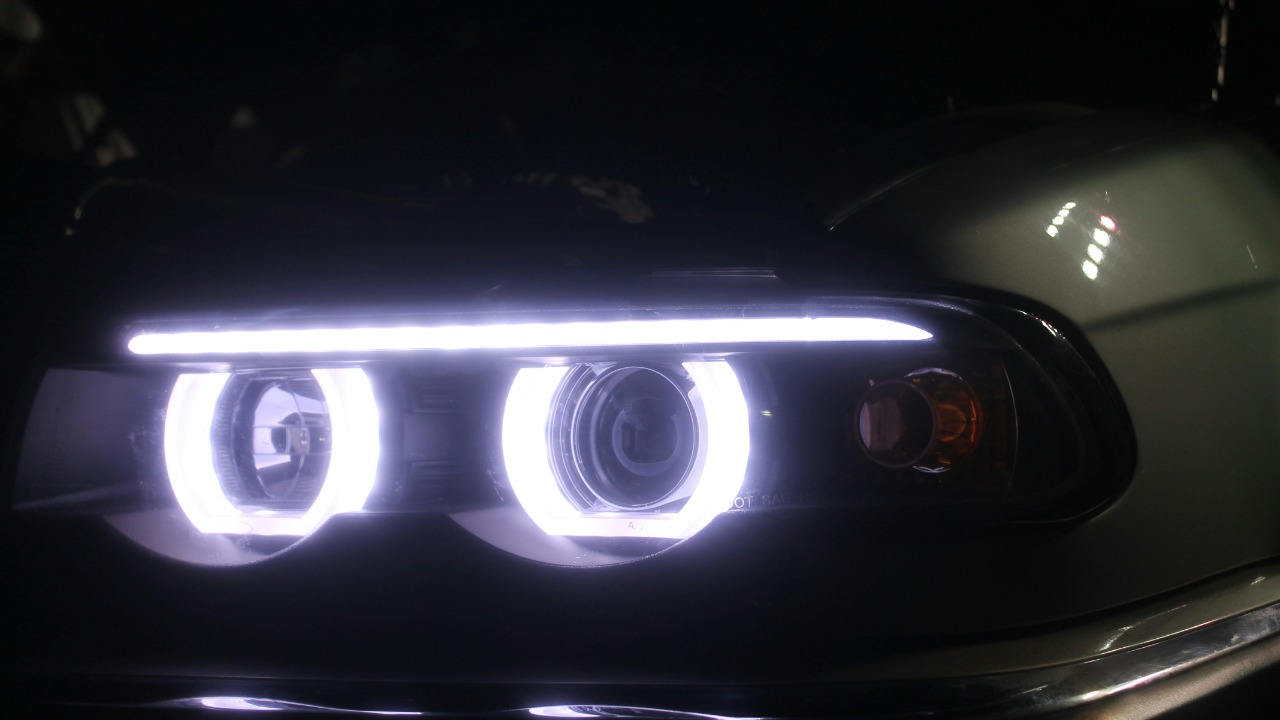
Night driving in the United States has turned into a high‑stakes glare contest, and you are stuck in the middle of it. After years of complaints about blinding LED headlights, Congress is finally moving to force regulators and automakers to dial back the dazzle and prioritize your ability to see the road.
The political shift reflects a simple reality you already feel every time a lifted pickup or new SUV crests a hill toward you: the technology that was supposed to make roads safer has, in many cases, made them more hostile. Now lawmakers are trying to catch up to that reality with new oversight, tougher standards, and pressure on federal agencies that have been slow to act.
The glare problem you live with every night
If you drive after dark, you do not need a study to tell you that headlights have become harsher and more piercing. Viewers in Washington state told a local station that modern beams are so intense they feel like a weapon, a frustration that prompted coverage featuring Congresswo Marie Gluesenkamp Perez discussing what she is hearing from constituents. You see the same thing on your own commute, where compact cars sit lower than the light height of towering crossovers, putting the full blast of LEDs directly into your eyes.
Drivers are not just grumbling in comment sections. Thousands have signed a national Apr campaign calling for a ban on “blinding” headlights, describing near misses, headaches, and the instinctive urge to avert your gaze from the road just to escape the glare. In Maine, a separate Nov report captured motorists saying the new generation of bright lamps is “doing just the opposite” of improving safety, leaving you squinting through oncoming traffic instead of scanning for hazards.
Why it is mostly an American mess
The irony is that the technology to solve much of this already exists, just not in a form you are allowed to use. In other countries, adaptive systems carve the beam around oncoming traffic, but In America the closest you typically get is automatic high beams that simply flip between two crude settings. That leaves you stuck with a binary choice: either you blind someone else with your brights or you get blinded by their low beams that are still too intense or poorly aimed.
Federal regulators have started to open the door to better options, approving a new type of headlamp that uses an array of light emitting diodes to shape the beam and avoid oncoming drivers, a technology described in a Feb update on federal rules. Yet the rollout has been slow, and most vehicles on the road still rely on older designs that blast a fixed pattern of light, which is why you continue to feel the problem every time you meet a late‑model truck on a dark two‑lane road.
Congress finally leans on regulators
What has changed is that lawmakers are no longer treating your complaints as background noise. Representative Marie Gluesenkamp Perez pushed an Amendment Passes House that directs federal officials to Investigate Overly Bright Headlights, effectively ordering the bureaucracy to stop shrugging off the glare and start measuring it. For you, that means the issue has moved from online petitions into the language of spending bills, where agencies like the National Highway Traffic Safety Administration can be forced to respond.
That political pressure did not appear out of thin air. A long‑running Petition titled Ban Blinding Headlights helped spark a Congressional Pressure Campaign Begins, with organizers telling supporters they had already contacted dozens of members on Capitol Hill. That kind of sustained activism, combined with local coverage and constituent calls, is what finally convinced lawmakers that the glare in your rearview mirror is a national safety problem, not just a personal annoyance.
Courts, loopholes, and the limits of DIY fixes
Even as Congress steps in, you are seeing how slow and fragmented the system can be. The same Ban Blinding Headlights effort that pushed lawmakers also tried to force change through litigation, but Dear Supporters were told that the United States District Court in the Eastern District of California ruled against them on September 16, finding that regulators had no clear duty to test and evaluate LED headlights in the way plaintiffs demanded. That decision underscored why congressional direction matters: without it, agencies can argue that existing rules are good enough, even if you know they are not.
In the meantime, you are left to navigate a confusing patchwork of state and federal rules that do not always match what you see on the road. One analysis of how bright lamps can be legally notes that the Departmen of Transportation caps forward intensity at 3,000 candelas in the US, a limit explained in a How Bright Can overview. Yet aftermarket kits and do‑it‑yourself conversions often ignore those thresholds, which is why you still encounter vehicles whose beams feel more like stadium lights than safety equipment.
State law adds another layer. In California, for example, California law prohibits the use of blue, green, red, or other colored bulbs for headlights, requiring white or yellow light that is actually aimed to assist a driver at night. Yet you still see vehicles with icy blue tints that look more like emergency equipment than factory lamps, a sign that enforcement has not kept pace with the aftermarket.
What the crackdown could mean for your car
For you as a driver, the congressional crackdown is likely to show up in three places: what automakers are allowed to sell, what you can legally install, and how aggressively police and inspectors enforce the rules. Federal regulators are already being pushed to focus on the single biggest flaw in current standards, which one expert described as the issue of aim, arguing that misaligned lamps can turn even compliant hardware into a hazard for every other object on the road, a point detailed in a blinded light investigation. If Congress forces agencies to update testing to reflect real‑world mounting heights and suspension changes, you could finally see fewer mis‑aimed beams on lifted trucks and modified SUVs.
The rules around LEDs themselves are also likely to tighten. A detailed guide on About LED Headlights explains that LEDs are legal in the U.S. when they are installed as original equipment or as replacements that meet federal standards, but that does not cover every cheap kit you can buy online. Another advisory on Yes blue headlights notes that Yes, blue headlights are illegal for regular road use in all 50 U.S. states and that Federal and state laws require headlights to emit white or amber light approved by the Department of Transportation. As Congress pushes regulators to crack down, you can expect more scrutiny of products that skirt those requirements and more pressure on retailers that market them.
To track how far these efforts go, you will need to watch the same tools policy professionals use. A federal research guide points out that All federal legislation regarding price gouging can be found on All, and the same Congress.gov portal lets you search for headlight and vehicle safety bills and monitor their progress through Congress. If you care about how quickly the glare in your windshield gets addressed, that is where you can see whether the promises of a crackdown are turning into binding rules that finally put your ability to see the road ahead of the race to outshine everyone else.
More from Fast Lane Only