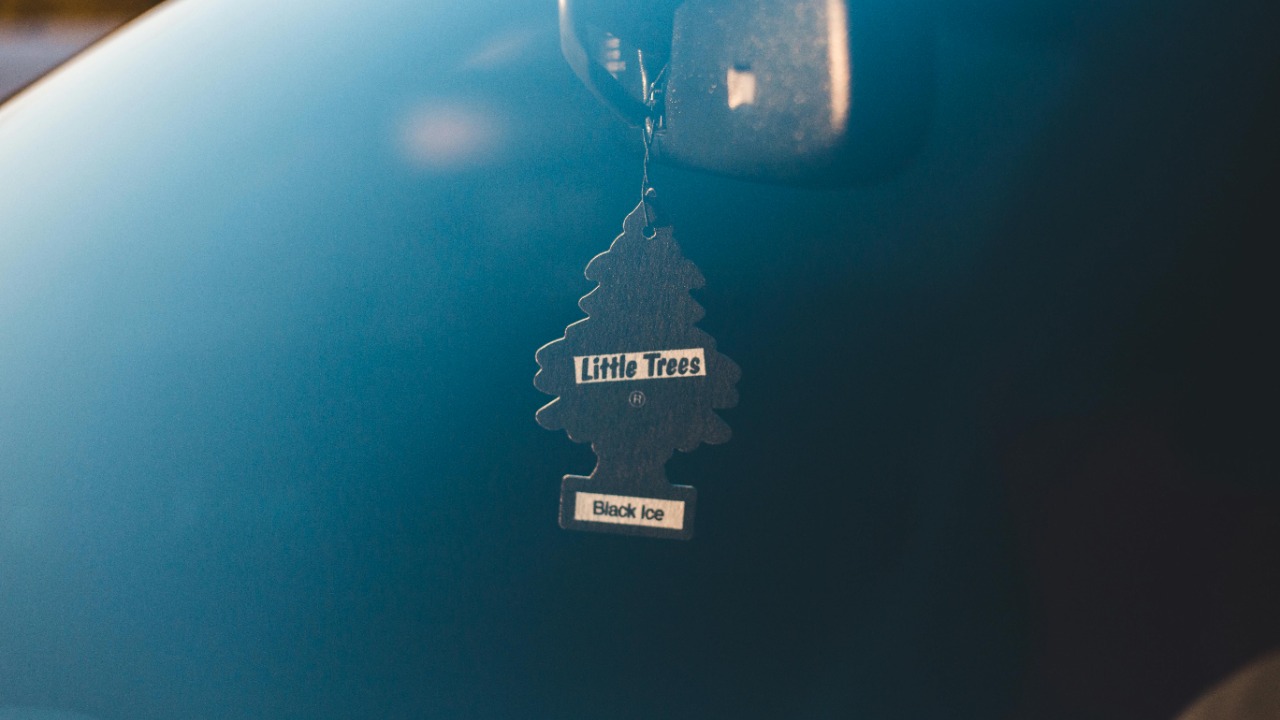
That little tree dangling from your rearview mirror is doing more than freshening the air in your car. In a growing number of states, it is giving officers a ready-made reason to pull you over, even when you are driving perfectly within the rules. What looks like a harmless accessory has become a legal tripwire that can escalate into searches, tickets, or worse.
As lawmakers and courts argue over traffic safety and civil rights, you are left to navigate a patchwork of rules that can turn a scented cardboard tree, a rosary, or a graduation tassel into a legal liability. Understanding how those rules work, and how officers are using them on the road, is now part of basic defensive driving.
How a scented tree became a legal excuse
Across the country, states have quietly written broad “obstructed view” rules into their traffic codes, then treated anything hanging from your mirror as a potential violation. In Minnesota, for example, drivers can be stopped if an officer decides a mirror ornament blocks the windshield, and that includes a simple air freshener. Reporting on those laws notes that Minnesota is one of several states where officers are explicitly allowed to pull you over if they believe a hanging object is obstructing your view, even if you have not broken any other rule, and that a stop over a mirror item can quickly lead to a broader investigation once you are at the roadside.
Legal guides aimed at motorists spell out how this works in practice. One explainer on rearview mirror rules points out that “Hanging a tree-shaped air freshener, a graduation tassel, or a religious symbol from your rearview mirror may seem harmless,” but in many jurisdictions it can be enough to justify a traffic stop and potentially a search if the encounter escalates, turning a tiny object into the opening move in a much larger encounter with law enforcement. That warning is grounded in state codes that treat any item on the mirror as a possible obstruction, and it is why you see lawyers advising clients that hanging decorations can lead to “a traffic stop, or worse.”
The patchwork of state rules you are driving through
Whether that pine tree is technically illegal depends entirely on where you are. Some states have written specific bans on mirror hangings into law, while others rely on general language about anything that might block a driver’s view. A safety-focused overview of these rules lists several “States with Specific Laws,” including California, Arizona, Texas, Illinois, and Pennsylvania, where statutes single out mirror items or windshield obstructions and give officers clear authority to act. In those places, the law does not just discourage clutter, it explicitly authorizes a stop if an officer decides your view is compromised.
Other states take a more permissive approach on paper, but still leave you exposed. In Florida, for instance, a local explainer notes that “Your fuzzy dice are safe” because it is not automatically illegal to hang items from your mirror. At the same time, the same reporting stresses that state law makes it illegal to drive with anything that actually obstructs your view, and a Stuart Police spokesperson, Lisa Bossio, underscores that officers can still act if they believe a driver’s vision is impaired. That nuance is captured in one guide that reassures you it is not per se illegal to hang items, then immediately adds that it is unlawful to drive with something that blocks your sightline, quoting Florida statute 316.2004 and Bossio directly.
From safety rule to pretext stop
On paper, these laws are framed as common-sense safety measures, but on the roadside they often function as a flexible pretext. A legal analysis of mirror-stop cases notes that many states allow officers to pull you over for hanging objects such as a pine tree air freshener if they decide it obstructs your view, and that once the stop is made, the encounter can expand into questions, searches, or sobriety checks that have nothing to do with the original ornament. That is why one attorney warns that Many states treat the air freshener as enough to justify the initial stop, even if the real focus is something else.
Traffic law specialists also point out that officers do not need to prove your view was actually blocked, only that they reasonably believed it might be. One explainer on whether it is illegal to have something hanging from your rearview mirror stresses that the standard is often subjective, and that a “tree-shaped air freshener” or similar item can be treated as a violation even when you feel it is not in your way. That subjectivity is what makes these rules so powerful as a pretext, and why civil rights advocates worry that they can be selectively enforced. A detailed breakdown of rearview mirror laws warns that a simple hanging object can be enough to trigger a stop that then spirals into a search or arrest, underscoring how a minor infraction can become the legal hook for a much more serious encounter with police once you are pulled over for Hanging something from your mirror.
Who gets stopped, and how often
The burden of these stops is not falling evenly. Civil rights groups have warned that officers are using low-level infractions like mirror hangings as a way to stop drivers they already view with suspicion. In one widely shared video, The ACLU is quoted expressing concern that police are using low-level infractions, such as driving with an air freshener hanging from the mirror, as a pretext for stopping Black motorists. That critique is not about the cardboard tree itself, but about how a vague safety rule can be deployed disproportionately against certain drivers while others cruise by with the same decorations untouched.
Other reporting echoes that pattern, noting that laws allowing stops for mirror items have led to vehement complaints from civil rights advocates who say police can use them as a pretext for stopping Black motorists. When you combine that with the fact that officers have broad discretion to decide what counts as an “obstruction,” the risk is clear: the same air freshener that earns one driver a warning or no attention at all can become the official reason for pulling over someone else. That is why civil rights lawyers increasingly talk about mirror hangings in the same breath as broken taillights or expired tags, as one more low-level rule that can be used to justify a stop first and ask questions later.
States start to rethink the rules
Not every state is comfortable leaving that power untouched. In Illinois, it has long been against the law to hang anything from your rearview mirror, and officers could ticket you if they saw an object there. That rule has come under scrutiny, and a bill introduced in the state would prohibit law enforcement from pulling you over solely because of a mirror hanging, reflecting a growing recognition that the safety benefits are thin compared with the potential for abuse. A local news segment on that debate underscores that in Illinois it is currently illegal to hang items from your mirror and that officers can ticket you, but that lawmakers are now weighing whether to strip police of the power to initiate a stop on that basis alone, a shift that would directly limit how mirror rules can be used as a pretext in Illinois.
More from Fast Lane Only