Few things sting like paying for a big repair and then watching the check engine light come right back. That is where a young couple in Utah found themselves with their 2018 Ford truck, a 5.0 Coyote V8 pickup with about 148,000 miles. As it turned out, the real trouble was the catalytic converters.
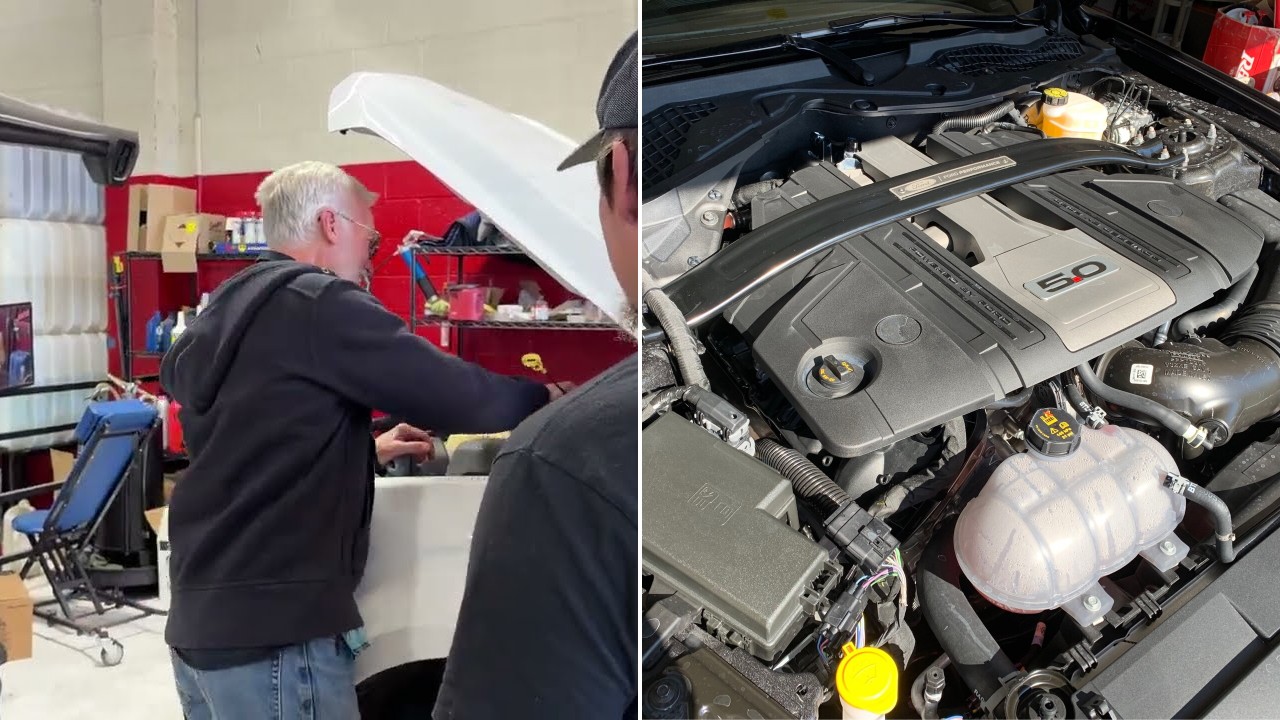
The couple brought their story to @DavesAutoCenterCenterville, the shop owner and mechanic known as Dave, and his longtime technician Tyson. They had the truck towed in and asked a simple question: can anyone figure out what is really wrong?
A Used Engine That Did Not End The Trouble
According to the couple, the truck ran well from August until February. Then it started showing low oil pressure and misfires. They say the first shop kept it for about two months before running a compression test. That shop told them two cylinders read 112 to 115 psi and that the truck needed a new engine.
So the shop installed what the couple believe was a used engine. However, they say the check engine light came back about 20 miles down the road. After about a month, the low oil pressure warning returned too. By then, the couple had also added five quarts of oil because the dipstick looked dry.
Dave makes a point of not judging other shops on camera. Instead, he treats the conversation like a doctor’s visit. He collects the symptoms first, then hands the truck to Tyson.
The Dipstick Mistake Behind The Smoke
The first surprise came on the dipstick. Dave calls the husband and says the engine is overfull, not low.
“I think you were three or four quarts overfull.”
He explains that a crankshaft whipping through too much oil froths it up, much like beating eggs. That foamy oil can end up on the cylinder walls and burn, which matches the smoke the couple saw. Later, he walks them through checking a dipstick on fresh oil, and he admits he has misread one himself more than once.
Meanwhile, Tyson finds no misfire codes at all. Instead, the scan shows a catalytic converter efficiency problem on bank one. A pressure test of the cooling system also finds no leak, so the couple never needed the water pump they feared.
Testing The Catalytic Converters
Dave describes what a converter does in plain terms. It works like a honeycomb inside the exhaust, and a long misfire can melt it down.
“it’s like putting a potato in your exhaust pipe.”
To confirm it, Tyson graphs both rear oxygen sensors on a test drive. A healthy converter should leave the rear sensor signal fairly flat, yet bank one keeps swinging. Next, he checks the exhaust with a temperature gun before and after each converter. A working unit runs hotter at the back, but these did not.
Along the way, the shop also finds loose ends from the engine swap. A nut was missing from the oil cooler lines, which were flopping around, and a bracket had been left off. Then Dave makes an offer the couple did not expect.
“We’re going to replace that for you. We’re going to do that free of charge.”
When Tyson pulls the old units, chunks of the passenger-side converter spill out. He puts in new catalytic converters and oxygen sensors, trims an aftermarket pipe to fit and uses proper flange hardware.
“So that cat is definitely toast.”
What We Took From This Repair
This one is a reminder that the loudest symptom is not always the cause. Here is what we would keep in mind:
- Check oil on a level surface with the engine off, wipe the dipstick once and read it in good light.
- Never top off by guesswork; add a little, wait, then check again.
- Treat a flashing check engine light as a stop sign, because misfires can ruin catalytic converters.
- Ask any shop to explain the condition, the cause, the correction and how it confirmed the fix.
- Keep every invoice, so the next technician can follow the history.
Where Things Stand
Tyson then puts about 150 miles on the truck. All of the readiness monitors set, which means it should be ready for an emissions test. Dave tells the couple the new catalytic converters should last as long as they keep coolant, raw fuel and burning oil out of the exhaust. They say they plan to bring the truck back if anything else comes up. The video closes with Dave choking up as he thanks Tyson, who he says has worked with him for 31 years.
More from Fast Lane Only