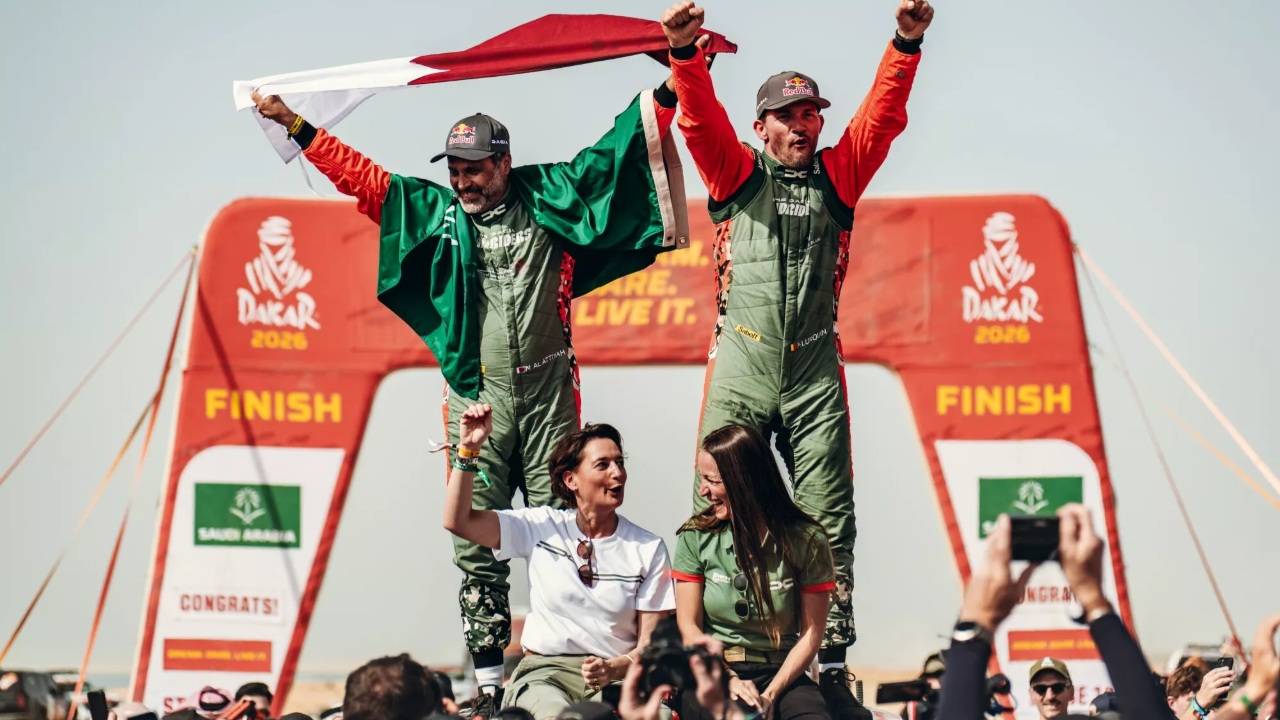
Dacia has turned the motorsport hierarchy on its head by winning the 2026 Dakar Rally with The Dacia Sandriders, transforming a value-focused road brand into the new benchmark of cross‑country rallying. In a race that has long been dominated by established giants, the Romanian marque’s factory team not only survived the Saudi Arabian desert but emerged as the reference point for the entire field. The result is more than a surprise victory, it is a statement that reshapes expectations of what Dacia represents in global competition.
The triumph was delivered by a line‑up that blended proven Dakar expertise with a still‑young team structure, converting a first full season of rally‑raid competition into the sport’s most coveted trophy. By the time the convoy reached the final bivouac, Dacia had secured the overall win, beaten heavyweight rivals such as Ford, and placed itself at the center of a wider story about how quickly a focused programme can rise to the top of the toughest rally on the calendar.
A breakthrough victory in the harshest rally on earth
The 2026 Dakar Rally was staged across Saudi Arabia as part of the long‑running Dakar Rally calendar, maintaining its reputation as the ultimate test of endurance for drivers, co‑drivers, and machinery. Over nearly two weeks, competitors faced long stages across dunes and rocky plateaus, with the event’s own organisers describing it as the toughest test of car and crew. Within this environment, The Dacia Sandriders programme delivered what its own communications called an outstanding achievement in only its first full season, turning a relatively new entrant into the team everyone else had to beat.
The scale of the accomplishment is underlined by the fact that the Dakar Rally is a cornerstone of the wider rally‑raid world, with the 2026 edition listed as part of the Dakar Rally sequence of events that stretches back decades. Simply reaching the finish is often described by competitors as an achievement in itself, yet Dacia did far more than that. The team’s cars not only completed the route but consistently ran at the front, culminating in The Dacia Sandriders winning the Dakar Rally outright and placing the brand on the top step of the podium for the first time.
Nasser Al‑Attiyah and Mathieu Baumel’s record‑setting charge
At the heart of Dacia’s success was Qatar driver Nasser Al‑Attiyah, who added another chapter to his already formidable Dakar record. Driving for Dacia Sandriders and partnered with navigator Mathieu Baumel, Nasser Al‑Attiyah earned a record‑equalling 50th event stage win on his way to an impressive sixth victory at the Dakar Ra. The same result is described elsewhere as a sixth Dakar Rally win for the Qatari driver in Saudi Arabia, confirming that this latest triumph extends a career that already included victories with several different manufacturers.
The partnership between Nasser Al‑Attiyah and co‑driver Lurquin is highlighted as a maiden success for Dacia Sandriders and navigator Lurquin, with the 2026 result marking the first time this particular pairing has taken the overall win together for the team. One report notes that Nasser Al‑Attiyah has now taken six Dakar wins with four different cars, underlining his adaptability and explaining why Dacia placed him at the centre of its project. By combining his experience with the new machinery, the team converted raw pace into a controlled campaign that delivered both stage victories and the overall lead when it mattered most.
Team Sandriders: from first full season to Dakar champions
The organisational backbone of the programme was The Dacia Sandriders structure, which approached the 2026 season as its first full year of rally‑raid competition. Team principal TIPHANIE ISNARD, identified in official communications as TEAM PRINCIPAL, THE DACIA SANDRIDERS, framed the victory as the culmination of that rapid build‑up, noting that the squad had managed to win the Dakar after the first full season of competing. That context matters, because it places Dacia’s success in contrast to rivals that have spent far longer refining their desert racing operations.
The team’s internal messaging also makes clear that the Dakar win is not seen as an endpoint. TIPHANIE ISNARD has pointed to the broader rally‑raid calendar, indicating that the FIA World Rally‑Raid Championship remains the target even after the Dakar triumph. In other words, the 2026 result is both a validation of the Sandriders concept and a launchpad for a sustained campaign. The fact that the team could arrive in Saudi Arabia with a relatively new car and structure, then leave with the biggest prize in the discipline, suggests that Dacia’s motorsport ambitions are now aligned with long‑term competitive goals rather than a one‑off headline.
Depth of the driver line‑up and the role of Loeb and Gutiérrez
While Nasser Al‑Attiyah and Lurquin delivered the overall win, Dacia’s success was not built on a single car. The Dacia Sandriders line‑up also included high‑profile names such as Sébastien Loeb and Édouard Boulanger, who returned to the final bivouac on the banks of the finish location after contributing to the team’s stage‑winning record. Official summaries describe their efforts as part of an outstanding achievement in only the first full season, with Loeb and Boulanger adding both speed and experience to the squad’s overall performance profile.
Further underlining the depth of the roster, Cristina Guti and Pablo Moreno took 11th overall after starting the final stage in 12th. Over 13 days of intense and gruelling competition, they climbed the order, with one report noting that after their stage‑winning heroics they ended the rally 9m42s behind a key rival despite going 36th quickest on a particular day. That kind of resilience is central to Dakar success, and their result shows that Dacia Sandriders fielded more than a single headline crew. The combination of a winning car, multiple stage‑winning crews, and a supporting entry inside the top dozen overall positions gave the team a robust competitive footprint across the event.
Rewriting expectations for Dacia and its rivals
Dacia’s victory has immediate implications for how the brand is perceived, both by fans and by competitors. One analysis of the result describes it as Dacia’s breakthrough Dakar victory, noting that the team claimed the 2026 win ahead of Ford, which had delivered a strong showing but ultimately missed out on the top step. That framing is important, because it positions Dacia not as a beneficiary of others’ misfortune but as the outfit that directly beat a major manufacturer in a straight fight over the full distance of the rally.
The cultural impact of the win is also evident in the way it has been celebrated beyond official channels. Social media posts have hailed the result with messages such as “DACIA WINS THE DAKAR RALLY 2026” and described it as an incredible achievement for the Romanian brand. Elsewhere, commentators have played on Dacia’s reputation for affordable road cars, joking that “The Dacia Sandero – whoops, sorry – the Dacia Sandrider” has powered to victory in the Dakar Rally, a nod to how unexpected it once seemed that this manufacturer would conquer the sport’s toughest event. Taken together with the formal recognition that The Dacia Sandriders has won the 48th Dakar Rally, these reactions confirm that the 2026 edition has redrawn the competitive map and given Dacia a new, hard‑earned status at the summit of rally‑raid.
More from Fast Lane Only