In the American South, a new kind of pickup is rolling into showrooms, built in China, packed with software, and priced to undercut Detroit’s workhorse trucks. For executives in DETROIT, the specter of a high-tech Chinese electric pickup stalking the Ford F-150 is no longer an abstract geopolitical worry but a direct commercial threat. The question is whether tariffs, brand loyalty, and a late pivot to electrification can keep the country’s best-selling vehicle from being flanked in its own backyard.
Detroit’s uneasy awakening to a Chinese pickup era
For more than four decades, the Ford F-150 has defined American truck culture, from construction sites in Michigan to ranches in Texas. Now, Chinese automakers are quietly positioning their own pickups and crossovers to appeal to the same buyers, using aggressive pricing and dense technology to chip away at that dominance. Reporting from DETROIT describes how Chinese brands are expanding globally with stylish, software-heavy electric vehicles that are already reshaping markets in Europe and Latin America, and industry analysts warn that North America is next if regulators and incumbents are not prepared.
That anxiety is sharpened by the arrival of models like the BYD Shark 6, a hybrid pickup that reviewers describe as a blend of muscle and modern Chinese tech, aimed squarely at the segment long ruled by the Toyota Hilux and Ford Ranger. In markets where it has launched, the Shark 6 is presented as a capable work truck that also behaves like a connected gadget, a combination that could resonate in Dixie states where buyers want towing capacity but increasingly expect smartphone-grade interfaces in their vehicles. For Detroit executives, the fear is not only that such a truck could undercut the F-150 on price, but that it could reset expectations for what a “basic” pickup should offer in software and efficiency.
Tariffs, politics, and the fragile wall around the U.S. market
Policy makers in Washington and Ottawa have already tried to build a moat around domestic automakers, particularly against Chinese electric vehicles. In 2024, former President Joe Biden set a 100% tariff on Chinese electric cars, a move that Canada mirrored to keep similarly priced imports from flooding its market. Those measures were explicitly designed to slow the advance of Chinese EV makers whose global scale and cost structure allow them to sell vehicles at prices that would be ruinous for U.S. manufacturers trying to cover higher labor and regulatory costs.
Yet even with those barriers, experts tracking Chinese EV expansion caution that the shift is “inevitable” over time, as Chinese EV brands refine their products and seek creative ways to enter North America. Some countries have already tried to regulate Chinese EV makers more tightly, citing both economic and security concerns, but the underlying dynamic is that Chinese companies have built a powerful lead in battery technology, software integration, and manufacturing efficiency. A segment on Driving Into the Future noted that Chinese EV producers are disrupting the global market even as they face U.S. tariffs, underscoring that trade policy can delay, but not permanently block, competition that is already reshaping supply chains and consumer expectations.
BYD Shark 6 and the new benchmark for truck value
Among the Chinese challengers, BYD has emerged as the most visible symbol of this new era, and the Shark 6 pickup is its most pointed message to Detroit. Analysts describe BYD as China’s electric vehicle giant, and the Shark 6 as a hybrid “monster” that is shaking up the pickup industry worldwide by combining strong performance with a relatively low price. In markets where it is sold, the truck is marketed as a luxury-leaning workhorse, with cabin tech and driver assistance features that would typically cost extra on a traditional American pickup, but are bundled as standard to emphasize value.
Comparisons between the BYD Shark 6 and the Ford F-150 in overseas markets highlight how the Chinese truck is calibrated to exploit Detroit’s vulnerabilities. Detailed car comparisons list the Shark 6 alongside the Ford F-150, inviting buyers to weigh price, specifications, and features line by line. Reviewers in Australia have already staged drag races pitting the Ford F-150 Lightning against new Chinese and Chinese-linked utes, including the BYD Shark 6 and Deepal E07, to test acceleration and real-world performance. The spectacle is more than entertainment: it signals that in some regions, the F-150 is no longer the unchallenged benchmark, but one competitor among several, some of which are built in China and optimized to beat it on cost.
Detroit’s strategic whiplash on electrification
Detroit’s response to this pressure has been uneven, particularly on the question of how quickly to electrify its most profitable trucks. Reporting on Can Detroit compete with China’s EV surge notes that U.S. automakers have been leaning back into gasoline models even as they promise to invest in electric vehicles over time, a hedging strategy that reflects both consumer hesitation and the need to protect near-term profits. A separate analysis of the “Car Wars” outlook for the Detroit Three pointed out that Stellantis had an 18.8% share in certain segments and urged the companies to prioritize trucks and electric vehicles while reducing exposure to China, a recommendation that now looks prescient as Chinese EV makers gain ground globally.
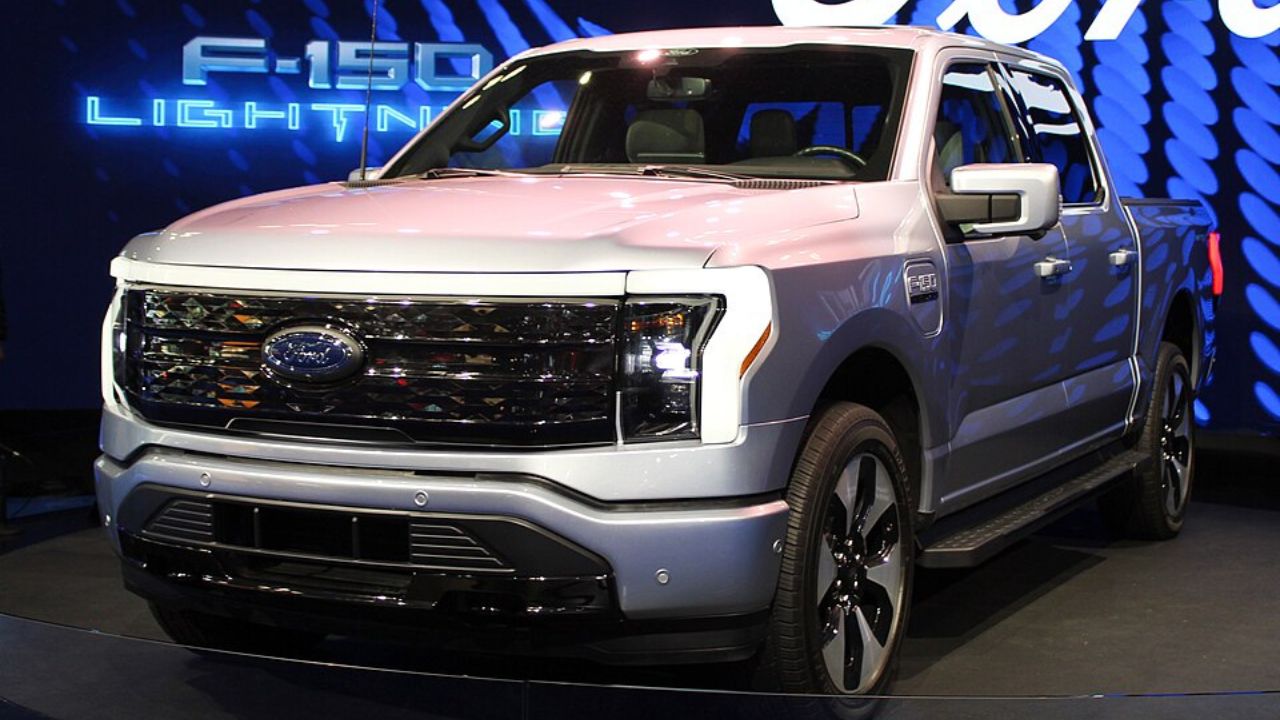
Ford’s own strategy captures this tension. On one hand, executives have publicly committed to an electric pickup that can match the cost structure of BYD and other Chinese original equipment manufacturers, signaling an understanding that price parity is essential if the F-150 is to remain competitive. On the other hand, Ford is pivoting away from big EVs and rethinking its electric F-150 truck, reassessing demand and profitability after an initial wave of enthusiasm for the F-150 Lightning. The Ford F-150 remains a centerpiece of the brand, as seen when The Ford F-150 was showcased at the Los Angeles Auto Show, but the company is now trying to balance investment in next-generation electric platforms with the reality that its current profit engine is still gasoline and hybrid trucks.
Dixie as the next battleground for truck loyalty
The American South, often referred to as Dixie, is emerging as the most contested ground in this unfolding competition. The region has long been a stronghold for full-size pickups, with the F-150 deeply embedded in local identity, small business fleets, and rural life. Yet it is also a region where price sensitivity is high and where new manufacturing plants, including foreign-owned factories, have reshaped the industrial landscape. Chinese EV makers see this mix as an opportunity: a market that reveres trucks, is open to new brands assembled in nearby states or in Mexico, and is increasingly exposed to global products through online reviews and social media.
Industry experts who track Chinese EV expansion into North America warn that once Chinese pickups or crossovers gain a foothold in one part of the continent, they can quickly spread through gray imports, joint ventures, or localized production. Reports on Why Chinese EV makers worry regulators note that countries have tried to limit Chinese vehicles for both economic and strategic reasons, but also acknowledge that Chinese EV brands are adept at tailoring products to local tastes and price points. In Dixie, that could mean a Chinese-built truck that offers the stance and towing capacity of an F-150, but with a cabin that feels like a smartphone on wheels and a monthly payment that undercuts domestic rivals, a combination that could slowly erode even deep-rooted brand loyalties.
More from Fast Lane Only