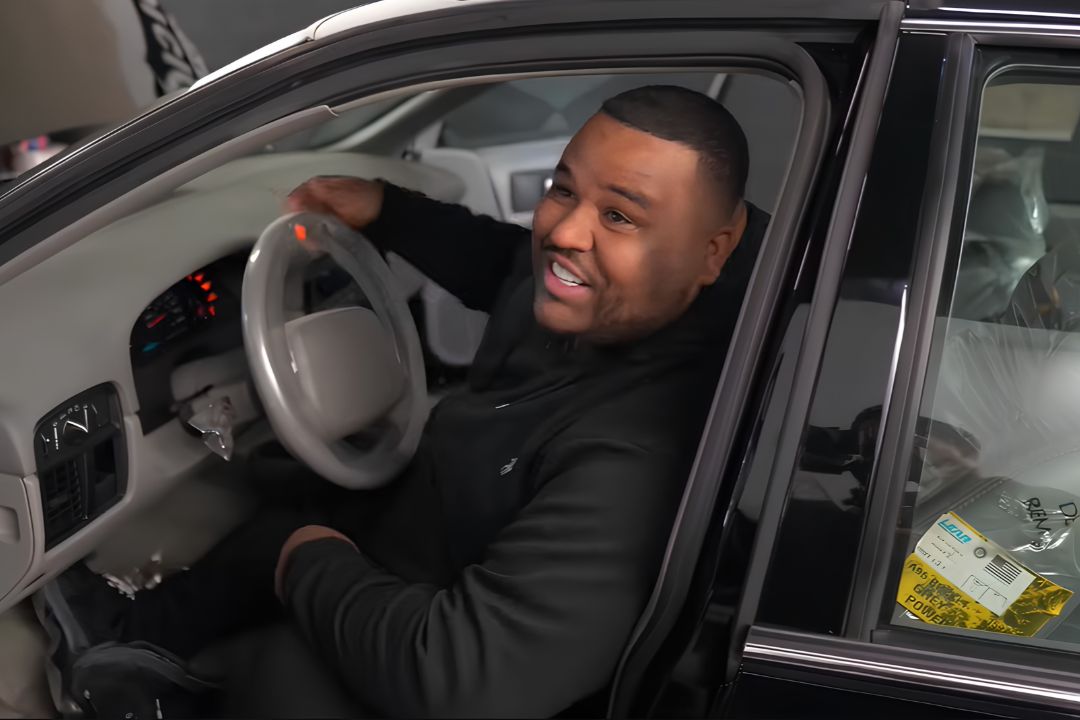
It started like the kind of test drive that sells a car all by itself: smooth idle, clean shifts, no weird smells, no warning lights glaring like a guilty conscience. The driver says everything felt “perfect” rolling through neighborhood streets, the engine pulling confidently like it had nothing to hide. Then, right as the on-ramp came into view, the engine cut out. No dramatic backfire, no smoke—just a sudden silence that makes your stomach drop faster than the tach needle.
They managed to coast to a safe spot, but the moment changed the whole mood. One minute it’s “this might be the one,” and the next it’s you staring at a dashboard like it’s supposed to explain itself. The seller was reportedly surprised too, which is either reassuring or suspicious depending on how your trust issues are doing that day.
A test drive that went from confident to confusing
According to the driver, the car behaved exactly how you’d want it to during the first part of the drive. No hesitation off the line, no stuttering at stop signs, and the temperature gauge stayed calm. It’s the kind of experience that makes you stop listening for problems and start imagining road trips.
That’s what made the stall so jarring. The cut-out happened before highway speed, during the transition from slower roads to a more demanding stretch. In car terms, it’s like someone did great in warm-ups and then tripped walking onto the field.
What “engine cut out” usually means in plain English
When people say the engine “cut out,” they usually mean the engine stopped running unexpectedly—like it lost spark, fuel, air, or the computer decided it was done for the day. Sometimes it’s an instant shutdown, other times it sputters and dies. Either way, it’s not the same as a mild misfire or a rough idle you can shrug off.
The tricky part is that a stall can be caused by something small and fixable, or it can be a sign of deeper gremlins. It could be as simple as a loose battery terminal or as annoying as an intermittent sensor that only misbehaves when the car warms up. And yes, intermittent problems are the ones that make mechanics start squinting at you like you brought them a haunted object.
The most common culprits that can hide during a short drive
One of the usual suspects is fuel delivery: a weak fuel pump, a clogged fuel filter, or debris in the tank that shifts around as the car moves. These can act totally normal at low load and then stumble when you ask for more power. Another possibility is ignition trouble—think worn plugs, failing coil packs, or a crankshaft position sensor that decides it doesn’t like being warm.
Air and idle control issues can also cause a sudden stall, especially when the throttle position changes quickly. A dirty throttle body, sticking idle air control (on some older setups), or a vacuum leak can behave politely until the engine transitions from steady cruising to acceleration. Then it’s lights-out, and you’re coasting like you just ran out of luck.
Why it can feel perfect… right up until it doesn’t
Short test drives can be misleading because a lot of problems don’t show up until the car reaches operating temperature or sees sustained load. Some components fail only when they heat-soak—sensors drift, electrical connections expand, and weak parts tap out when current demand rises. That’s why a car can seem flawless on neighborhood streets and then quit when you’re about to merge.
There’s also the “reset effect.” If the battery was disconnected recently, or codes were cleared, the car’s computer may not have had time to relearn idle trims and fuel adjustments. It might run okay for a bit, then stumble as it tries to adapt—like someone confidently reading a script until they realize it’s in the wrong language.
What the driver did next, and what most people should do too
In situations like this, the best move is usually the least dramatic one: get safely out of traffic, turn the hazards on, and take a breath. If the engine restarts, that doesn’t mean the problem vanished; it just means it’s intermittent, which can be even more important information. If it won’t restart, that’s also useful—because a “no-start” is often easier to diagnose than a “sometimes it dies.”
Drivers in this spot often check a few basics if they’re comfortable: do the dash lights come on with the key, does the engine crank, and do any warning lights appear after the stall. Even something as simple as noting whether it died during acceleration, braking, or turning can help narrow it down later. And if it’s a test drive, it’s also a fair moment to pause and reassess whether you want to keep auditioning this particular car.
How sellers react can tell you almost as much as the car does
A seller being surprised isn’t automatically a red flag—some issues genuinely pop up out of nowhere. But what matters is what happens next. Do they offer to have it checked, share repair records, and let you walk away without pressure, or do they suddenly become allergic to accountability?
If they start minimizing the stall (“it does that sometimes”) while also insisting it’s “nothing,” that’s a clue you should listen to. A car that shuts off unexpectedly can be a safety issue, not just an inconvenience. Nobody wants to find out the hard way that “sometimes” includes intersections.
What to ask for before you consider continuing the deal
If you’re still interested after a stall, it’s reasonable to request a proper diagnostic scan and a longer, more structured test drive after repairs. Ask whether the car has any stored codes, even if the check engine light isn’t on. Many cars save history codes that can point to a failing sensor, fuel pressure issues, or electrical faults.
You can also ask about recent work that might connect to stalling: battery replacement, alternator issues, throttle body cleaning, fuel pump replacement, or any “it was just in the shop” story. Sometimes a recent repair is a good sign; other times it’s the start of a saga. If paperwork exists, it’s your friend—because memories get fuzzy when money’s on the line.
A quick checklist for smarter test drives next time
A longer test drive is your best defense against the “ran great for ten minutes” trap. Ideally, you want a cold start, a mix of city streets and highway speed, and a few minutes of idling after the engine is warm. If a seller won’t allow that, it’s not necessarily proof something’s wrong, but it does mean you’re being asked to buy with less information.
It also helps to pay attention to the small tells: dimming lights, a fluctuating tach, odd electrical behavior, or a stumble when coming to a stop. Those can hint at charging problems, sensor trouble, or air leaks. Cars rarely go from perfectly healthy to fully stalled without leaving at least one breadcrumb—sometimes you just need enough time to notice it.
When “it stalled once” is enough to walk away
Some buyers will still proceed if the issue is clearly identified, repaired, and verified with a longer drive. But if the cause is unclear, the seller is evasive, or the car repeatedly stalls, walking away is often the cheapest option—even if it’s annoying in the moment. The whole point of a test drive is to learn what the car does under normal conditions, not to discover surprise plot twists.
The driver in this case summed it up with an honesty anyone can relate to: it felt perfect until it didn’t. And that’s the uncomfortable truth about used cars—sometimes the first real test isn’t the gentle neighborhood loop. It’s the moment you ask the car to join the real world, and it decides it’d rather take a nap.
More from Fast Lane Only