The 1989 Pontiac 20th Anniversary Turbo Trans Am (TTA) blended Buick’s turbo 3.8-liter V6 with the Firebird GTA chassis and then went out and paced the Indy 500. Just 1,555 were built, and period tests proved it was one of the quickest American cars of the late ’80s. Here are seven reasons this rare bird still carries weight—with numbers that hold up.
Insane Acceleration
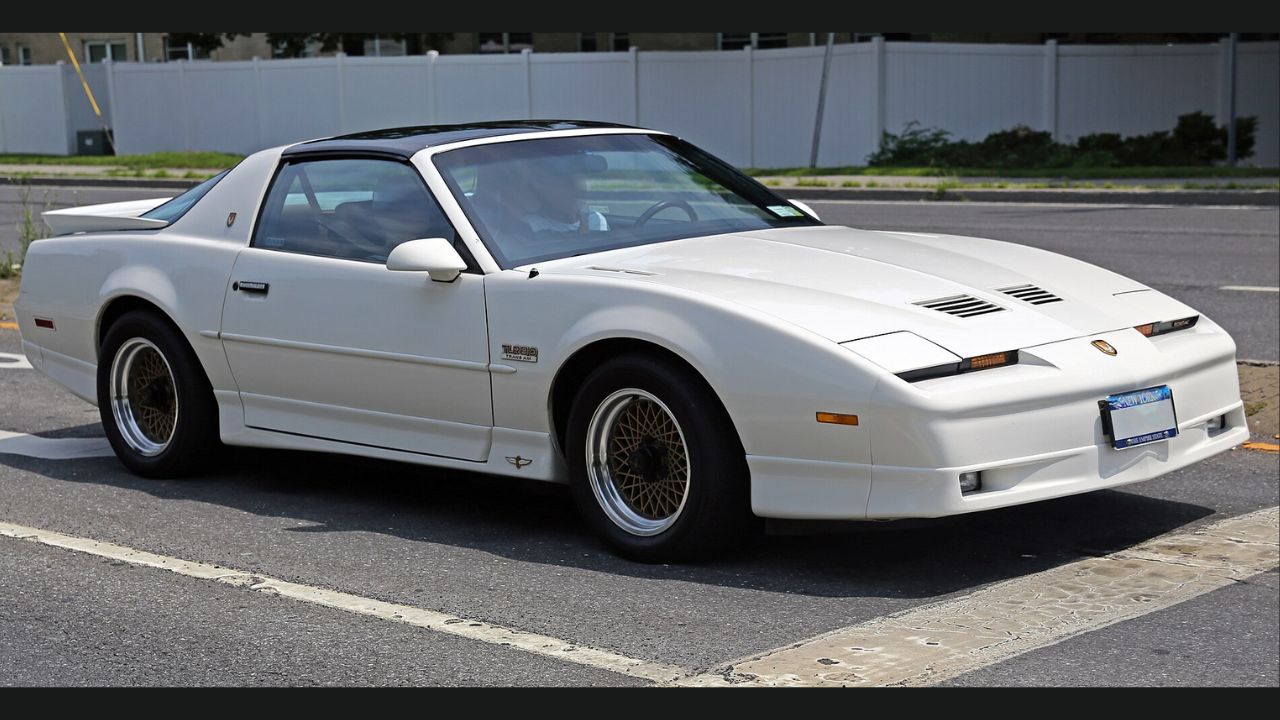
Pontiac rated the intercooled 3.8-liter turbo V6 at 250 hp and 340 lb-ft, but contemporary dynos and trap speeds put real output closer to ~300 hp. Car and Driver clocked 0–60 mph in 4.6 seconds and the ¼-mile in 13.4 sec @ 101 mph—quicker than the 1989 L98 Corvette. At about 3,346 lb on a 101-in wheelbase and backed by the robust 200-4R automatic, it delivered supercar-grade thrust for its day.
Indy 500 Pace Car
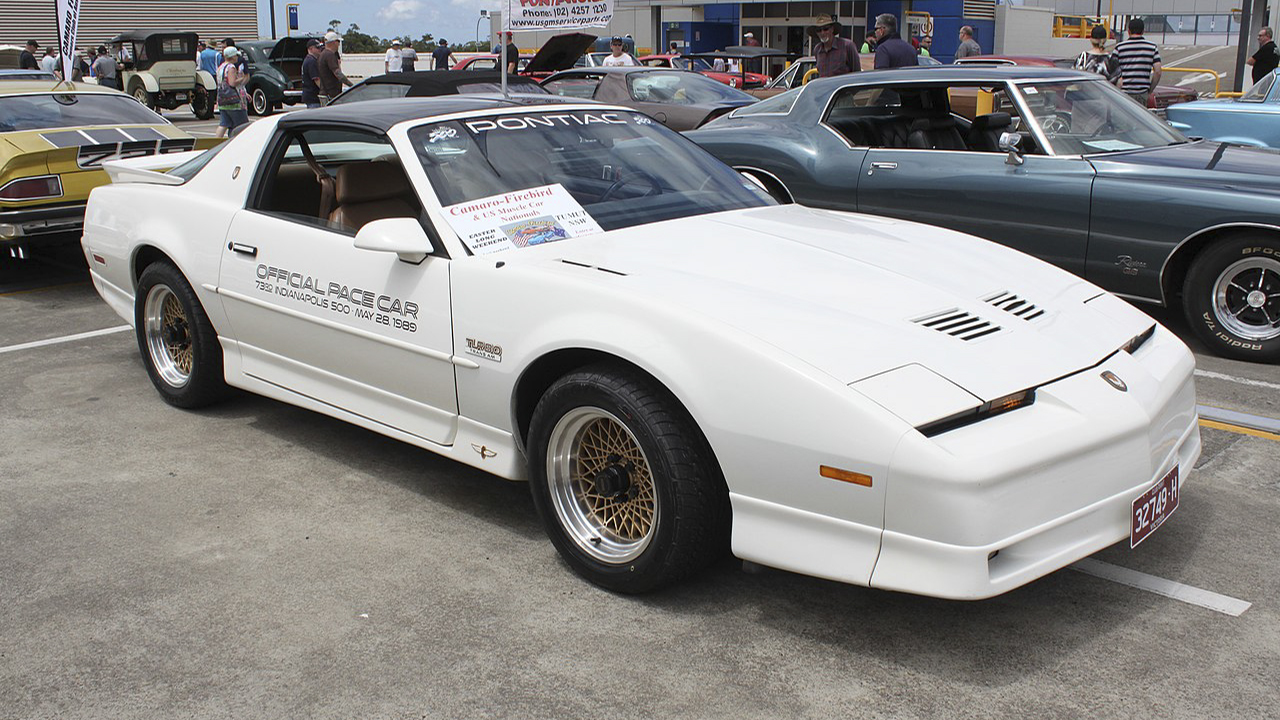
The TTA served as the official pace car of the 1989 Indianapolis 500 with only minor safety/lighting tweaks. Testing for pace duty verified ~162 mph capability. All customer cars wore the white paint, gold cross-lace 16-inch wheels, and “20th Anniversary”/“Turbo Trans Am” identifiers that tie it to that role.
Rare Production Run
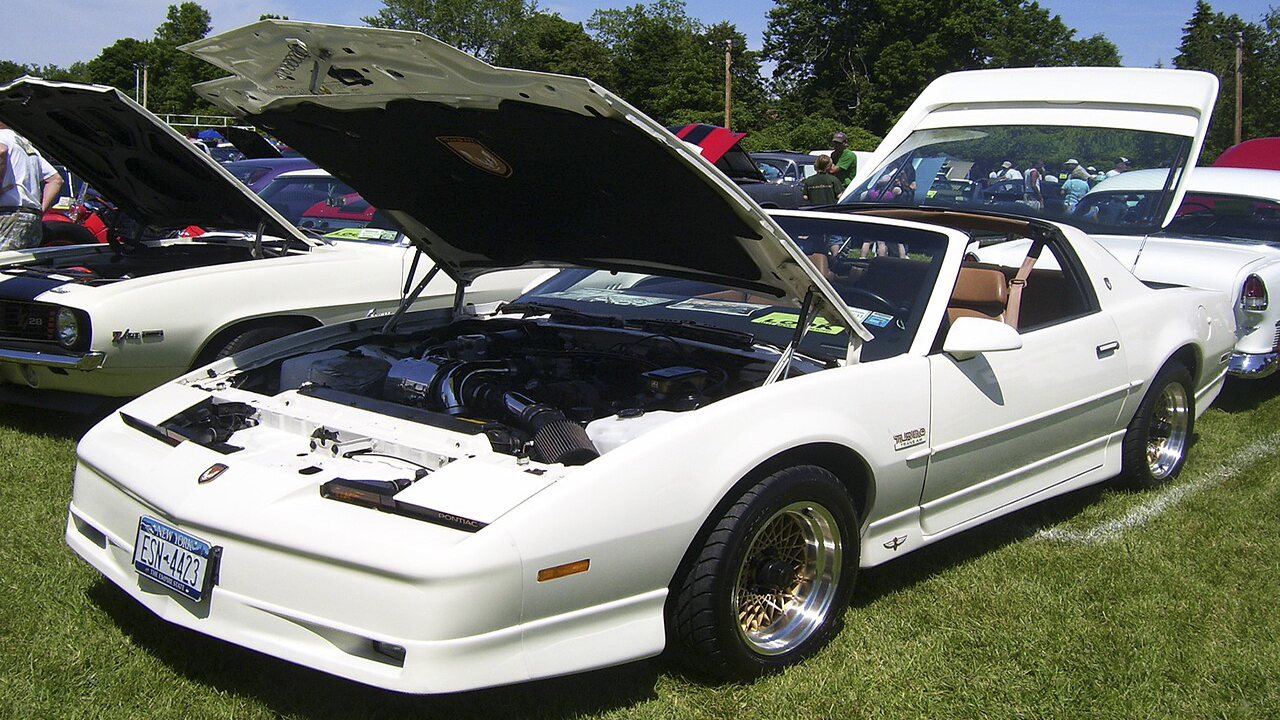
Pontiac built 1,555 examples for 1989. The large majority were T-top cars, and only a few dozen hardtops were made. Interior trims were largely Beechwood (tan) leather, with a smaller number in cloth. (Breakdowns commonly cited by marque historians: ~1,324 T-top/leather; ~187 T-top/cloth; ~24 hardtop/leather; ~15 hardtop/cloth, with a handful of pre-production/engineering cars rounding the total to 1,555.)
Underrated Power

Pontiac’s 250-hp rating was conservative—motivated by warranty prudence and to avoid out-shining Chevy’s flagship Corvette on paper. In practice, the turbo LC2-based V6 (with unique cylinder heads/manifolds to fit the F-body) routinely delivered performance consistent with ~300 hp, and verified ~162-mph pace-car speed.
Handling Precision

With the WS6 package (quick steering, performance springs/dampers, 36-mm front / 24-mm rear anti-roll bars) and 245/50ZR16 Goodyears, period tests recorded roughly 0.85–0.89 g on the skidpad and strong braking. The GTA-grade structure and suspension balance made the TTA feel planted and exploitable—not just a straight-line hero.
Tuner Potential

Using a Garrett T3 turbo and sequential fuel injection, the TTA responds well to mild bolt-ons (exhaust, intercooler upgrades, careful boost/tune). Many lightly modified cars run 12-second quarters while retaining street manners—one reason the platform still has an active aftermarket.
Collector’s Dream

Limited production, Indy pedigree, and verified performance keep values healthy. Market guides and auction data typically show a wide range from ~$40k to low six figures depending on mileage and originality, with ultra-low-mile cars occasionally exceeding that. The best examples remain blue-chip ’80s Pontiacs.
Like Fast Lane Only’s content? Be sure to follow us.
Here’s more from us:
*Created with AI assistance and editor review.