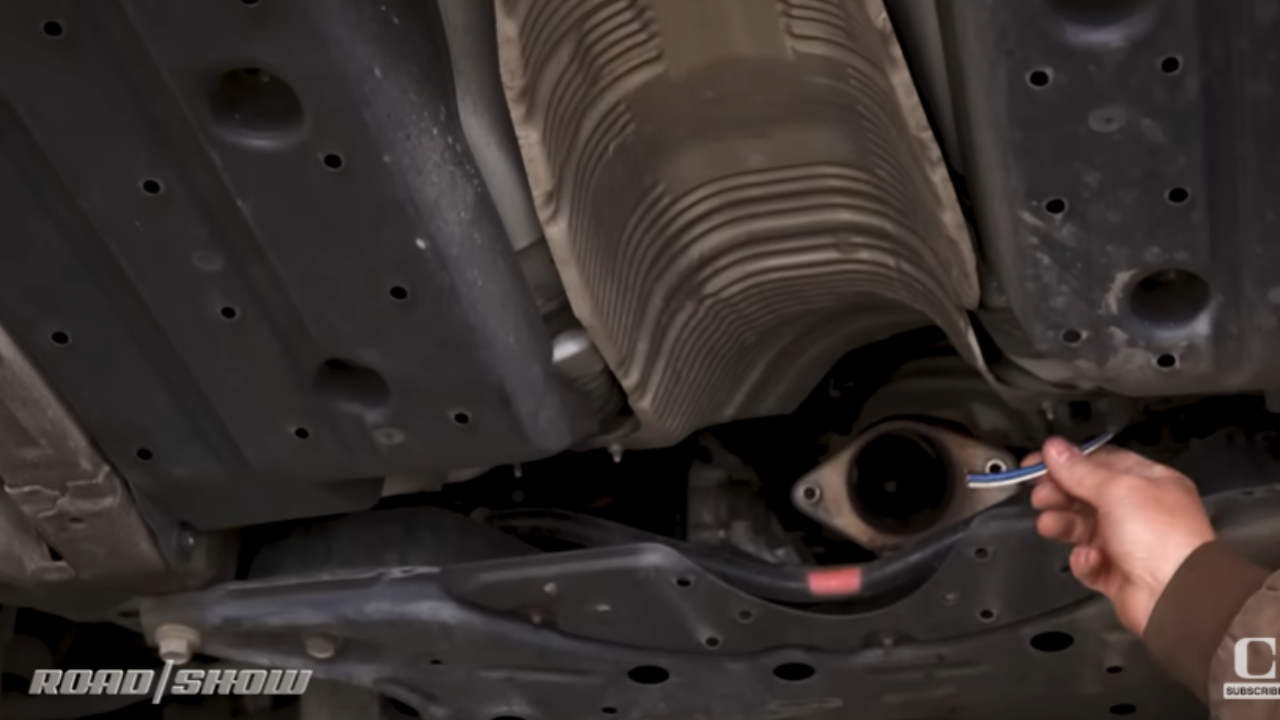
You probably think of your car’s catalytic converter as a forgettable chunk of metal under the chassis. Federal prosecutors say Tou Sue Vang saw it as a gold mine, orchestrating a pipeline of stolen exhaust parts that turned into roughly $38 million in revenue. His case shows how a crime that starts with a thief sliding under a parked Toyota Prius can end with industrial refineries and international money flows.
To understand how a single “kingpin” could turn scrap into a fortune, you have to follow the trail from neighborhood driveways in California to buyers in New Jers and beyond. Along the way, you see how a family-run operation, a national resale network, and a coordinated federal crackdown converged to expose the real business model behind catalytic converter theft.
How a Sacramento family turned scrap into $38 million
Federal authorities say Vang, a Sacramento man in his early thirties, sat at the center of a sprawling theft and resale scheme that treated catalytic converters as a high-yield commodity. According to investigators, Vang and his relatives bought stolen converters across California, then moved them out of state where the parts could be stripped for the precious metals that make them so valuable. You see the scale in the figure that keeps surfacing in court documents and charging papers: more than $38 million in proceeds tied to this one network.
The operation was not a lone-wolf hustle. A California family, led by Tou Sue Vang, is described in federal filings as the core of the conspiracy, with relatives including Andrew Vang and Monica Moua helping to purchase and ship the stolen parts. Prosecutors say the group trafficked converters from California to New Jers, where downstream buyers and processors paid for bulk loads that had been ripped from vehicles in cities like Sacramento and San Jose. The government’s description of that family structure and the $38 figure appears in multiple filings and summaries, including a detailed account of how a California man led a $38M catalytic converter theft ring and lived lavishly off stolen parts, and a separate notice that a California family, led by Tou Sue Vang, generated over $38 million through the scheme.
The “kingpin” lifestyle behind the stolen metal
When you strip away the legal language, what emerges is a portrait of a man who treated stolen exhaust systems as a ticket to a luxury lifestyle. Accounts of the case describe Vang using the proceeds to fund high-end vehicles, recreational toys, and a standard of living far removed from the scrapyards where the parts were supposed to end up. One report on the California man who led the $38M catalytic converter theft ring notes that he lived lavishly off stolen parts, while another describes a California catalytic converter kingpin sentenced in a $38 theft ring that stretched across Sacramento County and into San Jose.
Those same filings and local reports detail how the money moved through family accounts and informal channels instead of legitimate recycling businesses. They did not have a scrap yard or a valid business license, according to one Sacramento-focused indictment, which underscores how the operation relied on volume and speed rather than any pretense of lawful trade. When you read that a California family, led by Tou Sue Vang, faces prison for a $38 catalytic converter scheme, or that a 33-year-old man was sentenced to 12 years in prison after the ring in California raked in $38M, you see how prosecutors framed the case as a deliberate, long-running business built on other people’s repair bills.
Inside the theft pipeline: apps, couriers, and cross-country shipping
From your perspective as a car owner, the crime starts with a jolt: you turn the key and your Prius or Honda CR-V roars like a motorcycle because the exhaust has been sliced away. For Vang’s buyers and their suppliers, that moment was just the first step in a tightly organized supply chain. Local coverage of the Sacramento man sentenced for his role in the 38 million dollar conspiracy notes that They did not have a scrap yard or a valid business license, and that the thieves used an app that gave real time prices for catalytic converters so they could decide which vehicles to target. That kind of tool turns a random smash-and-grab into a data-driven operation, with thieves prioritizing models like the Prius, Lexus RX, and older trucks whose converters carry higher concentrations of platinum, palladium, and rhodium.
Once the parts were cut free, they moved quickly. Reports on the California catalytic converter kingpin sentenced in the $38 theft ring describe how converters were stockpiled in Sacramento County, then trucked to buyers in San Jose and shipped across the country. Federal summaries of the case explain that a California family, led by Tou Sue Vang, coordinated these shipments as part of a broader $38 scheme, while a separate notice from the Attorney Office in the Eastern District of California, labeled For Immediate Release, details how three Sacramento family members pleaded guilty to a $38 million catalytic converter theft conspiracy that relied on moving parts out of state for processing. The logistics were simple but effective: local thieves, regional aggregators, and then national buyers who could sell the scrap to refineries.
From Sacramento streets to national refineries
Vang’s network did not exist in a vacuum. It plugged into a national market that federal agents had been tracking for years, one that turned stolen converters into feedstock for industrial refineries. In the Eastern District of California Case, a federal grand jury returned a 40-count indictment charging multiple defendants with buying stolen catalytic converters and shipping them to an out-of-state refinery for over $545 million in payments. Homeland Security Investigations later highlighted that same Eastern District of California Case as part of a broader takedown, noting in its own account that a 40-count indictment described how brothers and their associates moved converters from California to a refinery that paid more than $545 million for the material.
That refinery-level demand explains why a Sacramento family’s $38 million slice of the market was possible. Federal officials have described the California man who led the $38M catalytic converter theft ring as one node in a larger web that stretched from California to New Jers and beyond. A Justice Department announcement on the takedown of a nationwide catalytic converter theft ring, tied to the Eastern District of California, emphasized that a 40 count indictment captured how regional buyers funneled stolen parts into a national pipeline. Another federal summary of three defendants pleading guilty in SACRAMENTO, Calif., issued by the U.S. Attorney Office in the Eastern District of California, spells out how converters removed from a vehicle’s internal combustion engine in local neighborhoods ended up as raw material for distant processors.
The national crackdown: from New Jersey to Oklahoma
As Vang’s case moved through federal court, investigators were also closing in on the buyers who turned his stolen parts into cash. In a separate but related prosecution, a New Jersey man pleaded guilty in federal court in the Northern District of Oklahoma to leading a multi-state operation that bought stolen catalytic converters and sold the extracted precious metals. That plea, detailed in a Justice Department release on a leader of a national catalytic converter theft ring, shows how the market for stolen parts extended far beyond California. A local television segment on the same Oklahoma case, featuring reporter Evan Onto, described how the leader of a national theft ring worth millions admitted in an Oklahoma courtroom that he had been selling stolen goods into the metals market.
More from Fast Lane Only