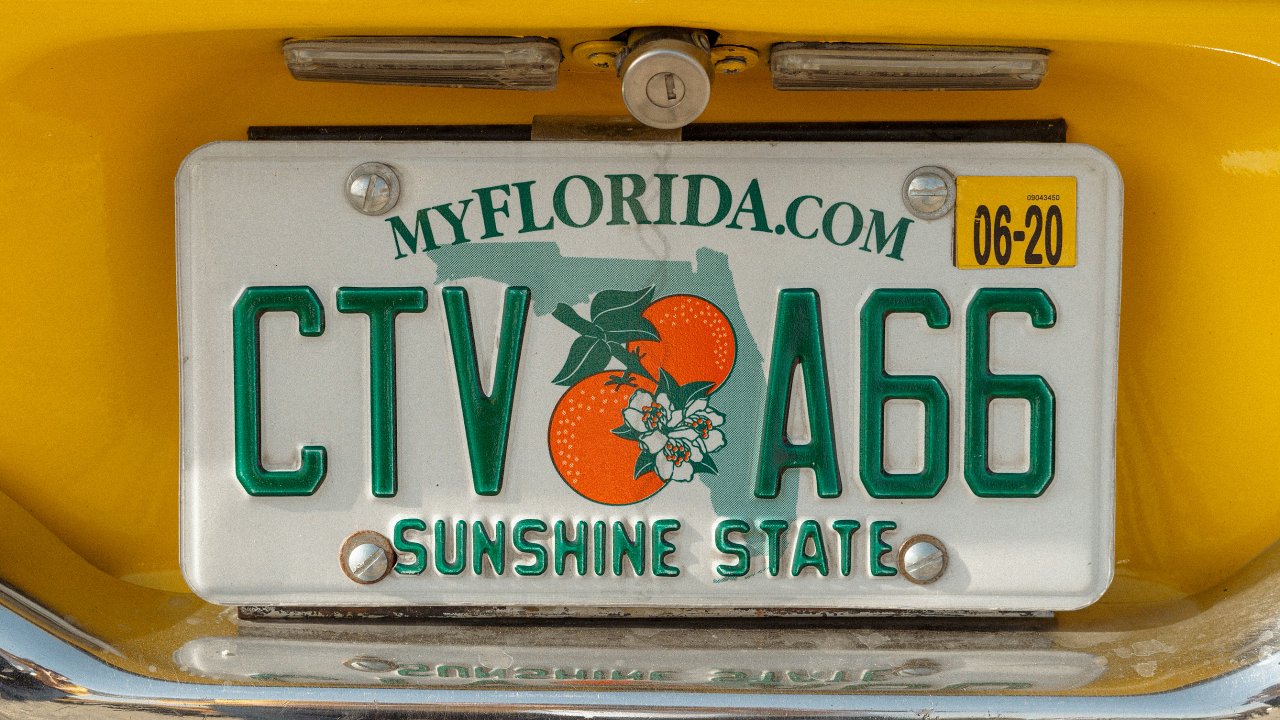
Florida’s familiar yellow registration stickers may soon give way to a system that exists almost entirely in databases and patrol car computers. A proposal from Miami-Dade County Tax Collector Dariel Fernandez is pushing the state to retire the physical decals and rely instead on digital verification of vehicle registrations.
If Florida follows through, drivers would still renew their tags, but the proof of that renewal would live in state records rather than on a small square of adhesive plastic. The debate now unfolding around Fernandez’s idea is less about nostalgia for the sticker and more about whether a digital approach can deliver the efficiency, savings, and accountability he promises.
Why a county tax collector wants to kill the yellow decal
From my vantage point, the most striking part of this story is that the push is not coming from a tech company or a Tallahassee task force, but from a local tax collector who spends his days watching how the system actually works. Miami-Dade County Tax Collector Dariel Fernandez has formally proposed ending what his office calls the “physical yellow registration decal” for vehicles in Florida, arguing that the state’s current technology already makes the sticker redundant. In his pitch, Fernandez frames the change as a statewide shift, not just a Miami-Dade experiment, and he presents it as a logical next step for a state that already processes renewals online and stores registration data electronically.
Fernandez’s argument rests on a simple premise: if law enforcement and tax offices already rely on digital records to confirm whether a plate is valid, then the small yellow square on the metal tag is little more than a relic. In his public explanation of the proposal, he describes the decal as outdated and unnecessary in light of technology upgrades that let agencies check registration status in real time. That framing sets the tone for the broader conversation, positioning the sticker not as a safety tool, but as a leftover habit that has outlived its usefulness.
The practical problems with Florida’s yellow stickers
As I read through Fernandez’s case, what stands out is how much of his critique is rooted in the day-to-day hassles drivers already know too well. He points out that the yellow decal fades in the Florida sun, peels at the corners, and is easy to steal from the back of a car. Those are not abstract complaints. Anyone who has tried to scrape off an old sticker from a license plate or discovered that a decal has gone missing after a night parked on the street will recognize the friction he is describing. Fernandez goes further, noting that these physical quirks translate into real costs when residents have to replace stolen or damaged stickers.
Fernandez also ties those annoyances to a broader sense that the system is simply behind the times. He has said bluntly that the yellow sticker is “no longer needed,” emphasizing that it fades, peels, gets stolen, and costs residents money every single year. In his view, the state is asking drivers to keep performing a manual ritual, peeling and sticking a new square on the plate, even though the real proof of registration already lives in a database. That critique resonates in a state where many drivers now renew their tags from a smartphone, yet still have to wait for a piece of plastic to arrive in the mail before they are fully compliant.
The digital alternative Fernandez is pushing
When I look at what Fernandez is actually proposing, it is less a radical reinvention and more a decision to trust the systems Florida already uses. The core of his plan is to eliminate the requirement for a physical yellow decal while keeping the underlying registration process intact. Drivers would still renew annually, pay the same fees, and keep their metal license plates, but the visible proof of that renewal would disappear. Instead, law enforcement and tax offices would rely on the state’s electronic records to confirm whether a vehicle is properly registered, something they already do whenever they run a plate number.
Fernandez presents this shift as a modernization effort that aligns with how other parts of government now operate. He has framed the initiative as part of his responsibility to update county systems and reduce burdens on families, describing the end of the decal as a “powerful step” toward that goal. In his public comments, he links the move to efficiency and savings, arguing that if the state can stop printing, shipping, and replacing millions of small stickers, it can redirect those resources to more pressing needs. For him, the digital alternative is not just about convenience, it is about treating residents’ time and money as something worth protecting.

Cost, efficiency, and what taxpayers stand to gain
From a taxpayer’s perspective, the financial logic behind this proposal is straightforward. Every yellow decal has a cost: the material itself, the printing, the distribution to county offices, and the customer service time spent dealing with lost or stolen stickers. Fernandez has emphasized that these expenses add up across Florida’s millions of registered vehicles, and that residents effectively pay for the privilege of maintaining a system that technology has already made optional. By ending the physical decal, he argues, the state could trim recurring costs and reduce the number of small but frustrating errands drivers have to run each year.
Fernandez also connects the idea to a broader push for government efficiency. He has described the move away from decals as part of a larger effort to modernize county operations and cut unnecessary steps for families. In that framing, the yellow sticker becomes a symbol of outdated bureaucracy, a tiny square that forces people to stand in line, wait for mail, or schedule a trip to a tax collector’s office when something goes wrong. Replacing that ritual with a system that relies on digital records, which agencies already use, is presented as a way to streamline interactions between residents and the state without sacrificing accountability.
How law enforcement and drivers might adapt
Any shift away from a visible sticker raises a practical question that I hear often from readers: how will officers know if a car is properly registered? Fernandez’s answer leans heavily on the tools police already have. Patrol vehicles across Florida are equipped to run license plates against state databases, and officers routinely check registration status that way, regardless of what the sticker shows. In that context, the yellow decal is more of a quick visual cue than a definitive proof of compliance, since a plate can display a current sticker even if the underlying registration has been suspended or revoked.
For drivers, the adjustment would be more psychological than procedural. They would still need to renew on time, still receive confirmation of payment, and still be subject to penalties if they let their registration lapse. What would change is the absence of that annual ritual of peeling off the old square and pressing on a new one. Some residents have already begun debating the idea in online forums, with posts about “Ending Florida’s Yellow Registration Decal” drawing comments that range from enthusiasm about fewer chores to concern about how quickly officers can verify a plate. Those conversations underscore that while the technology is in place, public comfort with a fully digital system will depend on how clearly the state explains the transition and how smoothly it works in practice.