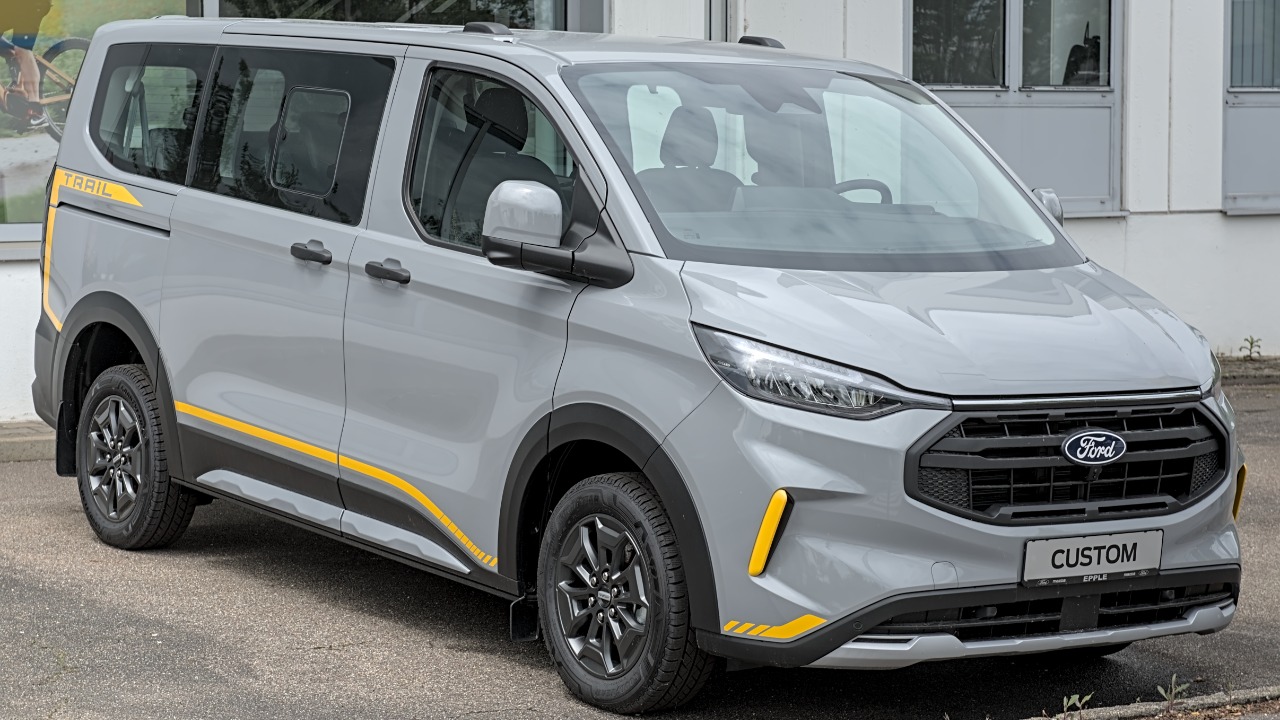
Ford is circling back to the part of the market that first made its name: everyday cars regular buyers can actually afford. After several years of prioritizing SUVs and trucks and walking away from many traditional passenger models, the company is now sketching a new future in which compact sedans, hatchbacks, and lower priced EVs again play a central role for you.
The shift is not about nostalgia. It is a response to a new car market where average transaction prices hover around luxury territory, household budgets are stretched, and rivals from China and legacy brands alike are racing to build cheaper electric and combustion models. Ford is betting that if it can get small cars and smaller EVs right, you gain back something you have been losing: real choice.
How you got an SUV-only Ford in the first place
If you live in North America, you felt the change when Ford quietly stopped offering most of its traditional cars and leaned almost entirely on crossovers, SUVs, and pickups. Reporting on the great sedan exodus describes how Ford made headlines in 2018 when it announced plans to discontinue nearly all of its North American sedan models and focus on SUVs and trucks. You saw that strategy play out in the showroom as familiar badges vanished and were replaced by a wall of high riding vehicles with higher price tags.
The pivot did not stop at the U.S. border. In Europe, Ford moved to discontinue the Fiesta, one of its most recognizable small cars, as it pushed toward crossovers and electrification. The decision to end the Fiesta in European left you with fewer low cost options just as living costs climbed. For a while, the company seemed comfortable with an identity built almost entirely around SUVs, larger EVs, and trucks, even if that meant walking away from buyers who needed something smaller and cheaper.
Why affordability is forcing Ford back to cars
Affordability is now the pressure point pulling Ford back toward passenger cars. New vehicle prices have climbed to the point where the average transaction is around $50,000, which pushes a lot of shoppers out of the market entirely. Combine that with higher interest rates and insurance costs, and the SUV heavy strategy that looked profitable on paper starts to look like a volume problem, because fewer people can sign on the dotted line.
Dealers and analysts have been warning that the rapid rise in new vehicle prices has moved ownership out of reach for many households, and you see that in longer loan terms, delayed purchases, and a booming used market. At the same time, some of the remaining mainstream sedans such as the Toyota Corolla and continue to sell strongly because they give you a lower entry point than most compact SUVs. That success sends a clear message to Ford executives: if you ignore affordable cars, you leave money and long term customer relationships on the table.
Inside Ford’s new passenger car rethink
Ford is now reorganizing internally so you eventually see more small cars in showrooms again. In Europe, the company has created a dedicated passenger vehicles role to guide a new wave of affordable multi energy models that can run on combustion, hybrid, or electric power. That move signals to you that Ford no longer sees cars as an afterthought in Europe, but as a product line that needs its own leadership and strategy.
Elsewhere, reporting indicates that Ford has effectively backflipped on an for its passenger car lineup, reconsidering earlier decisions to scrap traditional models entirely. For you, that means the company is once again exploring compact hatchbacks and sedans that can share platforms and components, potentially even through partnerships such as a platform charging agreement with Volkswagen, to keep costs down and pricing within reach.
Affordable EVs and the Clarke influence
Ford’s rethink is not just about bringing back gasoline powered compacts. It is also about how you can get into an electric vehicle without paying luxury money. The company has publicly shifted its EV roadmap so that an affordable electric model now takes priority over a larger three row SUV, a decision that directly affects what you will see first in showrooms. That change reflects a belief that volume will come from smaller, cheaper EVs rather than from big, expensive flagships.
To make that work, Ford has brought in engineering leadership with a track record in exactly the kind of vehicle you might cross shop. Reporting notes that, Notably, Clarke played a key role in the engineering of the Tesla Model Y, described as the world’s best selling car. If Ford can translate that experience into a compact electric crossover or hatchback priced closer to what you paid for a Focus or Fiesta, the company could give you a realistic path into EV ownership without stretching your finances.
What Ford’s 2030 plan means for your next car
The clearest signal that you should expect more affordable choices is Ford’s long term product plan. The company has outlined a strategy to bring five all new lower priced vehicles to market by 2030, explicitly framed as a return to what Ford Motor Company historically did best: building cars that ordinary buyers could afford. That plan includes both cars and trucks, so you are likely to see a mix of compact passenger models and smaller pickups, potentially with a blend of combustion, hybrid, and electric powertrains.
Separate reporting on vintage SUVs highlights how some buyers are paying surprising sums for older models such as the Ford Excursion because newer large vehicles are so costly, even as Ford plans five new lower by the end of the decade. Taken together, that suggests a future showroom where you can choose between a compact EV, a simple gasoline hatchback, or a modestly sized truck, instead of being steered toward a single oversized SUV because that is all that fits the current strategy.
More from Fast Lane Only